
Antibacterial Compositions Comprising Copper Oxo-Hydroxide Nanoparticles and Their Uses as Biocidal Agents
Patent Information
- Authority / Receiving Office
- US · United States
- Current Assignee / Owner
- Publication Date
- 2018-05-31
- Estimated Expiration
- Not applicable · inactive patent
Smart Images
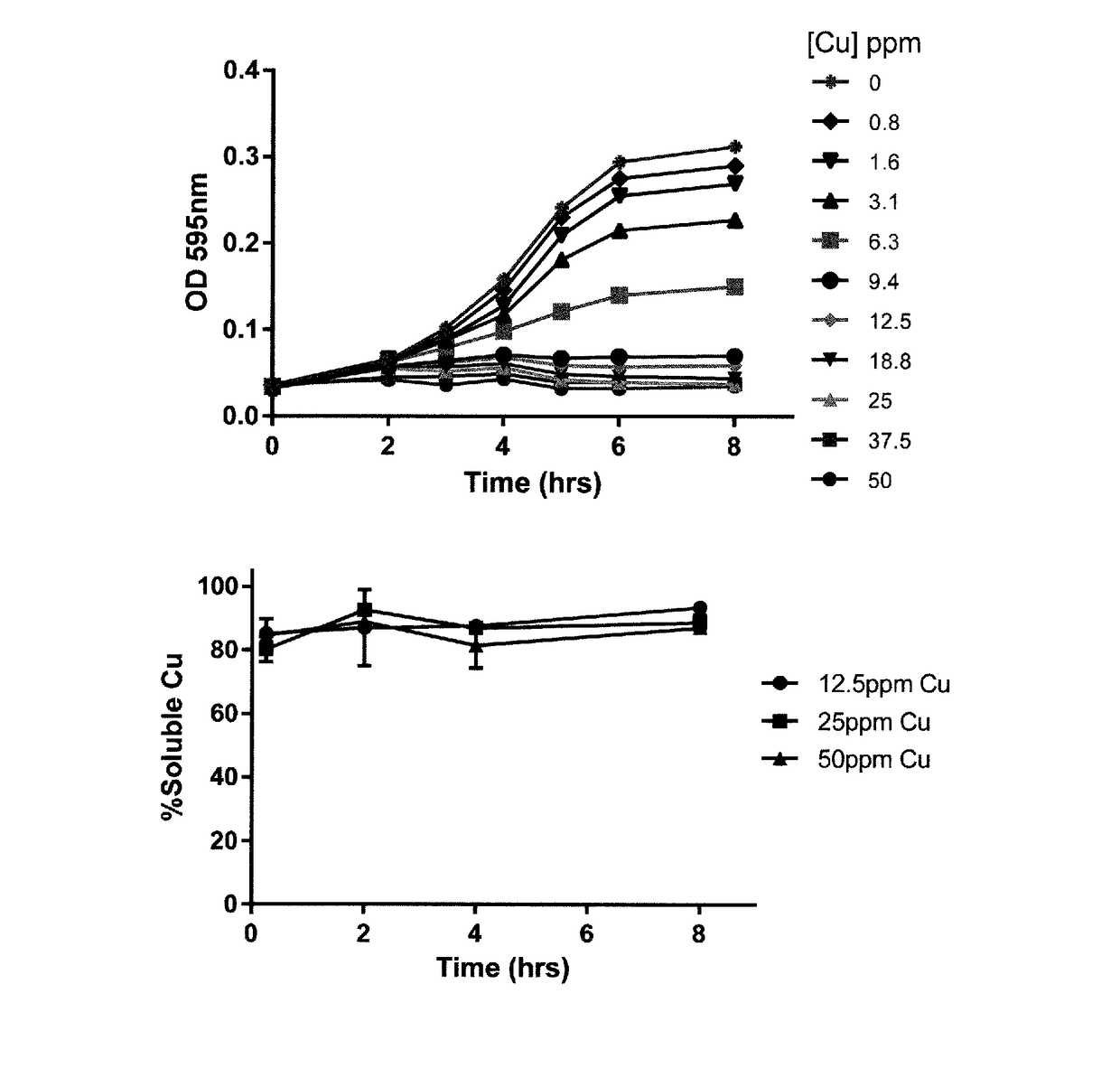
Figure 1 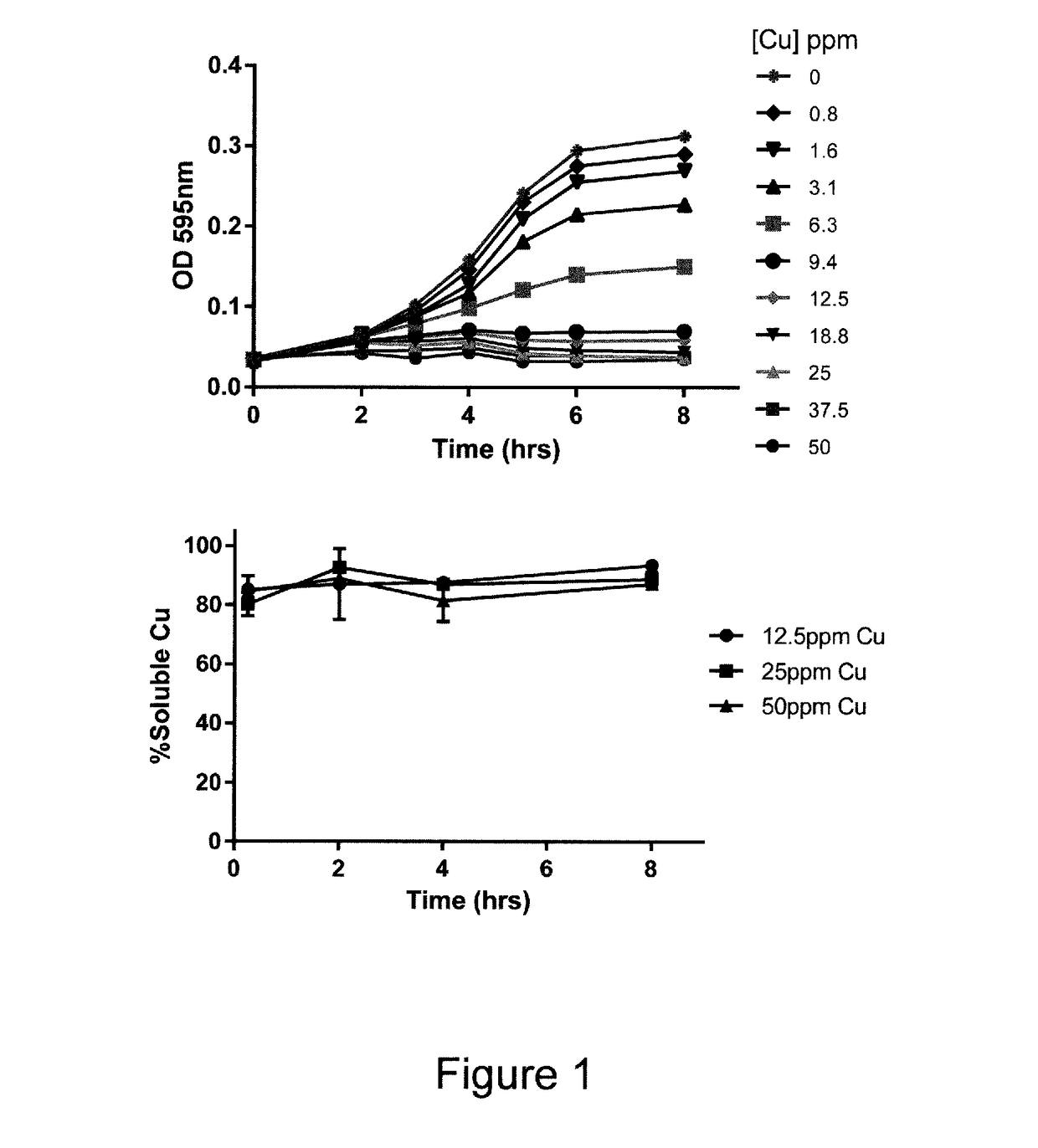
Figure 2 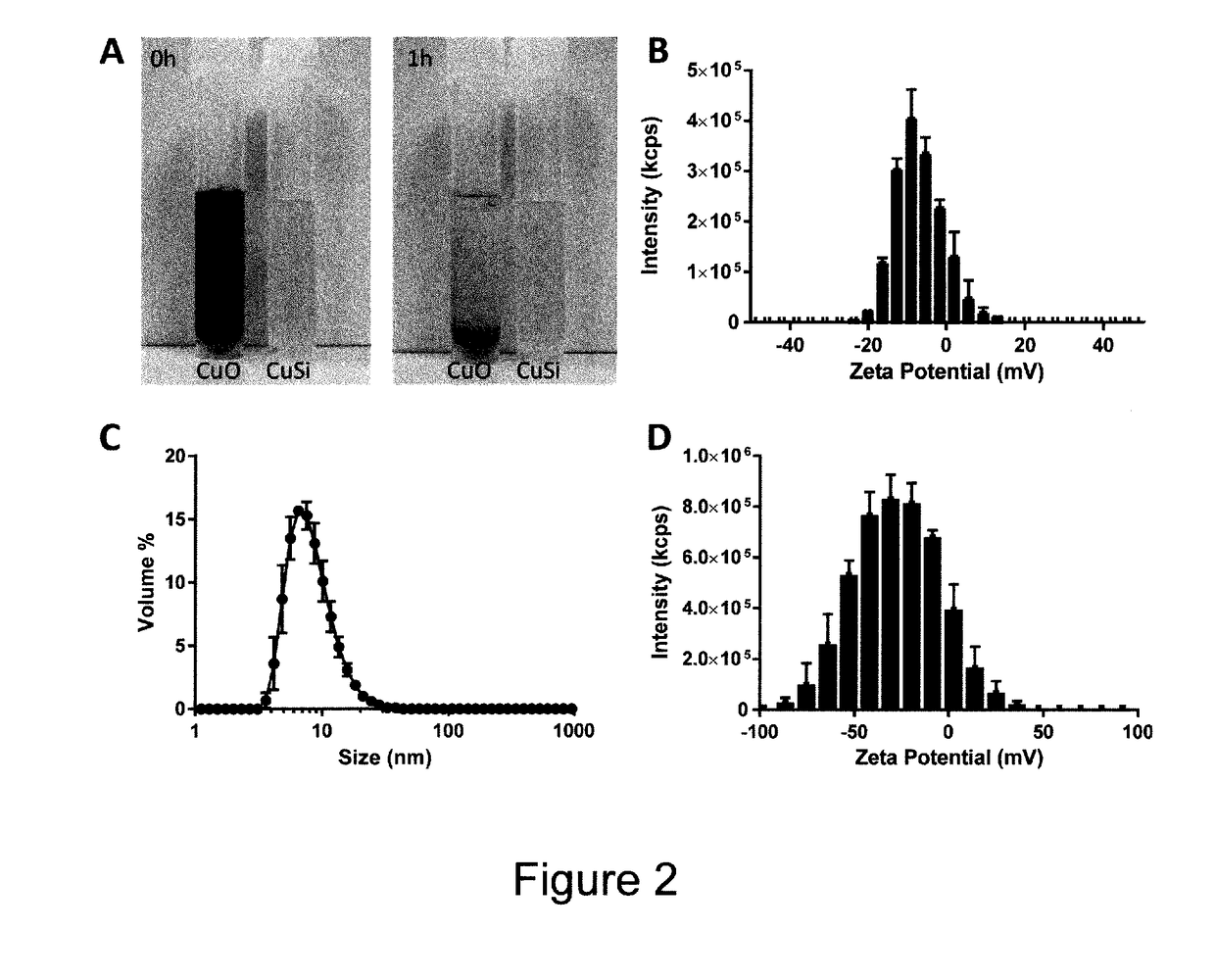
Figure 3
Abstract
Description
FIELD OF THE INVENTION
[0001] The present invention relates to antibacterial compositions comprising copper oxo-hydroxide nanoparticles, and in particular to ligand-modified copper oxo-hydroxide nanoparticles and their uses as antibacterial agents capable of delivering soluble biocidal copper. The present invention further relates to medical uses of the ligand-modified copper oxo-hydroxide nanoparticles, in particular for wound healing or the treatment or prevention of microbial infection.BACKGROUND OF THE INVENTION
[0002] Development of new antimicrobials has progressively slowed down since the 1980s, leaving a bleak scenario in the face of emerging multi-drug resistant pathogens. So called ‘superbugs’ are increasingly recognised as a global threat to public health, driving exploration of new antimicrobials—including inorganic agents, such as those based on copper and silver. These metals have had historical usage and, significantly, are hypothesised to act via a multiplicity of biocid...
Examples
experimental examples
[0094]All experiments were carried out using ultra high pure (UHP) water (distilled deionised water; 18.2 ΩM / cm), and at room temperature (20±2° C.), unless otherwise stated.
[0095]1.1 Synthesis and Preparation of Copper Materials
[0096]1.1.1 Copper Chloride Stock Solution
[0097]CuCl2.2H2O was dissolved in UHP water to produce a concentrated stock at 40 mM (2542 ppm Cu), which was used in subsequent assays.
[0098]1.1.2 CuO Nanoparticles
[0099]Commercial CuO nanoparticles were obtained from Sigma-Aldrich (544868) and used as received and used for comparison with the antibacterial compositions of the present invention. Stock suspensions were prepared by dispersing the nanopowders in UHP water at 20 mM (1270 ppm Cu).
[0100]1.1.3 Silicate-Stabilised Copper Hydroxide Nanoparticles (CuSi NPs)
[0101]CuSi nanoparticles were prepared for comparative purposes by mixing a 400 mM sodium silicate solution at ca. pH 12, with a copper chloride solution (40 mM Cu), in a volume ratio of 1:1. The resulting ...