
Method and apparatus to control the heterogeneous flow of bone cement and improve osseointegration of cemented implant
a cemented implant and heterogeneous flow technology, applied in the field of prosthetics, can solve the problems of inability to conduct cell viability studies to evaluate the effect of fiber treatment on biocompatibility, inability to achieve ideal long-term mechanical stability of a cemented implant, and inability to conduct cell viability studies to achieve the effect of biocompatibility, improve the biomechanical performance of polymer, and improve the osseointegration of cemen
Patent Information
- Authority / Receiving Office
- US · United States
- Patent Type
- Patents(United States)
- Current Assignee / Owner
- Publication Date
- 2018-05-22
Smart Images
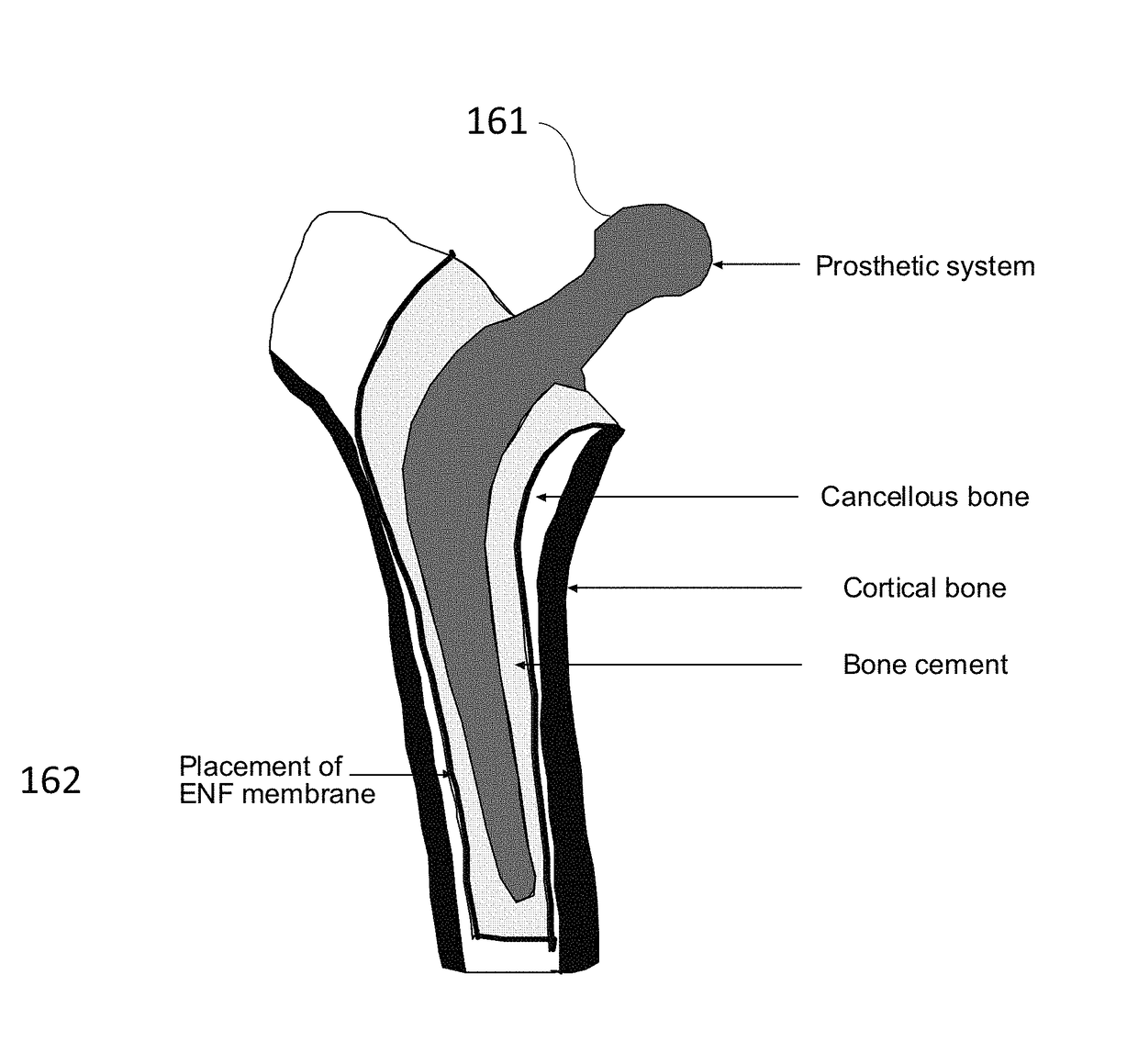
Figure 1 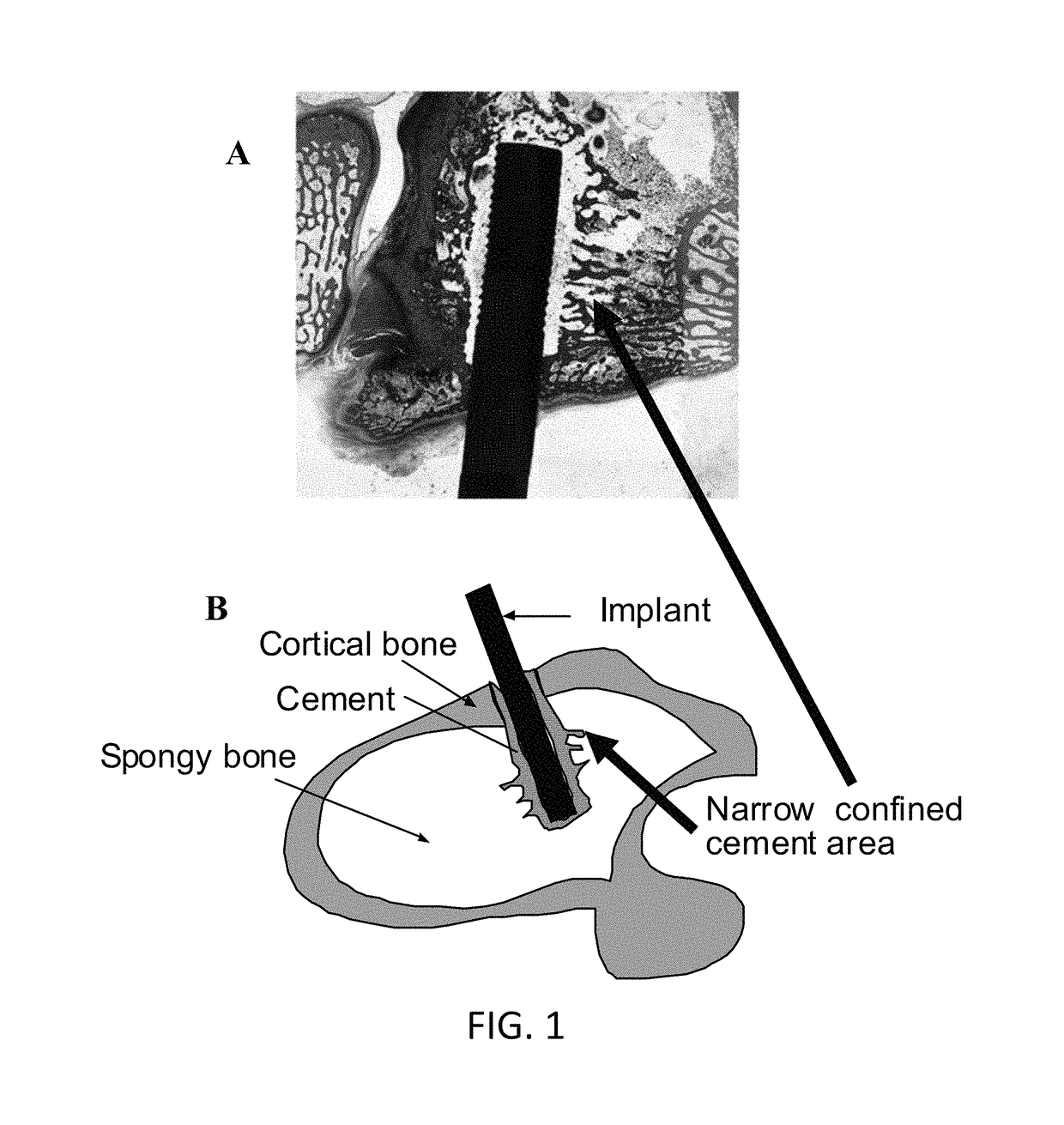
Figure 2 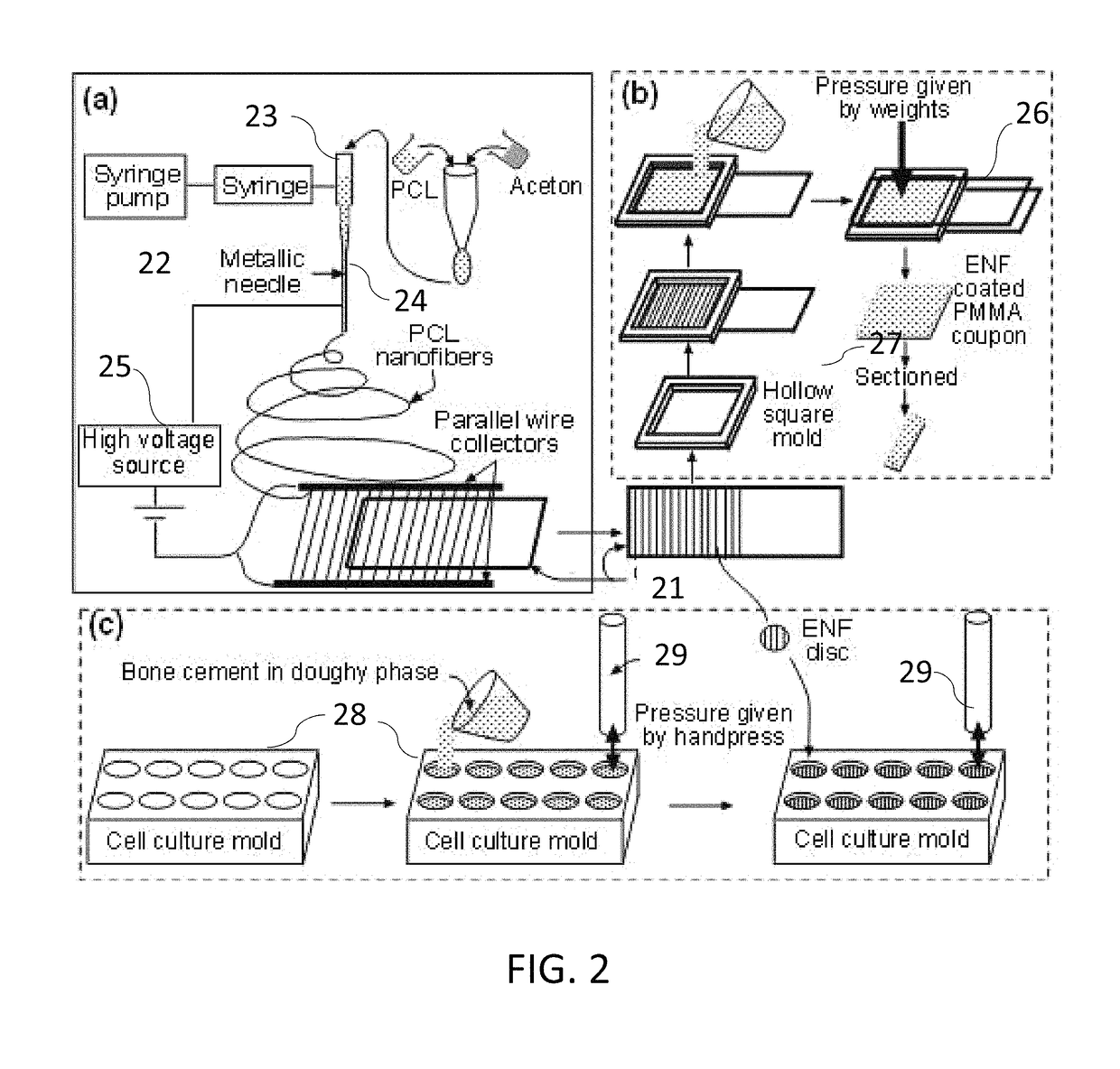
Figure 3
Abstract
Description
CROSS REFERENCES TO RELATED APPLICATIONS
[0001] This application claims the benefit of U.S. Provisional Patent Application No. 62 / 373,786 filed on Aug. 11, 2016 in the name of Morshed Khandaker and Shahram Riahinezhad, which is expressly incorporated herein by reference in its entirety.STATEMENT AS TO RIGHTS TO INVENTIONS MADE UNDER FEDERALLY SPONSORED RESEARCH OR DEVELOPMENT
[0002] This invention was made with government support under 8P20GM103447 awarded by the United States National Institutes of Health. The government has certain rights in the invention.FIELD OF THE INVENTION
[0003] The present invention generally relates to the field of prosthetics. More specifically, the invention relates to attachment of orthopedic implants to bone using orthopedic bone cement. Cemented fixation of titanium (Ti) with bone are commonly used in orthopedic surgeries. Cemented fixation, mainly used for osteoporotic bone, requires bone cement to hold the Ti based prostheses in place. Since implant loose...
Examples
Embodiment Construction
[0032]The present invention provides a novel cementing technique to solve the debonding problem and improve the mechanical stability and osseointegration of cemented implant with bone. Implants can be coated with a functional coating to increase the osteoinductive properties, and thereby to improve osseointegration of an implant. Methods (incorporated herein by reference in their entirety) disclosed by the present inventor in U.S. Pat. No. 9,359,694 and co-pending U.S. application Ser. Nos. 15 / 439,650 and 15 / 467,652 provide a set of steps (e.g. grooving, plasma oxidizing) by which a nanofiber membrane, composed of Collagen glycosaminoglycan (CG) and Polycaprolecton (PCL) electrospun nanofiber (ENF) can be coated on Ti, a widely-used orthopedic and orthodontic implant material. Both in vitro and in vivo evidence indicated that machine sawing of microgrooves on titanium (Ti) implants and coating the microgrooves with collagen-poly-ε-caprolactone nanofiber matrix (CG-PCL NFM) significa...