
Intravenous formulation with water-soluble cocrystals of acetylsalicylic acid and theanine
a technology of acetylsalicylic acid and water-soluble cocrystals, applied in the direction of carboxylic acid amide separation/purification, drug compositions, biocide, etc., can solve the problems of limited intravenous use of intravenous aspirin, 75% of the nation's acute care hospitals are not capable of performing life-saving pci, etc., to achieve enhanced stability and bioactivity
Patent Information
- Authority / Receiving Office
- US · United States
- Patent Type
- Patents(United States)
- Current Assignee / Owner
- Publication Date
- 2012-05-08
Smart Images
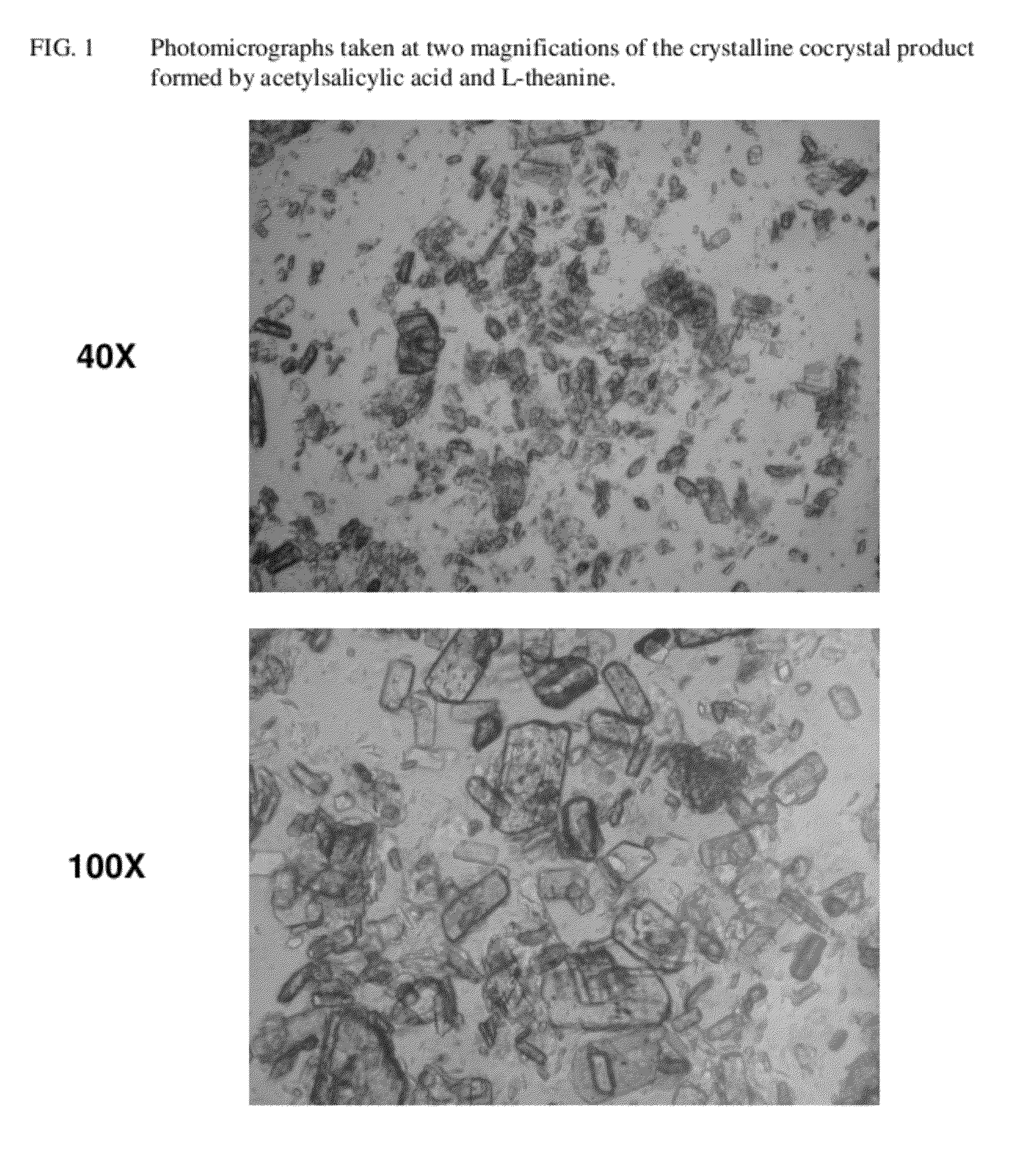
Figure 1 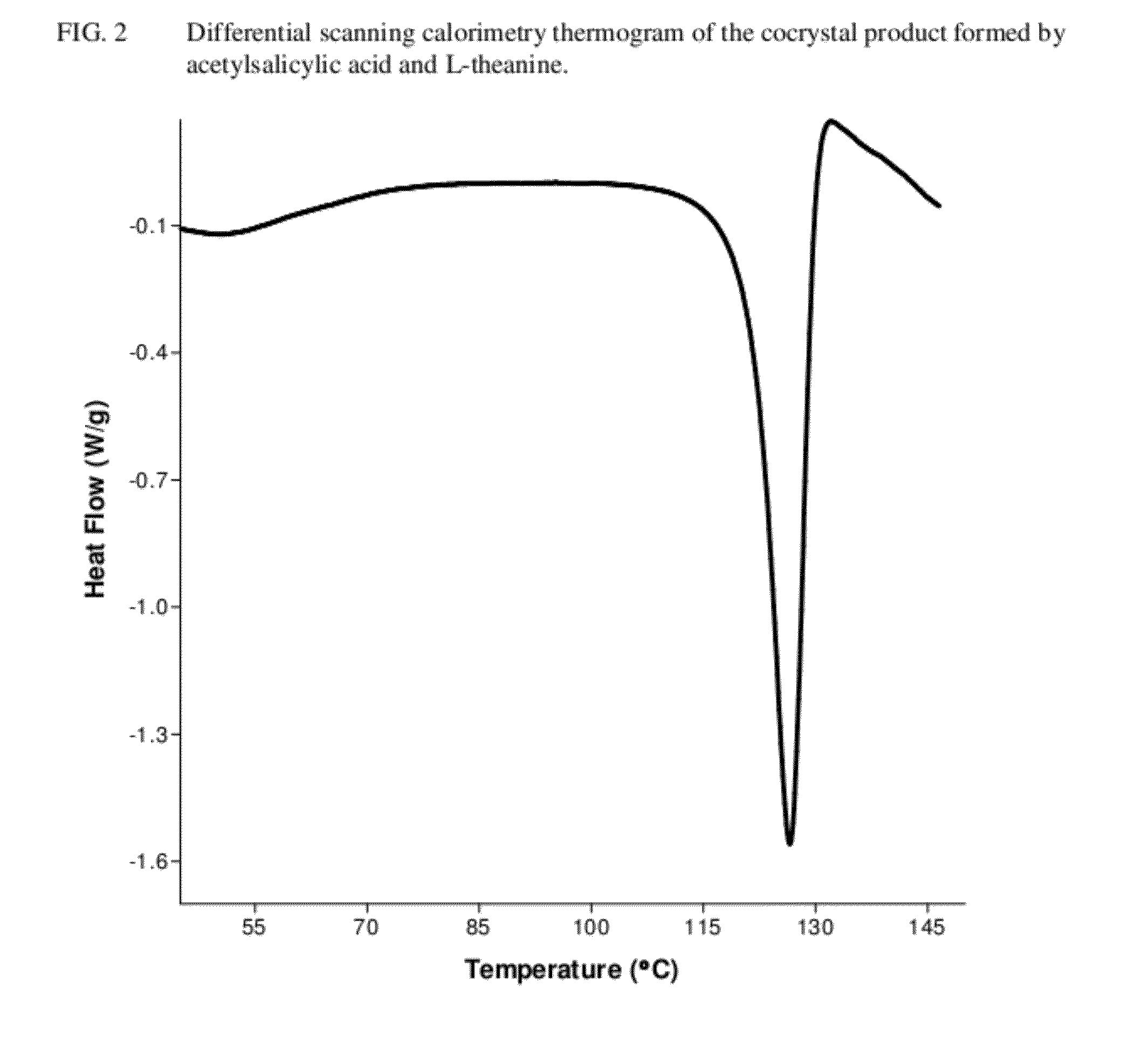
Figure 2 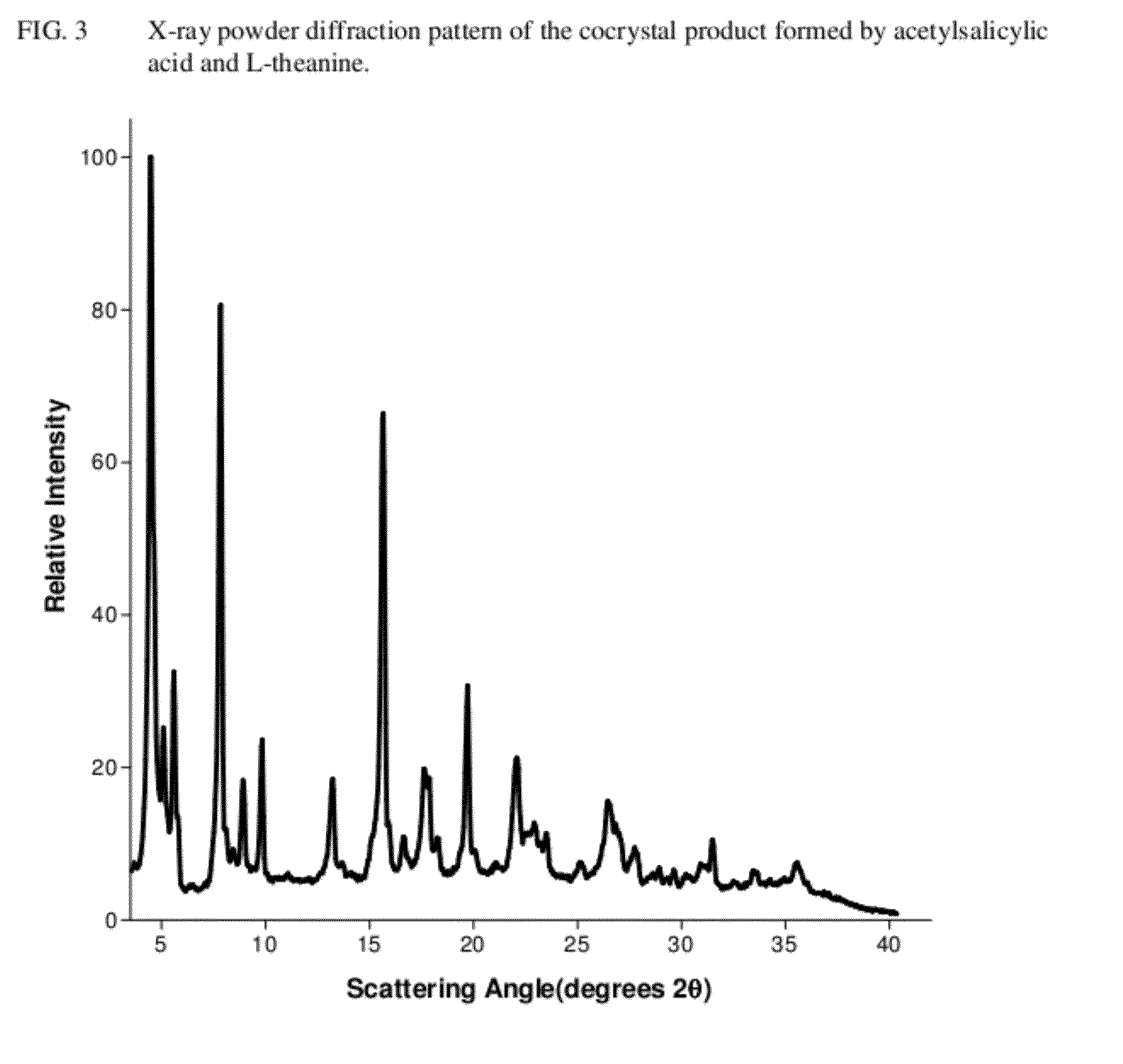
Figure 3
Abstract
Description
FIELD OF THE INVENTION
[0001] The present invention relates to a novel method of administering acetylsalicylic acid, more specifically to a novel intravenous formulation, using a water-soluble cocrystal product of acetylsalicylic acid and theanine that has a neutral pH and provides enhanced stability and bioactivity as compared to previously known water-soluble formulations of aspirin.BACKGROUND OF THE INVENTION
[0002] Coronary artery disease is the leading cause of mortality in developed countries. In the United States, a heart attack occurs approximately every 20 seconds. Aspirin inhibition of cyclooxygenase has been shown to be beneficial in patients presenting with acute coronary syndrome and acute myocardial infarction. Researchers found that the median platelet inhibition times for chewed baby aspirin 324 mg, soluble aspirin (alka-seltzer) 325 mg, and whole compressed non-enteric coated aspirin 324 mg, were 7.5 minutes, 7.5 minutes, and 10.0 minutes, respectively. Schwertner, et a...
Examples
example 1
[0081]A cocrystal product of the present invention was prepared by weighing 352 mg of acetylsalicylic acid and 340 mg of L-theanine, and transferring the solids to an agate mortar. The solids were wetted with 500 μL of methanol, and hand-ground with a pestle until a dried crystalline mass was obtained. This product was characterized using differential scanning calorimetry (“DSC;” see FIG. 2), x-ray powder diffraction (“XRPD;”see FIG. 3), Fourier-transform infrared spectroscopy with attenuated total reflectance sampling (“FTIR-ATR;” see FIG. 4), and Raman spectroscopy with diffuse reflectance sampling (“RAM-DR;” see FIG. 5). In addition, 117 mg of the cocrystal product was found to dissolve in 13 mL of water, making the aqueous solubility approximately 9 mg / mL.
example 2
[0082]The aqueous solution formed in Example 1 was poured in an evaporating dish, and allowed to dry completely. The DSC thermogram of the solid product is reflected in FIG. 2, the XRPD pattern is reflected in FIG. 3, the FTIR-ATR spectrum is reflected in FIG. 4, and the RAM-DR spectrum is reflected in FIG. 5.
example 3
[0083]1.721 g of acetylsalicylic acid and 1.667 g of L-theanine were weighed and transferred into a large glass mortar. The solids were wetted with 20 mL of methanol, and hand-ground with a pestle until a dried crystalline mass was obtained. The DSC thermogram of the solid product is reflected in FIG. 2, the XRPD pattern is reflected in FIG. 3, the FTIR-ATR spectrum is reflected in FIG. 4, and the RAM-DR spectrum is reflected in FIG. 5. 752 mg of the cocrystal product was found to dissolve in 80 mL of water, making the aqueous solubility 9.4 mg / mL.
[0084]Aliquots of the aqueous solution were separately diluted in 1:1 v / v ratios with (a) pH 7.4 tromethamine buffer, (b) 0.9% saline solution, (c) 7.5% sodium bicarbonate solution, (d) 5% dextrose for injection, and (e) 50% dextrose for injection. The solutions were observed to remain physically unchanged over a six-day period, indicating compatibility of the cocrystal product with each of the infusion solutions.