
Rapid method of pattern recognition, machine learning, and automated genotype classification through correlation analysis of dynamic signals
a dynamic signal and correlation analysis technology, applied in the field of nucleic acid analysis and the identification of genotypes, can solve the problem that the level of temperature resolution is difficult to achieve in visual inspection, and achieve the effect of minimizing the separation between dynamic profiles and maximizing separation
Patent Information
- Authority / Receiving Office
- US · United States
- Patent Type
- Patents(United States)
- Current Assignee / Owner
- Publication Date
- 2013-04-02
- Estimated Expiration
- Not applicable · inactive patent
Smart Images
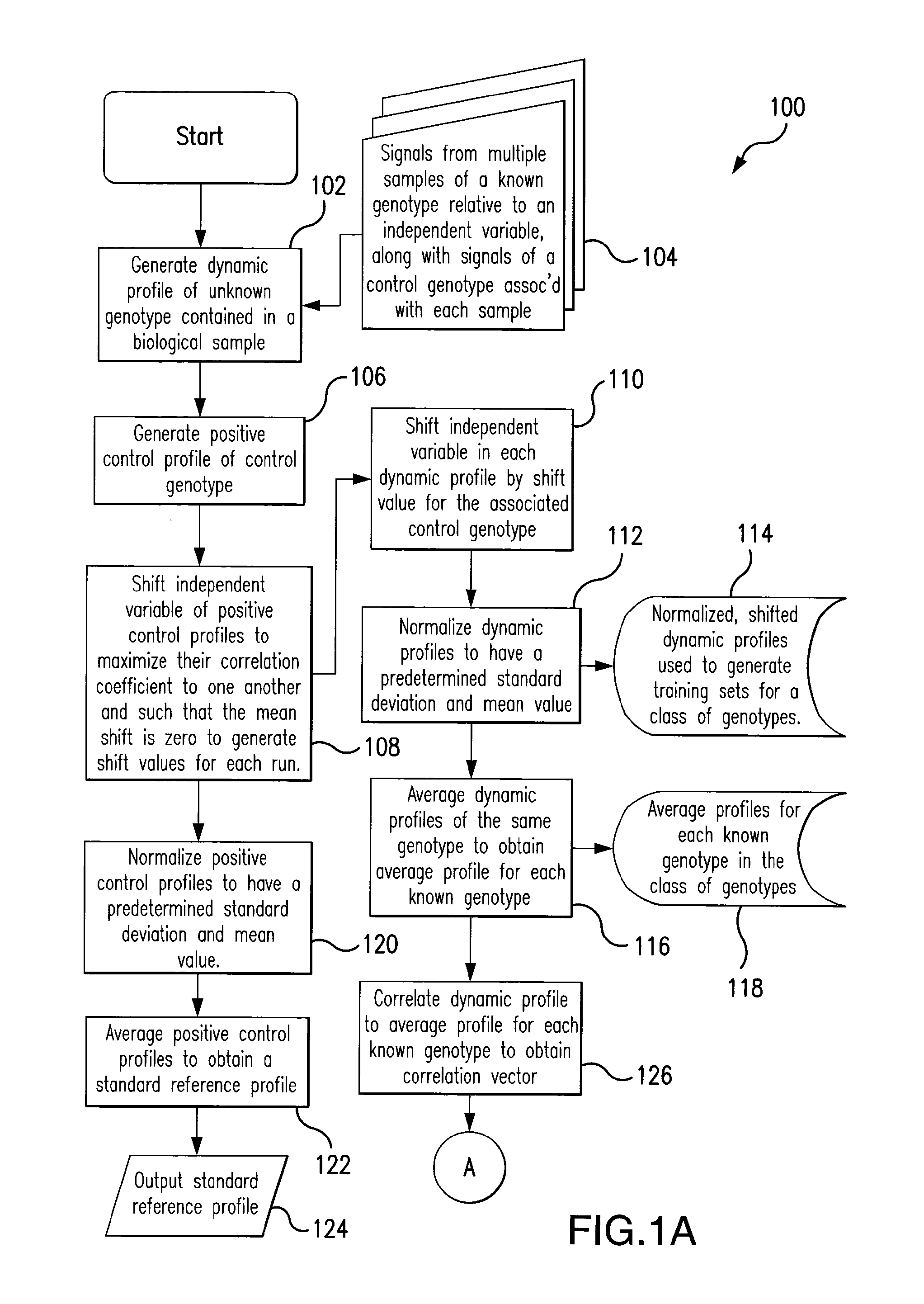
Figure 1 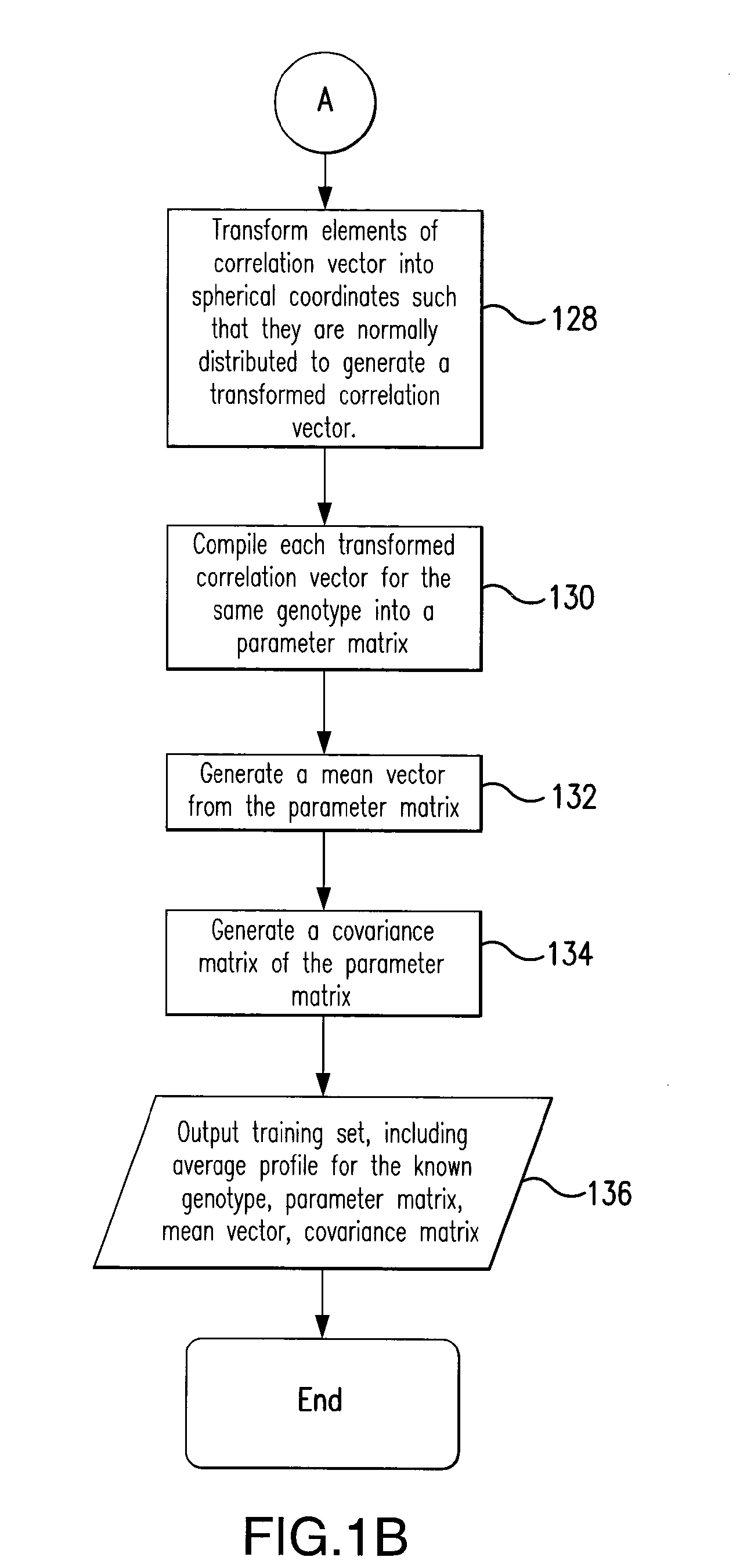
Figure 2 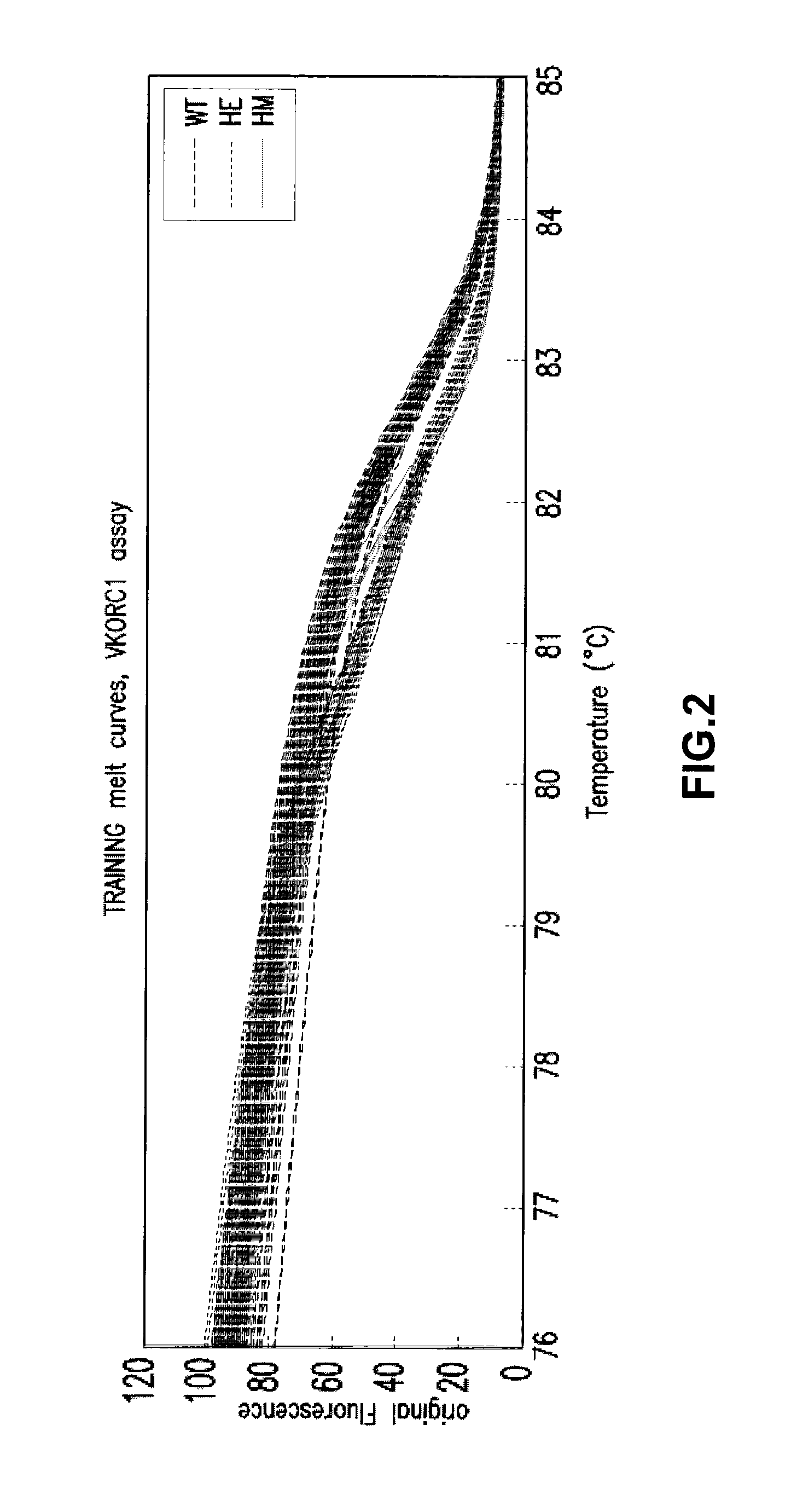
Figure 3
Abstract
Description
CROSS-REFERENCE TO RELATED APPLICATIONS
[0001] This application claims the benefit of U.S. Patent Application Ser. No. 61 / 168,649, filed on Apr. 13, 2009, which is incorporated herein by reference in its entirety.BACKGROUND
[0002] 1. Field of the Invention
[0003] The present invention relates to methods for the analysis of nucleic acids and the identification of genotypes present in biological samples. More specifically, embodiments of the present invention relate to automated methods for genotyping and analyzing the sequences of nucleic acids.
[0004] 2. Description of Related Art
[0005] The detection of nucleic acids is central to medicine, forensic science, industrial processing, crop and animal breeding, and many other fields. The ability to detect disease conditions (e.g., cancer), infectious organisms (e.g., HIV), genetic lineage, genetic markers, and the like, is ubiquitous technology for disease diagnosis and prognosis, marker assisted selection, correct identification of crime scene f...
Examples
example 1
[0172]Generation of Training Sets for Warfarin VKORC1 Polymorphism
[0173]Several thermal melt curves which include measurements of fluorescence at equally spaced temperature intervals for each of the Warfarin VKORC1 polymorphism genotypes were obtained by high resolution thermal melting from 50 to 95° C. at 0.5° C. per second using LC Green fluorescent dye following a 40 PCR cycle run on the Roche LC280 light cycler. These curves are shown in FIG. 2. −dF / dT was calculated for each of the generated curves by applying a Savitsky-Golay derivative filter, resulting in the curves shown in FIG. 3. A positive control thermal melt curve was obtained through high-resolution thermal melt analysis of a known sample containing the wild-type genotype of the Warfarin VKORC1 polymorphism, along with each thermal melt curve of each of the Warfarin VKORC1 polymorphism genotypes. Measurements of fluorescence for the positive control were averaged over several runs in order to generate a reference stan...
example 2
[0190]Generation of Training Sets for Coagulation Factor MTHFR677 Polymorphism.
[0191]Several thermal melt curves which include measurements of fluorescence at equally spaced temperature intervals for each of the Coagulation Factor MTHFR677 polymorphism genotypes were obtained by high resolution thermal melting from 50 to 95° C. at 0.5° C. per second using LC Green fluorescent dye following a 40 PCR cycle run on the Roche LC480 light cycler. These curves are shown in FIG. 19. −dF / dT was calculated for each of the generated curves by applying a Savitsky-Golay Filter resulting in the curves shown in FIG. 20. The curves are temperature shifted and normalized in the same manner as was done for the thermal melt curves for the Warfarin VKORC1 polymorphism; these shifted and normalized curves are shown in FIG. 21. The Coagulation Factor MTHFR677 polymorphism has three possible genotypes: wild-type (WT), heterozygote (HE), and homozygous (HM). Average thermal melt curves for these genotypes ...