Automatic projection of landmarks to generate additional correspondences in image registration

An automatically generated, in-image technique, used in the field of medical imaging systems, that addresses the lack of acceptable densities for matching landmarks
CN103548054BInactive Publication Date: 2016-05-18KONINKLJIJKE PHILIPS NV +1

Patent Information

Authority / Receiving Office
CN · China
Patent Type
Patents(China)
Current Assignee / Owner
KONINKLJIJKE PHILIPS NV
Publication Date
2016-05-18
Estimated Expiration
Not applicable · inactive patent

Smart Images

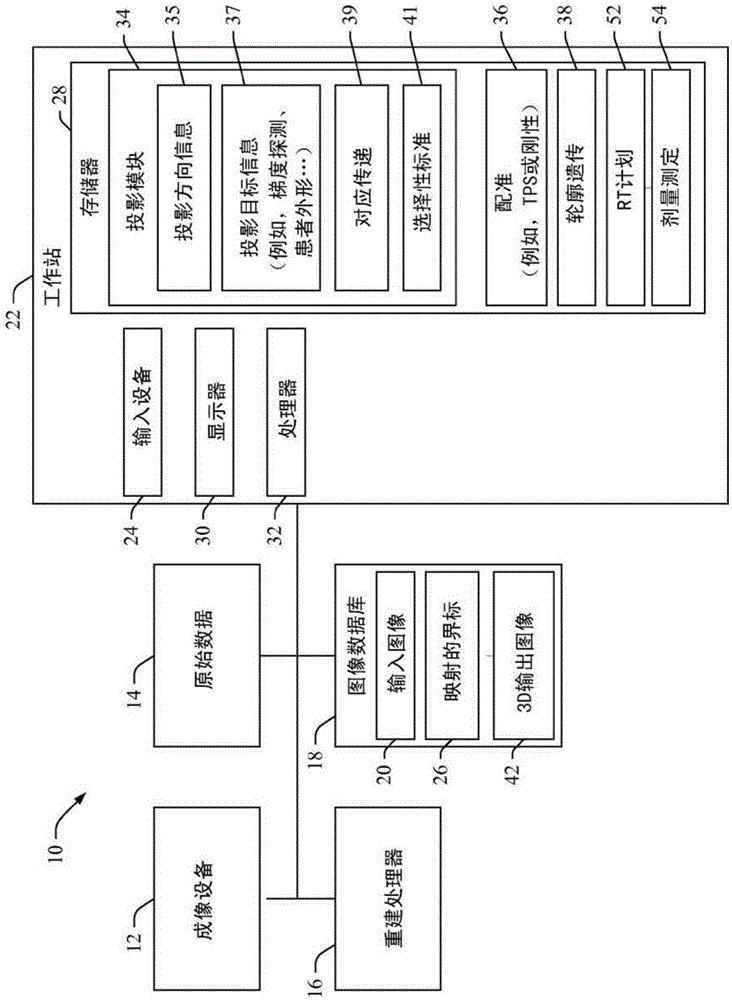
  • Figure 1
    Figure 1
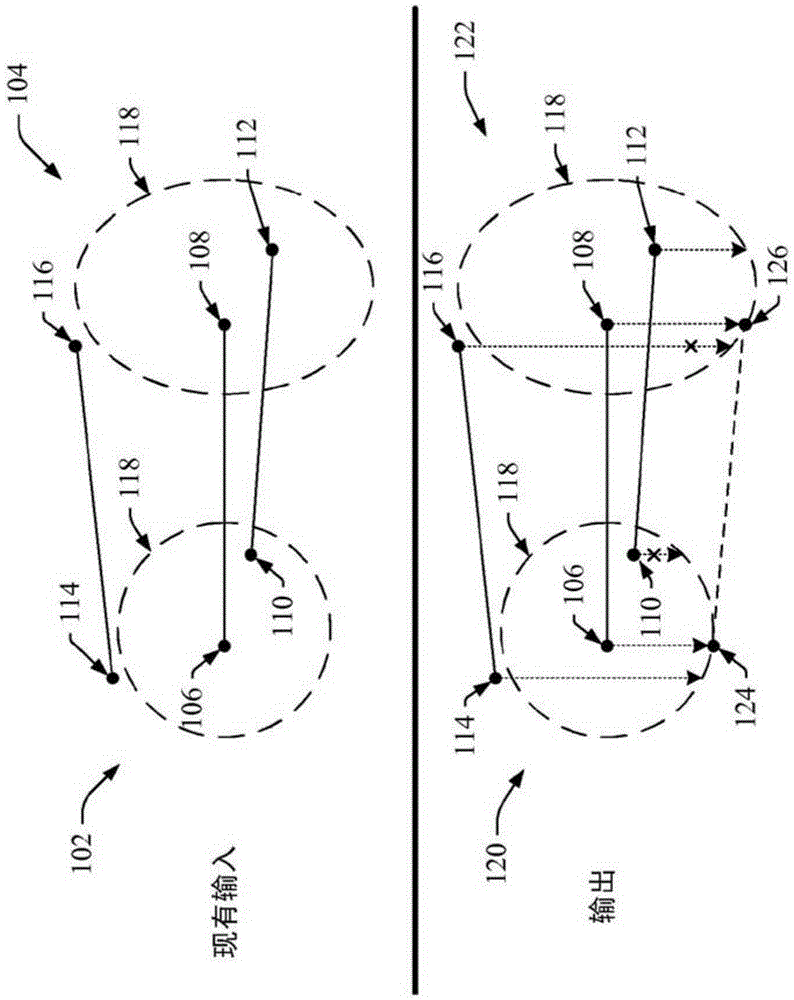
  • Figure 2
    Figure 2
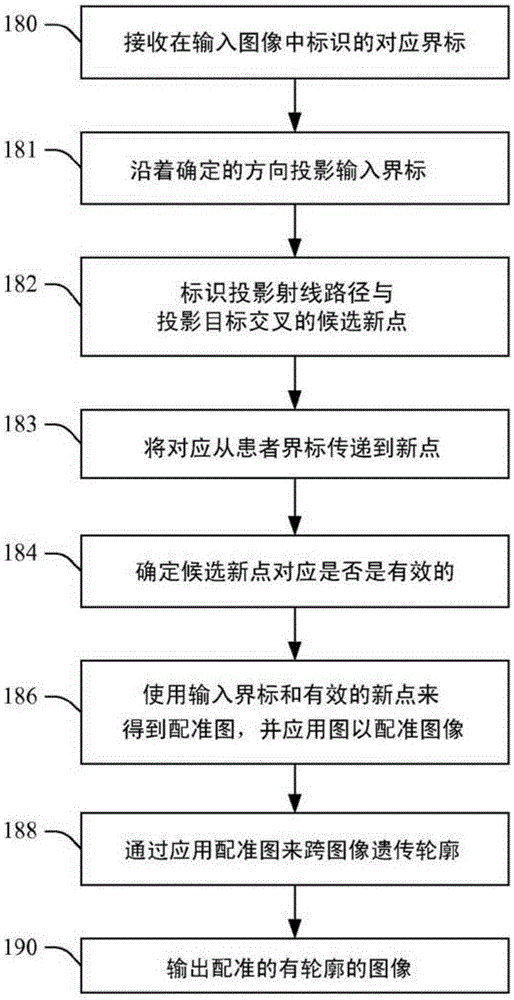
  • Figure 3
    Figure 3
Patent Text Reader

Abstract

When registering multiple multidimensional images based on landmarks, the system includes the distribution and density of points in the correspondence across the images that are important to the accuracy and reliability of the resulting registration transformation. A projection of the input corresponding point landmarks is performed to automatically generate additional point correspondences. The imported existing landmarks may have been manually or automatically located in the imported plurality of images. Projection is performed from each source landmark along one or more determined projection directions onto one or more determined projection targets in each image. A projection target can be explicitly reified or defined implicitly. Candidate new points are identified where the projected ray path intersects the projected target. The correspondence between new points across the image is passed from the input landmarks from which the new points have been projected, by projection direction and / or if multiple projection directions and / or projection targets are used Projection targets for further differentiation. Subsequent registration may use all or a selected subset of all combined input landmark correspondences and correspondences between additional projected landmark points. Additional correspondences between projected landmark points help refine image registration. Such accurate, efficient and robust tools for image registration and any downstream processing such as contour genetics or image fusion are highly demanded for various medical applications such as adaptive radiotherapy.
Need to check novelty before this filing date? Find Prior Art

Description

technical field

[0001] The present application is particularly applicable to medical imaging systems. However, it will be appreciated that the described techniques may also be applicable to other diagnostic systems, other imaging scenarios, or other diagnostic techniques. Background technique

[0002] Segmentation of medical images is used in many applications such as radiotherapy (RT), where both tumors and organs at risk are delineated to retrospectively assess treatment delivery relative to plan and to enable anticipatory planning and adjustment of treatment. A large number of contouring tasks are performed manually or semi-manually and remain very labor intensive in clinical practice. One goal of adaptive RT is to respond retrospectively to detected deviations from the initial treatment plan, often due to changes in the patient's anatomy during the course of treatment. Such deviations can be detected from subsequent acquisitions of additional images, and can be compens...

Claims

the structure of the environmentally friendly knitted fabric provided by the present invention; figure 2 Flow chart of the yarn wrapping machine for environmentally friendly knitted fabrics and storage devices; image 3 Is the parameter map of the yarn covering machine
Login to View More