
Propranolol hydrochloride lipidosome gel and preparation method thereof
A propranolol hydrochloride lipid and a technology of propranolol hydrochloride are applied in the field of propranolol hydrochloride liposome gel and preparation thereof, and can solve the problem that liposomes cannot be used alone on the skin surface and the like, and achieve The effect of improving administration time, good application prospect and improving stability
- Summary
- Abstract
- Description
- Claims
- Application Information
AI Technical Summary
Problems solved by technology
Method used
Image

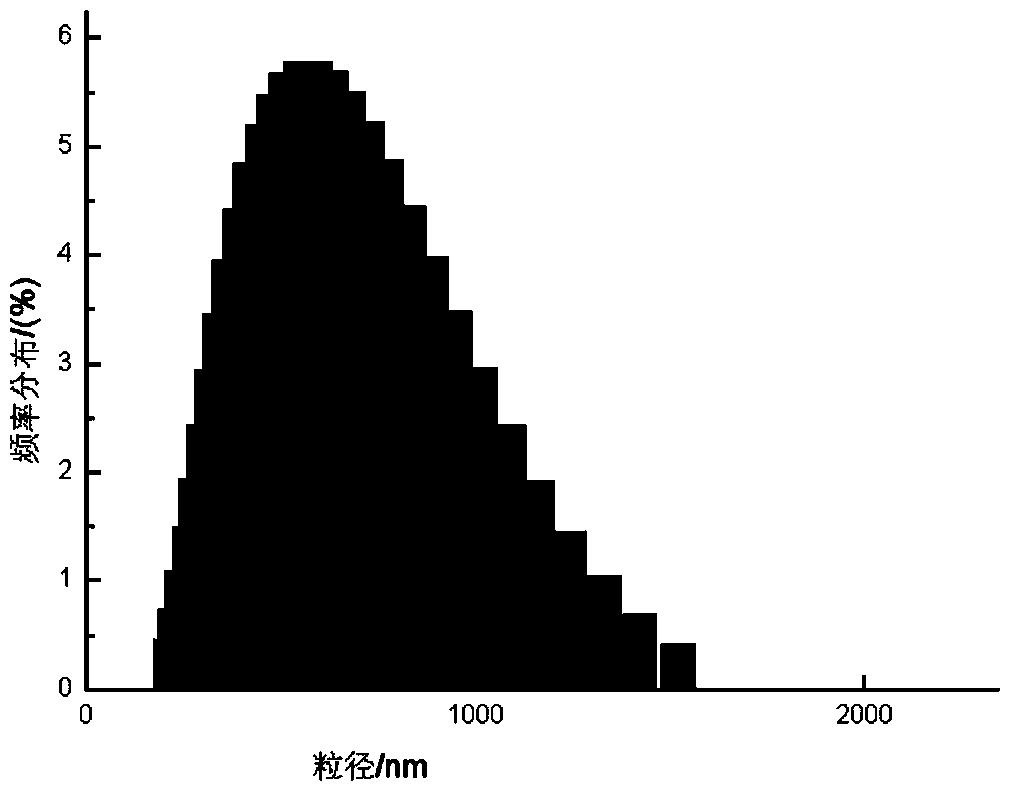
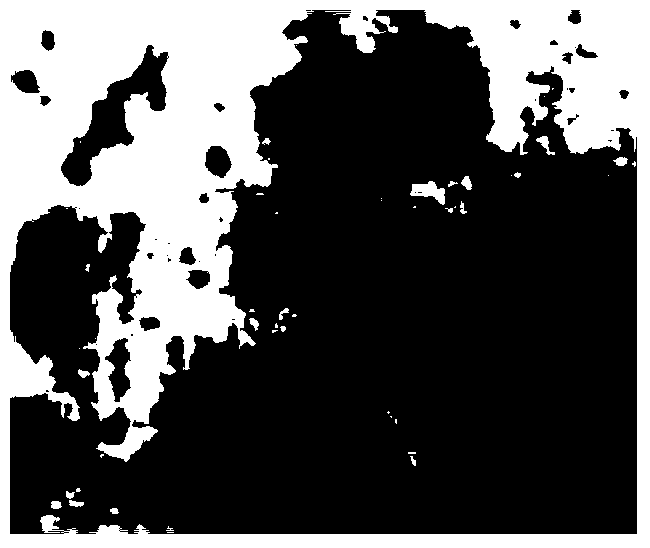
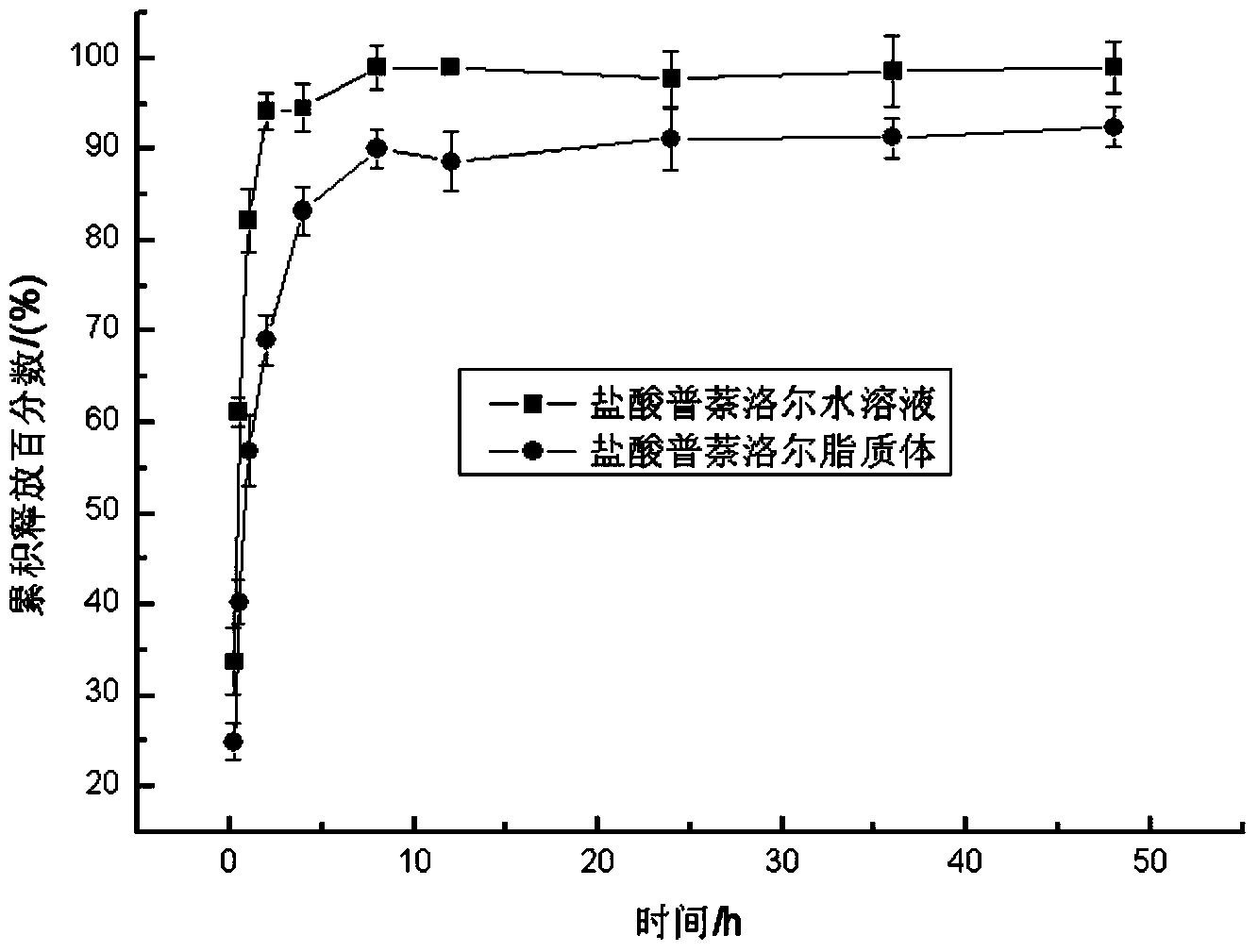
Examples
Embodiment 1
[0026] Weigh 30 mg of phosphatidylethanolamine and 5 mg of cholesterol, dissolve in 10 ml of organic solvent chloroform, and evaporate the mixed solution to dryness under reduced pressure until a uniform lipid film is formed. Add the lipid film to 20ml of propranolol hydrochloride solution with pH=7.4 (drug concentration is 0.75mg / ml, prepared by adding propranolol hydrochloride to PBS buffer with pH7.4), dissolve, 60 Hydrate in a water bath for 60 min to obtain propranolol hydrochloride liposomes.
[0027] Weigh 500 mg of carbomer into a beaker, add a certain amount of distilled water to make the gel concentration 2% (mass percentage), stir on a magnetic stirrer for 3 hours to make the gel swell evenly, and then place it in a refrigerator at 4°C overnight (12h) to fully expand it. The next day, the propranolol hydrochloride liposome was mixed with the gel, and then 620 mg of triethanolamine was added to adjust the pH to 7 to obtain the propranolol hydrochloride liposome gel....
Embodiment 2
[0029] Weigh 30 mg of phosphatidylethanolamine and 10 mg of cholesterol, dissolve in 10 ml of organic solvent chloroform, and evaporate the mixed solution to dryness under reduced pressure until a uniform lipid film is formed. Add the lipid film to 20ml of propranolol hydrochloride solution (drug concentration: 1.50mg / ml) at pH=7.4, dissolve, and hydrate for 60min in a water bath at 60°C to obtain propranolol hydrochloride liposomes.
[0030] Weigh 500 mg of carbomer into a beaker, add a certain amount of distilled water to make the gel concentration 2% (mass percentage), stir on a magnetic stirrer for 3 hours to make the gel swell evenly, and then place it in a refrigerator at 4°C overnight (12h) to fully expand it. The next day, the propranolol hydrochloride liposome was mixed with the gel, and then 665 mg of triethanolamine was added to adjust the pH to be 8 to obtain the propranolol hydrochloride liposome gel.
Embodiment 3
[0032] Weigh 60 mg of phosphatidylethanolamine and 5 mg of cholesterol, dissolve in 10 ml of organic solvent chloroform, and evaporate the mixed solution to dryness under reduced pressure until a uniform lipid film is formed. Add the lipid film to 20ml of propranolol hydrochloride solution (drug concentration: 1.50mg / ml) at pH=7.4, dissolve, and hydrate for 60min in a water bath at 60°C to obtain propranolol hydrochloride liposomes.
[0033] Weigh 500 mg of carbomer into a beaker, add a certain amount of distilled water to make the gel concentration 2% (mass percentage), stir on a magnetic stirrer for 3 hours to make the gel swell evenly, and then place it in a refrigerator at 4°C overnight (12h) to fully expand it. On the next day, the propranolol hydrochloride liposome was mixed with the gel, and then 665 mg of triethanolamine was added to adjust the pH to 7 to obtain the propranolol hydrochloride liposome gel.
PUM
| Property | Measurement | Unit |
|---|---|---|
| concentration | aaaaa | aaaaa |
| particle size | aaaaa | aaaaa |
Abstract
Description
Claims
Application Information
 Login to View More