An Adaptive Image Enhancement Method Based on Human Vision Characteristics

A technology for image enhancement and human vision, applied in image enhancement, image data processing, instruments, etc., to improve image quality and visual effects

CN103700077BActive Publication Date: 2017-01-04BEIJING INSTITUTE OF TECHNOLOGYGY
2 Cites 0 Cited by

Patent Information

Authority / Receiving Office
CN · China
Patent Type
Patents(China)
Current Assignee / Owner
Publication Date
2017-01-04

Smart Images

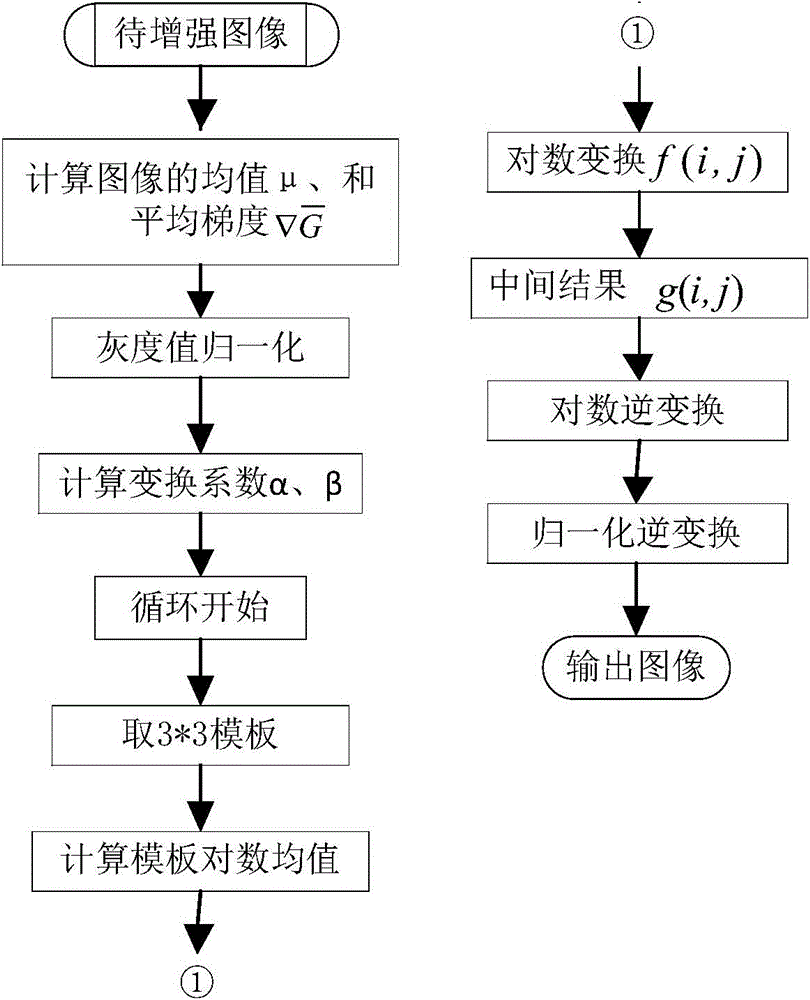
  • Figure 1
    Figure 1
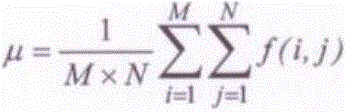
  • Figure 2
    Figure 2
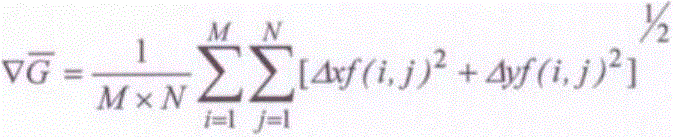
  • Figure 3
    Figure 3
Patent Text Reader

Abstract

The invention discloses a human visual characteristic-based adaptive image enhancement method. The problems of medium / low-grayscale and medium / low-resolution imaging are solved. The method comprises the following steps of 1, calculating statistical indexes of an image; 2, performing grayscale value normalization complementary-transformation; 3, calculating an overall grayscale regulation coefficient alpha and an edge enhancement coefficient beta of the image; 4, calculating a mean image; 5, calculating an intermediate image; 6, performing asymmetrical inverse transformation on the intermediate image obtained in the step 5 by taking e as a power base; 7, performing grayscale normalization inverse transformation on an asymmetrically inversely transformed image obtained in the step 6 to obtain an enhanced image to implement the adaptive image enhancement method.
Need to check novelty before this filing date? Find Prior Art

Description

technical field

[0001] The invention belongs to the technical field of image enhancement, and relates to an adaptive image enhancement method based on the visual characteristics of human eyes. Background technique

[0002] Degraded or degraded images usually have deficiencies such as blurred edges, poor local or overall contrast to varying degrees, making people unsatisfactory to observe, or reducing or even causing errors in the information extracted by machines. Therefore, the degraded image must be enhanced to improve the visual effect of the image. Among the degraded images, especially low-to-medium grayscale and low-to-medium resolution images are the most common, a robust and easy-to-operate enhancement algorithm is needed to improve the image quality.

[0003] In the field of image enhancement, many algorithms have been proposed, and there are two common ones: global information enhancement and local information enhancement. The most common global information enhanc...

Examples

Embodiment Construction

[0019] The present invention will be described in detail below with reference to the accompanying drawings and examples.

[0020] According to the characteristics of the image enhancement algorithm, the present invention specifically:

[0021] (1) Select the gray scale interval that is most suitable for human observation. The present invention first analyzes from the perspectives of visual neurology and visual psychology, combined with the experiments of visual neurology, it is determined that the gray scale interval of 60-100 is the most suitable gray scale interval for human eyes to observe. This interval is the gray scale of human eyes. Highest resolution and contrast sensitivity. The subsequent enhancement step is to adjust the overall grayscale of the entire image to the entire interval.

[0022] (2) Adaptive selection of adjustment coefficients: first normalize the image grayscale to remove the influence of light, and then calculate the grayscale mean μ and average gra...