Method and apparatus for regulating and controlling TCP bidirectional concurrent transmission

A control device and transmission rate technology, applied in the field of communication, can solve the problems affecting the timely transmission of downlink data and the decrease of downlink data flow, so as to ensure timely transmission, improve work efficiency, and increase transmission traffic.

CN103780336AActive Publication Date: 2014-05-07ZTE CORP
6 Cites 0 Cited by

Patent Information

Authority / Receiving Office
CN · China
Current Assignee / Owner
Publication Date
2014-05-07

Smart Images

  • Figure 1
    Figure 1
  • Figure 2
    Figure 2
  • Figure 3
    Figure 3
Patent Text Reader

Abstract

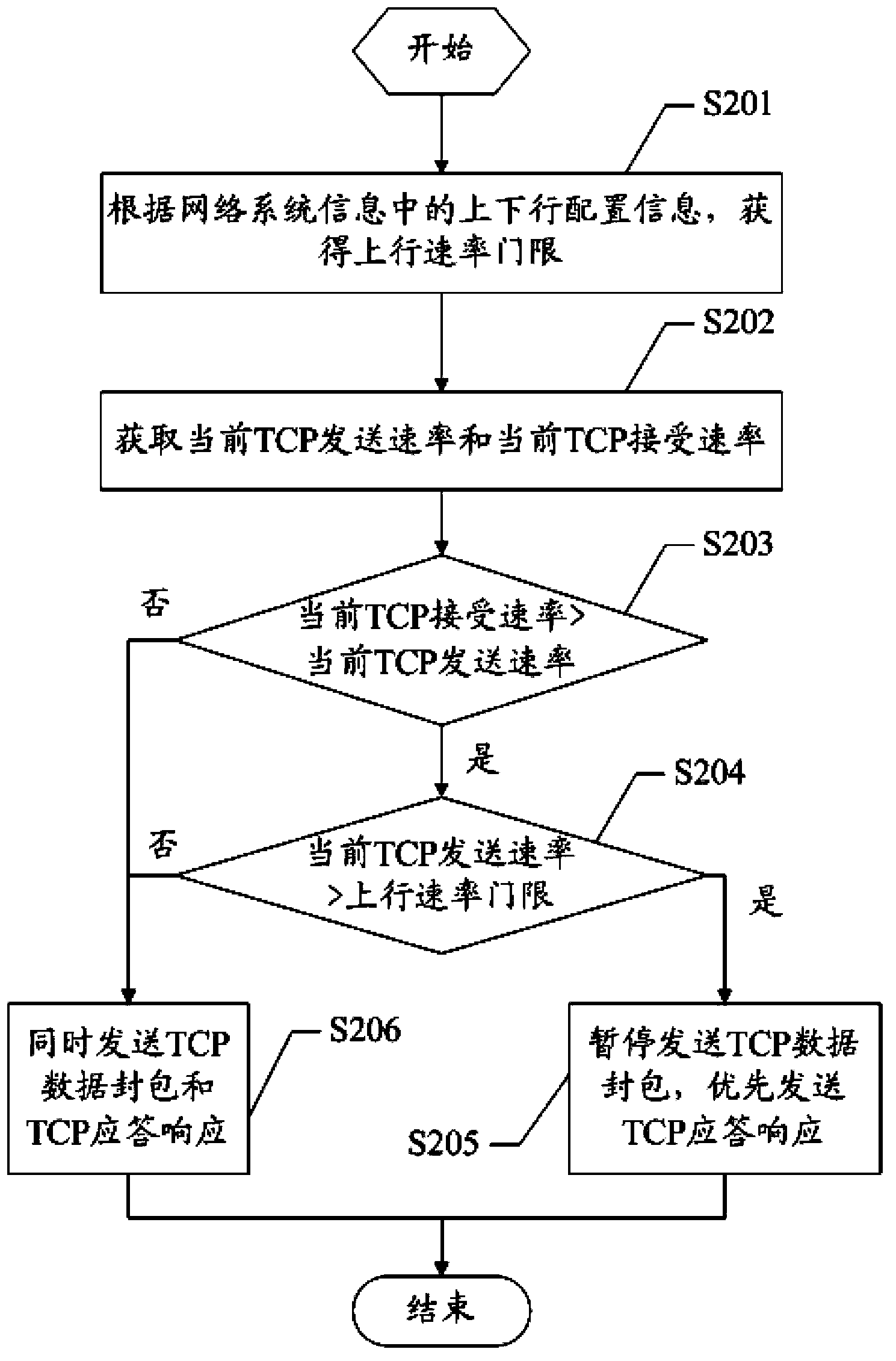
The invention discloses a method and apparatus for regulating and controlling TCP bidirectional concurrent transmission. The method comprises: acquiring current TCP sending rate and current TCP receiving rate; determining whether the current TCP receiving rate is more than the current TCP sending rate; determining whether the current TCP sending rate is more than an uplink rate threshold value if the current TCP receiving rate is more than the current TCP sending rate; and stopping sending TCP data packets and preferentially sending TCP answer response if the current TCP sending rate is more than the uplink rate threshold value. Threshold data is obtained by means of uplink and downlink configuration information broadcasted in network system information and is acquired easily, conveniently, and rapidly so as to be beneficial to increase in the work efficiency of whole transmission regulation and control. Network transmission flow resources are most distributed to TCP downlink data so as to guarantee the TCP downlink data to be sent timely, increase transmission flow when TCP bidirectional concurrent transmission occurs, and utilize network resources to the utmost extent.
Need to check novelty before this filing date? Find Prior Art

Description

technical field

[0001] The invention relates to the technical field of communication, in particular to a TCP bidirectional concurrent transmission control method and device. Background technique

[0002] TCP (Transmission Control Protocol, Transmission Control Protocol) is a transmission-confirmation system. Its transmission principle is that when data is transmitted between two hosts A and B, host B sends one or more The TCP data packet is sent to host A, and then waits for the confirmation of host A; after receiving the TCP data packet, host A sends a TCP response to the received TCP data packet; after receiving the TCP response, host B continues to send subsequent TCP data packets. It can be seen from the transmission principle of TCP that the timely sending of TCP response is the guarantee for improving the traffic of TCP transmission. However, in a wireless network environment, according to service characteristics, the uplink and downlink traffic is asymmetrical, and ...

Examples

Embodiment Construction

[0041] It should be understood that the specific embodiments described here are only used to explain the present invention, not to limit the present invention.

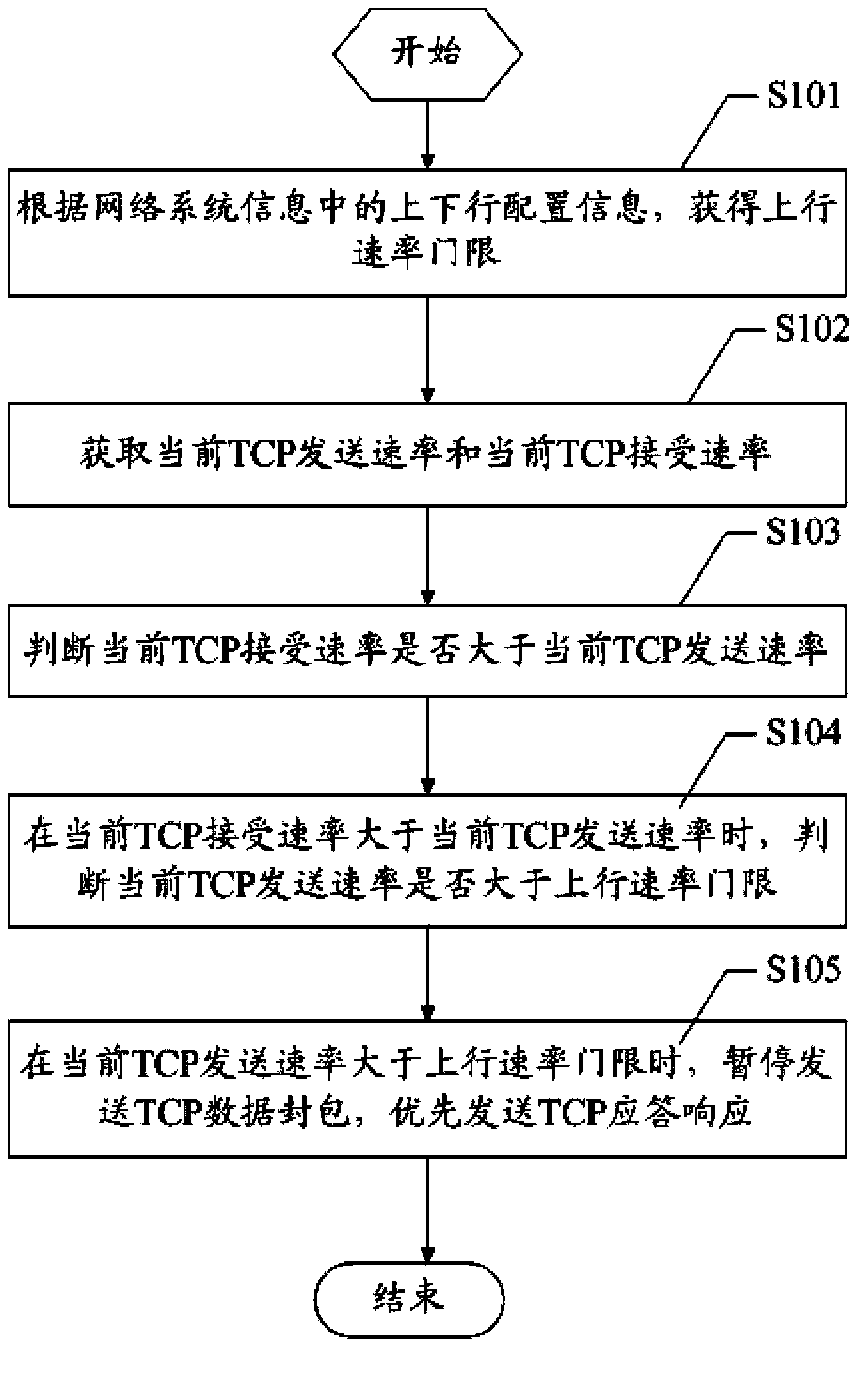
[0042] Such as figure 1 as shown, figure 1 It is a flow chart of the first embodiment of the TCP bidirectional concurrent transmission control method of the present invention. The TCP two-way concurrent transmission control method mentioned in this embodiment includes:

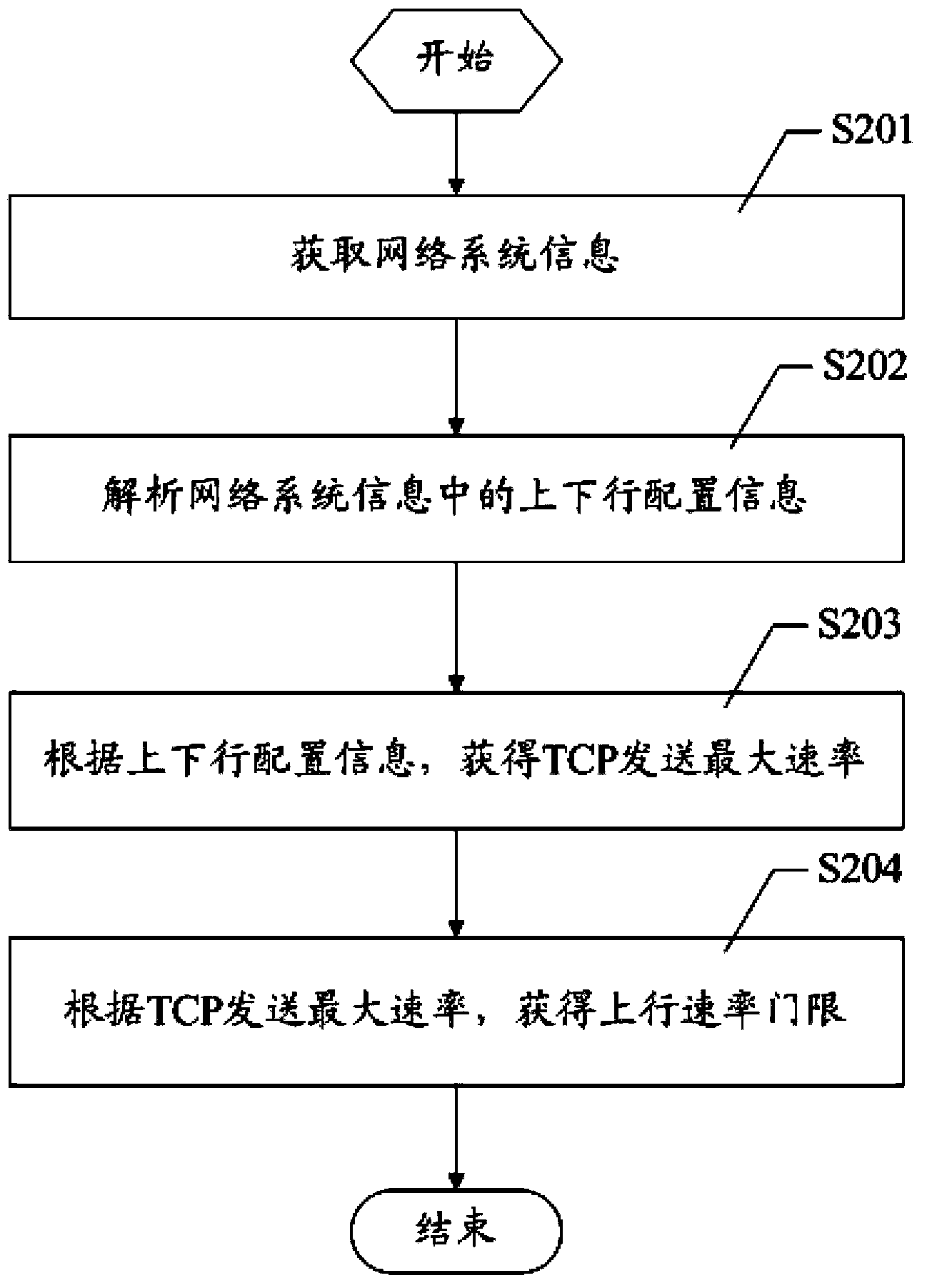
[0043] Step S101, obtaining the uplink rate threshold according to the uplink and downlink configuration information in the network system information;

[0044] In this embodiment, the uplink rate threshold is obtained by using the uplink and downlink configuration information broadcast by the network in the system information, combined with the transmission capability of the terminal. Among them, the uplink and downlink configuration information, that is, the slot ratio information, can be easily obtained by analyzing the network system informatio...