
A method for preparing heterogeneous acellular matrix and its product
A decellularized matrix and heterogeneous technology, applied in medical science, prostheses, etc., can solve problems such as unsatisfactory porosity and through-porosity, residual cell components, and brittleness, and achieve simplified residual treatment procedures, thorough decellularization, and Easy to grow effect
Active Publication Date: 2017-08-29
HEBEI AINENG BIOTECH CO LTD
View PDF4 Cites 0 Cited by
- Summary
- Abstract
- Description
- Claims
- Application Information
AI Technical Summary
Problems solved by technology
This preparation technology has the following disadvantages: 1. Excessive enzyme digestion or hypertonic salt treatment during the preparation of cell dermis will destroy the three-dimensional structure of collagen, otherwise cell components may remain and cause rejection; 2. Lack of vascular network structure leads to its lack of Blood time, reperfusion time and time without nutritional support are longer; 3. The porosity and through-porosity in the preparation of acellular matrix are not ideal, which makes it difficult for fibroblasts to adhere and migrate; 4. The commonly used cross-linking agent glutaraldehyde cross-linking Calcification, hardening and brittle phenomenon easily occur after bonding
Method used
the structure of the environmentally friendly knitted fabric provided by the present invention; figure 2 Flow chart of the yarn wrapping machine for environmentally friendly knitted fabrics and storage devices; image 3 Is the parameter map of the yarn covering machine
View moreImage
Smart Image Click on the blue labels to locate them in the text.
Smart ImageViewing Examples

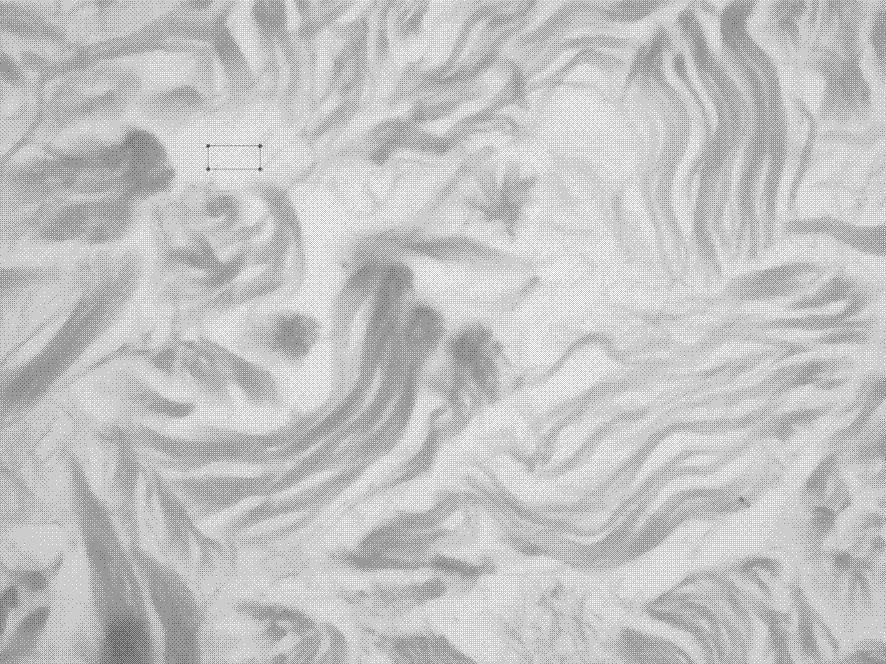
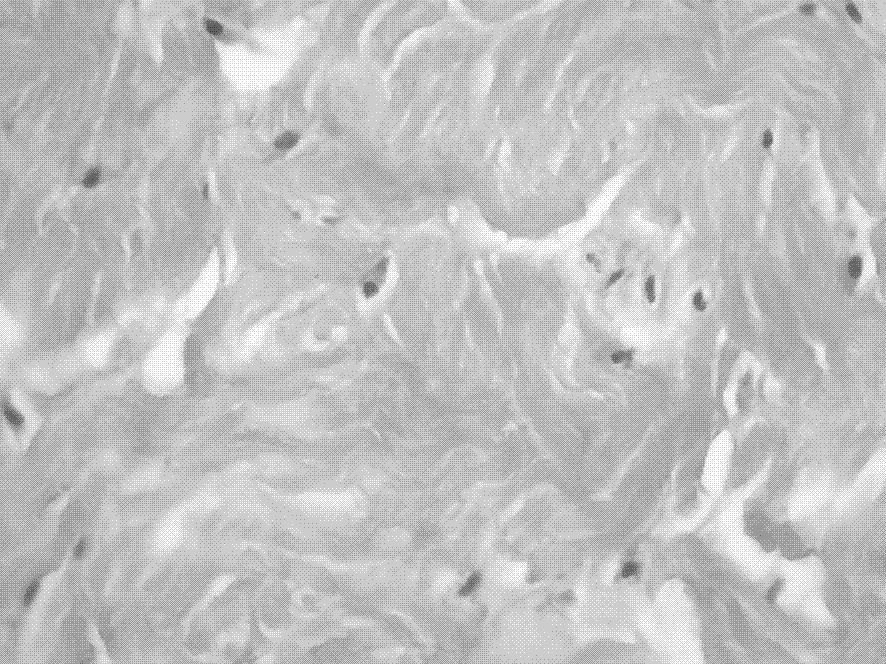
Examples
Experimental program
Comparison scheme
Effect test
Embodiment 1
Embodiment 2
Embodiment 3
the structure of the environmentally friendly knitted fabric provided by the present invention; figure 2 Flow chart of the yarn wrapping machine for environmentally friendly knitted fabrics and storage devices; image 3 Is the parameter map of the yarn covering machine
Login to View More PUM
 Login to View More
 Abstract
The invention relates to a method for preparing an acellular dermal matrix dressing. The acellular dermal matrix is finally obtained after animal skins are prepared through split skin slices, epidermis and dermis are separated, cross-linked, decellularized, freeze-dried, and virus inactivated. Advantages of the present invention: the method uses N,N-dicyclohexylcarbodiimide for short cross-linking time and high efficiency, and another cross-linking premise greatly simplifies the subsequent cross-linking agent residual treatment procedure and saves costs; In the cell process, enzymes, SDS and alkali are used to micro-regulate the acellular matrix, and freeze-drying is used to macro-regulate the acellular matrix. The decellularization is complete and the cells are easier to grow on it.
Description
A method for preparing heterogeneous acellular matrix and its product technical field The invention relates to the field of tissue engineering, in particular to a method for preparing heterogeneous acellular matrix. Background technique The purpose of the preparation of acellular dermal matrix is to remove as much as possible the highly immunogenic cell components in the skin tissue (epidermal cells, hair follicles, sebaceous glands, sweat glands, and vascular endothelial cells in the dermis, fibroblasts, etc.) Weaker extracellular matrix components and complete three-dimensional spatial structure of dermal tissue. This can not only avoid rejection and excessive immune inflammatory response after transplantation, thereby affecting the transplantation effect, but also provide a biological "template" or scaffold to guide tissue regeneration, so as to achieve the purpose of maximally repairing tissue defects. At present, the preparation methods of acellular dermal matrix ...
Claims
the structure of the environmentally friendly knitted fabric provided by the present invention; figure 2 Flow chart of the yarn wrapping machine for environmentally friendly knitted fabrics and storage devices; image 3 Is the parameter map of the yarn covering machine
Login to View More Application Information
Patent Timeline
 Login to View More
 Patent Type & AuthorityPatents(China)
IPC IPC(8): A61L27/36
Inventor宋灵杰高明侯朋丁春浦李一礼齐磊
OwnerHEBEI AINENG BIOTECH CO LTD