
Rehabilitation chair for sitting and standing
A dual-purpose, hinged technology, applied in the field of rehabilitation chairs, can solve the problems of inability to synchronously exercise hands and feet, inability to switch back and forth, and low rehabilitation efficiency, and achieve the effects of various forms, enhanced adaptability, and enhanced self-care ability.
- Summary
- Abstract
- Description
- Claims
- Application Information
AI Technical Summary
Problems solved by technology
Method used
Image

Examples
Embodiment Construction
[0030] The present invention will be further described below in conjunction with accompanying drawing.
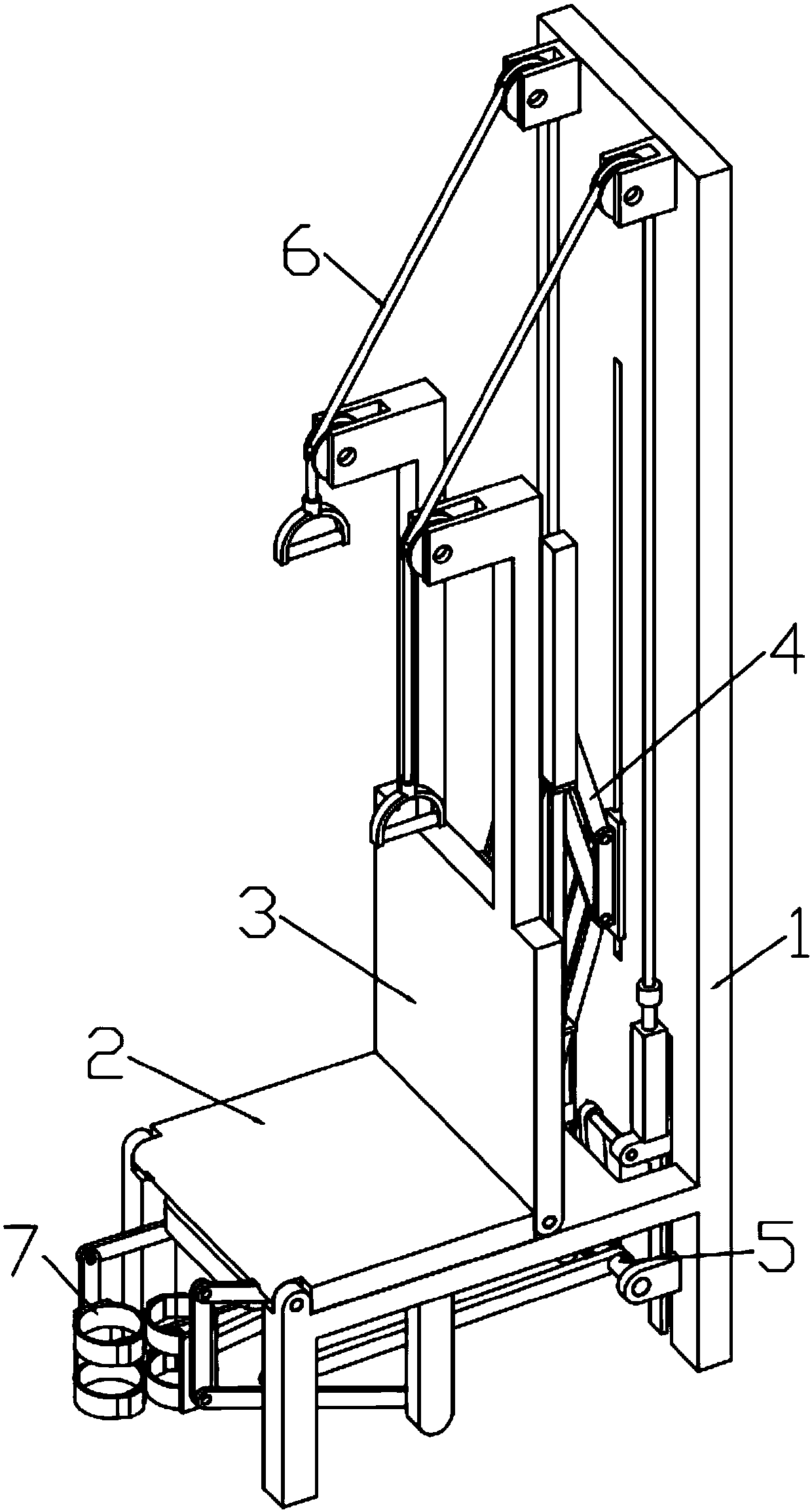
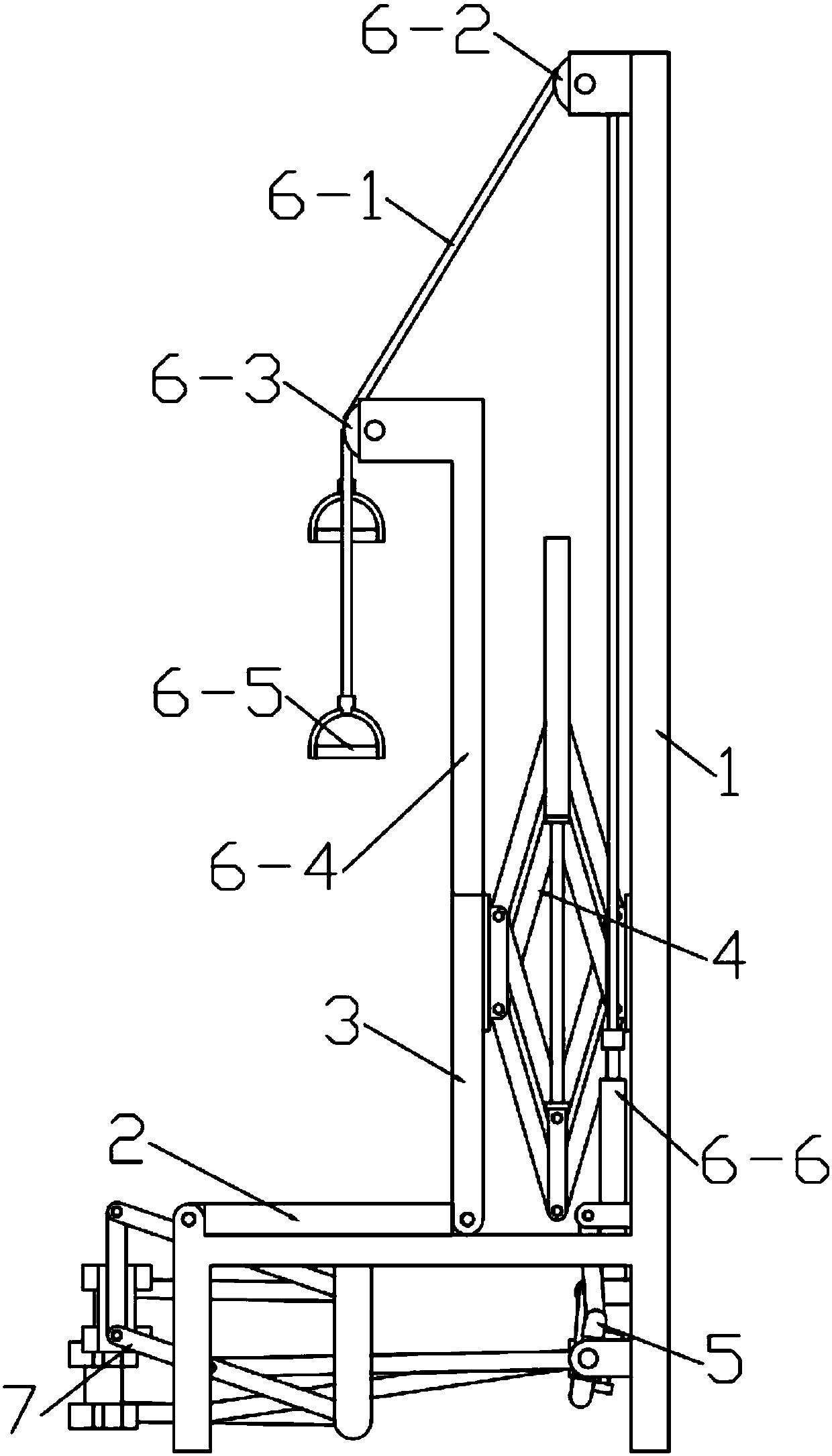
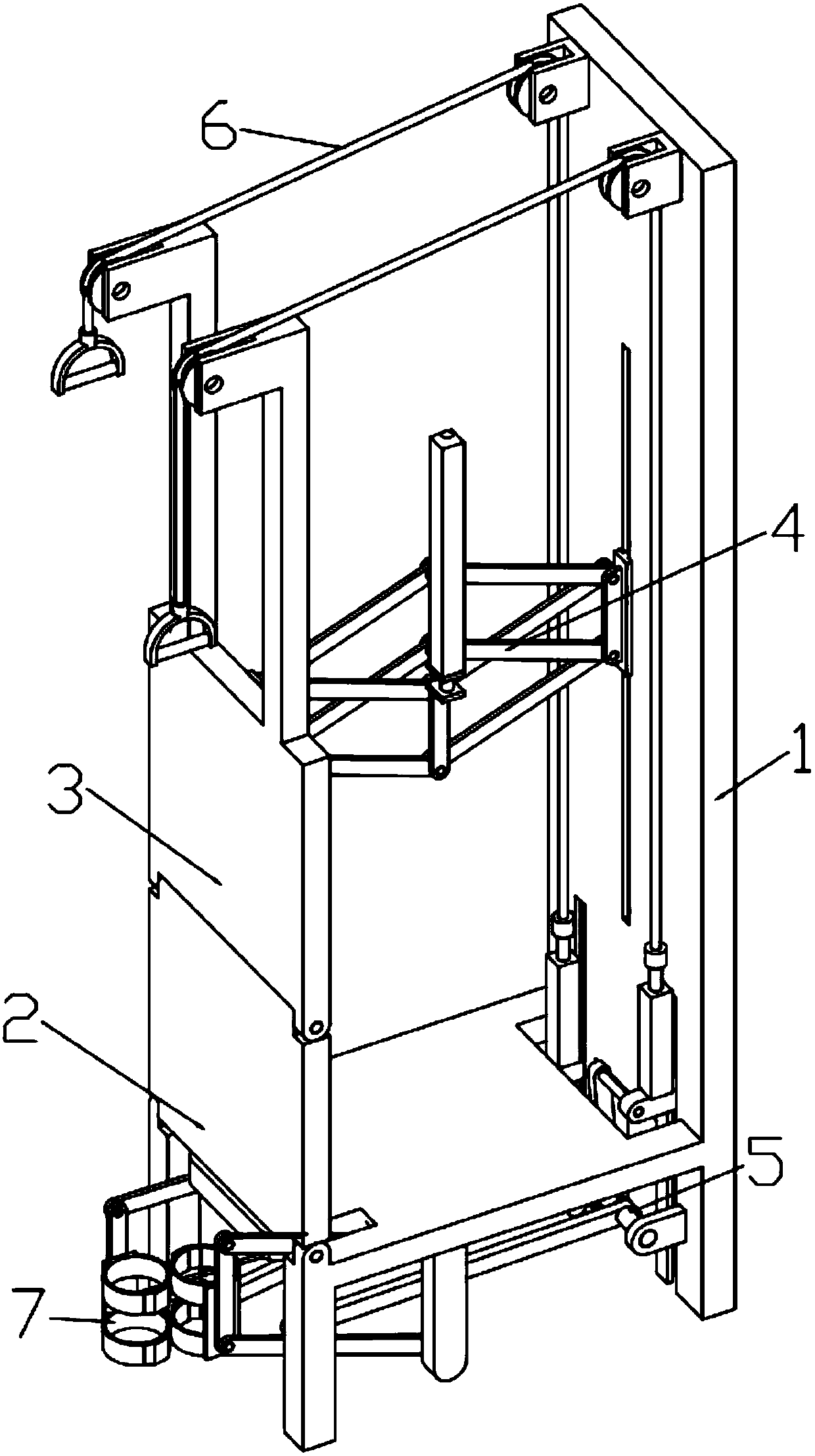
[0031] Such as figure 1 , 2 As shown in and 3, a rehabilitation chair for sitting and standing includes a chair body 1, a cushion board 2, a back board 3, a standing auxiliary mechanism 4, a driving mechanism 5, an arm stretching mechanism 6 and a leg raising mechanism 7. Chair body 1 comprises horizontal board, vertical board and supporting leg. One end of the horizontal plate is fixed to the inner surface of the vertical plate. The two corners of the bottom surface of the horizontal plate away from the end of the vertical plate are respectively fixed with the tops of the two supporting legs. The bottom ends of the two supporting legs are all set at the same height as the bottom ends of the vertical boards. One end of the cushion board 2 is hinged with the end of the top surface of the horizontal board away from the vertical board, and the other end is hinged with the ...
PUM
 Login to View More
 Abstract
Description
Claims
Application Information
 Login to View More