Supercharge Your Innovation With Domain-Expert AI Agents!

A method for identifying pore types in calcareous sandstone reservoirs

A type identification, sandstone technology, applied in the analysis of materials, the use of sound waves/ultrasonic waves/infrasonic waves to analyze solids, instruments, etc., can solve errors, samples cannot truly, and comprehensively reflect the reservoir pore type of the entire well section, and the vertical direction of the reservoir pore type and the distribution characteristics in the horizontal direction are difficult to accurately describe, etc.

Active Publication Date: 2021-05-14
CHINA PETROLEUM & CHEM CORP +1
View PDF4 Cites 0 Cited by
  • Summary
  • Abstract
  • Description
  • Claims
  • Application Information

AI Technical Summary

Problems solved by technology

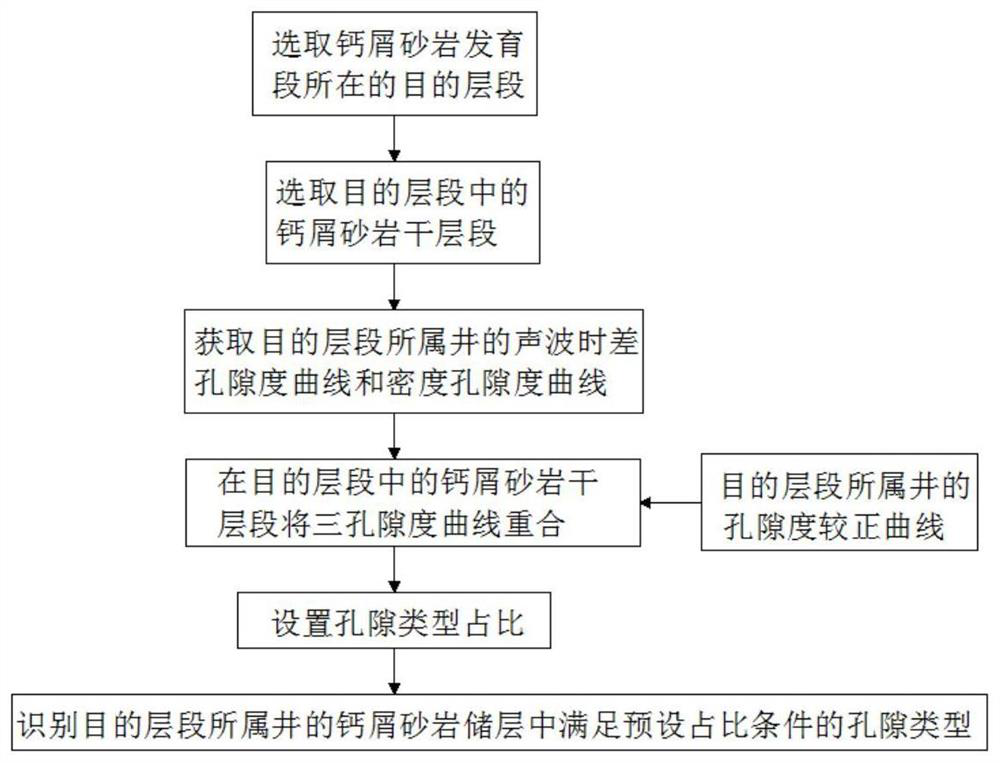
[0006] In order to solve the problem of determining the pore type of calcareous sandstone reservoirs in the above-mentioned prior art, due to the limitation of drilling and coring costs, the number of corings is small, and due to the strong heterogeneity, there is an error between the actual coring and the designed coring. The representativeness of coring is poor, and the samples taken cannot truly and comprehensively reflect the reservoir pore types of the entire well section; the number of wells is large, and the workload of cuttings selection is too large, which makes the distribution characteristics of reservoir pore types in the vertical and horizontal directions difficult to be accurate Description; and the existing method of utilizing conventional logging curves to judge the pore type is difficult to apply to the technical problem of the calcareous sandstone reservoir. The present invention provides a method for identifying the pore type of the calcareous sandstone reservoir. The specific scheme is as follows:

Method used

the structure of the environmentally friendly knitted fabric provided by the present invention; figure 2 Flow chart of the yarn wrapping machine for environmentally friendly knitted fabrics and storage devices; image 3 Is the parameter map of the yarn covering machine
View more

Image

Smart Image Click on the blue labels to locate them in the text.
Viewing Examples
Smart Image
  • A method for identifying pore types in calcareous sandstone reservoirs
  • A method for identifying pore types in calcareous sandstone reservoirs
  • A method for identifying pore types in calcareous sandstone reservoirs

Examples

Experimental program
Comparison scheme
Effect test

Embodiment Construction

[0041] The present invention will be further described below in conjunction with accompanying drawing

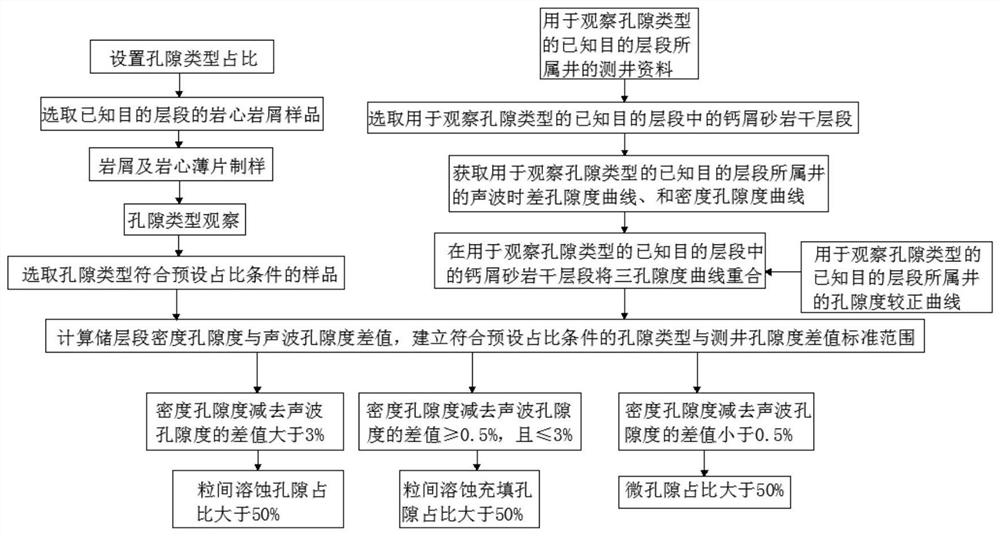
[0042] The calcareous sandstone development section includes the calcareous sandstone dry layer with no pores and the calcareous sandstone reservoir with intergranular dissolution pores, intergranular dissolution filling pores, and micropores. Intergranular dissolution pores refer to the pores formed between calcium dust particles due to dissolution, and the pore diameter of intergranular dissolution pores is usually between 0.03mm and 0.5mm. Intergranular dissolution filled pores refer to the pores formed by the intergranular dissolution pores being fully filled or partially filled by clay minerals, including the intergranular pores of clay minerals filled in the intergranular dissolution pores and some unfilled residual intergranular dissolution pores The residual intergranular dissolution pores are the pores formed by the space left after the intergranular dissolution por...

the structure of the environmentally friendly knitted fabric provided by the present invention; figure 2 Flow chart of the yarn wrapping machine for environmentally friendly knitted fabrics and storage devices; image 3 Is the parameter map of the yarn covering machine
Login to View More

PUM

PropertyMeasurementUnit
electrical resistivityaaaaaaaaaa
Login to View More

Abstract

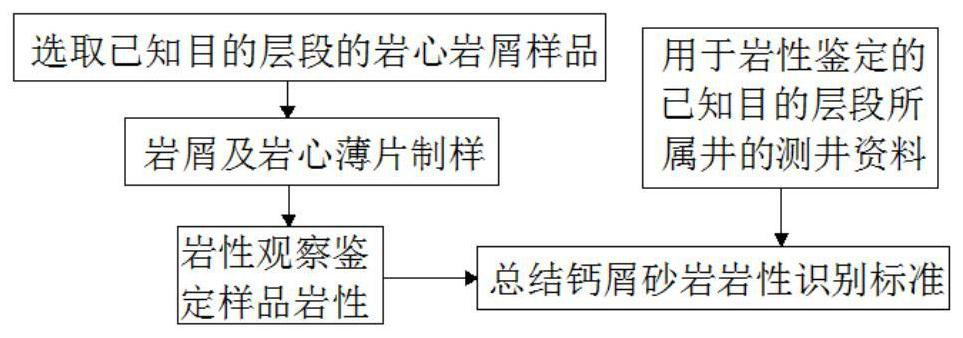
The present invention provides a method for identifying the pore type of calcareous sandstone reservoirs. By identifying the lithology of calcareous sandstone and selecting the dry layer of calcareous sandstone, the acoustic porosity curve and density porosity curve are obtained, and the porosity is compared. The positive curve corrects the density porosity curve and the acoustic porosity curve, and uses the difference between the density porosity and the acoustic porosity to identify the pore types that meet the proportion conditions in the calcareous sandstone reservoir, and the calcareous shale lithology The corresponding relationship between the recognition standard and the degree of difference and the type of pores that meet the proportion conditions is summarized through experiments. This method does not need to collect samples after the lithology identification standard and corresponding relationship are established, and it has good adaptability to calcareous sandstone reservoirs with strong heterogeneity, and overcomes the lack of data on cores and thin sections of cuttings in previous wells. Due to the large number of wells and the large amount of cuttings selected, it is difficult to identify or classify the pore types of calcareous sandstone in the whole well section, which broadens the scope of identification and is easy to grasp.

Description

technical field [0001] The invention belongs to the field of oil and gas exploration and development, in particular to a method for identifying pore types of calcareous sandstone reservoirs. Background technique [0002] Reservoir pore type is one of the key contents of understanding and evaluating reservoir, and pore type can reflect the formation mechanism of reservoir to a certain extent; different pore types have different pore structures, which can eventually lead to development effects controlled by permeability There are huge differences. At present, it is common to use drilling core samples to grind cast thin sections and observe them under a microscope, or directly use core samples to observe under a scanning electron microscope to determine the pore type of a certain target reservoir and describe its distribution characteristics. The method is suitable for relatively homogeneous reservoirs, but it is not suitable for calcareous sandstone reservoirs with strong res...

Claims

the structure of the environmentally friendly knitted fabric provided by the present invention; figure 2 Flow chart of the yarn wrapping machine for environmentally friendly knitted fabrics and storage devices; image 3 Is the parameter map of the yarn covering machine
Login to View More

Application Information

Patent Timeline
no application Login to View More
Patent Type & Authority Patents(China)
IPC IPC(8): G01N29/07
CPCG01N29/07G01N2291/011G01N2291/0232G01N2291/0289
Inventor 李宏涛李浩肖开华魏修平贾爽
Owner CHINA PETROLEUM & CHEM CORP
Features
  • R&D
  • Intellectual Property
  • Life Sciences
  • Materials
  • Tech Scout
Why Patsnap Eureka
  • Unparalleled Data Quality
  • Higher Quality Content
  • 60% Fewer Hallucinations
Social media
Patsnap Eureka Blog
Learn More