
Medical record storage, sharing and security claim settlement model and method based on a block chain
A medical record and block chain technology, applied in patient medical care, computer security devices, healthcare informatics, etc., can solve the problems of security, reliability and traceability of the electronic medical record management system.
- Summary
- Abstract
- Description
- Claims
- Application Information
AI Technical Summary
Problems solved by technology
Method used
Image

Examples
Embodiment Construction
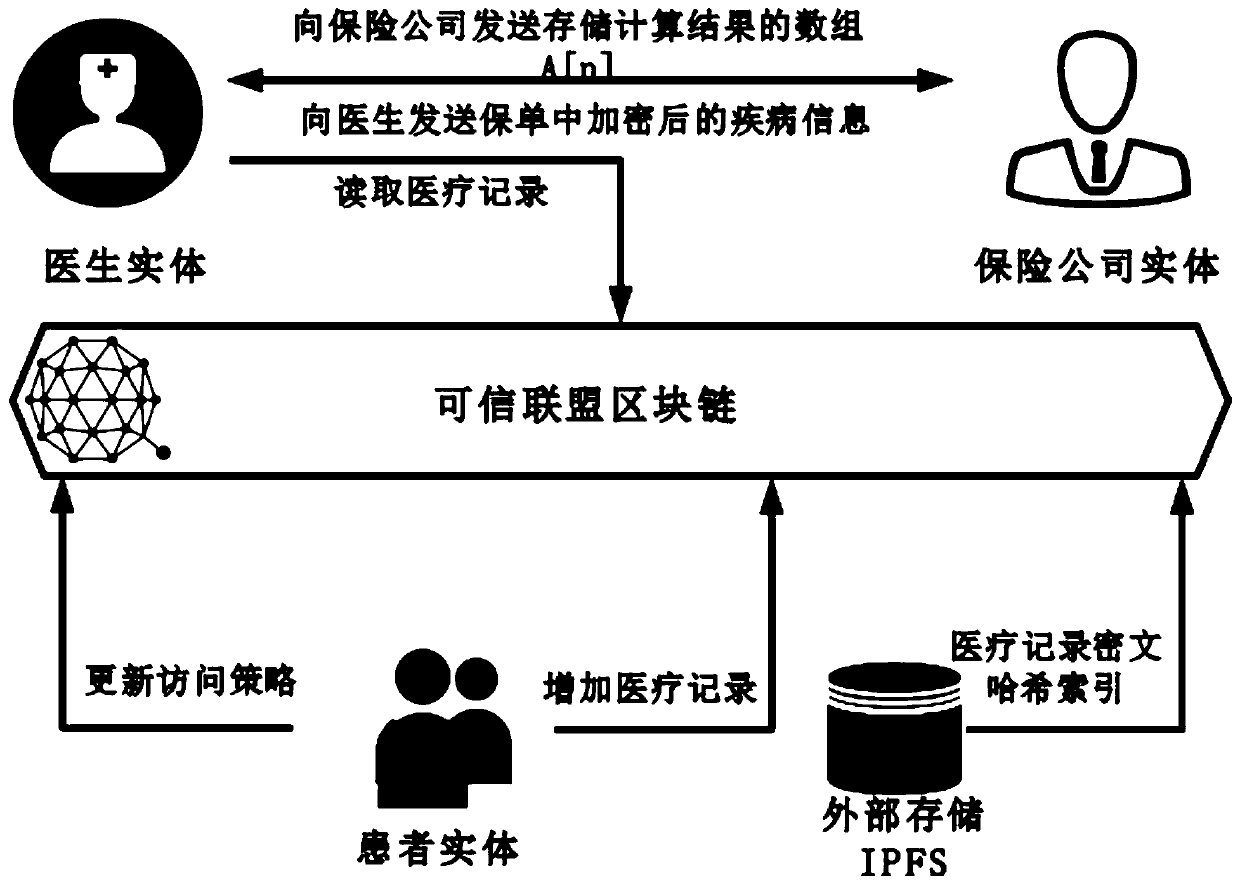
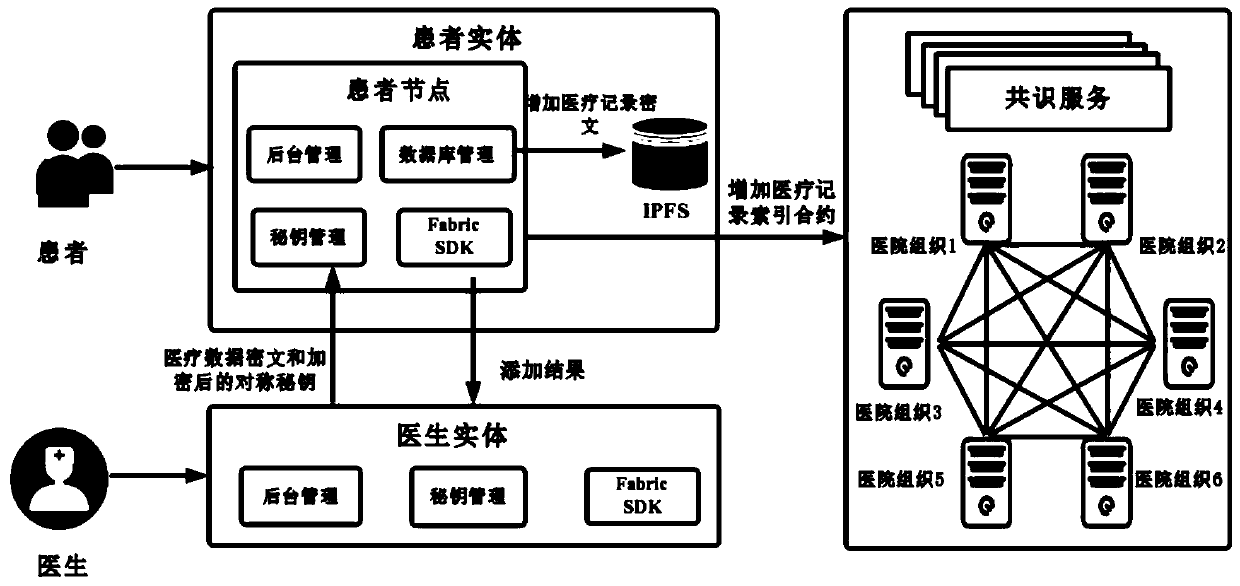
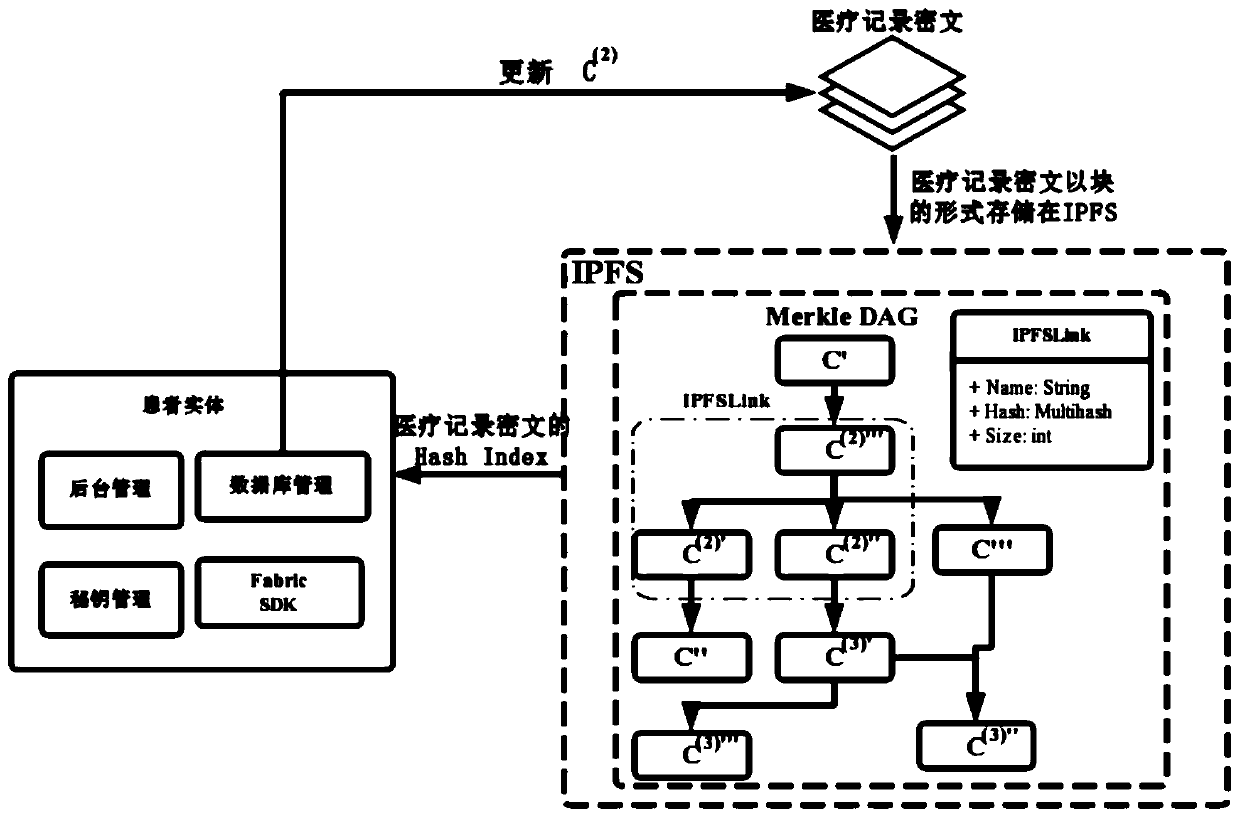
[0060] The embodiments and effects of the present invention will be described in detail below in conjunction with the drawings and technical solutions.
[0061] In the traditional electronic medical record management system centered on medical institutions, the medical institutions manage the patient's medical data, and patients cannot directly browse and control their own medical data. In addition, patients' medical records are stored in separate medical institutions, making it difficult to share medical data, making the interoperability between medical institutions lower, and also making patients' personal medical information stored in fragmented form, which cannot be constructed for patients. Complete lifetime medical information. Then, the traditional centralized storage of medical data brings huge risks, and incidents such as data loss and hacker attacks emerge in endlessly. Moreover, in extreme cases, when medical disputes occur, data managers in medical institutions ca...
PUM
 Login to View More
 Abstract
Description
Claims
Application Information
 Login to View More