
Sodium chlorite compositions with enhanced Anti-microbial efficacy and reduced toxicity
A technology of sodium chlorite and antibacterial composition, which can be used in pharmaceutical combinations, medical preparations without active ingredients, and medical preparations containing active ingredients, etc., and can solve problems such as loss, eye discomfort, vision, etc.
- Summary
- Abstract
- Description
- Claims
- Application Information
AI Technical Summary
Problems solved by technology
Method used
Image

Examples
Embodiment 1
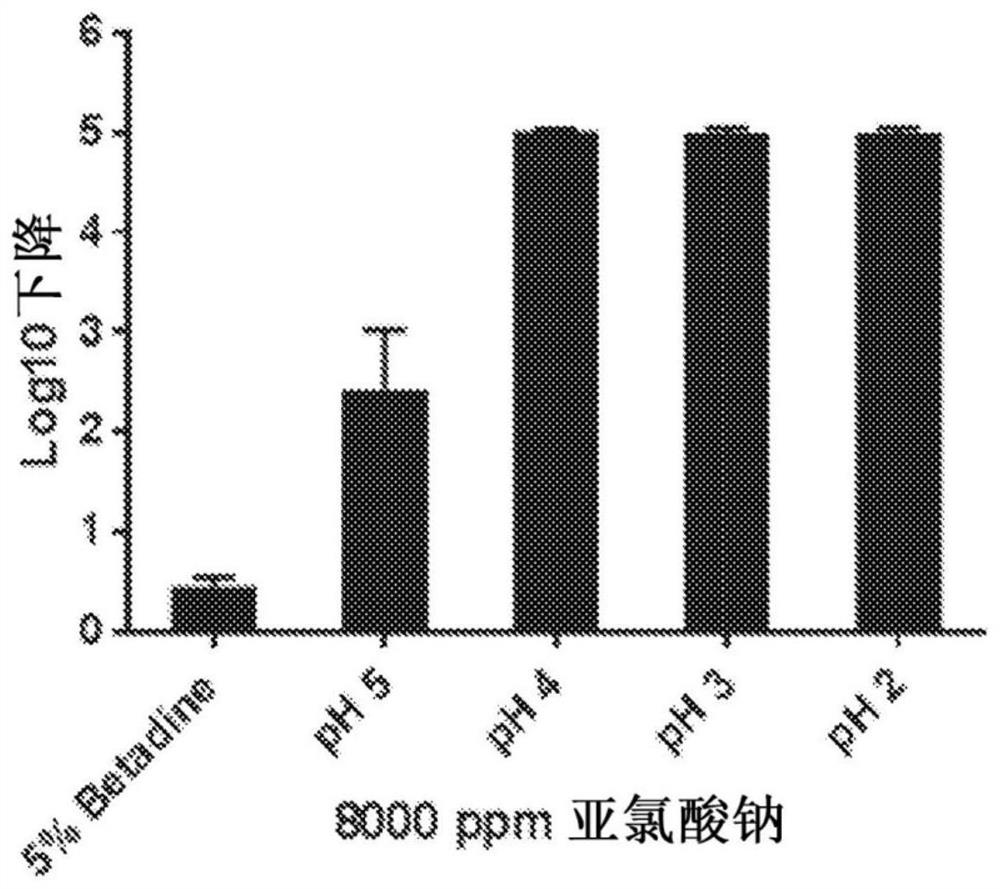
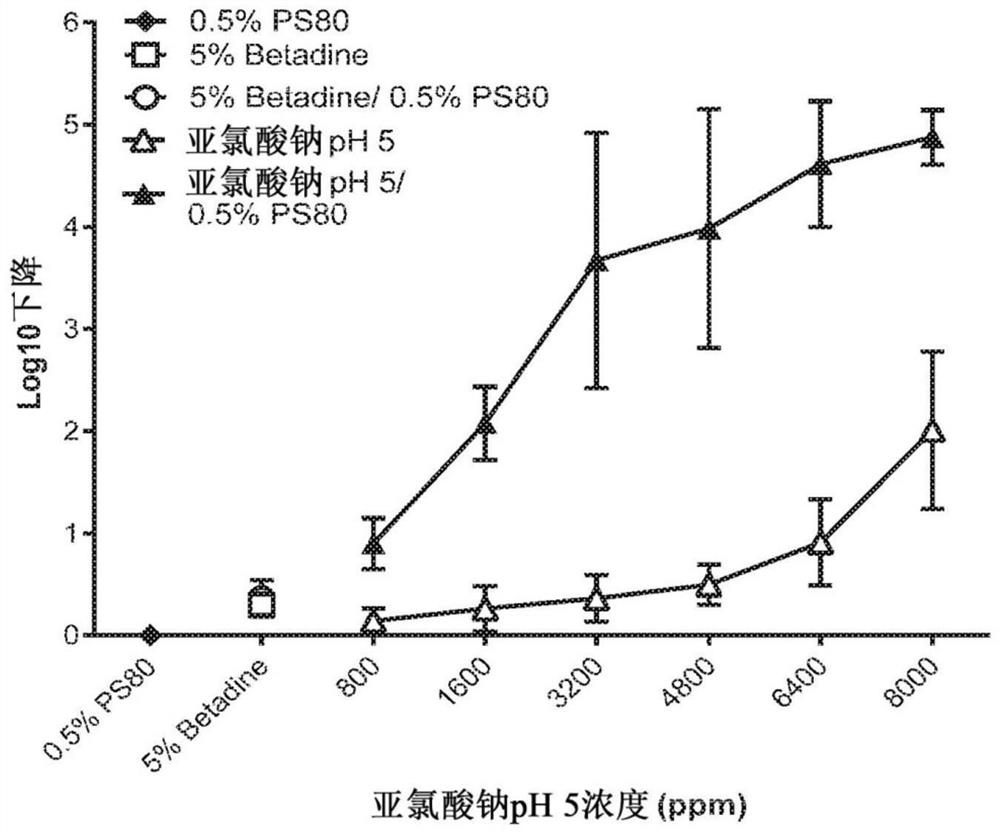
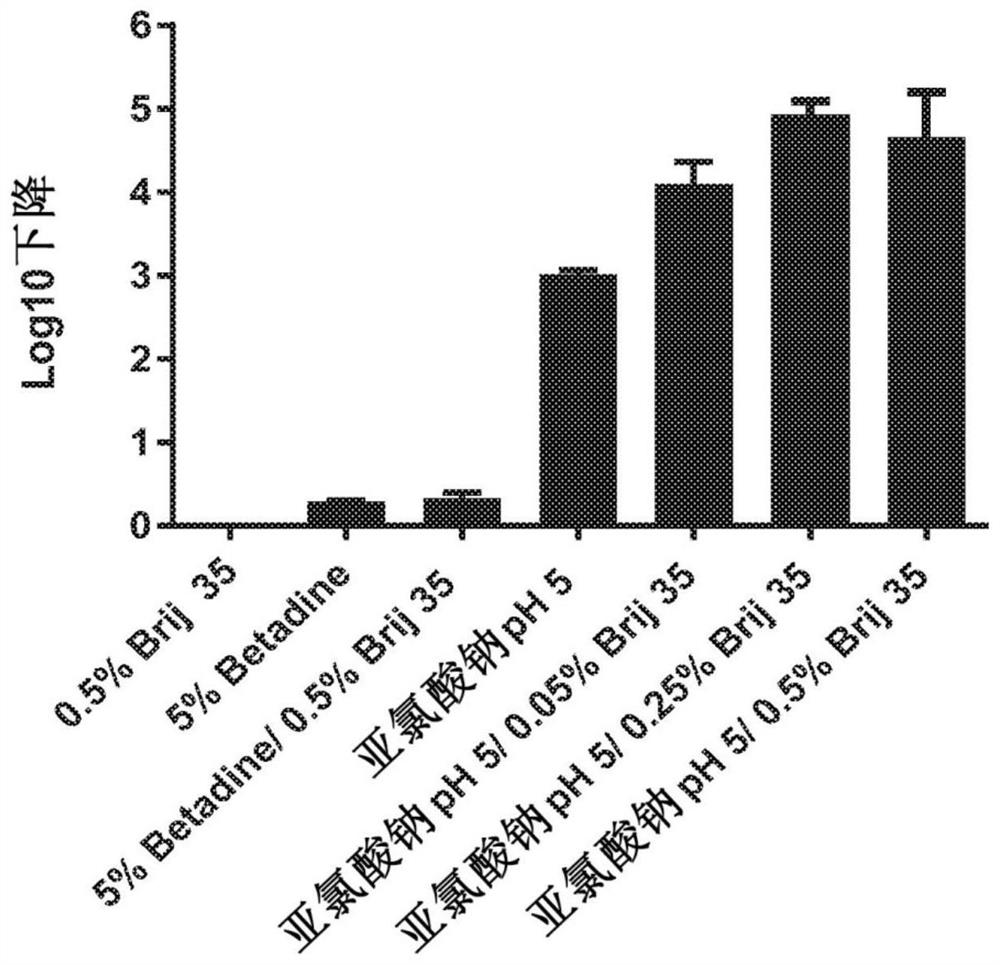
[0069] Antimicrobial Efficacy of Sodium Chlorite Compositions Compared to 5% Povidone-Iodine
[0070] A time kill efficacy experiment was performed against Staphylococcus aureus ATCC 29213 (Saureus). Plates with Tryptic Soy Agar (TSA) were inoculated with a culture of Saureus and incubated at 30°C to 35°C for 24 hours. Harvest the bacterial culture and adjust the sample suspension to contain approximately 10 5 to 10 6 Colony forming units (CFU). For each test, 10 mL of the test article ( 5% sterile ophthalmic preparation solution (povidone-iodine ophthalmic solution; Alcon, Fort Worth, TX) or sodium chlorite) was dispensed into sterile glass test tubes, inoculated with 100 μL of Saureus suspension and mixed thoroughly . Sodium chlorite was activated with one of four pH varying buffers (pH 5, pH 4, pH 3 or pH 2) for 30 seconds up to 5 minutes and then dispensed. After 30 seconds of exposure, 1 mL of the test suspension was removed and Dey-Engley neutralizer was added to ...
Embodiment 2
[0078] Ocular Safety and Tolerability of Sodium Chlorite Compositions Compared with Povidone-iodine 5%
[0079] Ocular safety and tolerability experiments were performed in non-sedated rabbits and included 1) assessment of corneal staining with topical sodium fluorescein, which is a readout for epithelial integrity), 2) ocular surface hyperemia Assessment (which is a reading of irritation) and 3) visual acuity assessment (which is a reading of how visual performance is affected by corneal damage).
[0080] Corneal epithelial integrity was assessed according to the NEI corneal staining guidelines for dry eye (Lemp MA. Report of the National Eye Institute / Industry workshop on Clinical Trials in DryEyes. CLAO J. 1995; 21:221–232). Rabbits were divided into 4 treatment groups: 5% povidone-iodine (n=8), sodium chlorite 8000 ppm formulation pH 3 (n=8), pH 4 (n=8) and pH 5 (n=4), And before administration with 250 ul of the test formulation, it was treated unilaterally with a drop o...
Embodiment approach P1
[0092] Embodiment P1. An antimicrobial composition for disinfecting tissue, wherein the composition comprises sodium chlorite.
PUM
 Login to View More
 Abstract
Description
Claims
Application Information
 Login to View More