Automatic implementation of channel plan change in cellular network

A cellular network, channel technology, applied in wireless communications, electrical components, selection devices, etc., to solve problems such as reduced service quality, revenue loss, long downtime, etc.

CN1218604CInactive Publication Date: 2005-09-07OPTIS CELLULAR TECH LLC
3 Cites 0 Cited by

Patent Information

Authority / Receiving Office
CN · China
Patent Type
Patents(China)
Current Assignee / Owner
Publication Date
2005-09-07
Estimated Expiration
Not applicable · inactive patent

Smart Images

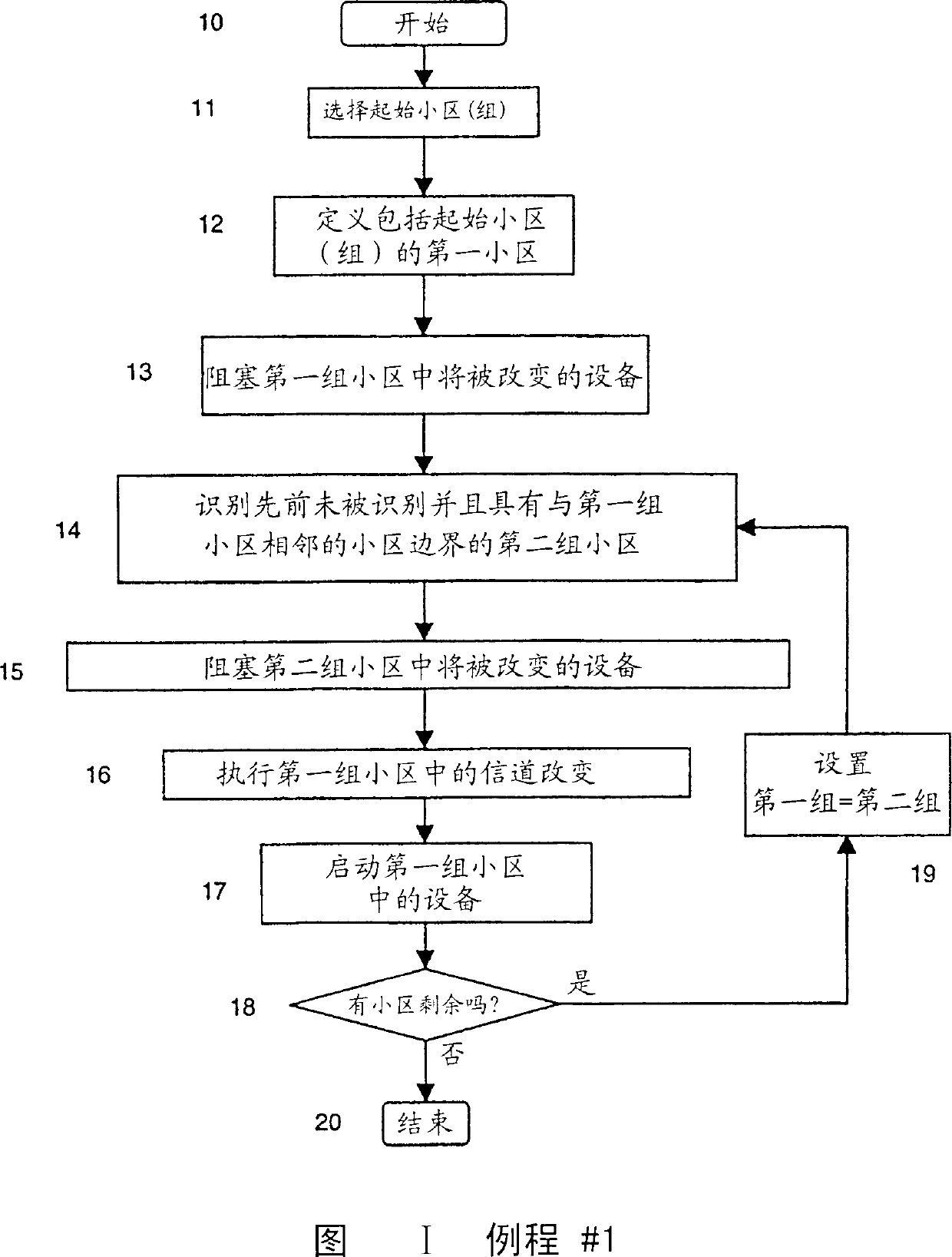
  • Figure 1
    Figure 1
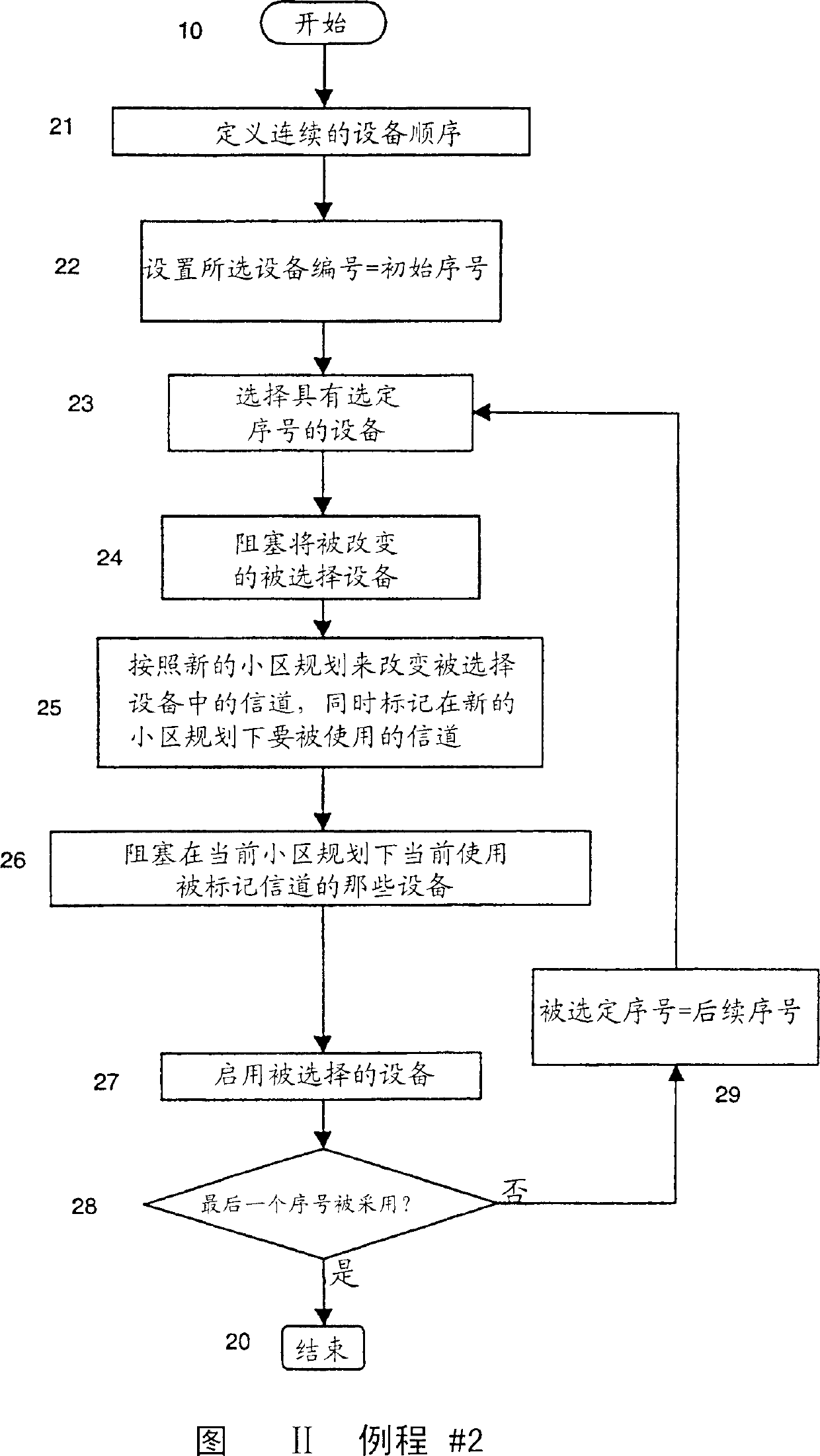
  • Figure 2
    Figure 2
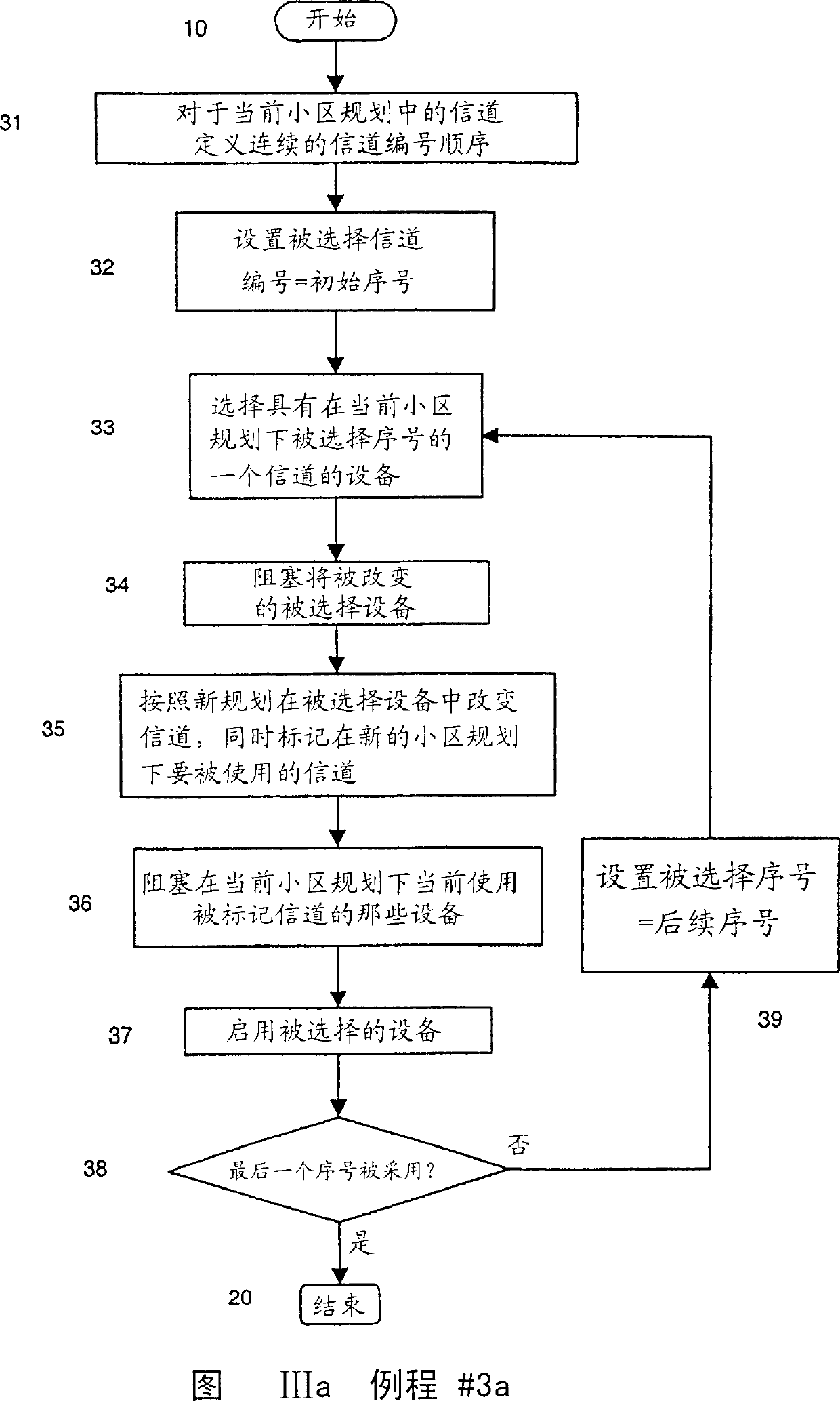
  • Figure 3
    Figure 3
Patent Text Reader

Abstract

The invention concerns methods for automatically implementing channel changes from a current plan to a new predetermined plan in a cellular network comprising a plurality of cells, each cell corresponding to at least one equipment, to which a channel may be allocated for communicating signals to and from mobile end stations in the cell. The methods involve that the sequence for how the equipment should be changed is determined by an order number, relating to cell location, equipment number, present channel number or new channel number. The invention leads to an efficient implementation of given channel changes causing a minimum of disturbances.
Need to check novelty before this filing date? Find Prior Art

Description

technical field

[0001] The invention relates to a method for automatically effecting predetermined channel plan changes in a cellular network. Background technique

[0002] A common type of conventional mobile radio communication system includes a plurality of radio base stations distributed over a certain geographical area. Communications with mobile end stations are transmitted via local base stations to a central network which may be coupled to the public switched telephone network.

[0003] In such a system a cell may be defined as a local geographical area in which communication between the mobile end station in question and the base station is enabled while complying with a set of predefined parameters. Such parameters can correspond to comparative measured signal strength values ​​of signals transmitted between the mobile terminal station and a given base station and adjacent base stations, respectively. These parameters may also relate to error rates. When a so-ca...

Examples

no. 4 example

[0162] In FIG. IV, the fourth routine according to the present embodiment has been shown. In Fig. 6, the steps according to the fourth routine will be explained with respect to the example of a cell plan change as shown in Figs. 2a and 2b.

[0163] Inc.1

[0164] According to step 41 a random starting device - number 8 - is selected and according to step 42 this device is selected.

[0165] In step 43, the selected device number 8 is blocked. In step 44 the device 8 changes the channel from 6 to 7 and according to step 44 channel 7 is marked. According to step 45, the devices currently using the marked channel under the current cell plan, ie devices 2 and 6, are blocked.

[0166] Inc.2

[0167] In step 46 the device 8 is enabled and according to step 48 the currently blocked device 2 is randomly selected.

[0168] Optionally, the decision regarding the selection of a particular blocked device among a plurality of simultaneously blocked devices may be made according to a p...