
System and method for identifying genes
a technology of system and method, applied in the field of system and method for identifying genes, can solve the problems of difficult statistical methods, low shared similarity between a candidate gene and its database counterpart, and difficult statistical methods
- Summary
- Abstract
- Description
- Claims
- Application Information
AI Technical Summary
Benefits of technology
Problems solved by technology
Method used
Image

Examples
Embodiment Construction
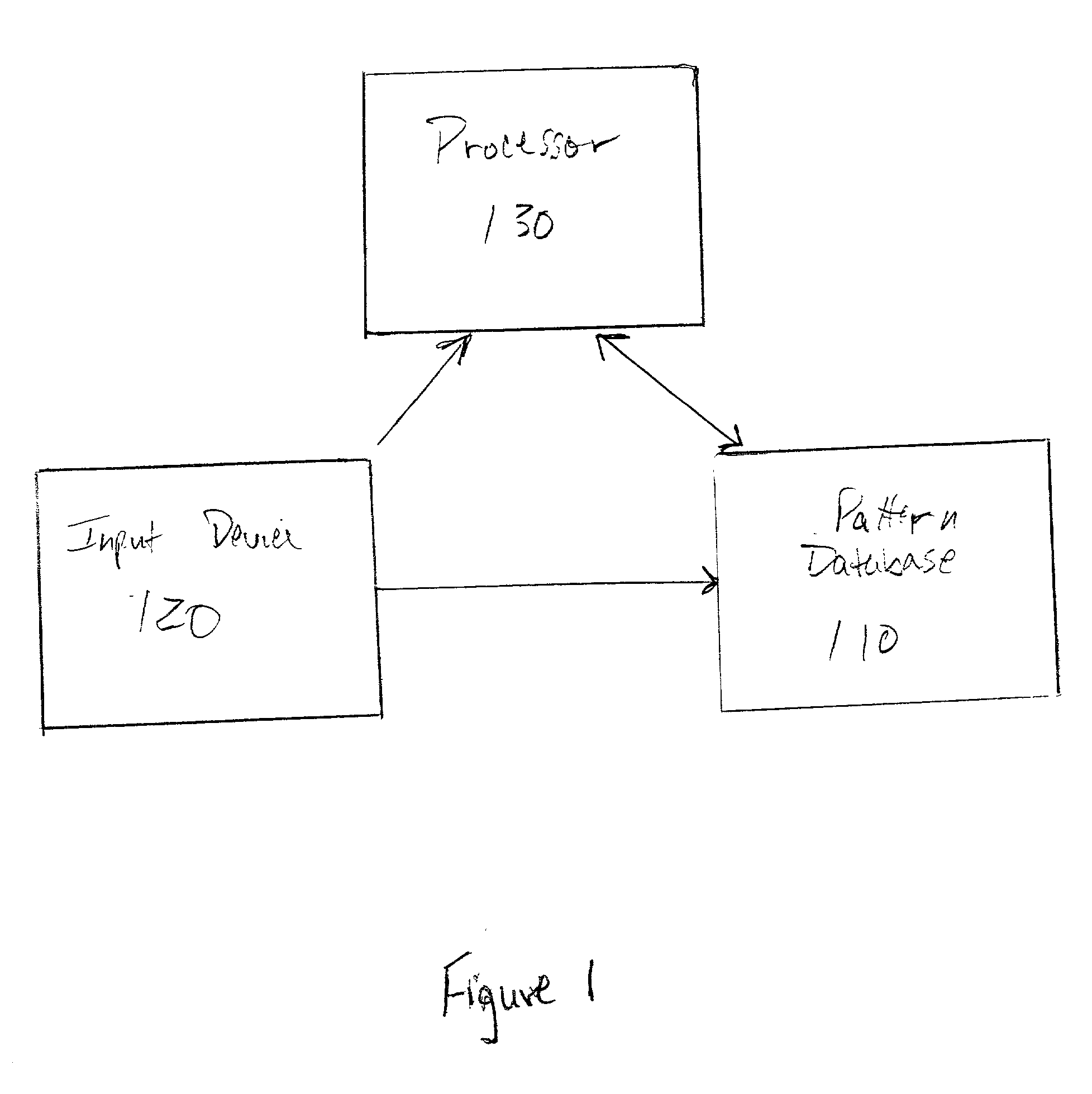
[0031] Referring now to the drawings, FIG. 1 illustrates an inventive system 100 for identifying genes according to the present invention.
[0032] As shown in FIG. 1, the inventive system 100 includes a pattern database 110 which includes patterns of amino acids. The patterns may be provided to system 100 or, optionally, the patterns may be derived from a database(s) comprising one or more amino acid sequence or fragment of an amino acid sequence, or otherwise be made available to the inventive system 100. The system 100 also includes an input device 120 for inputting data (e.g., a given DNA sequence) and instructions, and a processor 130 for processing the DNA sequence and patterns to identify a putative gene.
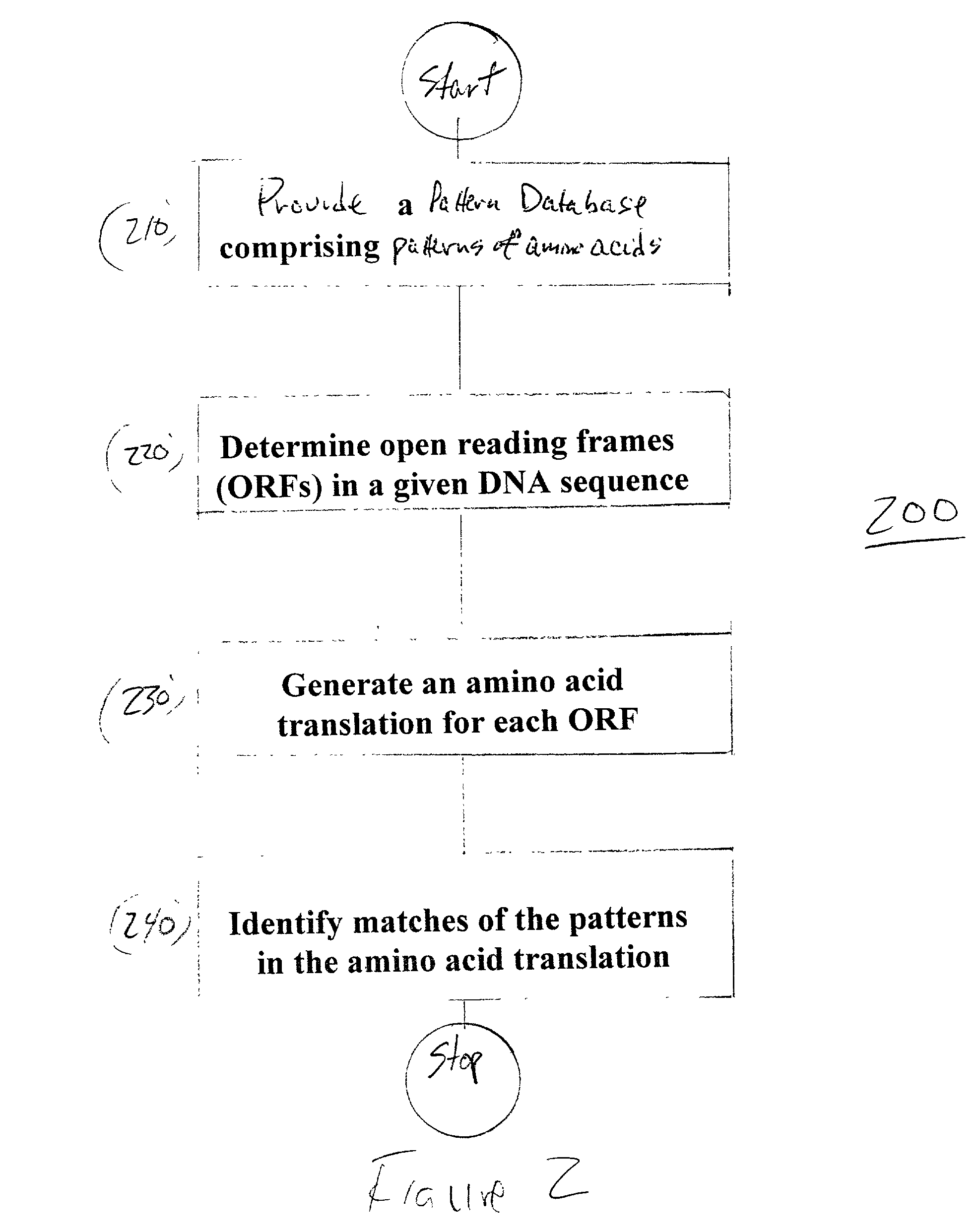
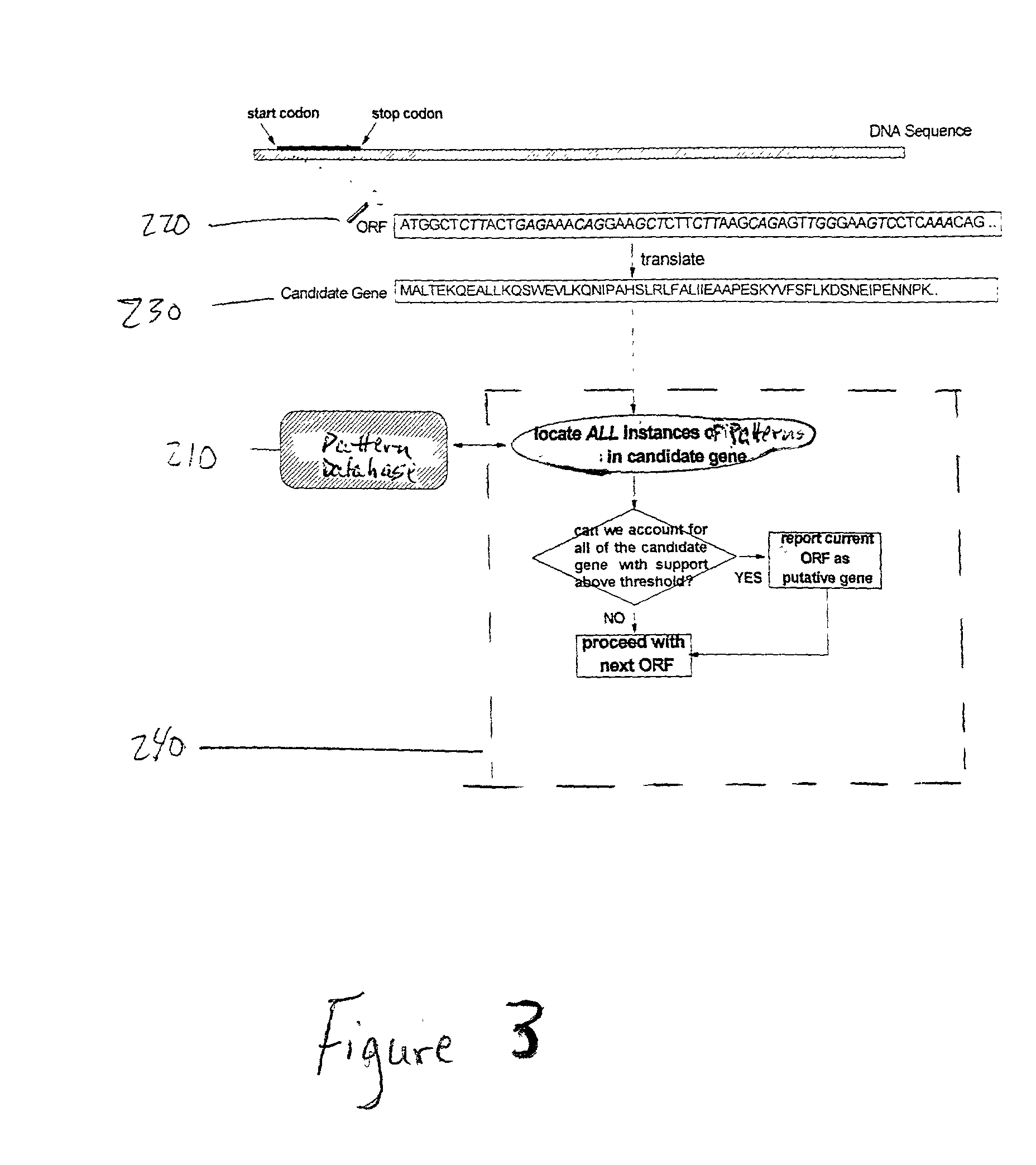
[0033] Specifically, the processor 130 may process input data to determine open reading frames (ORFS) in the DNA sequence, generate an amino acid translation for each ORF, and identify matches of the patterns in the amino acid translation. Optionally, the processor 130 may be us...
PUM
| Property | Measurement | Unit |
|---|---|---|
| weight | aaaaa | aaaaa |
| sum of weights | aaaaa | aaaaa |
| Structure | aaaaa | aaaaa |
Abstract
Description
Claims
Application Information
 Login to View More