
Damage-resistant superabsorbent materials
a superabsorbent material and damage-resistant technology, applied in absorbent pads, organic dyes, bandages, etc., can solve the problems of premature leakage and skin wetness, reduced large loss of original gel bed permeability, so as to increase the damage resistance of superabsorbent materials
- Summary
- Abstract
- Description
- Claims
- Application Information
AI Technical Summary
Benefits of technology
Problems solved by technology
Method used
Image

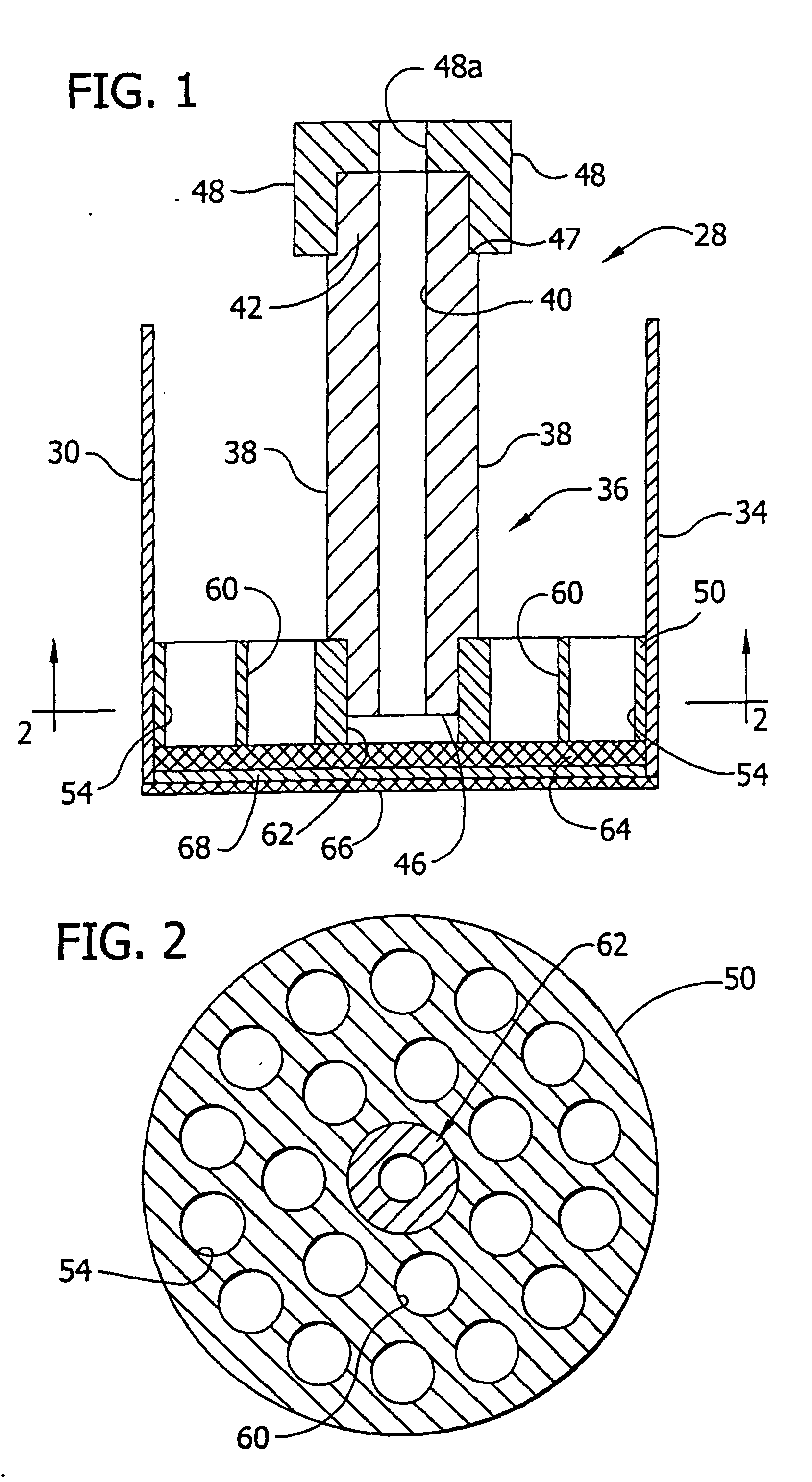
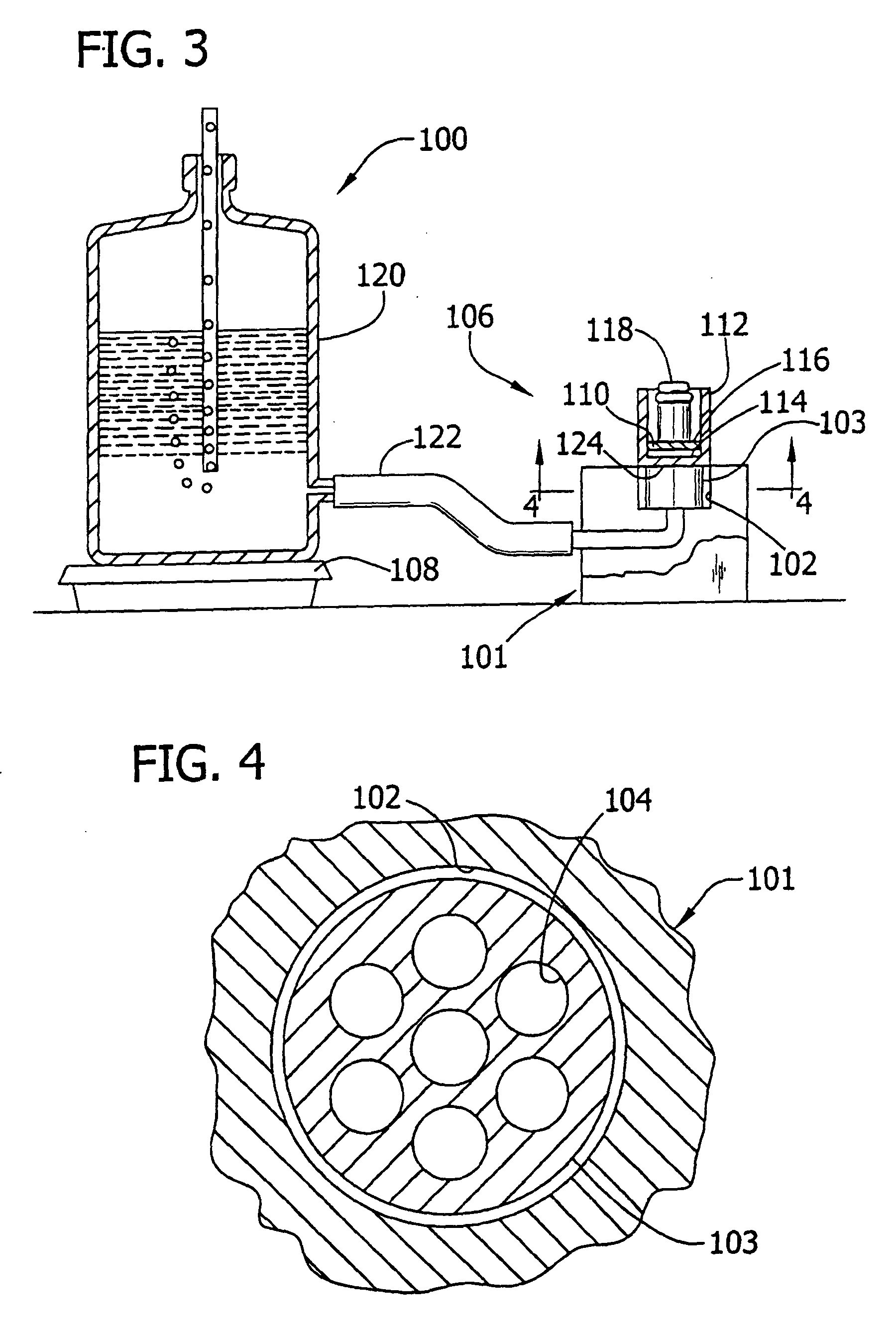

Examples
example 1
This Example illustrates the changes that occur in superabsorbent properties and average particle size of superabsorbent materials as a result of undergoing processing on a diaper production line. Table 1 summarizes these changes. The virgin materials are the materials in the condition in which they are received from the superabsorbent material manufacturer prior to being incorporated into an absorbent article. The reclaimed materials are the materials in the condition in which they are found after being incorporated into a commercially available absorbent article. The reclaimed superabsorbent materials were obtained using pulsing air turbulence and a rubber beater at a low or intermediate speed to separate superabsorbent from fluff in diaper absorbent cores.
The superabsorbents tested were virgin SXM 9543 from two different lots, available from Stockhausen Inc. in Greensboro, N.C., U.S.A.; and virgin Dow DRYTECH 2035, available from Dow Chemical Co. in Midland, Mich., U.S.A. The ...
example 2
In order to develop a bench method capable of mimicking the degree of damage inflicted on superabsorbent materials in commercial diaper lines, specifically the average PSD and its reduction, while simultaneously producing adequate sample sizes for making absorbent composites for small-scale diaper use testing, a commercial blender, OSTERIZER® 12-speed, available from Sunbeam Products, Inc., of Boca Raton, Fla., was used.
Fifty grams of as-is (“virgin”) particulate superabsorbent received from vendors or later modified / treated as described herein was added into the blender each time and then the blender ran for a varied amount of time (15, 30, and 60 seconds) while the blender was set at a combination of “high speed” and “blend” settings. Length of blending time was used to correspond with damage level, with longer time representing more severe damage. Table 2 lists data to support this hypothesis. Also based on the data in Table 2, the 30-second blending method was selected to rep...
example 3
Three types of commercial superabsorbents, namely SXM 9543 and FAVOR 880, both available from Stockhausen Inc., and Dow DRYTECH 2035, available from Dow Chemical Co., were separately damaged by the 30-second blending method described in Example 2 and their properties were measured and listed in Table 3. All three commercial superabsorbents were damageable by mechanical impact and stress. The samples labeled as “Virgin” in Table 3 did not undergo the blending process. The samples labeled as “Blend” were blended for 30 seconds as described above. The samples with particle size of 300-600 microns exhibited reductions in GBP @ 0 psi of about 30% or greater and in GBP @ 0.3 psi of about 60% or greater, while as-is particles exhibited a loss in GBP @ 0 psi of about 50% or greater and GBP @ 0.3 psi of about 95% or greater, and average particle size reduction of about 25% or greater compared to their virgin superabsorbents.
TABLE 3GBP & PSD Values of Damaged Commercial SuperabsorbentsSXM ...
PUM
| Property | Measurement | Unit |
|---|---|---|
| swell pressure | aaaaa | aaaaa |
| swell pressure | aaaaa | aaaaa |
| glass transition temperature | aaaaa | aaaaa |
Abstract
Description
Claims
Application Information
 Login to View More