
Connector and cable retainer
a technology of connectors and retainers, applied in the direction of electrical apparatus, connection, coupling device connections, etc., can solve the problems of troublesome wiring operations for the unnecessary second terminals, and achieve the effect of easy electrically connecting shield materials
- Summary
- Abstract
- Description
- Claims
- Application Information
AI Technical Summary
Benefits of technology
Problems solved by technology
Method used
Image

Examples
Embodiment Construction
[0026] Hereinafter, a connector according to a preferred embodiment of the invention is described with reference to the drawings.
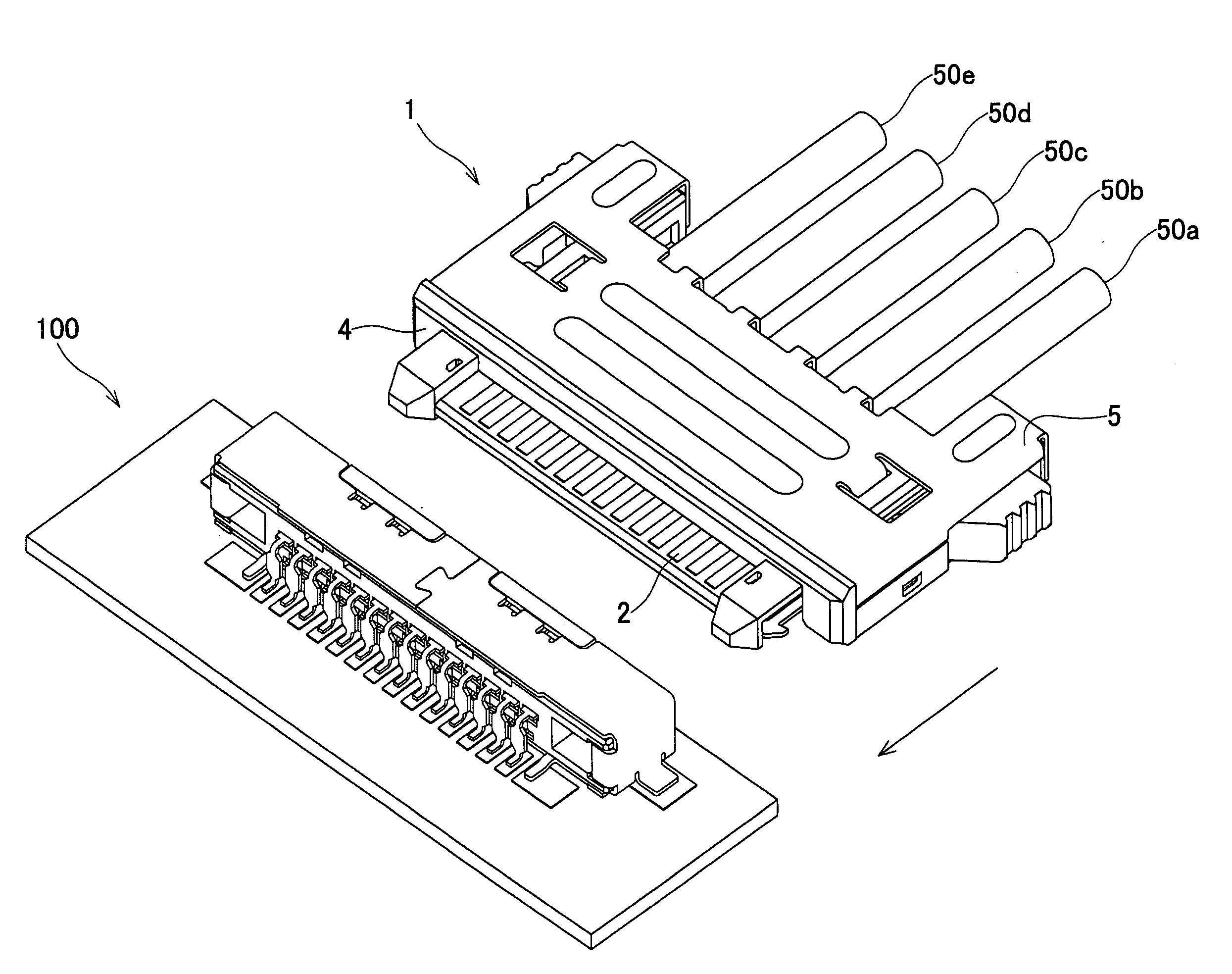
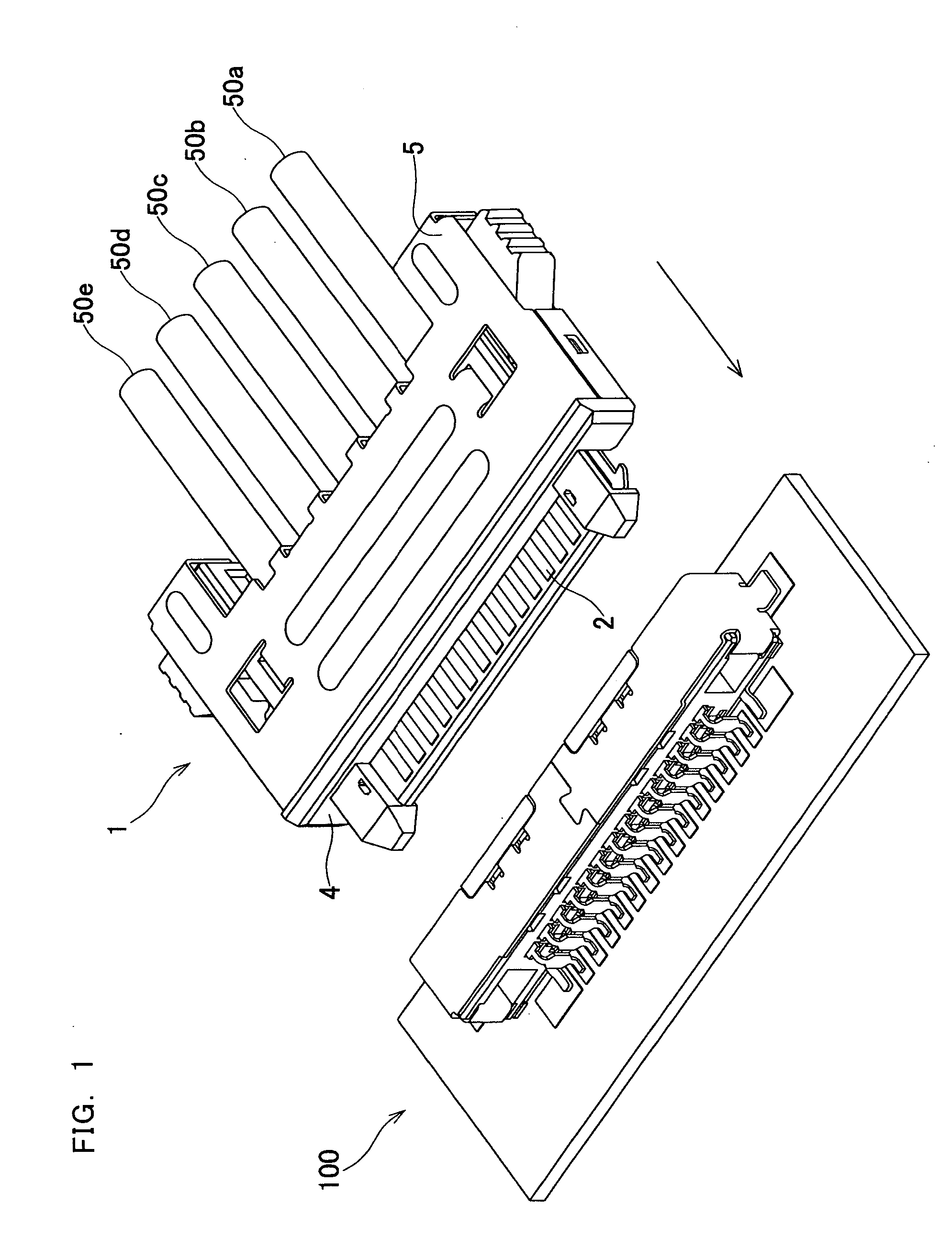
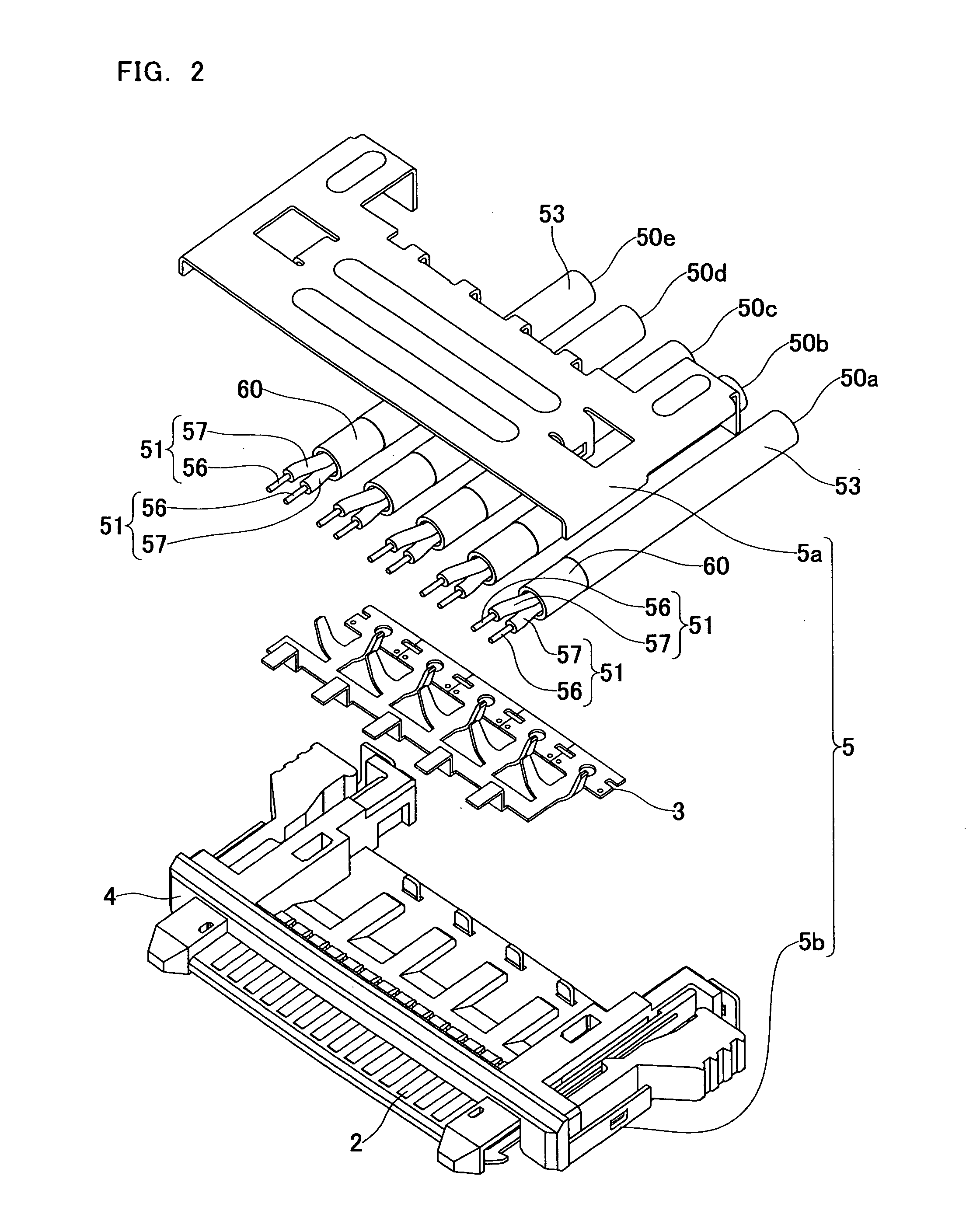
[0027]FIG. 1 is a perspective view of a connector according to a preferred embodiment of the invention and the opposing connector which said connector is inserted into and extracted from. The arrow in the figure indicates the inserting direction of the connector 1 into the opposing connector 100. FIG. 2 is an exploded perspective view of the connector 1. As shown in FIG. 1, to the connector 1, five cables 50a through 50e are connected, and the connector can be inserted into and extracted from the opposing connector 100. The connector 1 includes fourteen terminals (first terminals and second terminals) 2 that are aligned at a predetermined pitch in a direction orthogonal to the inserting direction of the connector 1, a cable retainer 3, and a housing (supporter) 4.
[0028] As shown in FIG. 2, the terminals 2 are thin plate-shaped electrodes extending along ...
PUM
 Login to View More
 Abstract
Description
Claims
Application Information
 Login to View More