
Methods and apparatus for treating disc herniation and preventing the extrusion of interbody bone graft
a technology of disc herniation and bone graft, applied in the field of methods, can solve problems such as further complications, and achieve the effect of avoiding delicate surrounding nerves and minimizing the size of the requisite incision
- Summary
- Abstract
- Description
- Claims
- Application Information
AI Technical Summary
Benefits of technology
Problems solved by technology
Method used
Image

Examples
Embodiment Construction
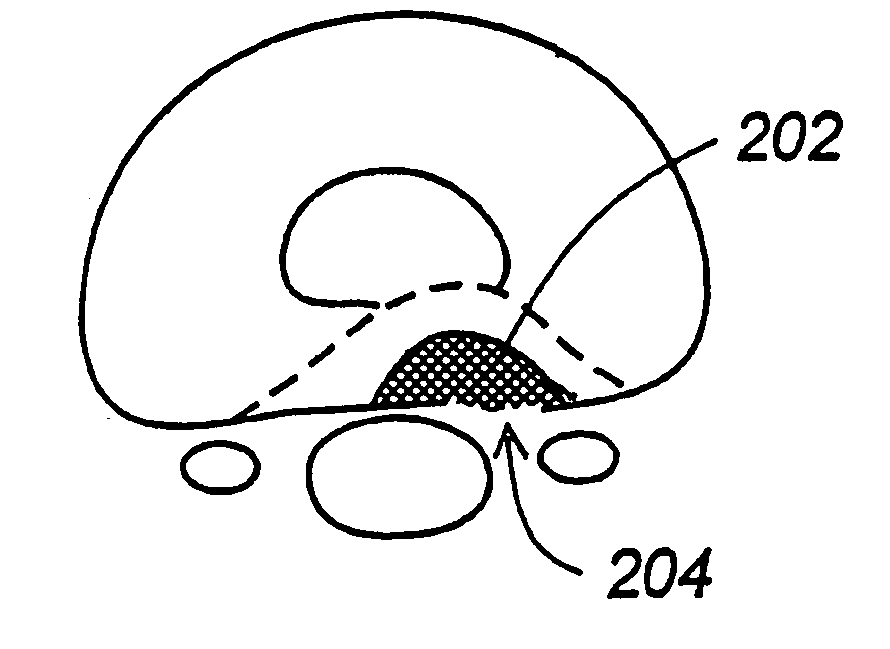
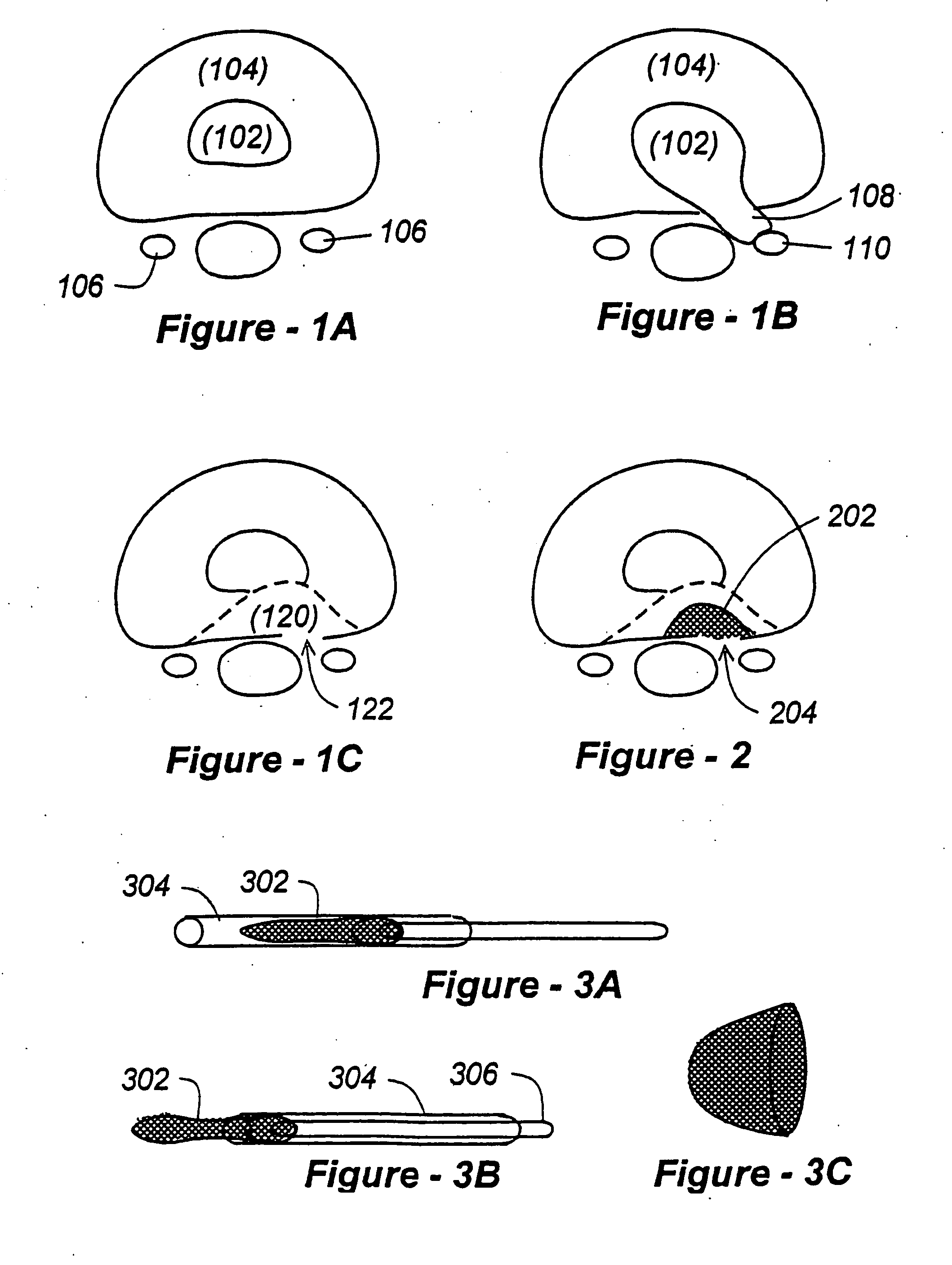
[0076] Having discussed the problems associated with post-operative partial discectomy with respect to FIGS. 1A-1C, reference will now be made to FIG. 2, which illustrates a preferred embodiment of the invention, wherein a device in the form of a stent 202 is used to occlude a defect 204 in a human disc, as shown. In this preferred embodiment, the device is composed of a flexible material, which may be cloth, polymeric or metallic. For reasons discussed below, a titanium mesh screen is preferred with respect to this embodiment of the invention.
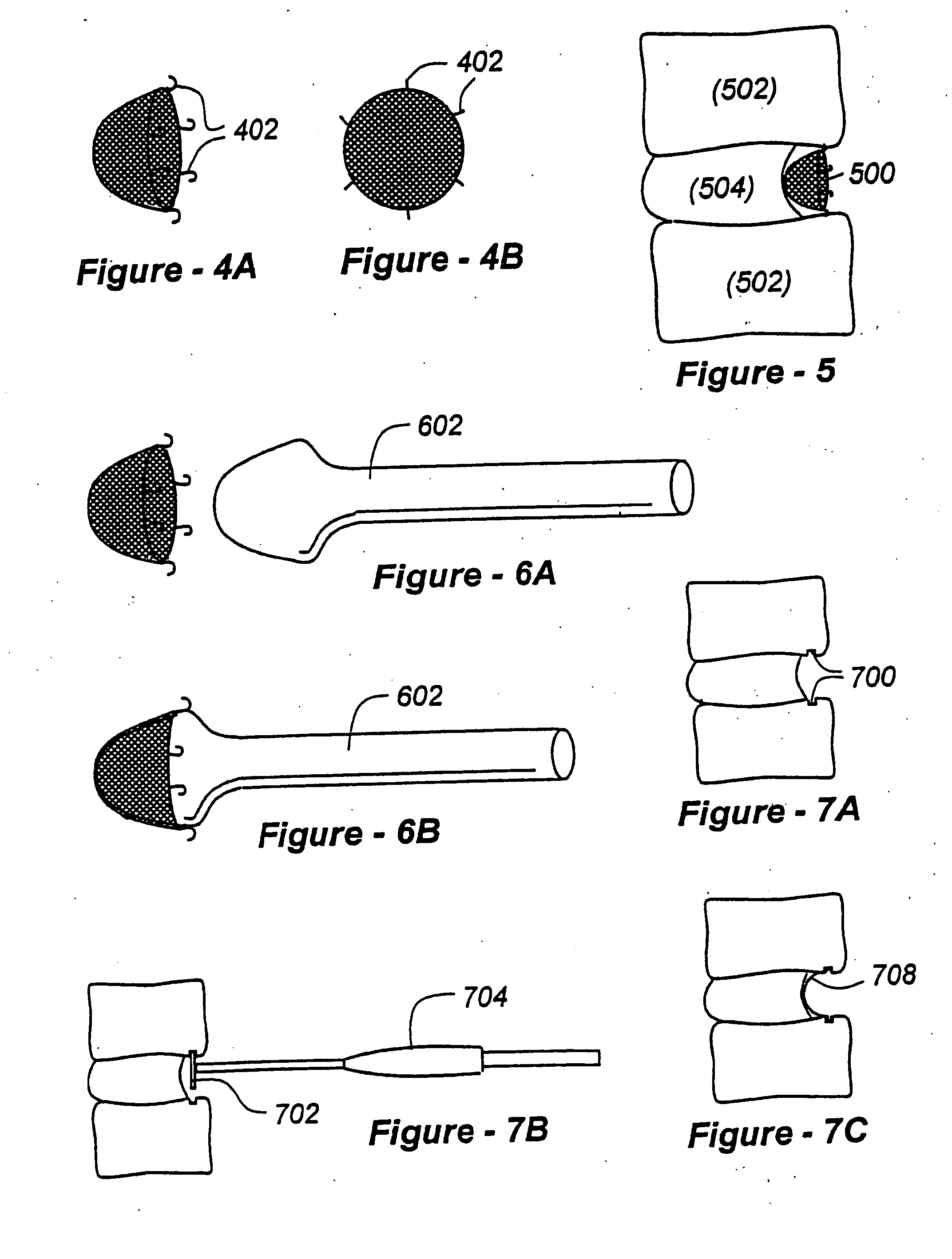
[0077] A flexible device is also preferred because the surgeon is presented with a very small working area. The incision through the skin is typically on the order of 1 to 1.5 inches in length, and the space at the disc level is approximately 1 centimeter on the side. As a consequence, the inventive device and the tools associated with insertion and fixation described below must be sufficiently narrow to fit within these confines.
[0078] As s...
PUM
| Property | Measurement | Unit |
|---|---|---|
| length | aaaaa | aaaaa |
| length | aaaaa | aaaaa |
| diameter | aaaaa | aaaaa |
Abstract
Description
Claims
Application Information
 Login to View More