
Method and device arrangement for managing a client/server environment
a client/server environment and device arrangement technology, applied in multi-programming arrangements, program control, instruments, etc., can solve problems such as limited data transfer channels, difficult tasks, and up-to-date information in prior art decentralized information networks
- Summary
- Abstract
- Description
- Claims
- Application Information
AI Technical Summary
Benefits of technology
Problems solved by technology
Method used
Image

Examples
Embodiment Construction
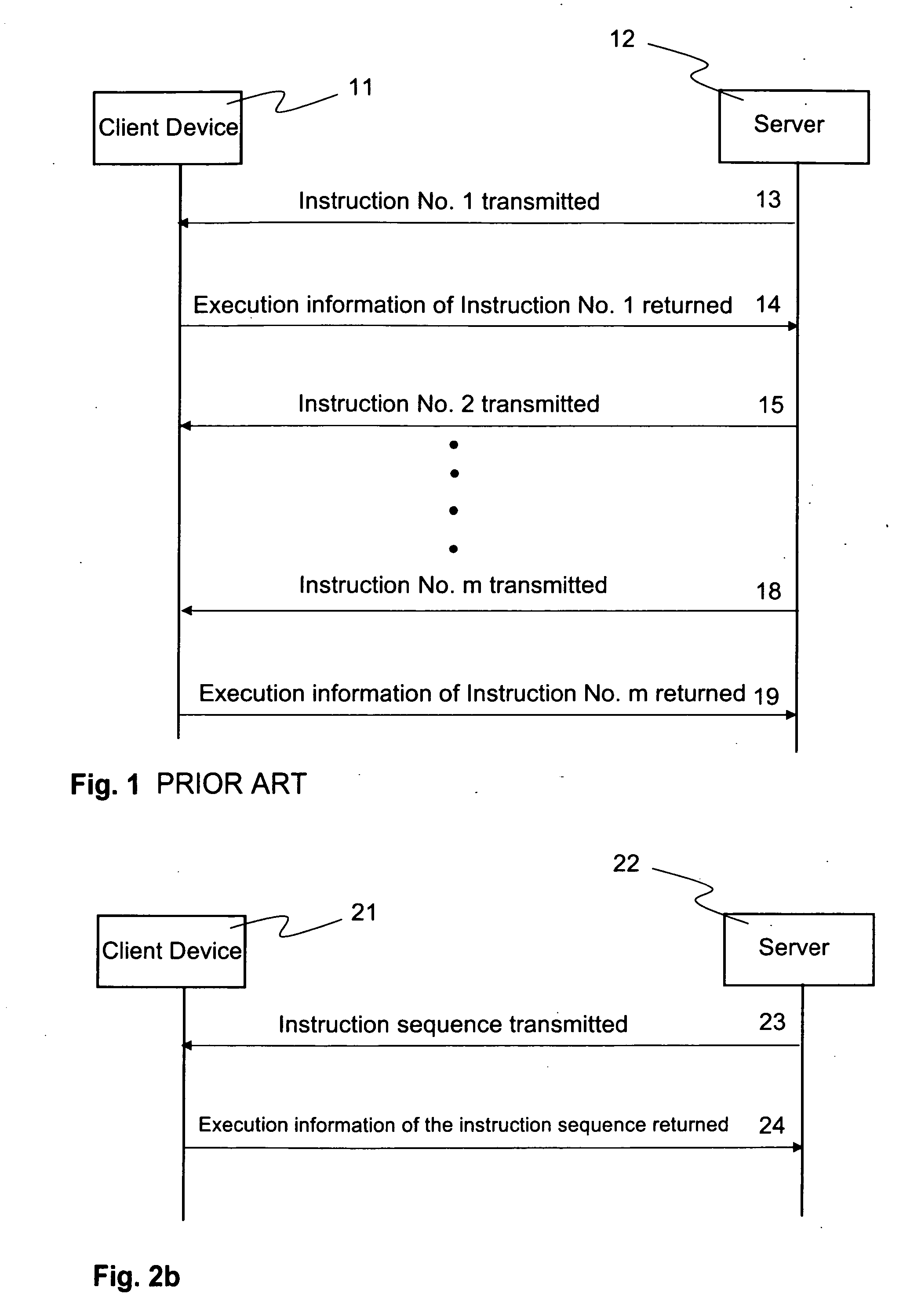
[0035]FIG. 1 was explained above in connection with the description of the prior art.
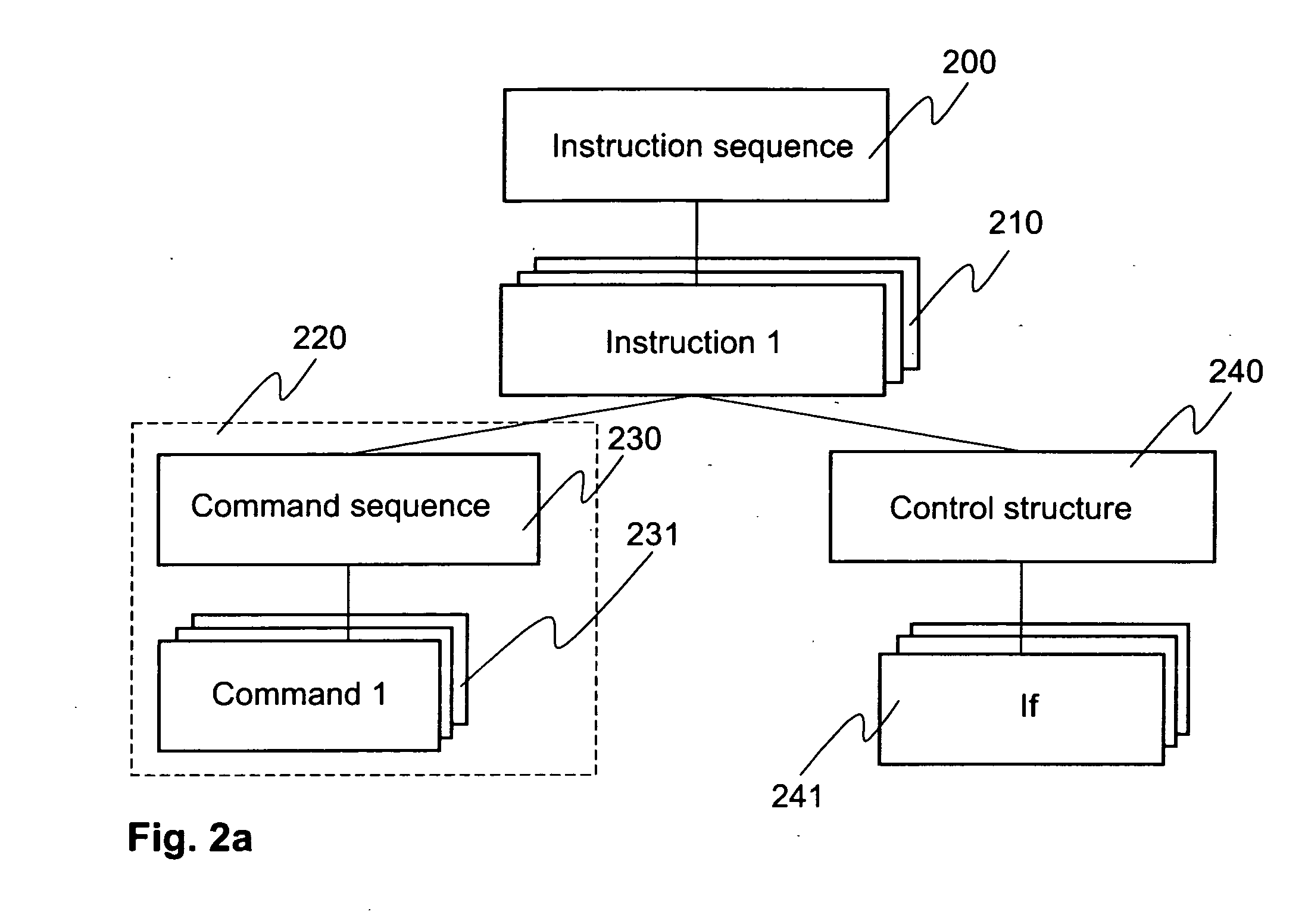
[0036]FIG. 2a shows a hierarchical structure, which is utilized in the method and device arrangement according to the invention. The instruction sequence 200 contains all the instructions which the user application (not shown in FIG. 2a) orders to be implemented in the client device 21. The instruction sequence 200 contains a number of separate instructions 210. A single instruction 210 can be either a command sequence 230 or a control structure 240. The command sequence 230 is formed of separate commands 231, and there may be a plurality of them. The prior art SyncML protocol 220 comprises the command sequence-command entity shown in FIG. 2a.
[0037] In the operation according to the invention, the control structures 240 are utilized in the client device 21 in addition to the command sequences 230. The control structures 240 advantageously contain the following conditional commands as single comman...
PUM
 Login to View More
 Abstract
Description
Claims
Application Information
 Login to View More