
System and method for implementing suppression for asynchronous transfer mode (ATM) adaptation layer 2 (AAL2) traffic in a communications environment
a technology of asynchronous transfer mode and a communication environment, applied in the field of communication, can solve the problems of adding significant overhead and cost in order to accommodate a large number of end-users or data streams, many of the existing compression/suppression protocols are deficient, and achieving the effect of optimizing data exchange, eliminating or greatly reducing disadvantages and problems associated
- Summary
- Abstract
- Description
- Claims
- Application Information
AI Technical Summary
Benefits of technology
Problems solved by technology
Method used
Image

Examples
Embodiment Construction
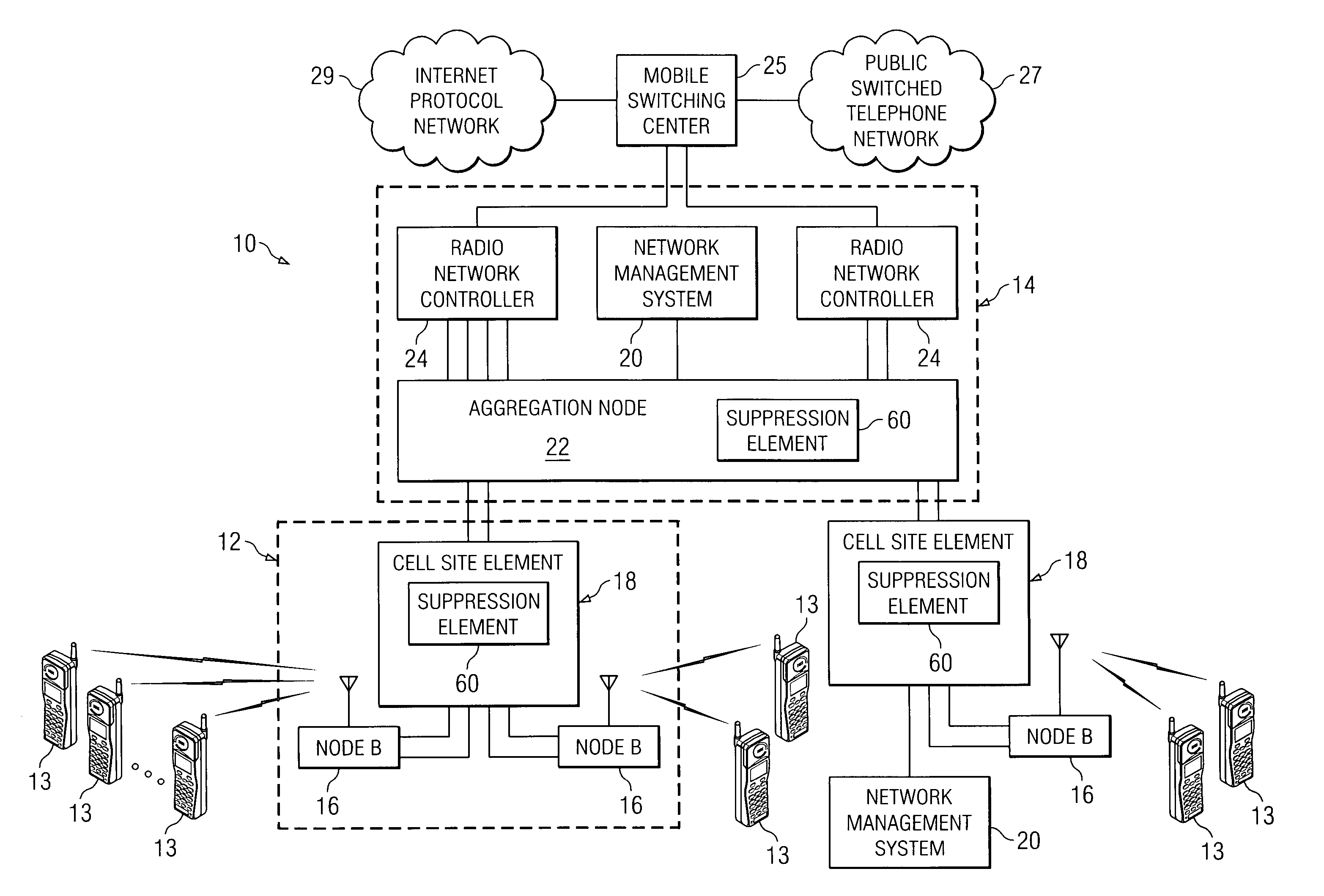
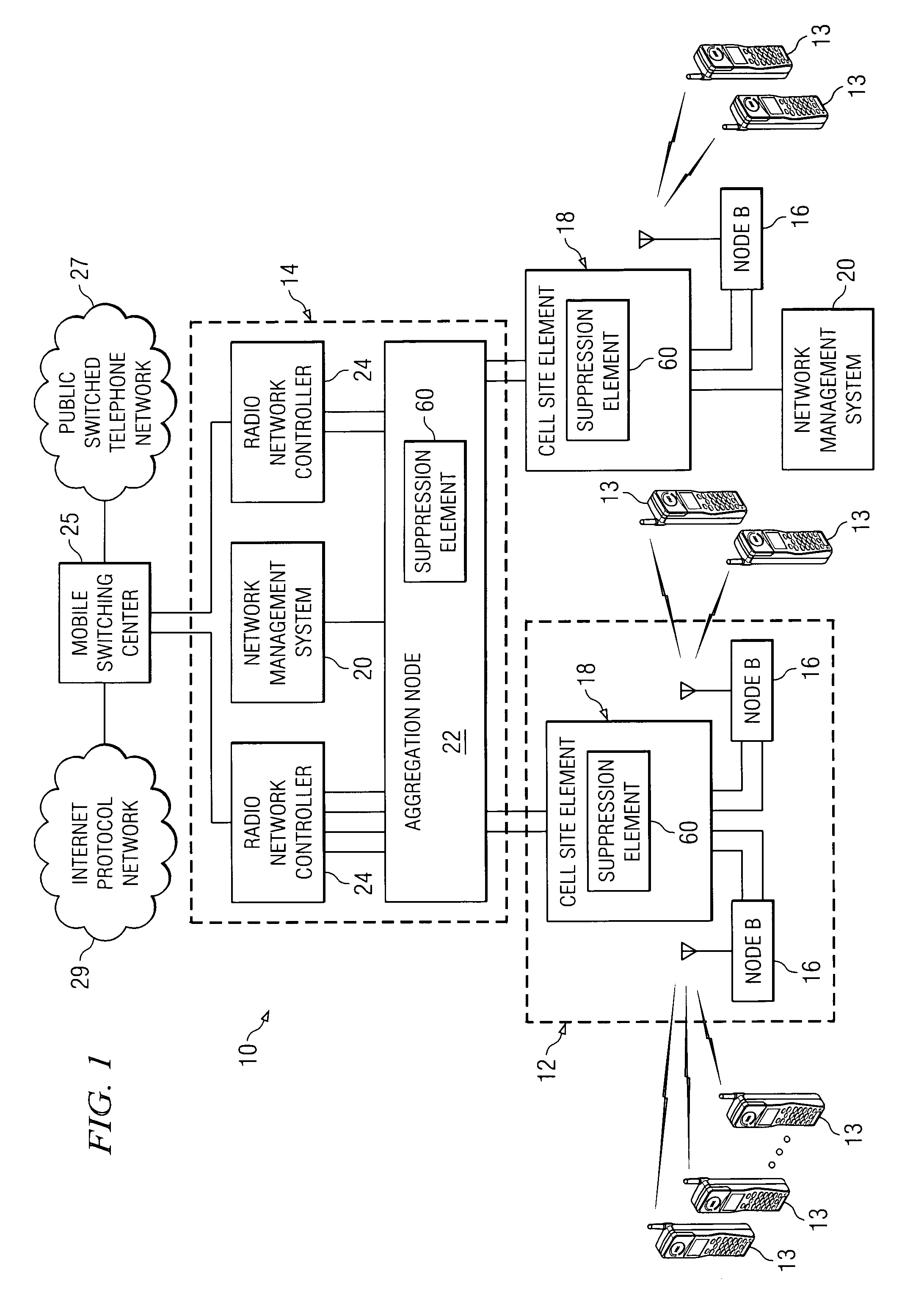
[0017]FIG. 1 is a simplified block diagram of a communication system 10 for suppressing data in a communications environment. Communication system 10 may include a plurality of cell sites 12, a plurality of mobile stations 13, a central office site 14, a plurality of Node Bs 16, a plurality of cell site elements 18, and a network management system 20. Additionally, communication system 10 may include an aggregation node 22, a plurality of radio network controllers (RNCs) 24, a mobile switching center 25, a public switched telephone network (PSTN) 27, and an Internet protocol (IP) network 29. Note the communications links extending between cell site element 18 and aggregation node 22, as compared to the number of communication links extending between cell site element 18 and Node Bs 16. This arrangement has been provided in order to illustrate that without the present invention, the number of communication links between cell site 12 and central office site 14 would be equal to the ou...
PUM
 Login to View More
 Abstract
Description
Claims
Application Information
 Login to View More