
Data transfer device
a data transfer and data technology, applied in the field of data transfer devices, can solve the problems of backup data not being recovered using other legitimate systems, same software packages must be used, and security issues become a consideration
- Summary
- Abstract
- Description
- Claims
- Application Information
AI Technical Summary
Benefits of technology
Problems solved by technology
Method used
Image

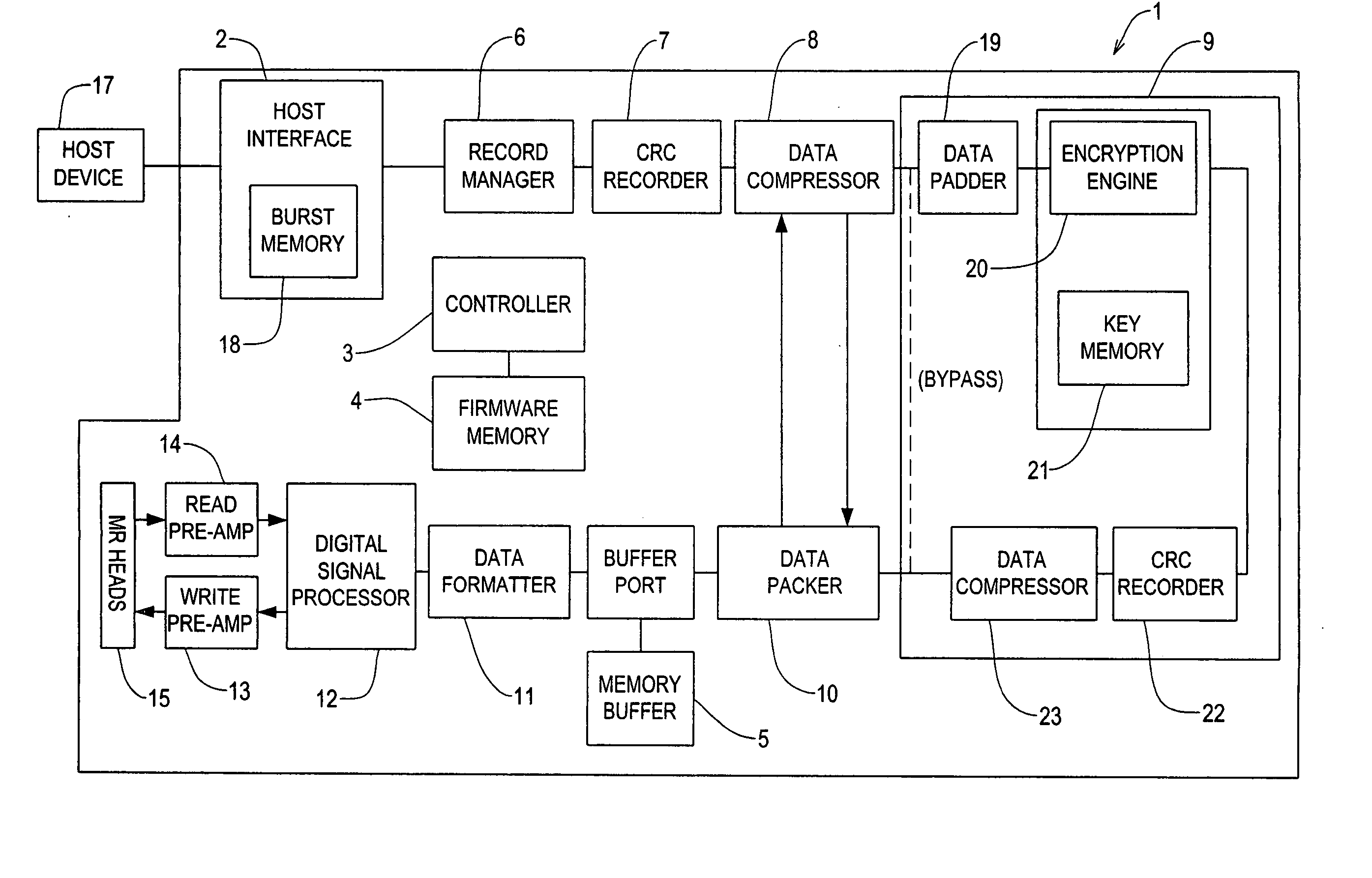
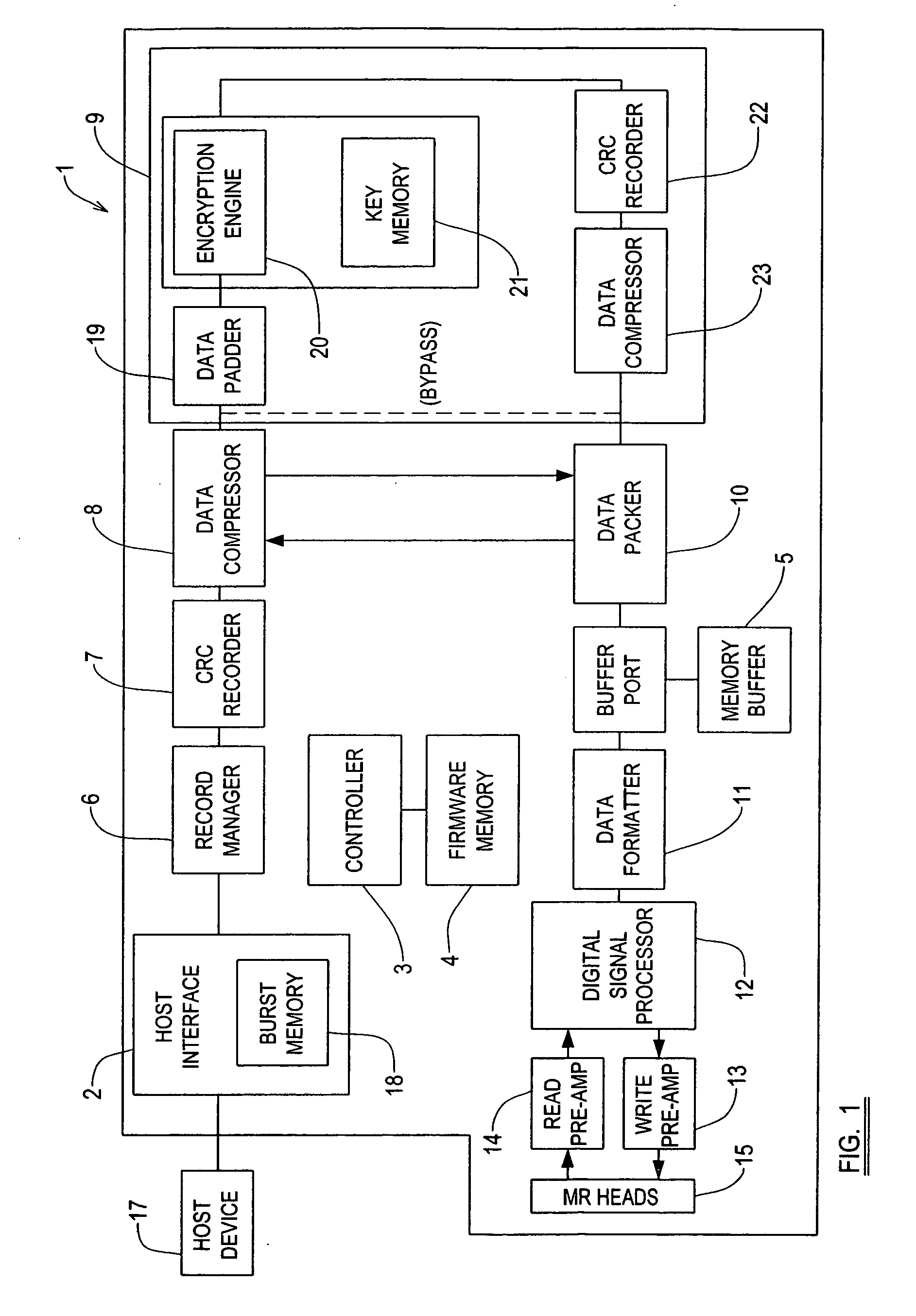
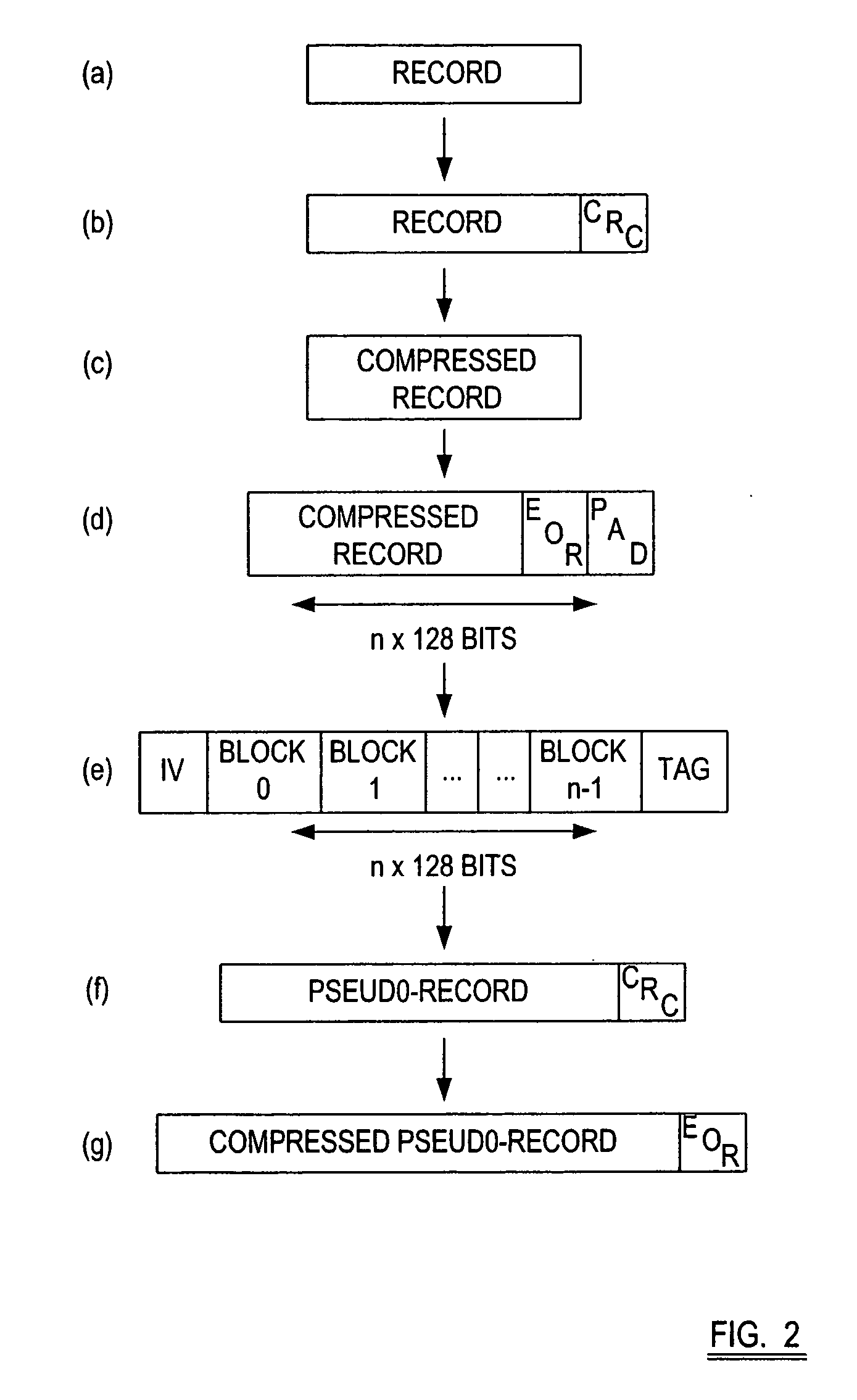
Examples
Embodiment Construction
[0035] In tape formats such as various generations of linear tape-open (LTO) and digital data storage (DDS, including DAT 72 and DAT 160), data to be stored are received by a tape drive as one or more records. The tape drive then formats and compresses the records into a compressed data stream, which is subsequently divided into chunks of data having the same predetermined size. Finally, an information table is appended to each chunk of data to create a data block, which is then written to tape. In the LTO format, the data block is referred to as a data set, whilst in the DDS format, the data block is referred to as a group.
[0036] An embodiment of the present invention will now be described in which records are encrypted prior to storage, and the data blocks written to tape continue to conform to a conventional tape format, such as LTO or DDS. Whilst the embodiment is described with reference to the LTO format, the present invention may be equally applied to other formats in which ...
PUM
 Login to View More
 Abstract
Description
Claims
Application Information
 Login to View More