
System and method for detecting proper cleaning of people and items entering a controlled area
a technology for cleaning people and items and detecting proper cleaning, which is applied in the direction of burglar alarms, mechanical actuation of burglar alarms, instruments, etc., can solve the problems of high cost of personnel costs, difficult to achieve effective and non-intrusive monitoring methods of personal hygiene, such as hand washing, and other existing techniques for monitoring compliance are often very expensive in terms of capital investment and personnel costs
- Summary
- Abstract
- Description
- Claims
- Application Information
AI Technical Summary
Problems solved by technology
Method used
Image

Examples
Embodiment Construction
[0011] The following description is based on illustrative embodiments of the invention and should not be taken as limiting the invention with regard to alternative embodiments that are not explicitly described herein.
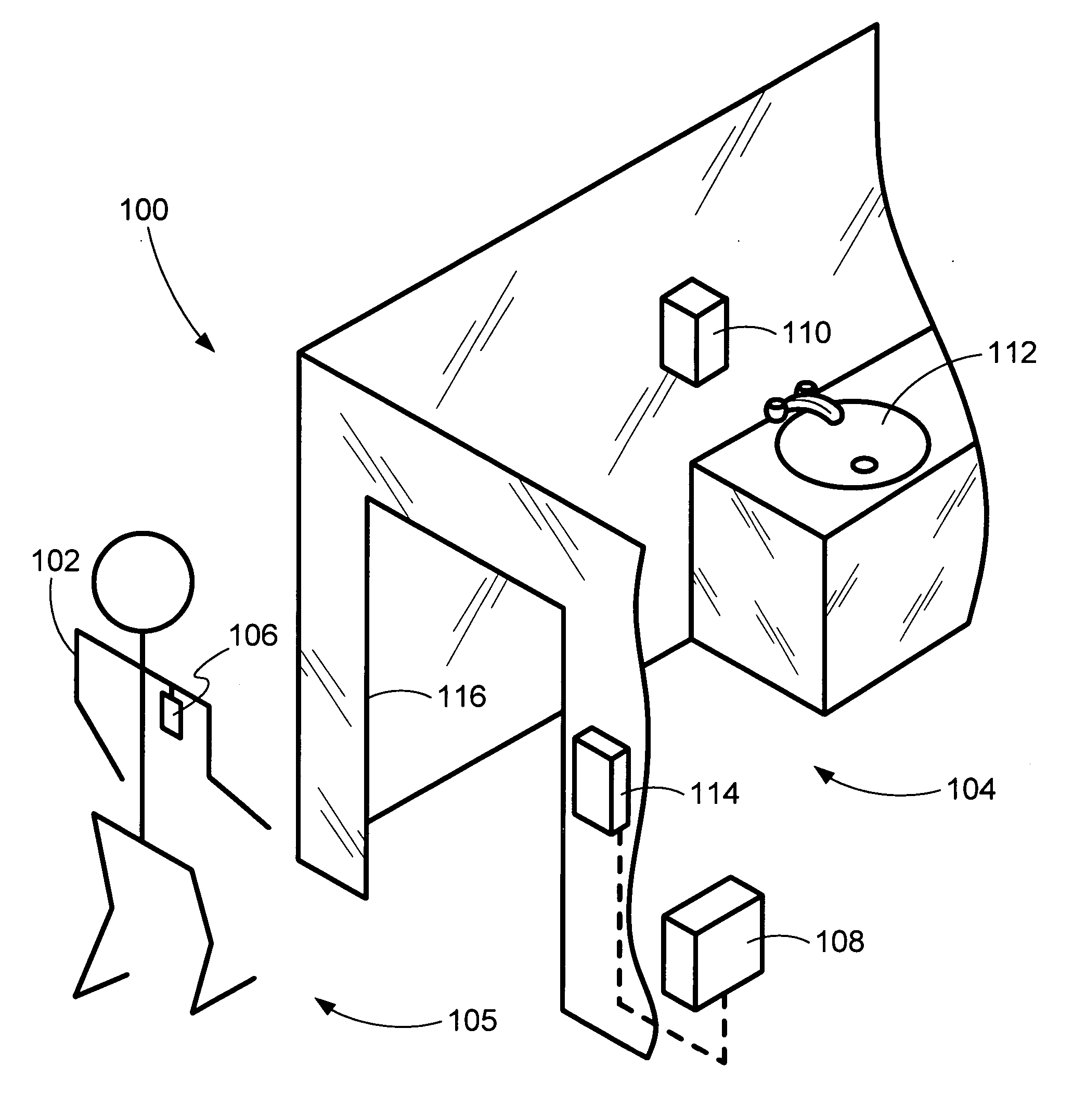
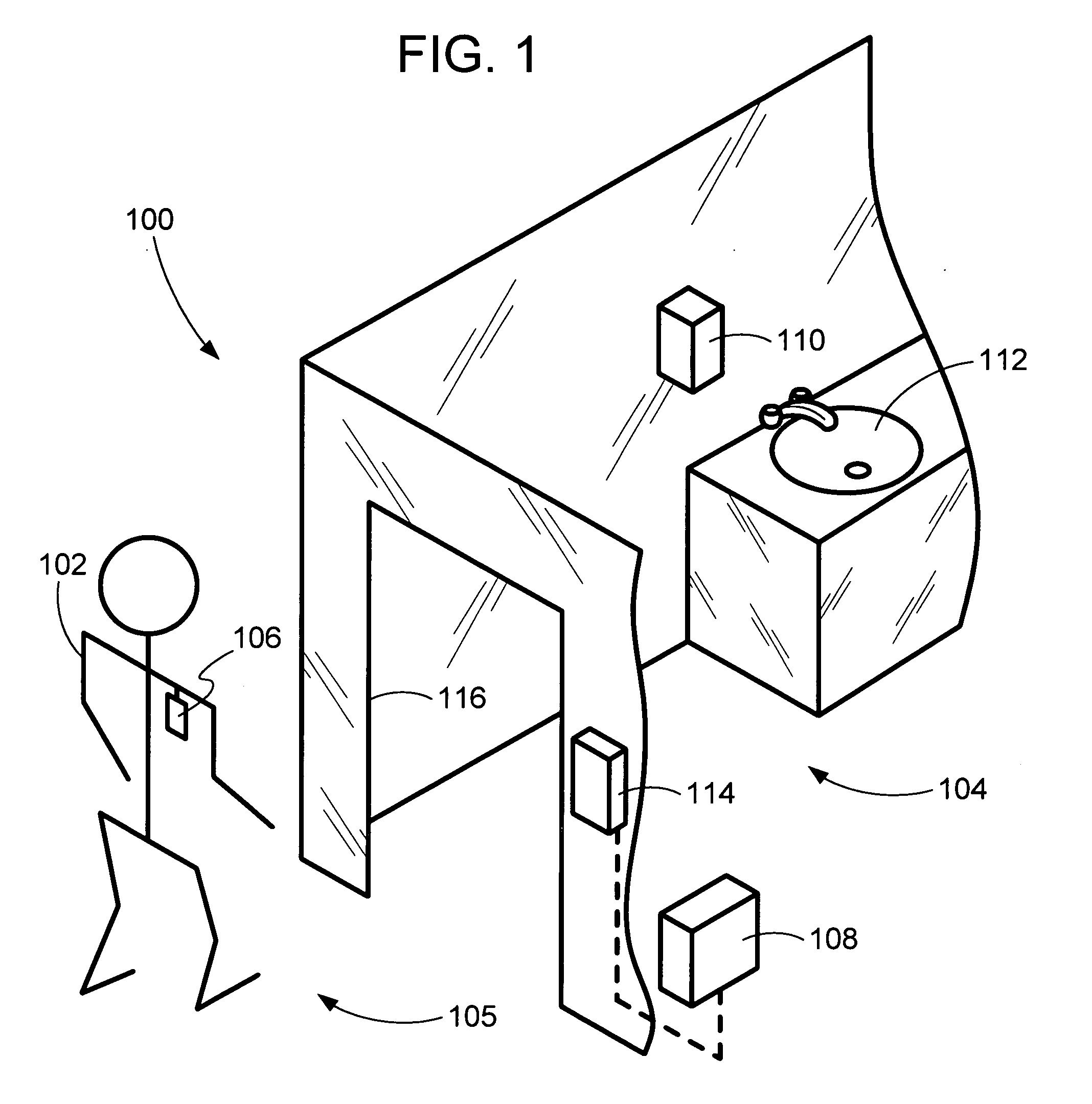
[0012]FIG. 1 shows an exemplary system 100 for monitoring compliance with personal hygiene requirements. A person to be monitored 102 is issued a name badge or an item of clothing such as a chefs hat that includes an RFID tag 106, similar to those used for preventing theft in retail stores. When the RFID tag 106 is carried near an electronic sensor 114 at the entrance 116 to a wash room 104, the RFID tag 106 emits a unique signal. The signal is detected by the sensor 114, and a record is entered into a database 108. In that database 108, the identity of the person 102 is correlated with the unique signal of the RFID tag 106.
[0013] In the exemplary wash room 104 of FIG. 1, a soap dispenser 110, located near a washbasin 112, dispenses soap containing a metallic element ...
PUM
 Login to View More
 Abstract
Description
Claims
Application Information
 Login to View More