Instrument docking station for an automated testing system

a technology of automated testing and instrument docking station, which is applied in the field of life sciences industry, can solve the problems of affecting the future integration of additional laboratory devices and the repair and/or upgrading of laboratory devices, affecting the quality of instrument docking station, etc., and achieves the effects of low cost of production, high repeatability, and simple construction
US20070237675A1Active Publication Date: 2007-10-11HIGHRES BIOSOLUTIONS INC

Patent Information

Authority / Receiving Office
US ยท United States
Current Assignee / Owner
HIGHRES BIOSOLUTIONS INC
Publication Date
2007-10-11

Smart Images

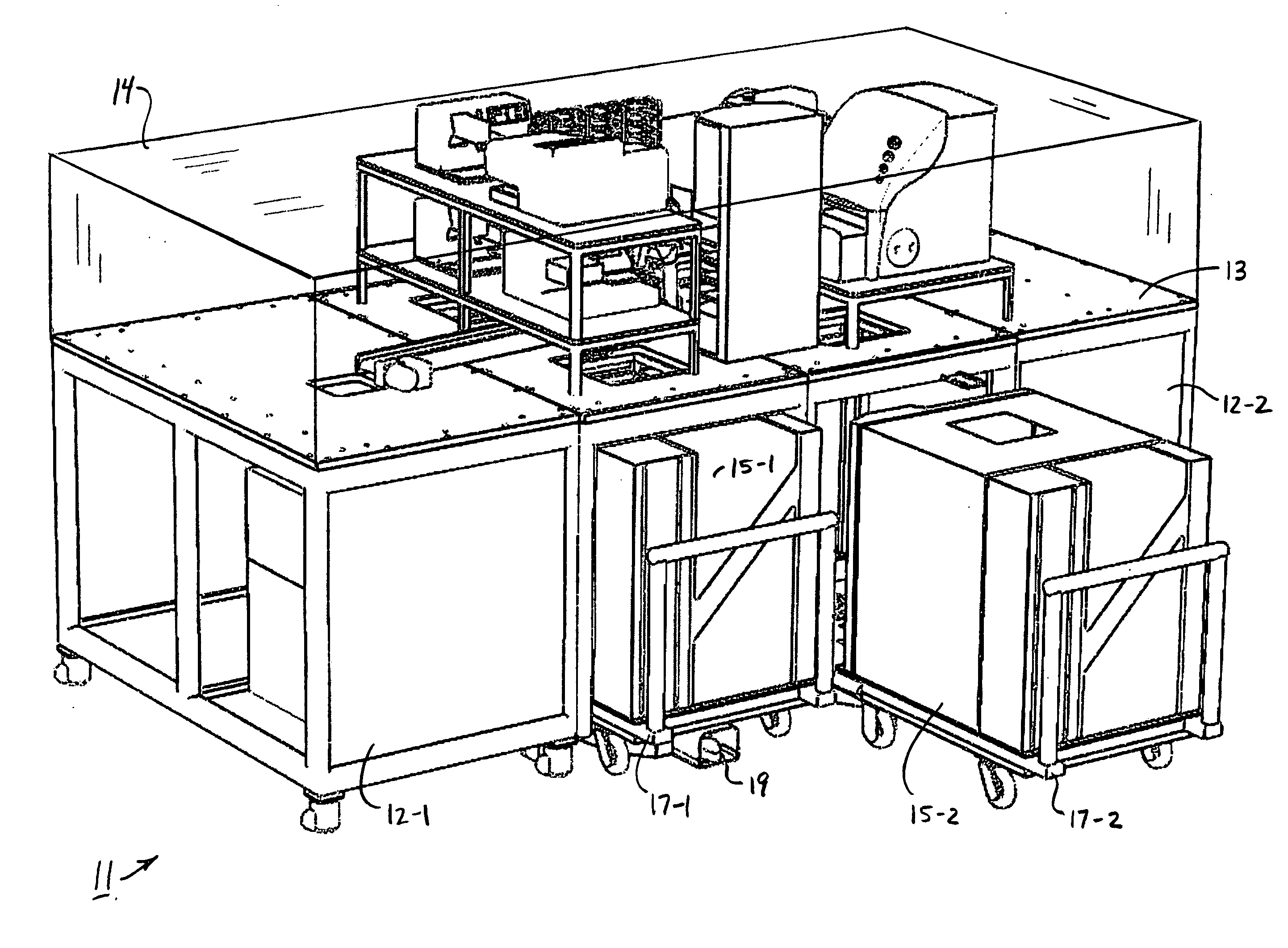
  • Figure 1
    Figure 1
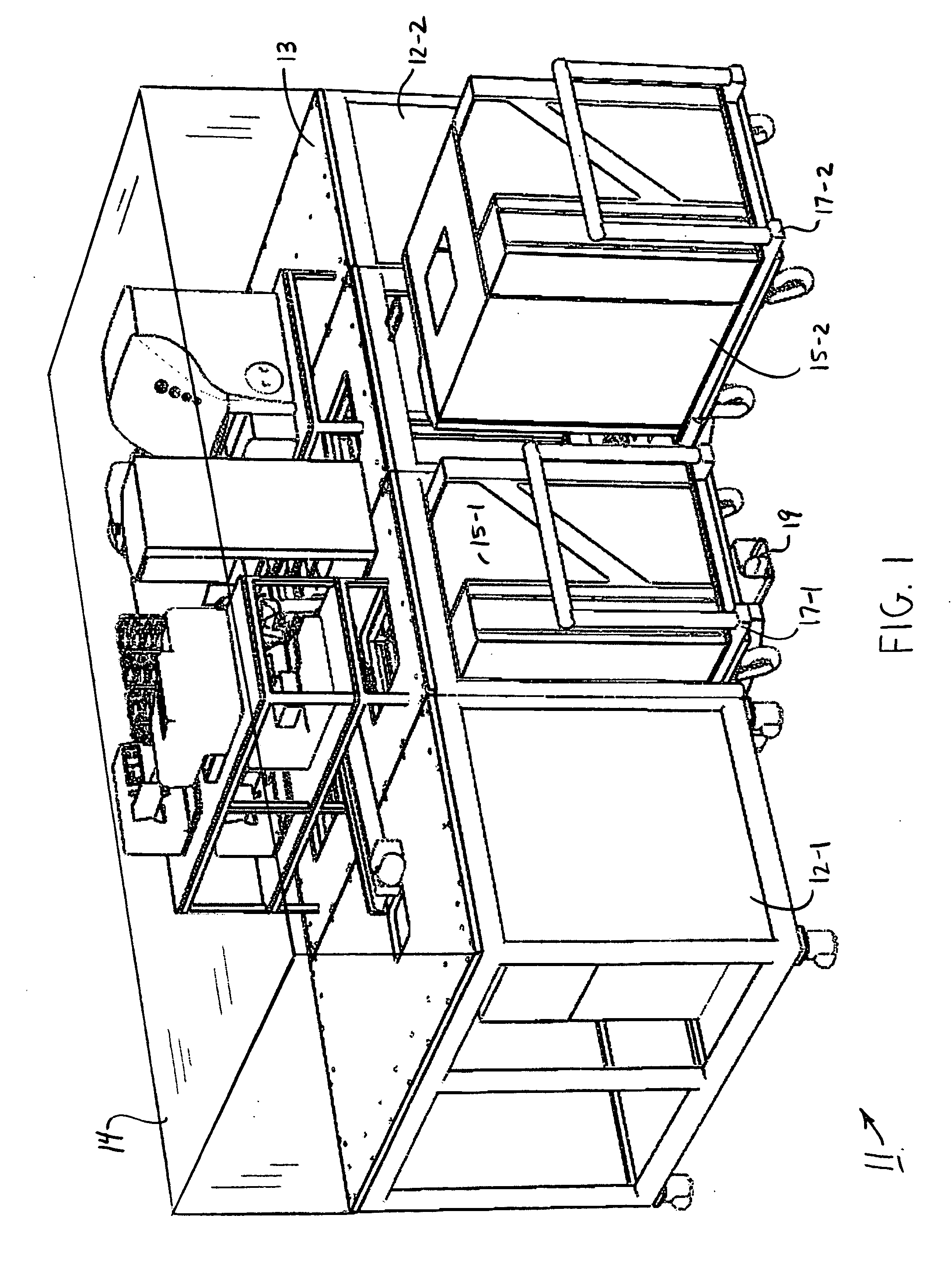
  • Figure 2
    Figure 2
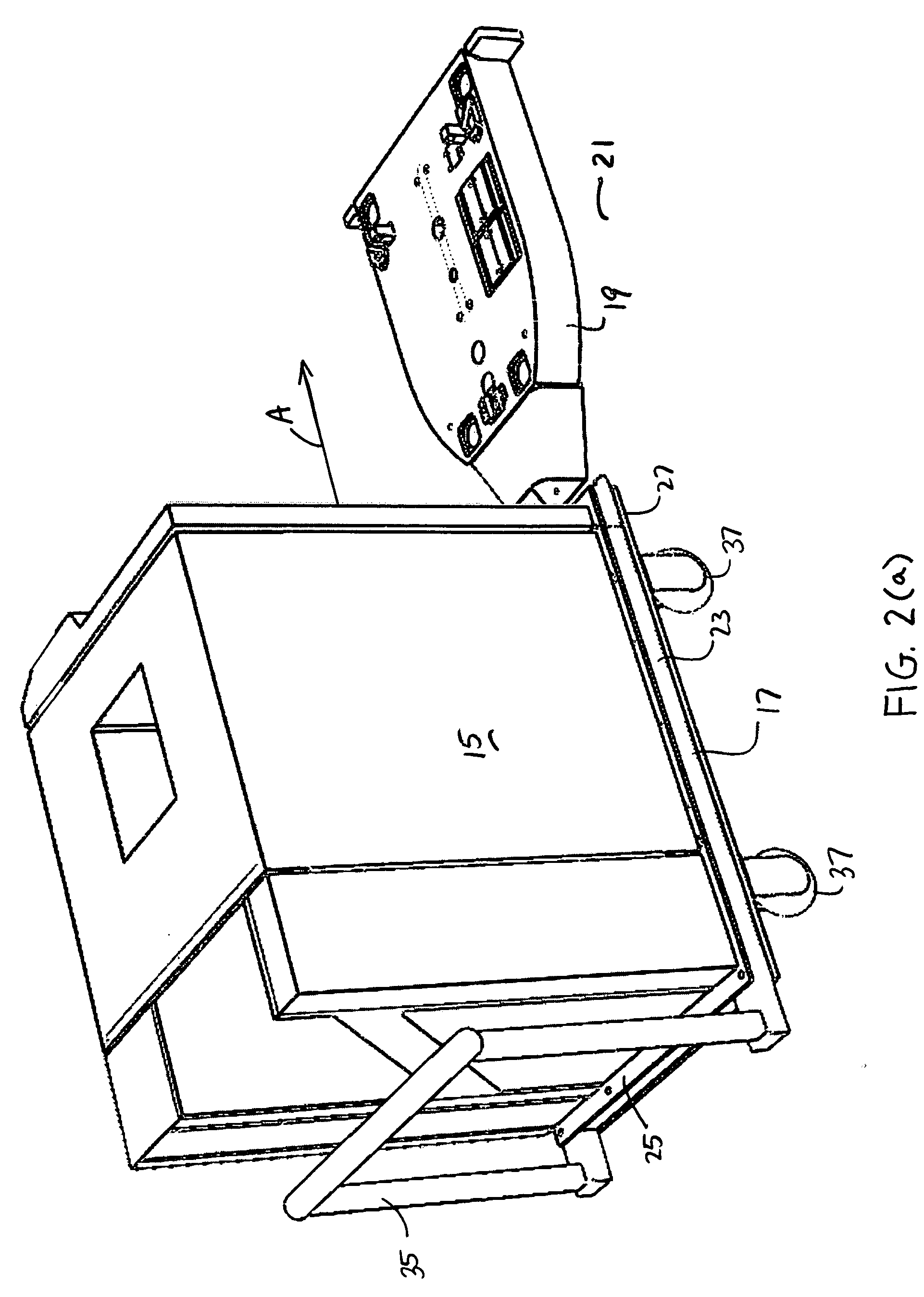
  • Figure 3
    Figure 3
Patent Text Reader

Abstract

An automated testing system includes one or more laboratory devices that operate together to perform an assay. The testing system is designed such that a laboratory device may be seamlessly integrated with the remaining devices in a quick and effortless manner. Specifically, the laboratory device is securely mounted on a slidable cart with fluid and electrical connections established therebetween. The slidable cart is in turn adapted to releasably engage with a docking station that is fixedly mounted on the workspace floor, the docking station being provided with at least one fluid input connection, an input power connection and at least one communication signal connection that are relatively permanent in nature. In order to couple the cart to the docking station, the cart is rolled generally into position above the docking station using complementary alignment posts and tracks. With the cart positioned as such, a foot pedal on the docking station is actuated which inflates a pair of internal bladders. The inflation of the bladders causes a top plate on the docking station to rise and physically lift the cart off the workspace floor, wherein complementary alignment pins and notched blocks are used to acutely position the cart on the docking station during the lifting process. As the docking station makes contact with the cart, fluid and electrical connectors on the docking station advance to their extended positions and make contact with complementary fluid and electrical connectors that are provided on the underside of the cart, thereby establishing fluid and electrical connections between the docking station and the cart. In this manner, the immobilized laboratory device is provided with fluid and electrical inputs via the cart and the docking station.
Need to check novelty before this filing date? Find Prior Art

Description

BACKGROUND OF THE INVENTION

[0001] The present invention relates generally to the life sciences industry and more particularly to automated testing systems for conducting high throughput screening in the life sciences industry.

[0002] High throughput screening (HTS) is a well-known form of scientific experimentation in the life sciences industry which enables a research facility to conduct a large quantity of experiments at the same time. Specifically, in one form of high throughput screening which is well-known in the art, a plate is provided which includes a large number of isolated, miniaturized wells (e.g., 96, 384 or 1536 wells per plate), whereby a unique compound is disposed within each well. An array of different substances is then deposited into each well with the premise of discovering a desired reaction. In this manner, high throughput screening can be used to subject a particular substance to an entire library of compounds at the same time and, as a result, is highly use...

Claims

the structure of the environmentally friendly knitted fabric provided by the present invention; figure 2 Flow chart of the yarn wrapping machine for environmentally friendly knitted fabrics and storage devices; image 3 Is the parameter map of the yarn covering machine
Login to View More