Elevator system

a technology of elevator system and elevator, applied in elevators, hoisting equipment, instruments, etc., can solve the problem of performing one selected route at a time, and achieve the effect of cost prognosis

US20080105499A1Inactive Publication Date: 2008-05-08KONE CORP
11 Cites 34 Cited by

Patent Information

Authority / Receiving Office
US · United States
Current Assignee / Owner
Publication Date
2008-05-08
Estimated Expiration
Not applicable · inactive patent

Smart Images

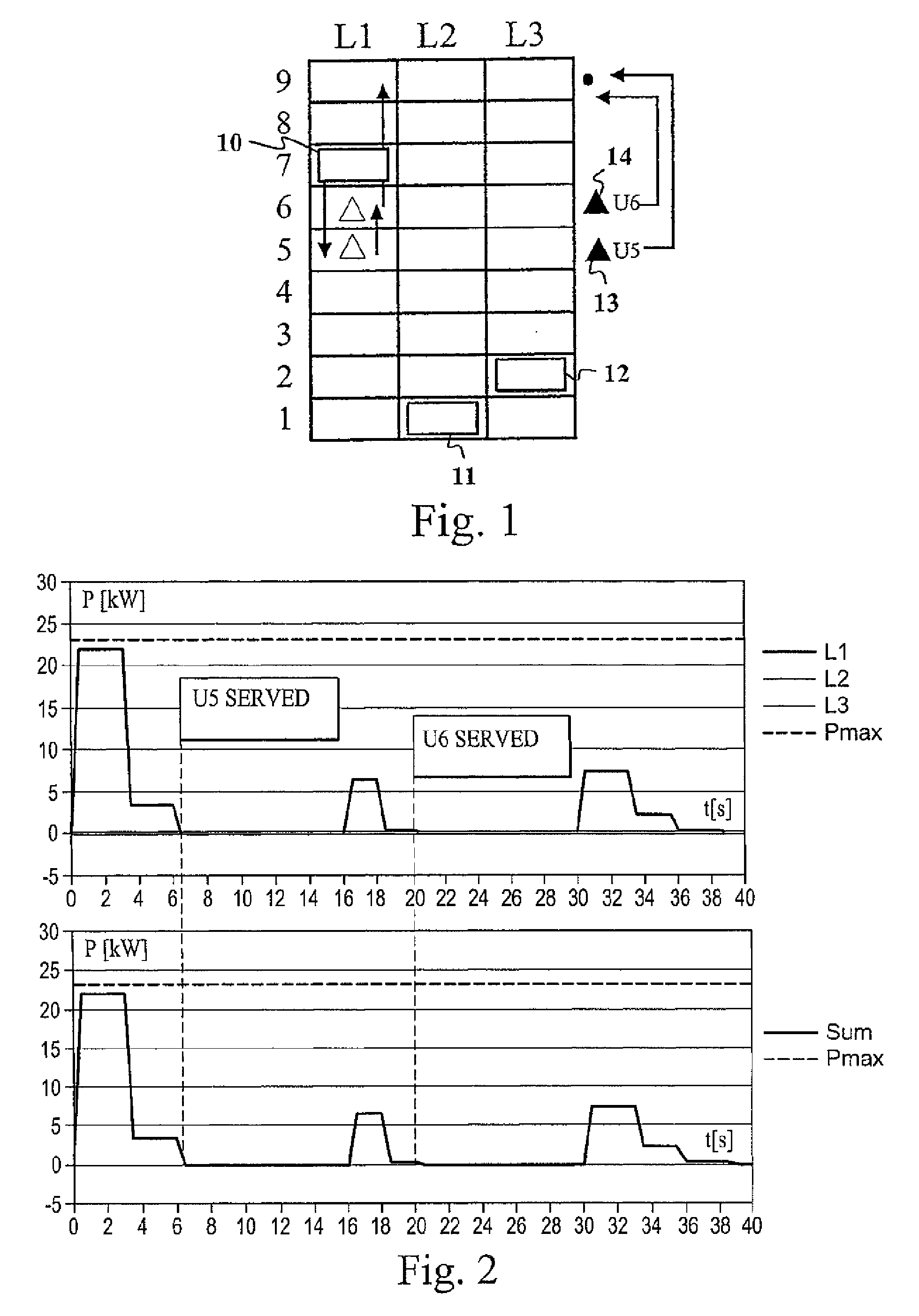
  • Figure 1
    Figure 1
  • Figure 2
    Figure 2
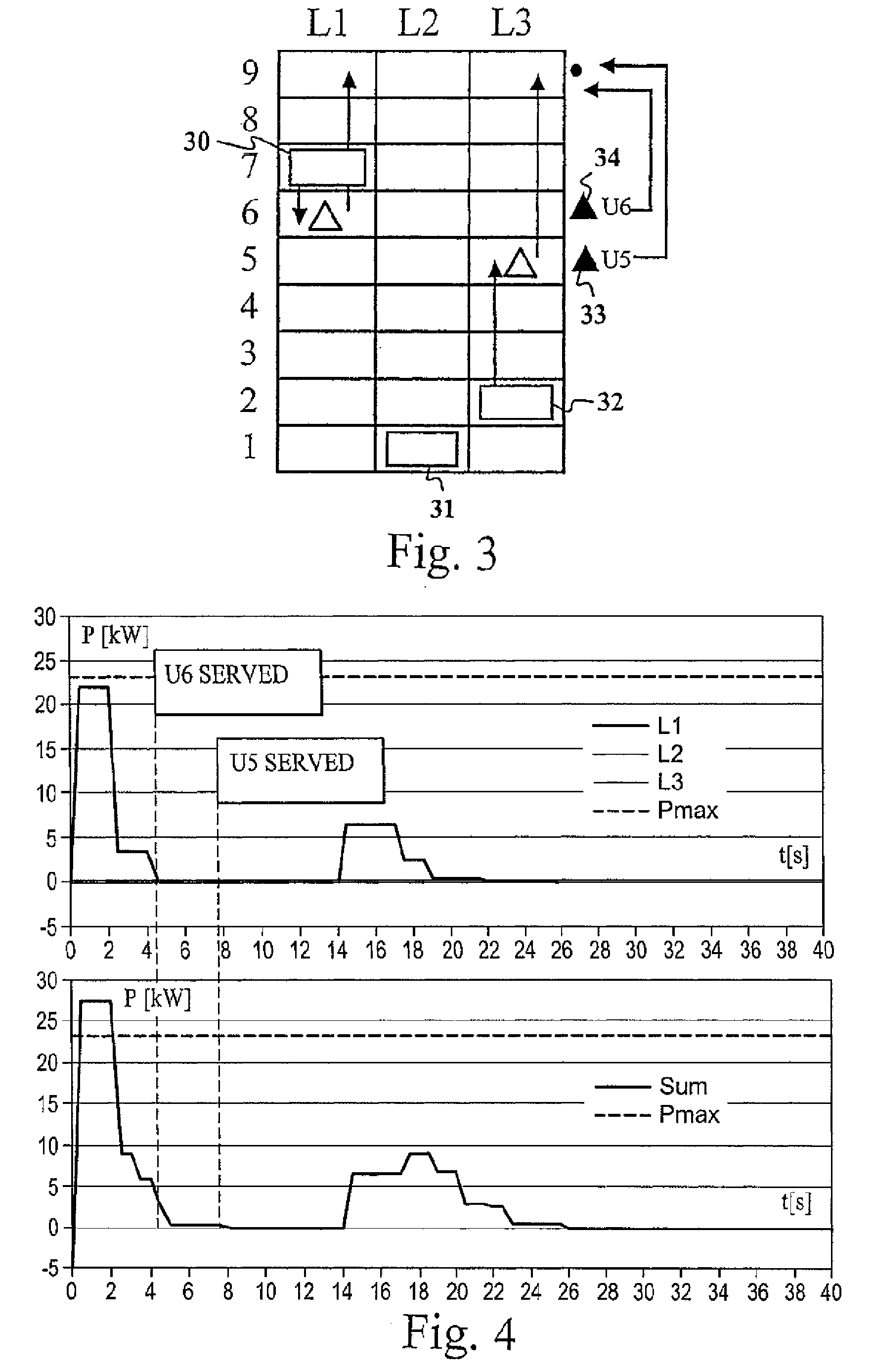
  • Figure 3
    Figure 3
Patent Text Reader

Abstract

The present invention discloses a method for optimal routing of the elevators in an elevator system in a situation where the supply power received by the system is limited e.g. due to emergency power operation. In the invention, routes are optimized by using a cost function to which has been added a term containing the summed instantaneous power consumed. Power consumption is monitored in real time, and the elevators need a start permission from the control system. A route alternative that exceeds the power limit is penalized in the cost function by a so-called penal term. With the elevator routing obtained as a result, the instantaneous power consumed by the system remains continuously below the set power limit. Some call can thus be postponed to be served later. By the method of the invention, the number of elevators serving passengers in an emergency power situation can be varied dynamically.
Need to check novelty before this filing date? Find Prior Art

Description

FIELD OF THE INVENTION

[0001] The present invention relates to optimal elevator routing in a situation where the energy to an elevator system is supplied by a stand-by power source or where the peak values of energy consumption of the elevator system are to be reduced. BACKGROUND OF THE INVENTION

[0002] Allocation of the calls entered by elevator users to different elevators in an elevator system is one of the basic functions of the control of the system. The aim of allocation is to assign the calls to the elevator cars so as to optimize a desired parameter descriptive of the operating capacity of the elevator system. Traditionally, the most commonly used parameters include e.g. passenger waiting times and traveling times. Typically, from these times, mean values are calculated and distributions are determined. ‘Calls’ refers generally to all calls issued, i.e. both calls entered using up / down buttons on different floors and destination floor calls given in the elevator car. The for...

Examples

Embodiment Construction

[0037] As the power consumption needs of the elevators are known, it is possible to control the elevator group even during emergency power operation in more versatile ways than by just simply putting certain predetermined elevators into normal service. The power requirements of the elevators being known, the elevator group can be controlled in such a way that the number of elevators in service varies dynamically according to the states of the elevators and the traffic situation. In addition, the essential condition, i.e. the instantaneous maximum power value can be continuously kept below the desired limit.

[0038]FIG. 5 represents a routing alternative according to the invention with the same elevator states 50, 51, 52 and active calls 53, 54 as in FIGS. 1 and 3. In the routing obtained as a final result, elevator L251 serves call U553 and elevator L352 serves call U654, and this routing fulfills the maximum power condition. With this routing, the total waiting time is 18 s, which i...