
Arrangement for Feeding a Slurry of Chips and Liquid
- Summary
- Abstract
- Description
- Claims
- Application Information
AI Technical Summary
Benefits of technology
Problems solved by technology
Method used
Image

Examples
Embodiment Construction
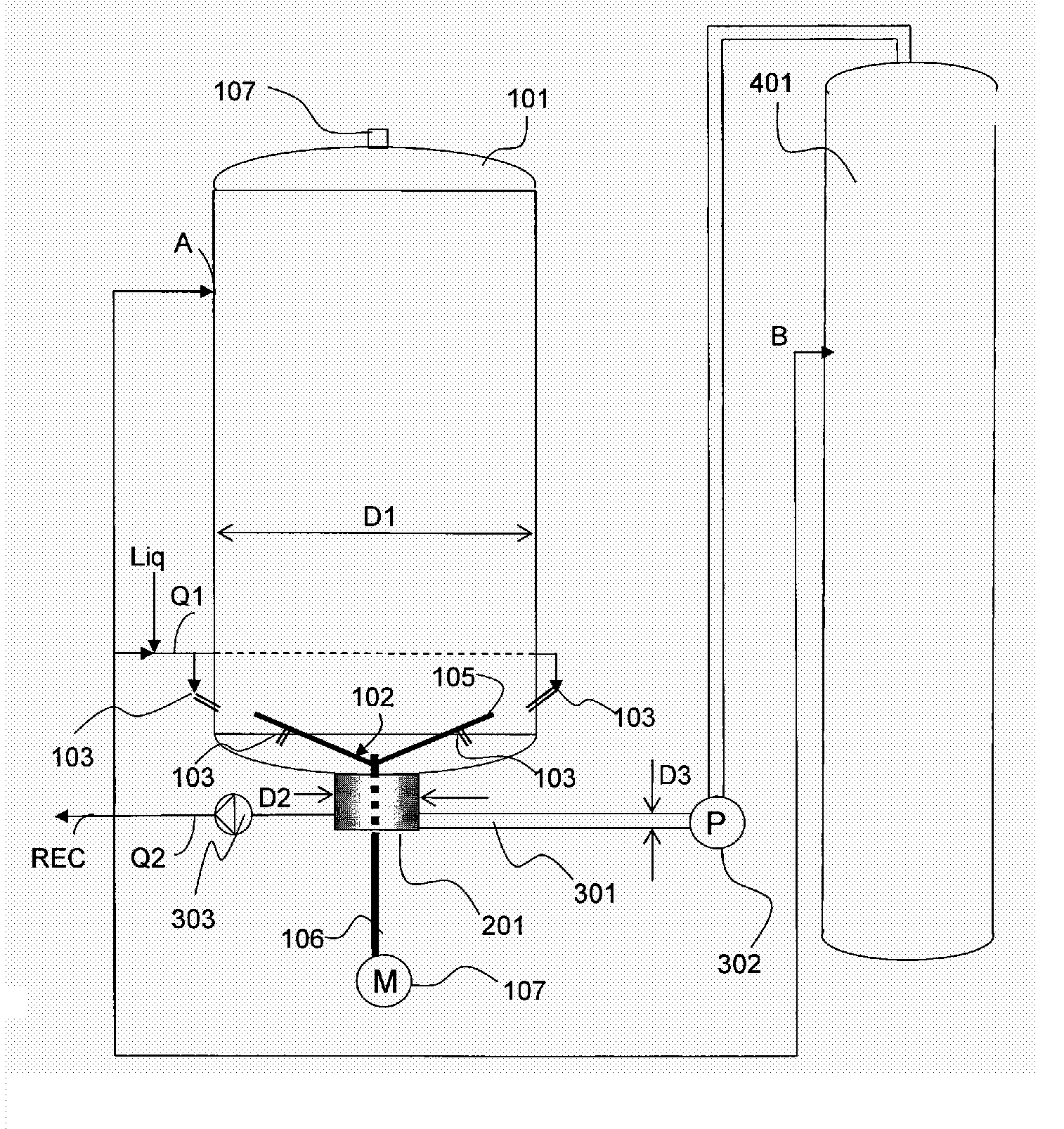
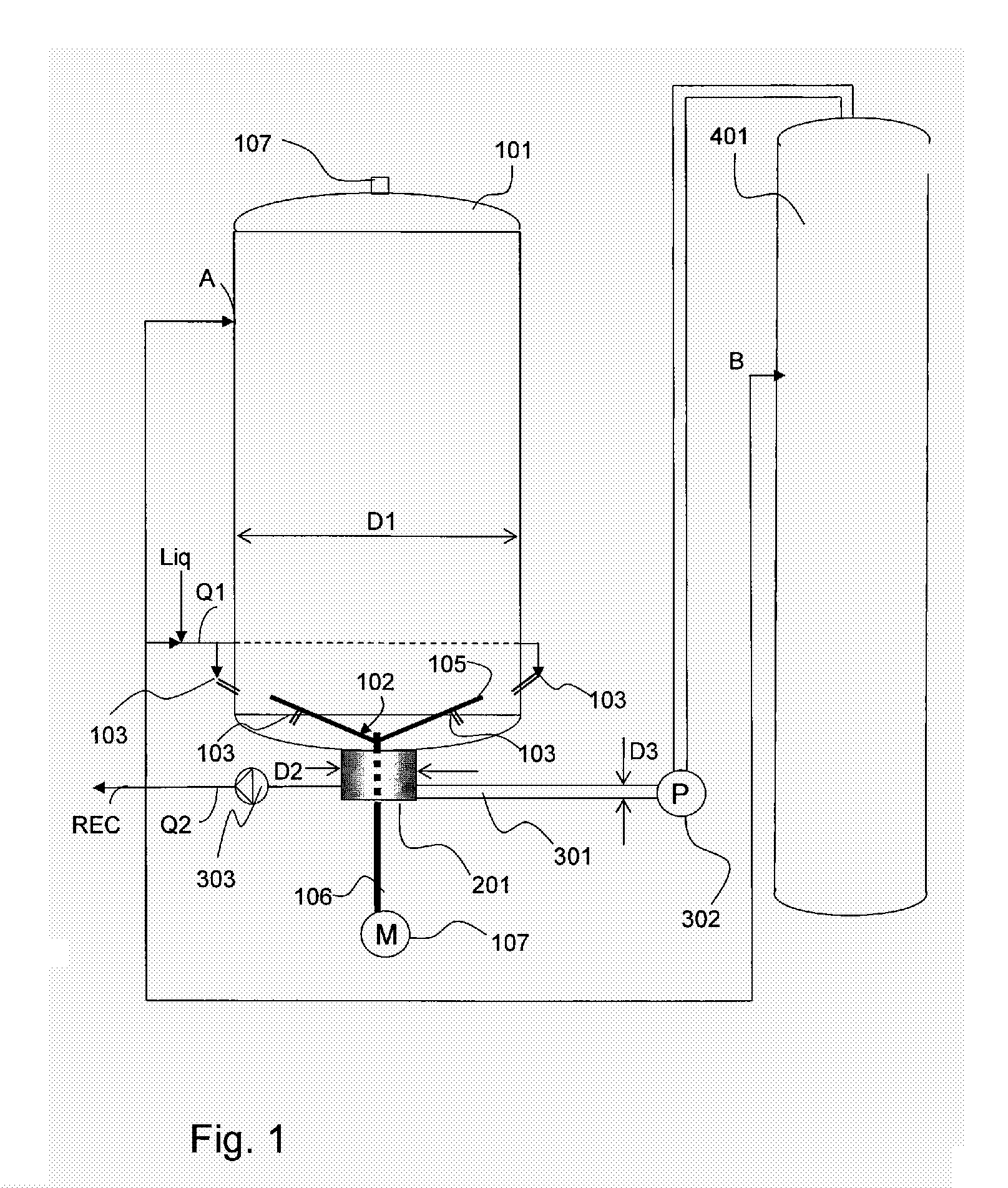
[0025]The concept “chips suspension” will be used in the following detailed description of the invention. This term is here used to denote chips together with fluid, which suspension is treated in an impregnation vessel and fed out from the said impregnation vessel to a subsequent digester in a continuous cooking process for the production of cellulose pulp.
[0026]A further expression that will be used is “fluid / wood ratio”. This expression is here used to denote the relationship between fluid and wood that is prevalent in the chips suspension.
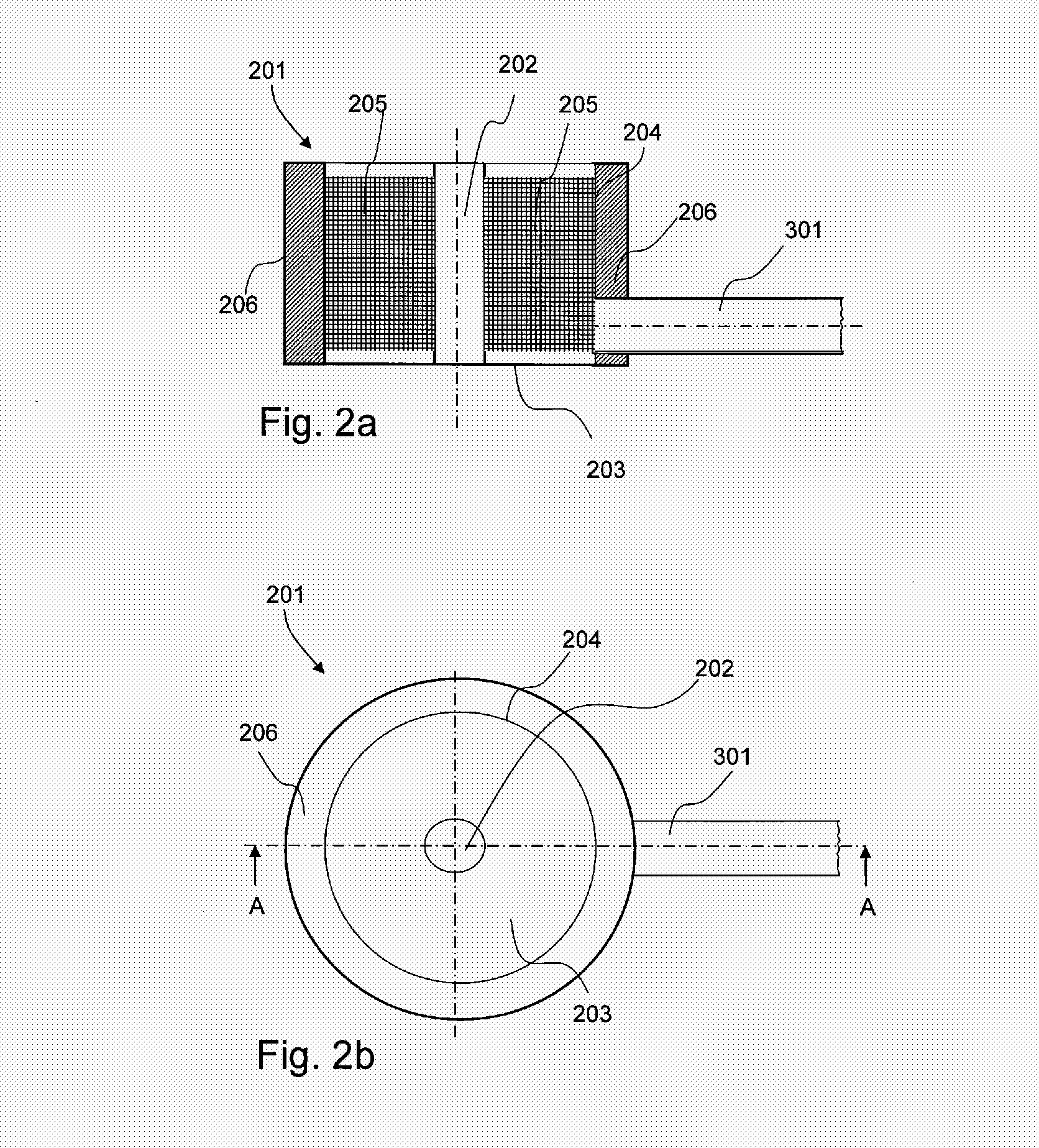
[0027]Furthermore, the expression “perforated strainer hole or slit” will be used in the description of strainer surfaces. This expression is here used to denote penetrating openings in the surface with no requirements placed on their shape. Thus, these openings may be round, square, triangular, etc. Furthermore, it is also possible to conceive that the perforations consist of penetrating slits that may be straight, bent, curved, etc.
[0028]Fina...
PUM
| Property | Measurement | Unit |
|---|---|---|
| Angle | aaaaa | aaaaa |
| Angle | aaaaa | aaaaa |
| Fraction | aaaaa | aaaaa |
Abstract
Description
Claims
Application Information
 Login to View More