
Method For Recognizing Dice Dots
- Summary
- Abstract
- Description
- Claims
- Application Information
AI Technical Summary
Benefits of technology
Problems solved by technology
Method used
Image

Examples
Embodiment Construction
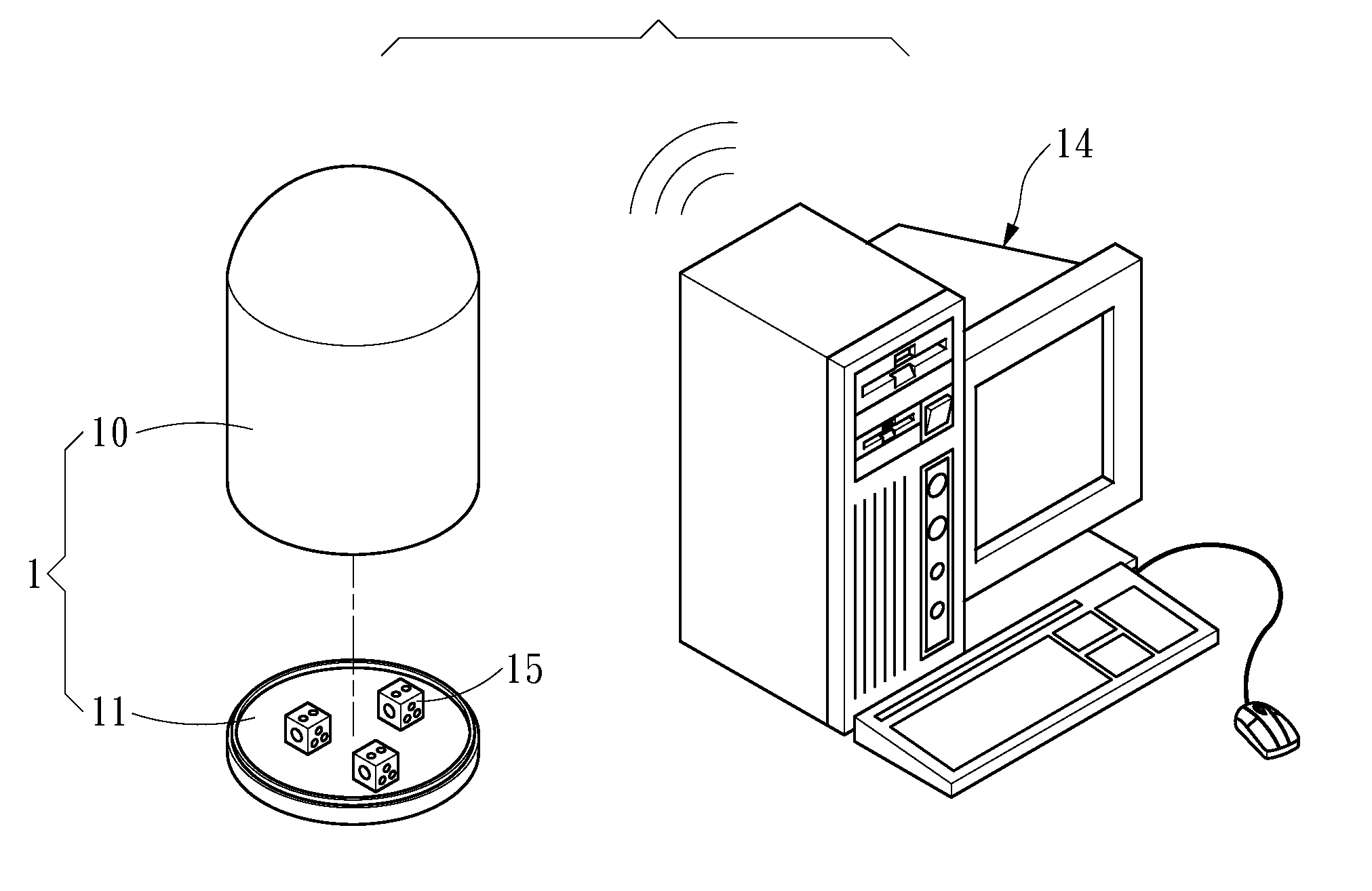
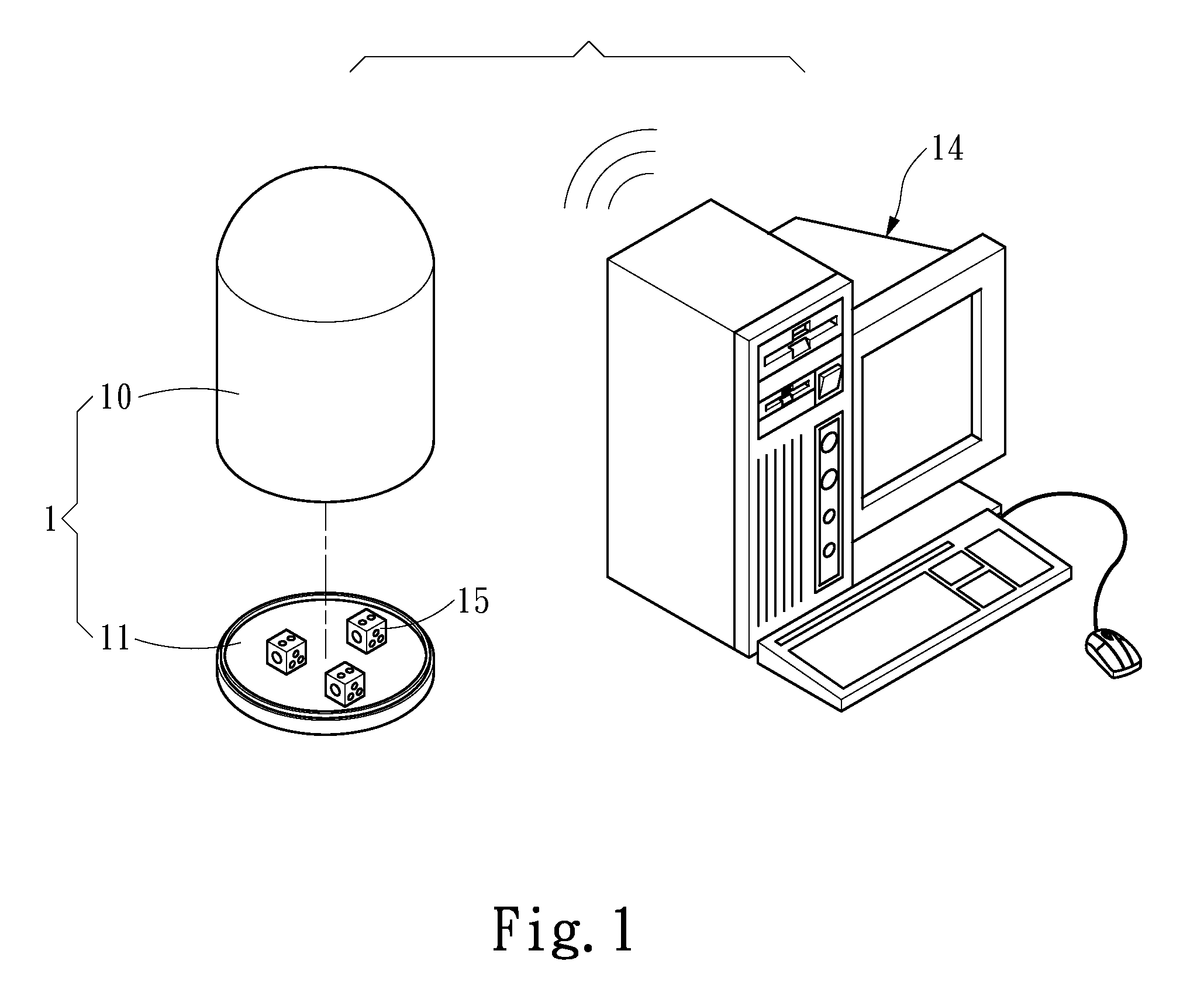
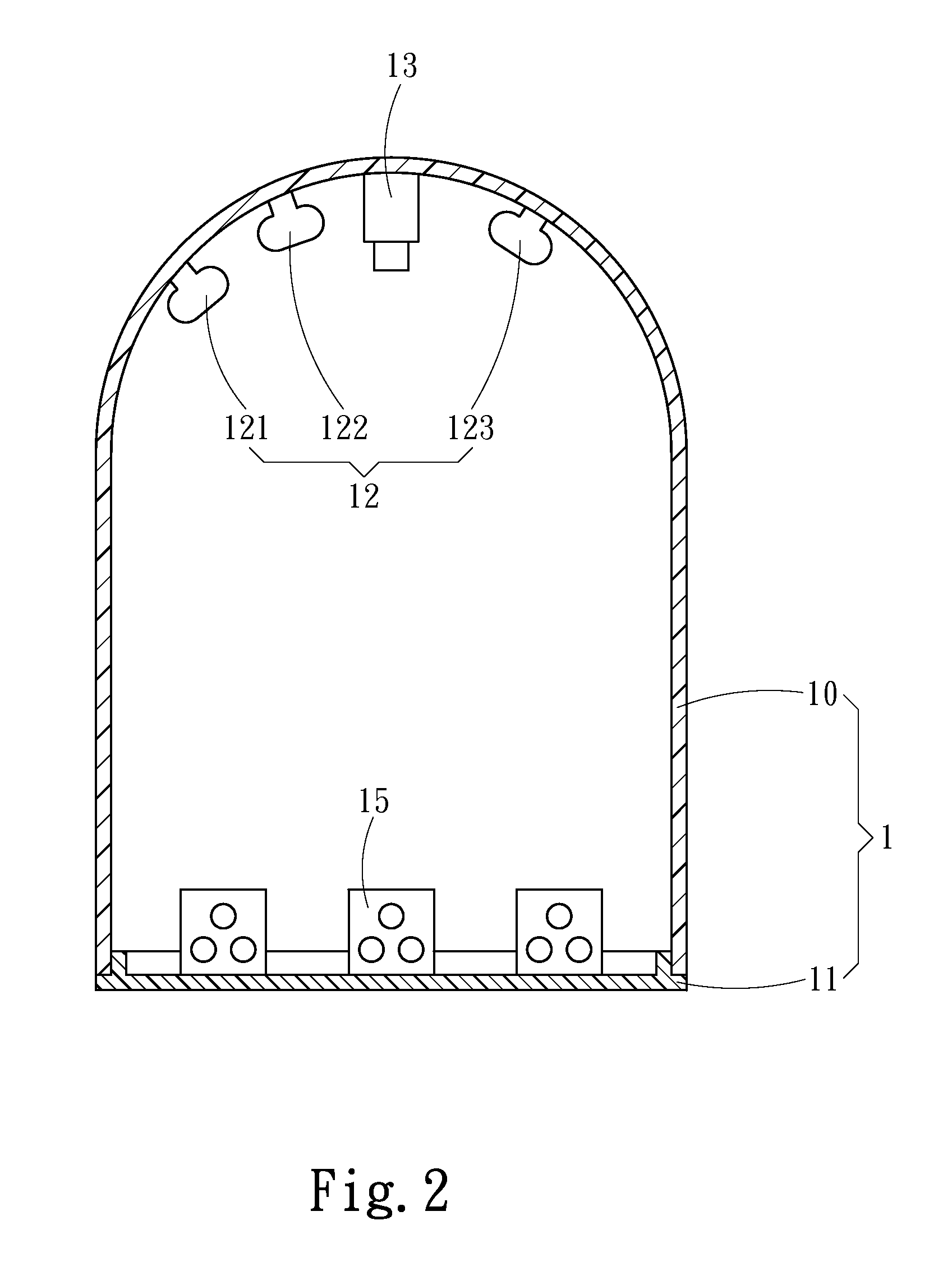
[0015]Please refer to FIGS. 1 and 2 for an apparatus to recognize dice dots according to the invention. It includes a dice cup 1 for holding at least one dice 15, a light source module 12, a capturing module 13 and a recognizing module 14. The dice cup 1 has a base 11 to hold the dice 15 and a hood 10 made from an opaque material to be fastened to the base 11. The light source module 12 is located in the hood 10 to generate a plurality of light sources 121, 122 and 123 to project lights to the dice 15 at different angles. The capturing module 13 also is located in the hood 10 to capture images of the dice 15 at a number of times according to the light projecting times of the light sources 121, 122 and 123 onto the dice 15 to generate a plurality of corresponding images information S1, S2 and S3 (referring to FIGS. 3A, 3B and 3C). The recognizing module 14 receives the image information S1, S2 and S3 from the capturing module 13 through a wired or wireless transmission means and also...
PUM
 Login to View More
 Abstract
Description
Claims
Application Information
 Login to View More