Door Mounted Finger Safety Device and Its Method of Use

a finger safety and finger technology, applied in the field of door hardware, can solve the problem of commanding a less robust arm construction, and achieve the effect of protecting against injury

US20100050377A1Inactive Publication Date: 2010-03-04RITACHKA ROMAN
19 Cites 18 Cited by

Patent Information

Authority / Receiving Office
US · United States
Current Assignee / Owner
Publication Date
2010-03-04
Estimated Expiration
Not applicable · inactive patent

Smart Images

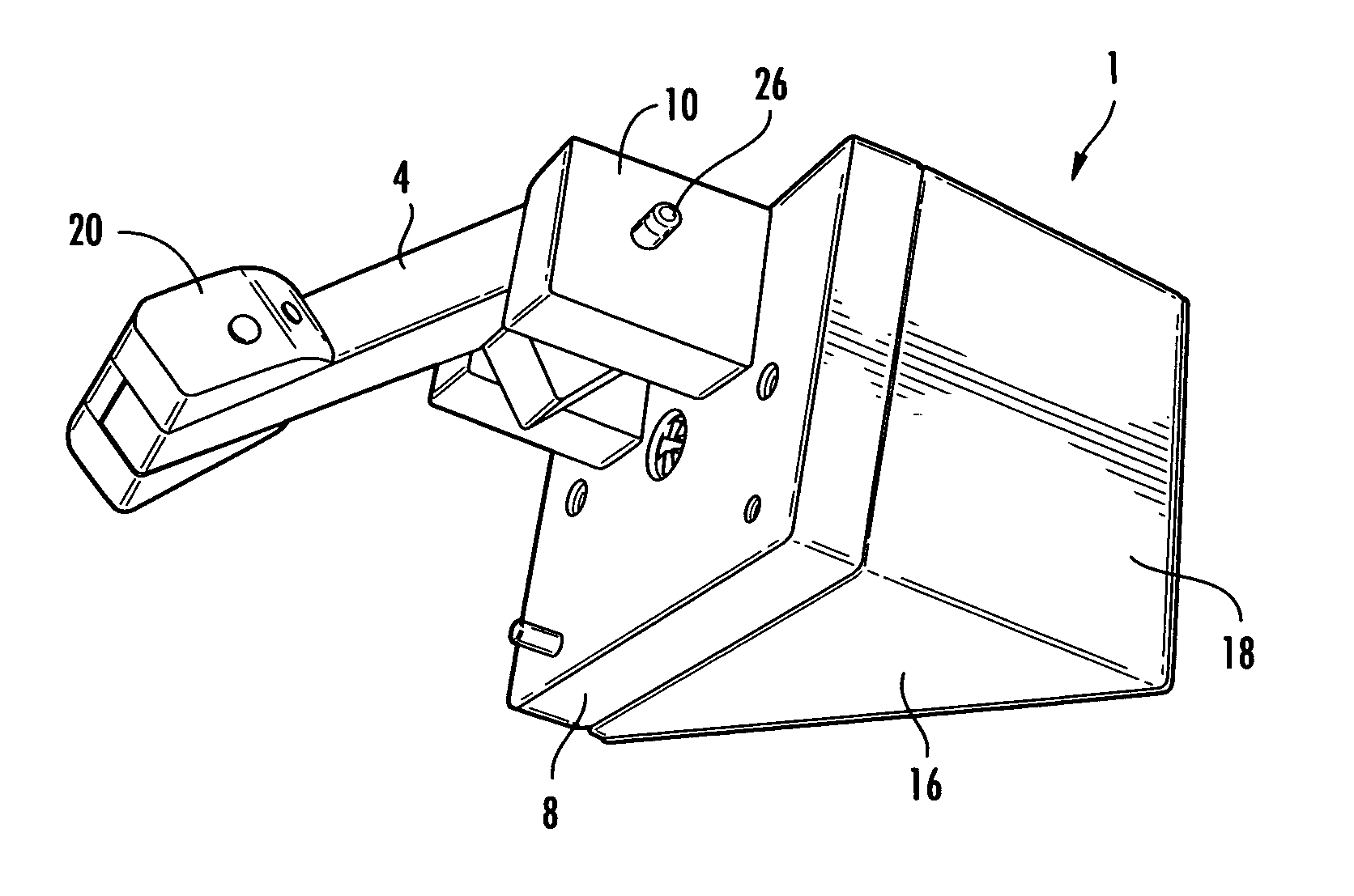
  • Figure 1
    Figure 1
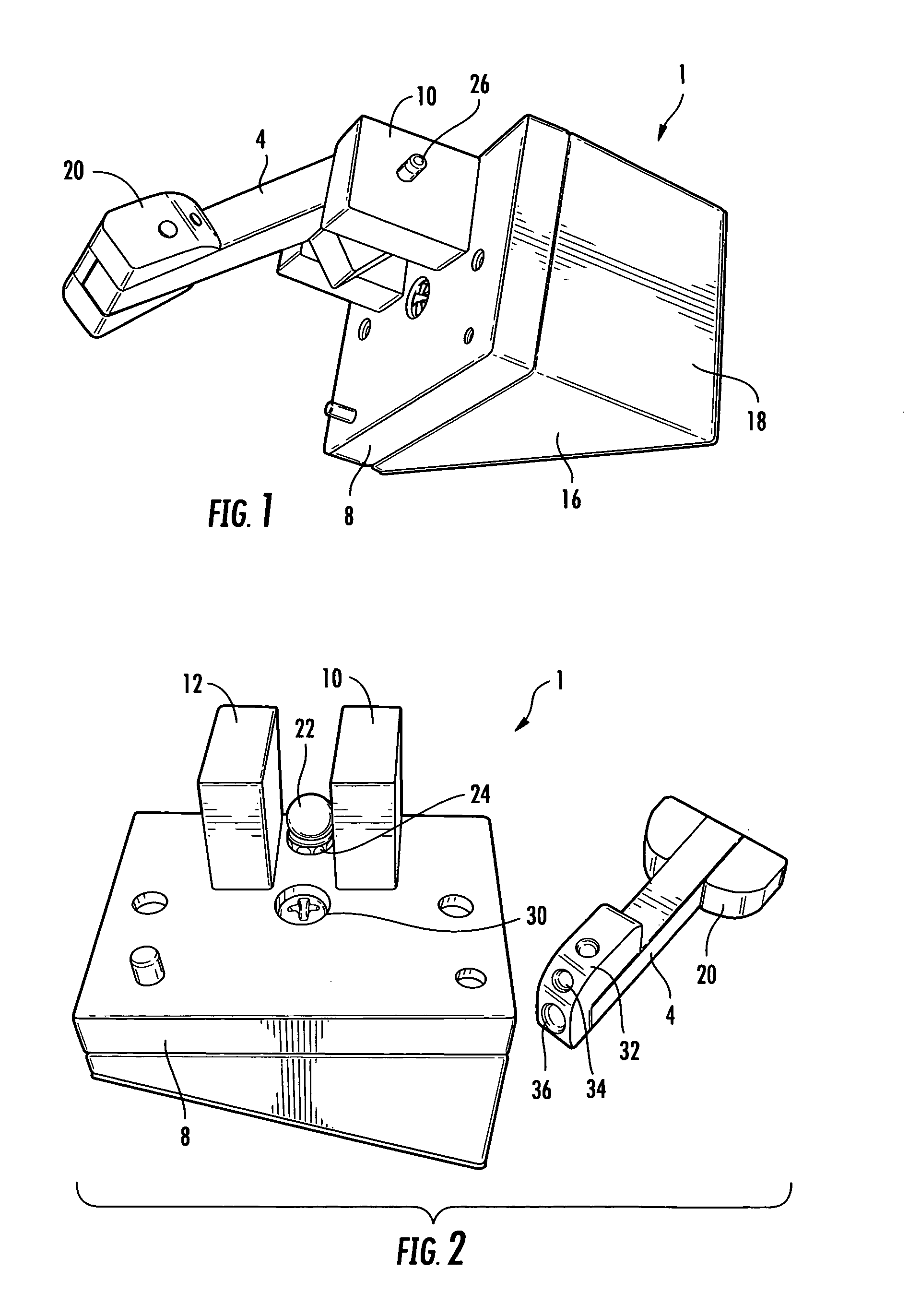
  • Figure 2
    Figure 2
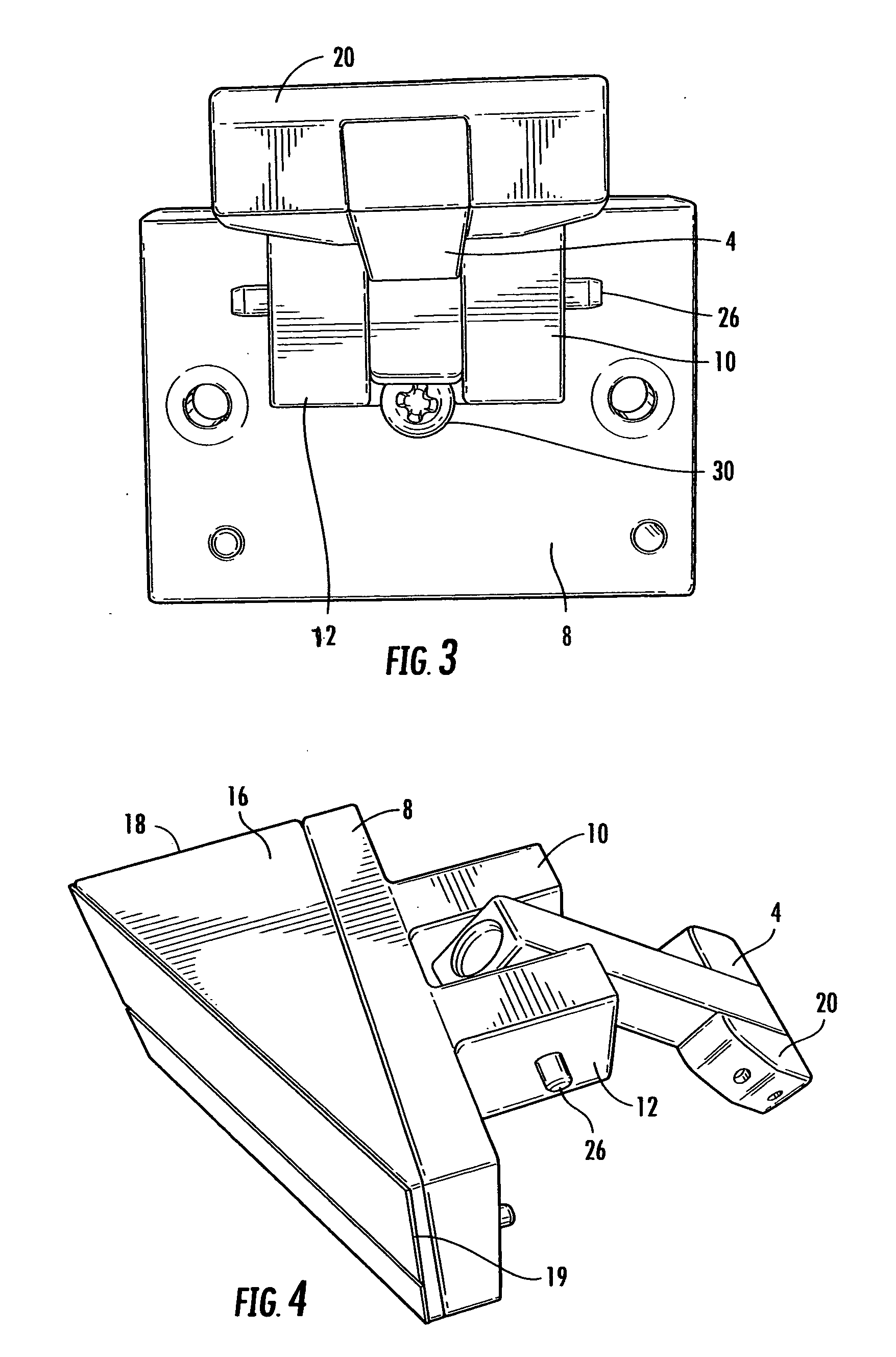
  • Figure 3
    Figure 3
Patent Text Reader

Abstract

A door check device to be mounted to a door for selectively maintaining a gap when door closing is attempted. This prevents injuries to children's fingers and the like. The door check includes a base with a journal having action arm pivoted at its proximal end. The arm has a distal end extending outwardly to engage a doorstop. Indexing sockets are formed along the arm's proximal end. Each socket collaborates with the nose of a spring-biased detent to retain the action arm in a preselected position. The arm may be set in a first position to directly engage the doorstop to form a gap. Set in a second position the arm allows door closing but, upon next opening, the arm automatically reverts to door checking position. In a third position the arm is fully lowered to disable the check device. This device may find application to a variety of closures.
Need to check novelty before this filing date? Find Prior Art

Description

REFERENCE TO RELATED APPLICATIONS

[0001] This application is entitled to the benefit of provisional patent application Ser. No. 61 / 136,404 filed Sep. 3, 2008; such benefit is hereby claimed under 35 USC 119(e) and the content of said application in its entirety and for all purposes is incorporated herein by reference.STATEMENT REGARDING FEDERALLY SPONSORED RESEARCH OR DEVELOPMENT

[0002] Not applicableREFERENCE TO SEQUENCE LISTING

[0003] Not applicableBACKGROUND OF THE INVENTION

[0004] 1. Field of the Invention

[0005] The invention disclosed herein generally relates to the field of door hardware and more specifically to mechanisms for preventing a door or equivalent closure from fully closing by mechanically maintaining at least a small gap along each lateral edge, thereby keeping the door slightly ajar. Described herein are a unique gap-retaining mechanism and its method of use.

[0006] Each year, tens of thousands of children in the United States receive serious injuries when closures accidenta...

Examples

Embodiment Construction

[0042]Looking more closely at the inventive door check device 1 depicted in FIGS. 1-12, it will be seen that the principal operative element is the outwardly projecting, articulated impact or action arm 4. This action arm 4 and its associated components may be fabricated from any of a variety of source materials. These materials include but are not limited to plastic, wood, metal, and the like, bearing in mind that to be qualified a source material must be sufficiently substantial to withstand repeated compressive and shearing impacts. Since this inventive device 1 is intended for widespread use, it also is important that the selected source materials be relatively inexpensive and easily manufactured and assembled.

[0043]The door check device 1 with impact or action arm 4 as viewed in FIGS. 1 and 2 extends from a proximal end at a base 8 to which it is mounted on pivot pin 26 in journal bearing block elements 10 and 12 (integral with, or affixed to, the base 8). The action arm extend...