
Rapid I/O Traffic System
a traffic system and i/o technology, applied in the field of input/output technology, can solve the problems of fictitious performance de-rating factors between cache and flat memory performance, general omission of load and change portions of this cycle, and loss of confidence in the capabilities of the device, so as to prevent head-of-line blocking
- Summary
- Abstract
- Description
- Claims
- Application Information
AI Technical Summary
Benefits of technology
Problems solved by technology
Method used
Image

Examples
Embodiment Construction
[0046]Trace data is stored in trace memory as it is recorded. At times, the trace data may be repetitive for extended periods of time. Certain sequences may also be repetitive. This presents an opportunity to represent the trace data in a compressed format. This condition can arise when certain types of trace data are generated e.g., trace timing data is generated when program counter (PC) and data trace is turned off and timing remains on.
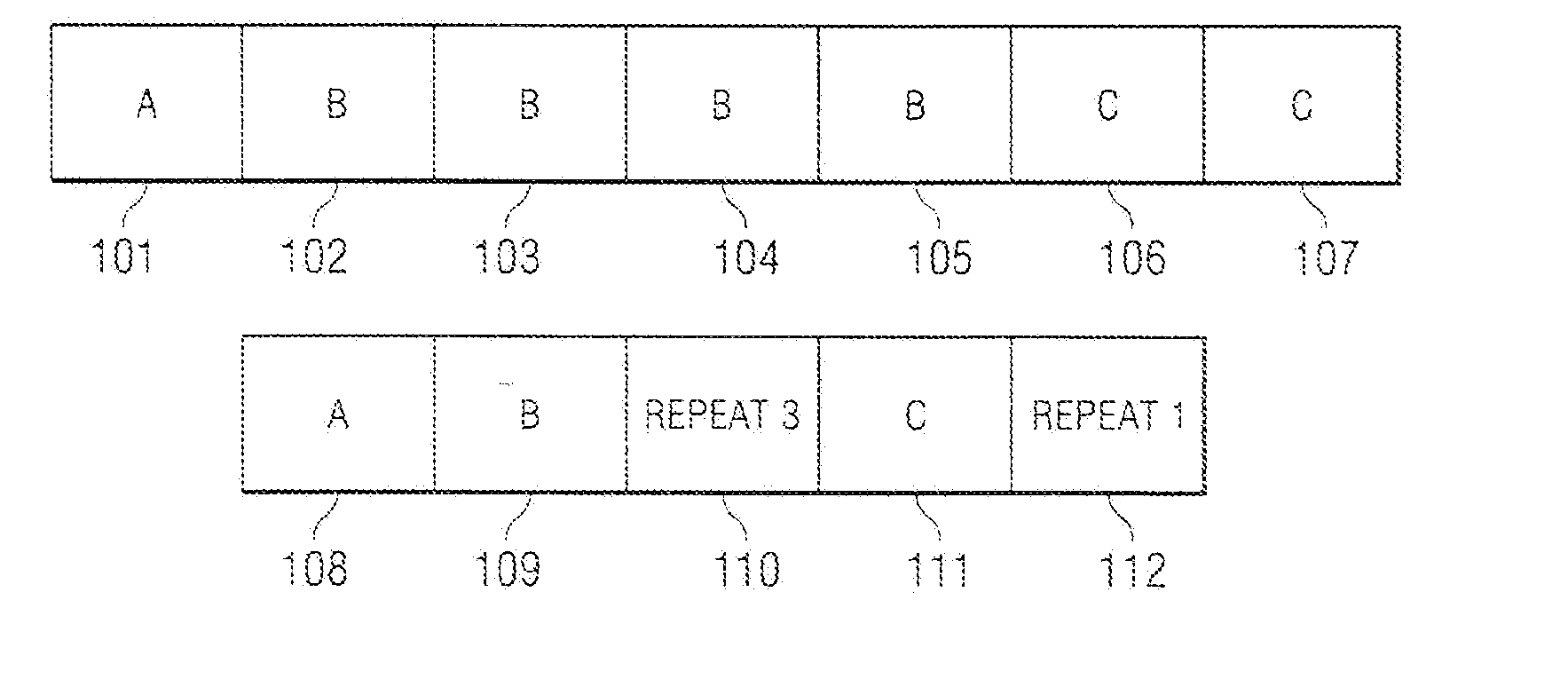
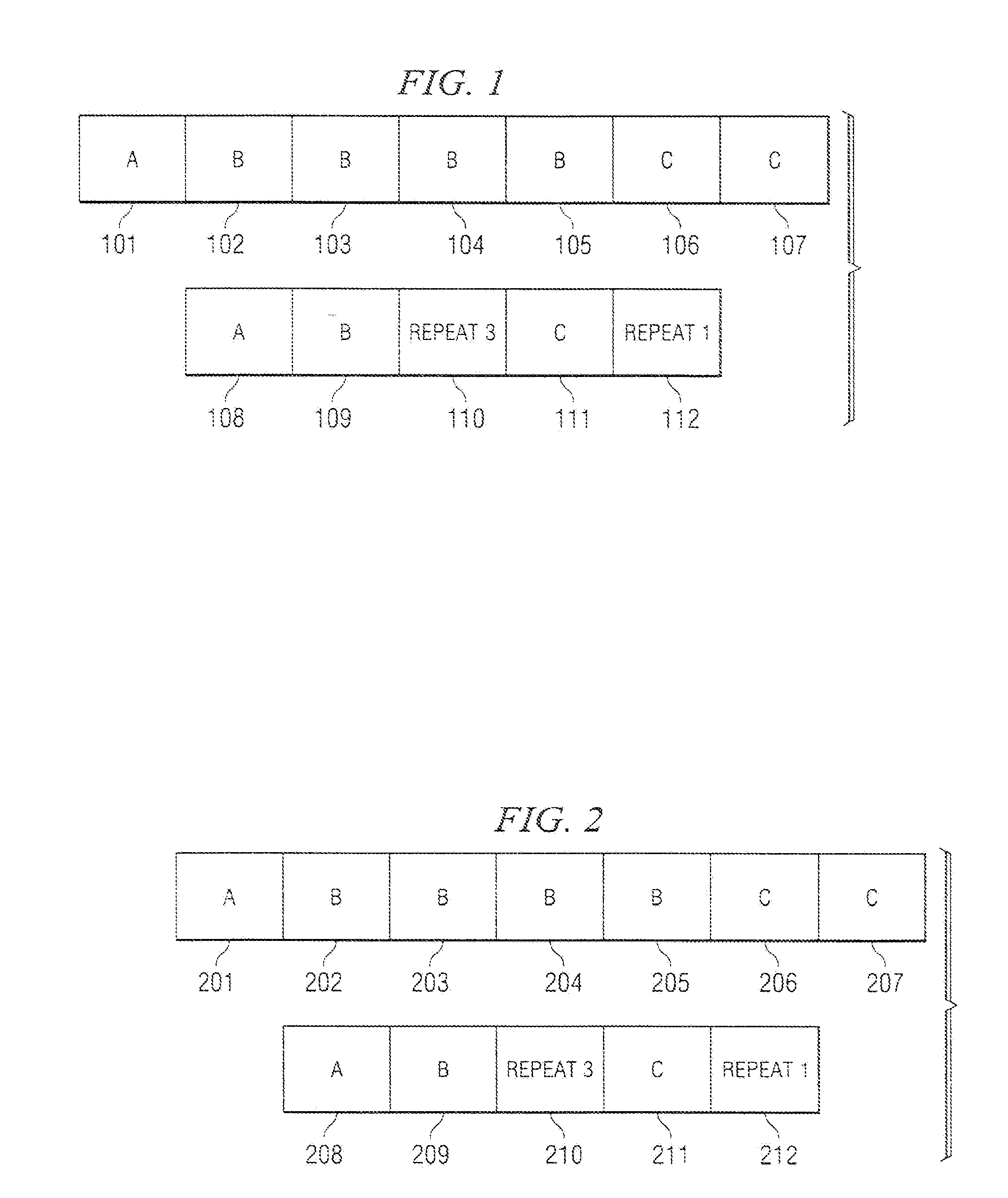
[0047]The trace recording format accommodates compression of consecutive trace words. When at least two consecutive trace words are the same value, the words 2 through n are replaced with a command and count that communicates how many times the word was repeated. The maximum storage for a burst of 2 through n words is two words as shown in FIG. 1, where word 101 does not repeat, words 102,103,104 and 105 are identical and then words 106 and 107 are identical. This sequence compresses as follows word 108 is the same as word 101, word 109 has the va...
PUM
 Login to View More
 Abstract
Description
Claims
Application Information
 Login to View More