
Hydrogen separation alloy and method for producing same
a technology of hydrogen separation and alloy, applied in the direction of hydrogen separation using solid contact, membrane technology, membranes, etc., can solve the problems of high cost of current technical levels, inability to meet the growing demand of pd—ag alloy membrane, etc., to improve hydrogen permeability, improve hydrogen permeability, and improve the effect of hydrogen permeability
- Summary
- Abstract
- Description
- Claims
- Application Information
AI Technical Summary
Benefits of technology
Problems solved by technology
Method used
Image

Examples
examples
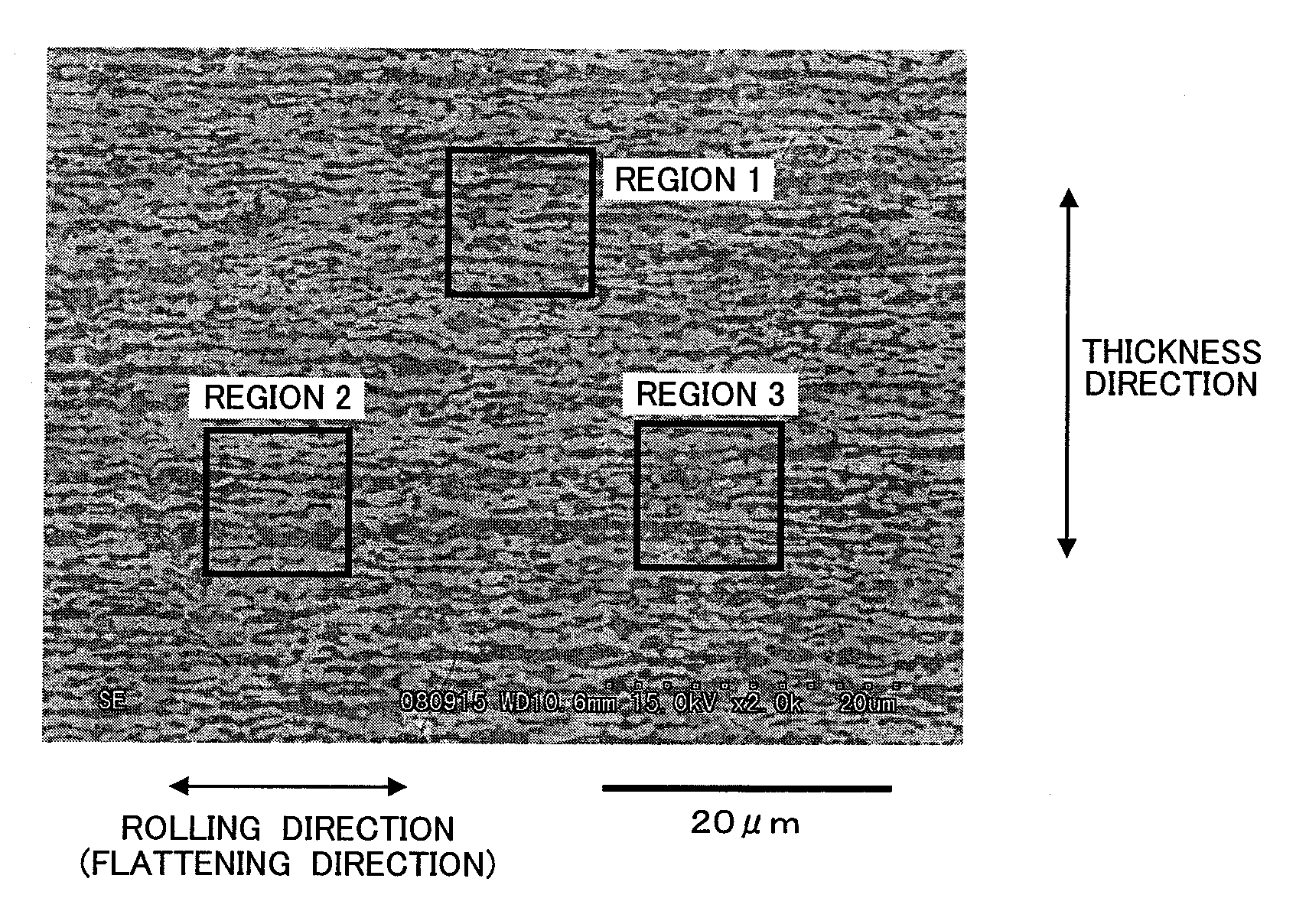
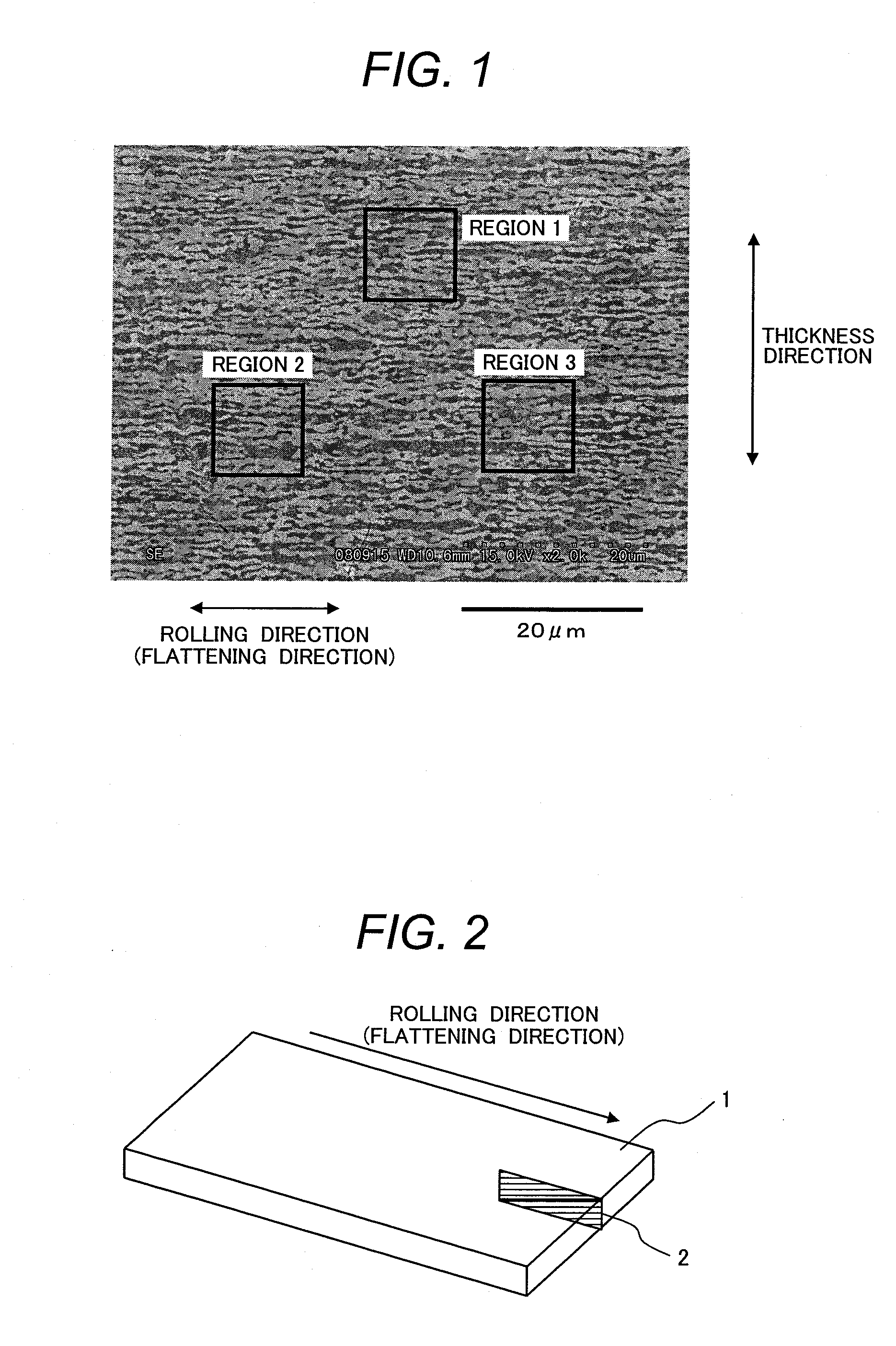
[0037]FIG. 1 depicts an electron micrograph illustrating a cross section of a hydrogen separation alloy according to an embodiment.
[0038]When a cross section in a rolling direction is observed with an electron microscope, the hydrogen separation alloy according to the embodiment has a metallographic structure which is biphasically separated into two phases, i.e., an Nb-enriched white hydrogen-permeable phase and a transition-metal-containing gray hydrogen-embrittlement-resistant phase, for example, as illustrated in the cross sectional electron micrograph of FIG. 1. In the structure, the hydrogen-permeable phase is elongated as a result of plastic working. As used herein the term “transition metal phase” refers to a phase containing two or more transition metal elements belonging to elements of from Group 3 to Group 12 of the periodic table.
[0039]In the hydrogen separation alloy according to the embodiment, the hydrogen-permeable phase should occupy 35 to 70 percent by area of the a...
PUM
| Property | Measurement | Unit |
|---|---|---|
| thickness | aaaaa | aaaaa |
| temperature | aaaaa | aaaaa |
| temperature | aaaaa | aaaaa |
Abstract
Description
Claims
Application Information
 Login to View More