
Electronic Combination Lock
a combination lock and electronic technology, applied in the field of electronic combination locks, can solve the problems of cumbersome and time-consuming method of adjusting mechanical combination codes to unlock conventional locking devices, large numeric volume, and inability to use keypads in electronic combination locks of small size, and achieve the effect of low power consumption and convenient us
- Summary
- Abstract
- Description
- Claims
- Application Information
AI Technical Summary
Benefits of technology
Problems solved by technology
Method used
Image

Examples
Embodiment Construction
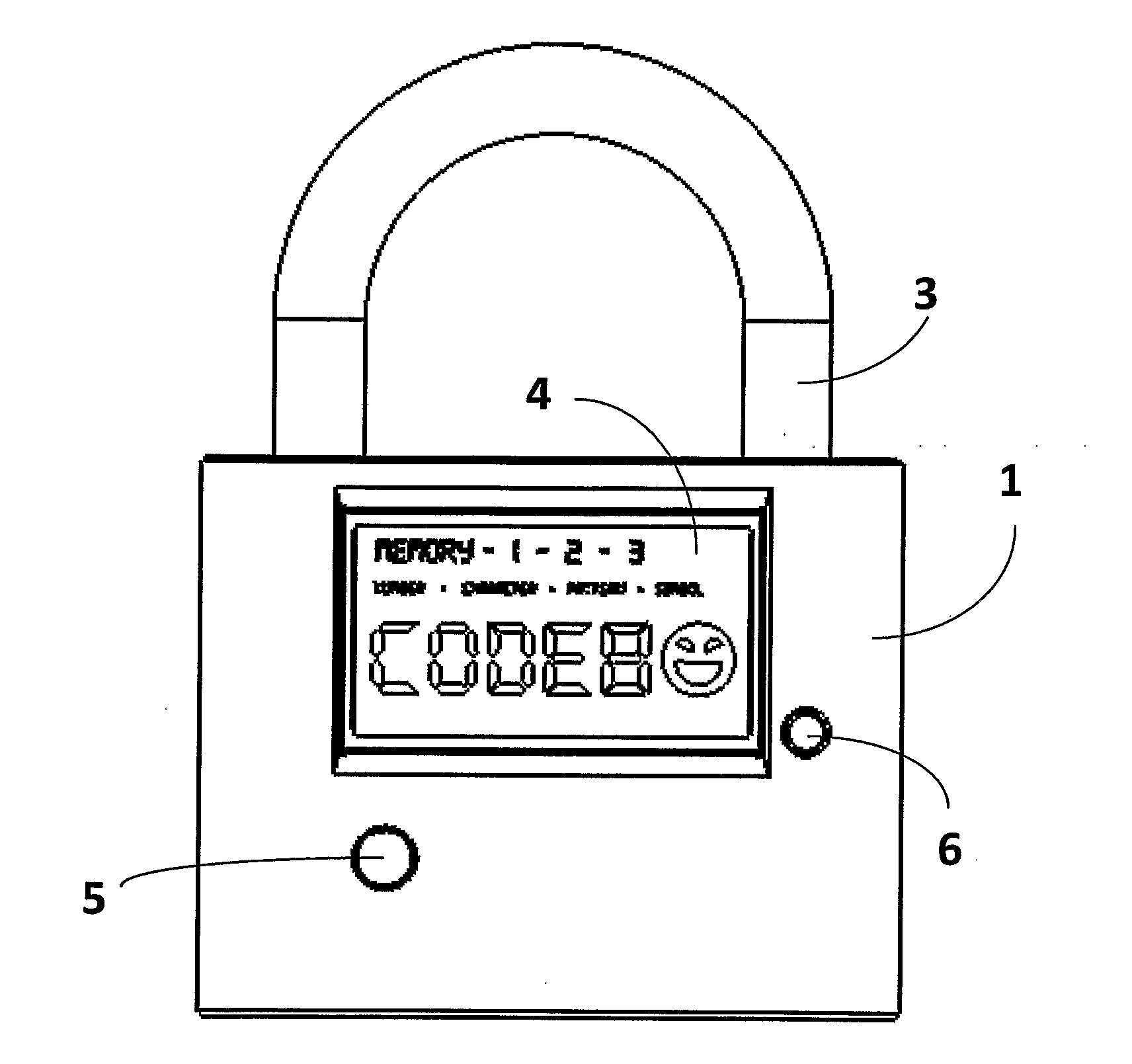
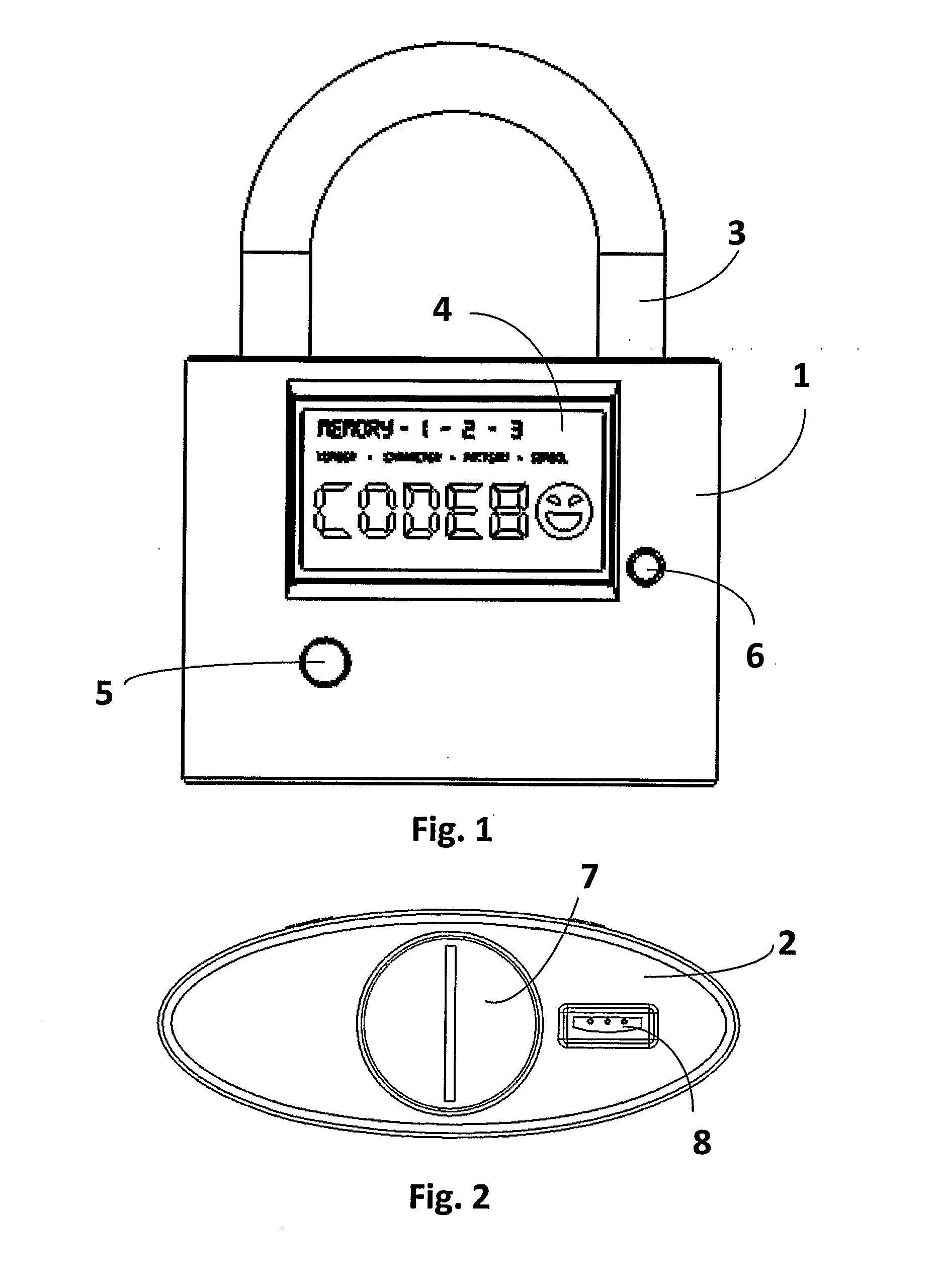
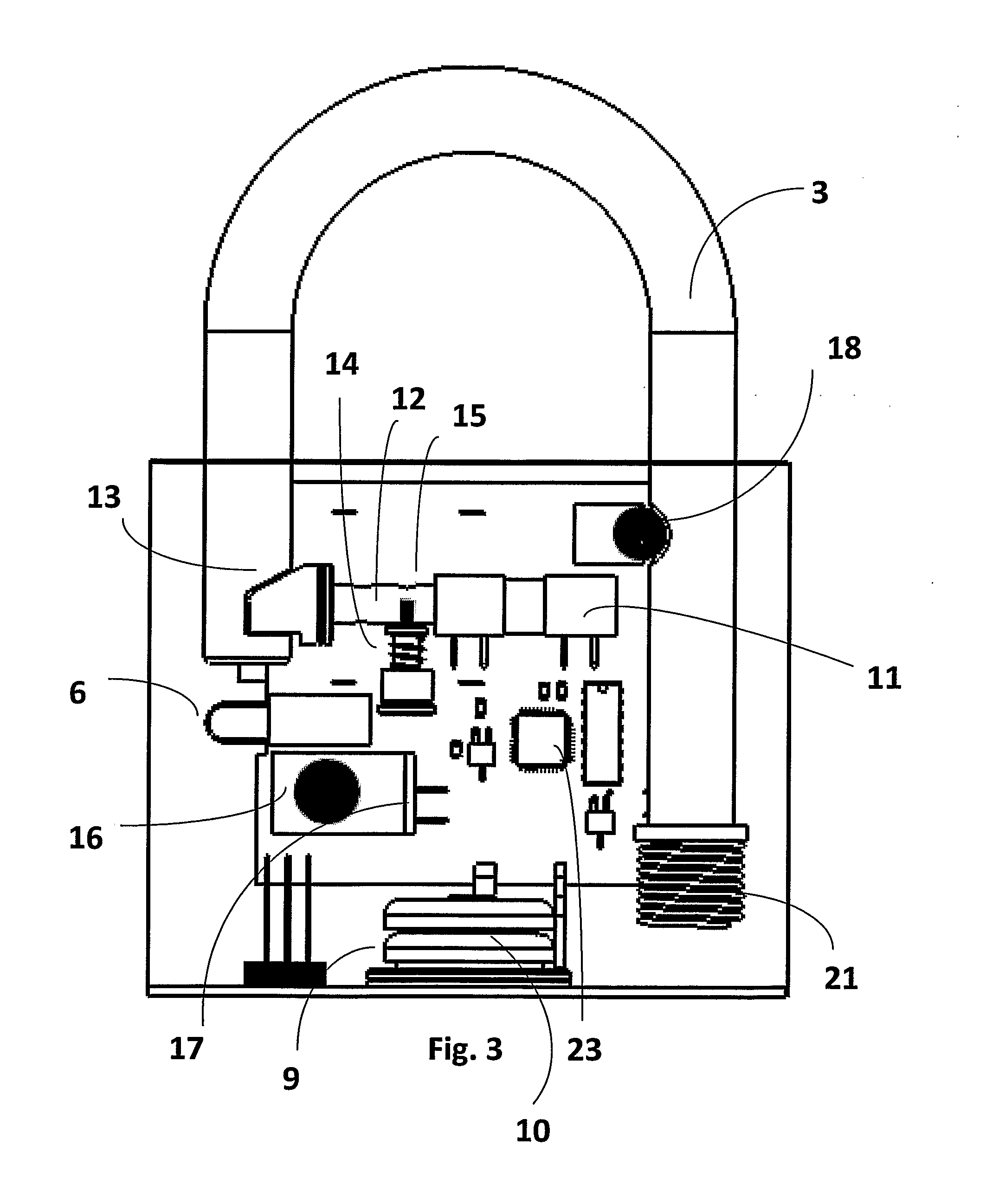
[0026]An embodiment of an electronic combination padlock can best be appreciated by referring to FIGS. 1 and 2. The electronic combination lock having a mixture of metal and plastic material to form a housing structure 1, preferably elongated, consists of metal plates 2 on the top and bottom of the housing 1 to reinforce the structure. The lock has a shackle-type locking bar 3 that is held lock in position within the housing 1. The front side of the housing 1 has a back-lighted touch screen Liquid Crystal Display (LCD) 4 either by color pixels or dot matrix which is capable of displaying combination of alphanumeric characters, symbols and patterns. The touch feature on the LCD screen 4 allows entering and controlling locking features. The LCD screen 4 is automatically turned off within a short duration to conserve battery power. In this preferred form described herein, the electronic combination lock uses six “digital dials” access code (a smaller or larger number of dials can also ...
PUM
 Login to View More
 Abstract
Description
Claims
Application Information
 Login to View More