
Drapes with Circumferential and Longitudinal Breakaways
- Summary
- Abstract
- Description
- Claims
- Application Information
AI Technical Summary
Benefits of technology
Problems solved by technology
Method used
Image

Examples
first embodiment
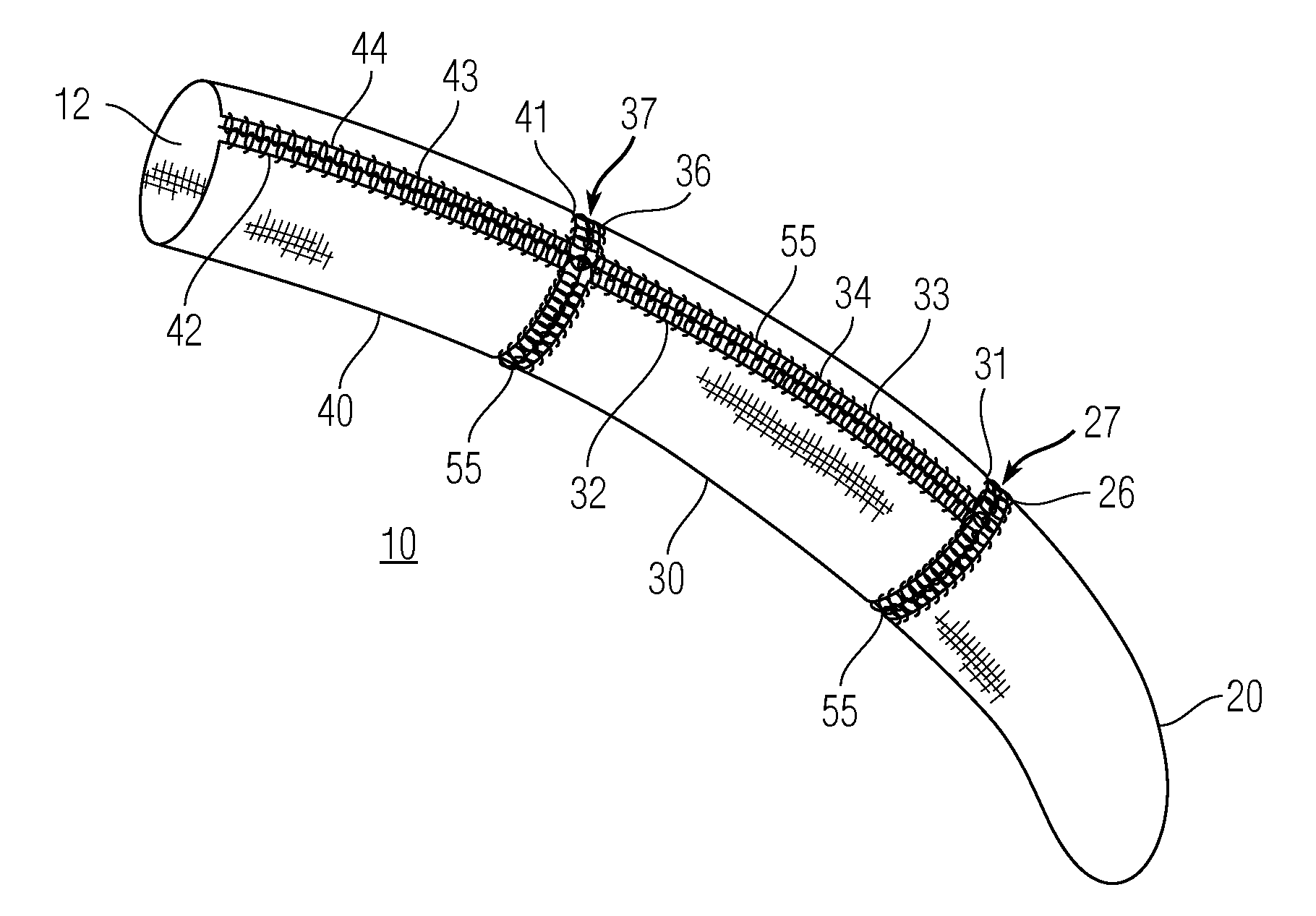
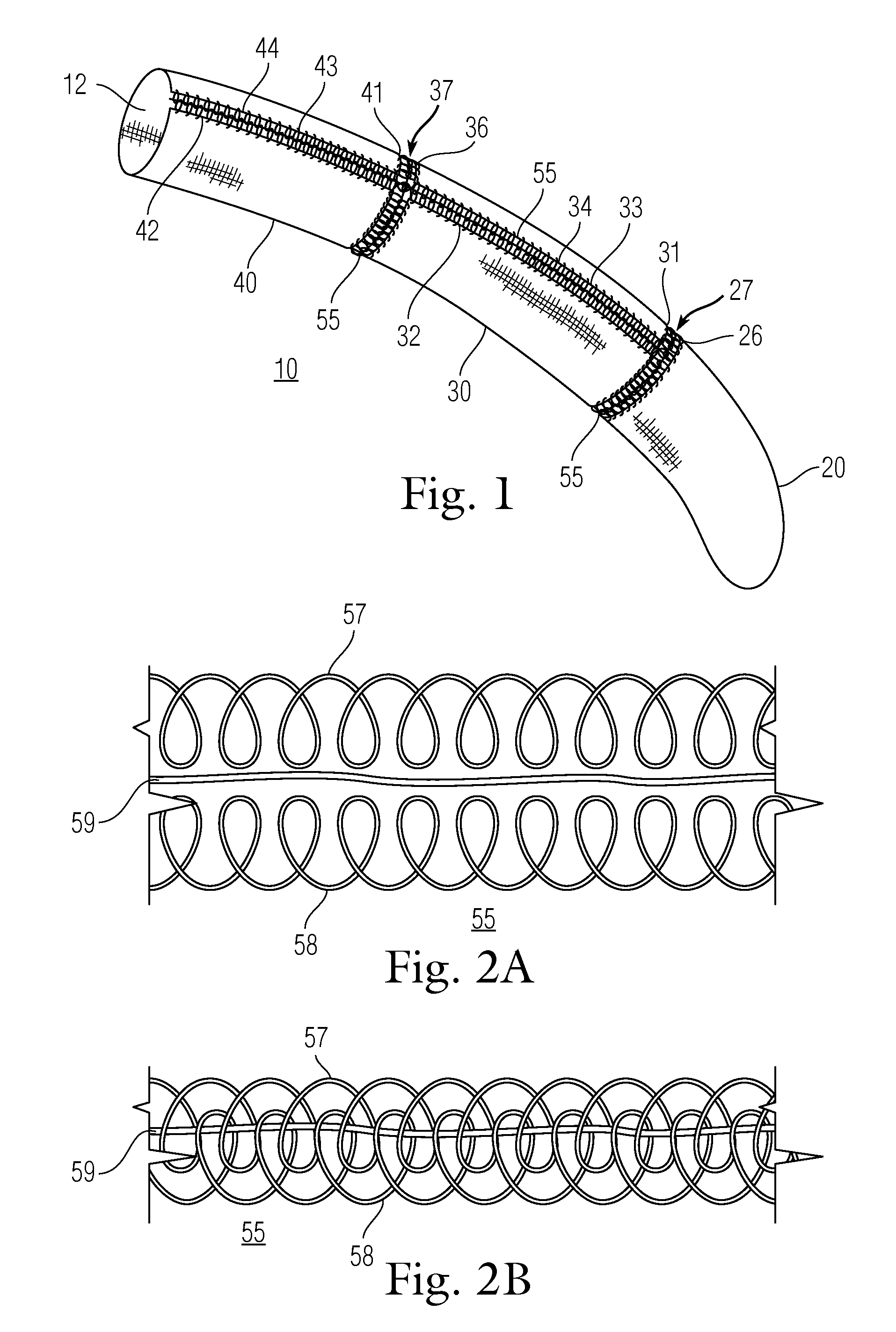
[0018]In accordance with FIG. 1, the present invention provides a surgical drape or stockinette 10 with several sections 20, 30, 40 that can be easily removed prior to or during surgery to quickly gain access to the surgery field. The drape 10 may be made of sterile two-ply material such as cotton, plastic, or paper material, and may include, for example, carbon fiber, ABS plastic, polyurethane, rubber, latex, synthetic rubber, or polymer elements. The drapes 10 material may include a liquid resistant layer and a liquid absorbent layer to keep the patient and the surgical area dry and sterile. In the preferred embodiment, the drape 10 is made from an impervious material. The drape 10 could be shaped as a stockinette or tube (see FIG. 1) for fitting over extremities, or as a rectangle sheet (see FIG. 3) which lays over the patient's entire body or a part of the body. In the preferred embodiment, the drape 10 would be sterile so it could be used in the operating room and as part of th...
second embodiment
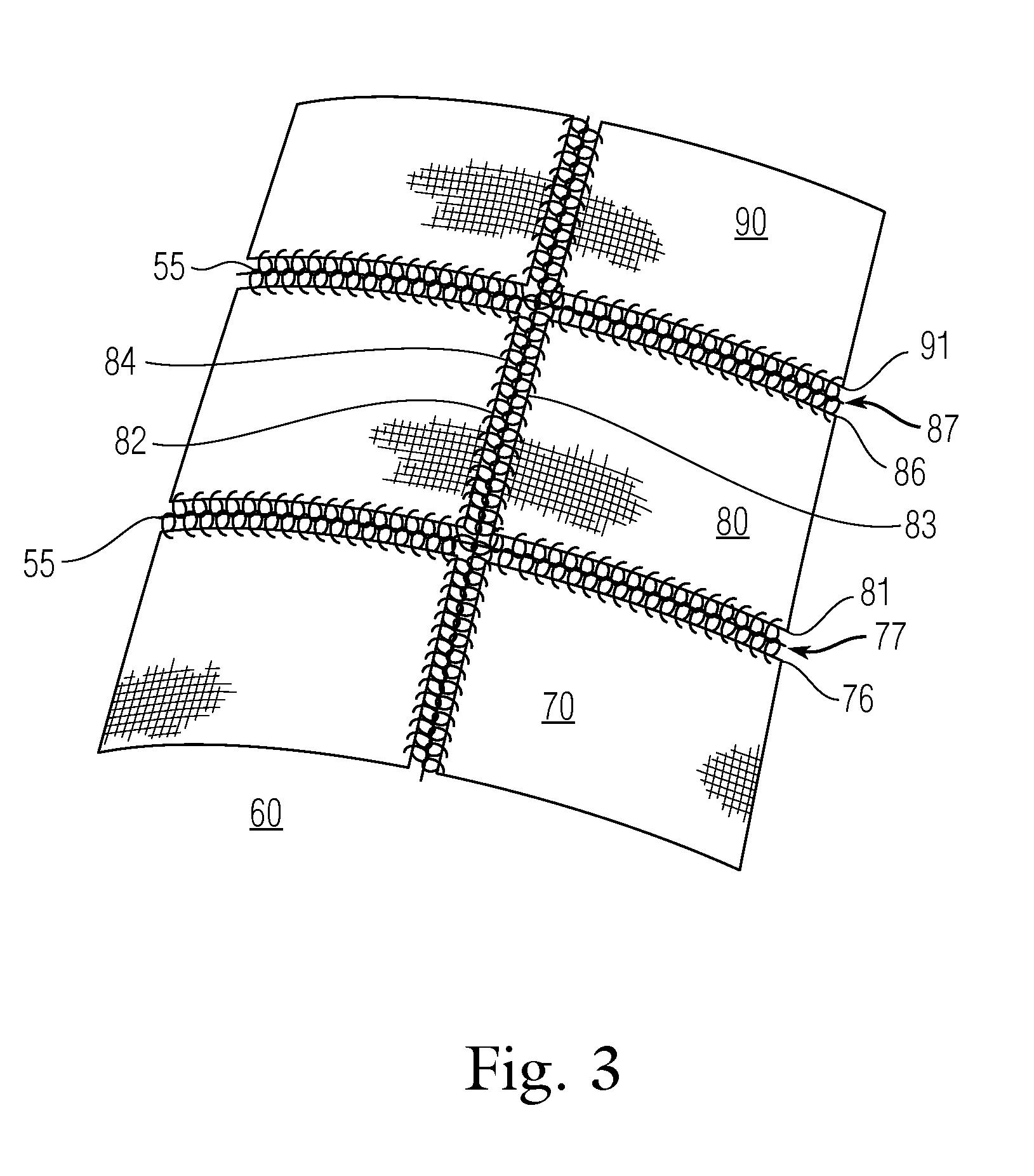
[0030]FIG. 3 displays the drape 60 in which the drape is rectangular shape and lays over the patient's entire body. The sections 70, 80, 90 are attached together by latitudinal breakaways 77, 87 and longitudinal breakaways 84. The upper latitudinal breakaway point or edge 81, 91 of a section 70, 80, 90 is secured to the lower latitudinal breakaway point or edge 76, 86 of a section by a fastener 55. The left longitudinal breakaway point or edge 82 of the left section is secured to the right longitudinal breakaway point 83 of a section by a fastener 55.
[0031]In use, the drape 60 is applied or draped over a patient and sections of the drape may be removed. For example, if the drape 60 was draped over a patient that needed hip surgery, the surgical team could remove panel or section 80 by separating fastener 55 around panel 80. In the preferred embodiment, fastener 55 would use the lace and coil design previously described.
[0032]The drapes and stockinettes 10, 60 described herein are re...
PUM
 Login to View More
 Abstract
Description
Claims
Application Information
 Login to View More