Check patentability & draft patents in minutes with Patsnap Eureka AI!

Ligand-guided-selection method for screening antigen-specific ligands

a ligand and antigen-specific technology, applied in the field of methods for screening for aptamers, can solve the problems of limited translational applications, and achieve the effect of strong and highly specific binder

Inactive Publication Date: 2016-10-13
RES FOUND THE CITY UNIV OF NEW YORK
View PDF1 Cites 1 Cited by
  • Summary
  • Abstract
  • Description
  • Claims
  • Application Information

AI Technical Summary

Benefits of technology

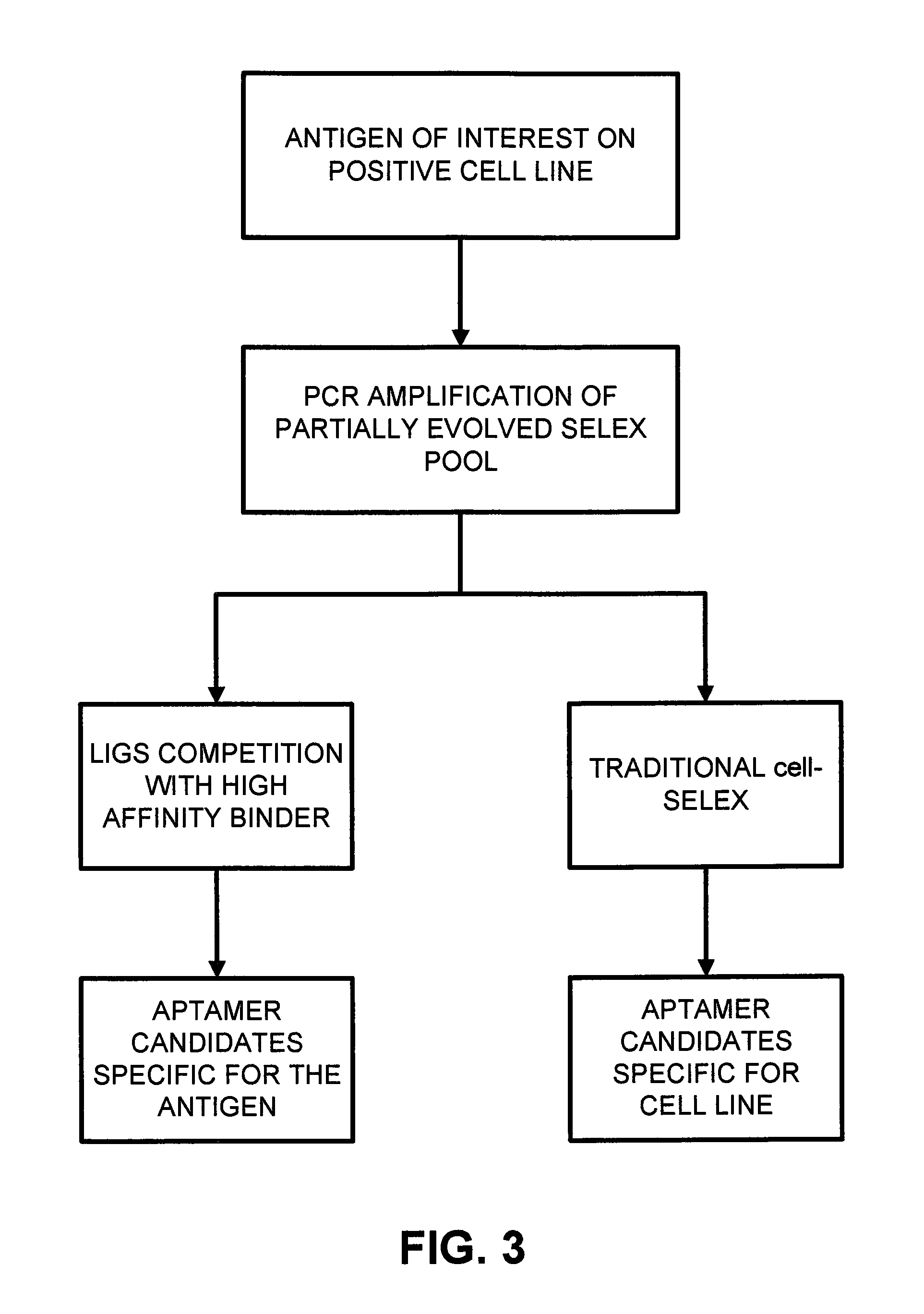
The patent text describes a method for identifying specific aptamers that can target a specific antigen on a given cell line. This method involves using a stronger and more specific binder to remove certain aptamers from a partially enriched pool, resulting in truly specific aptamers for the chosen antigen. The technical effect of this method is the ability to identify one or more specific aptamers against a particular antigen on a specific cell line.

Problems solved by technology

SELEX has resulted in generating a significant number of aptamers against targets ranging from small molecules to whole cells; however, translational applications have been limited.

Method used

the structure of the environmentally friendly knitted fabric provided by the present invention; figure 2 Flow chart of the yarn wrapping machine for environmentally friendly knitted fabrics and storage devices; image 3 Is the parameter map of the yarn covering machine
View more

Image

Smart Image Click on the blue labels to locate them in the text.
Viewing Examples
Smart Image
  • Ligand-guided-selection method for screening antigen-specific ligands
  • Ligand-guided-selection method for screening antigen-specific ligands
  • Ligand-guided-selection method for screening antigen-specific ligands

Examples

Experimental program
Comparison scheme
Effect test

example 1

Methods for Example 1

[0044]Cell lines, Jurkat.E6 (T lymphocyte) and Ramos (Burkitt's lymphoma), were a generous gift from David Scheinberg lab and Jason Huse lab, Memorial Sloan Kettering Cancer Center. All cells were cultured in RPMI 1640 medium supplemented with 100 units / mL penicillin-streptomycin and 10% fetal bovine serum (heat-inactivated; Invitrogen). Cell lines were validated by flowcytometric assays utilizing antibodies against surface markers uniquely expressed on each cell line.

[0045]Buffer compositions: Washing buffer composed of 1×DPBS containing 4.5 g Glucose / 1 L and 5 ml of 1M MgCl2 / 1 L. DNA Binding Buffer (DB) composed of 1×DPBS containing 4.5 g Glucose / 1 L, 5 ml of 1M MgCl2 / 1 L and 100 mg / 1 L tRNA. Cell Suspension Buffer (CSB) composed of 1×DPBS containing 4.5 g Glucose / 1 L, 5 ml of 1M MgCl2 / 1 L 100 mg / 1 L tRNA and 2 g / 1 L BSA.

[0046]Phosphoramidites: All of the DNA reagents needed for DNA synthesis were purchased from Glen Research or ChemGenes. All the DNA oligo se...

example 2

Methods of Example 2

[0070]Cell culture: All cells were cultured in RPMI 1640 medium supplemented with 100 units / mL penicillin-streptomycin and 10% fetal bovine serum (heat-inactivated; Invitrogen).

[0071]Phosphoramidites: All of the DNA reagents needed for DNA synthesis were purchased from Glen Research or ChemGenes. All the DNA oligo sequences were chemically synthesized attaching a fluorophore at the 3′ end using standard solid phase phosphoramidite chemistry on an ABI394 DNA (Biolytics) synthesizer using a 0.2 μmole scale. The completed DNA sequences were de-protected and purified using HPLC (Waters) equipped with a C-18 reversed phase column (Phenomenex). All in vitro experiments were performed using a binding buffer composed of DPBS and 4.5 g / L glucose (Sigma-Aldrich) and 5 mM MgCl2, 100 mg / L, tRNA (Sigma-Aldrich), 1 g / L BSA (Sigma-Aldrich). The wash buffer was composed of DPBS with 5 mM MgCl2 and 4.5 g / L glucose (Sigma-Aldrich).

[0072]SELEX Primers and Library: Primers and SELEX...

the structure of the environmentally friendly knitted fabric provided by the present invention; figure 2 Flow chart of the yarn wrapping machine for environmentally friendly knitted fabrics and storage devices; image 3 Is the parameter map of the yarn covering machine
Login to View More

PUM

PropertyMeasurementUnit
concentrationsaaaaaaaaaa
molecular weightaaaaaaaaaa
affinityaaaaaaaaaa
Login to View More

Abstract

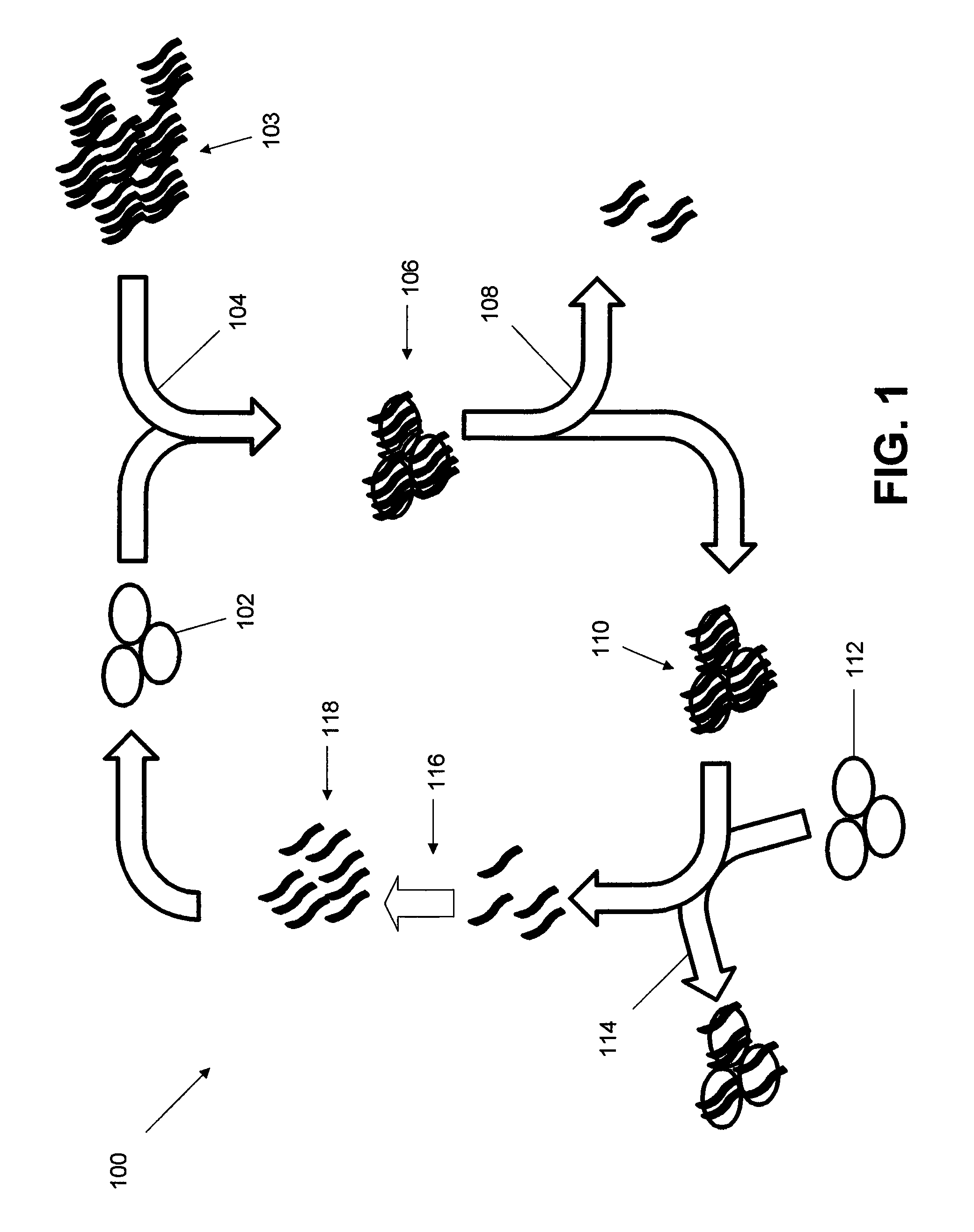
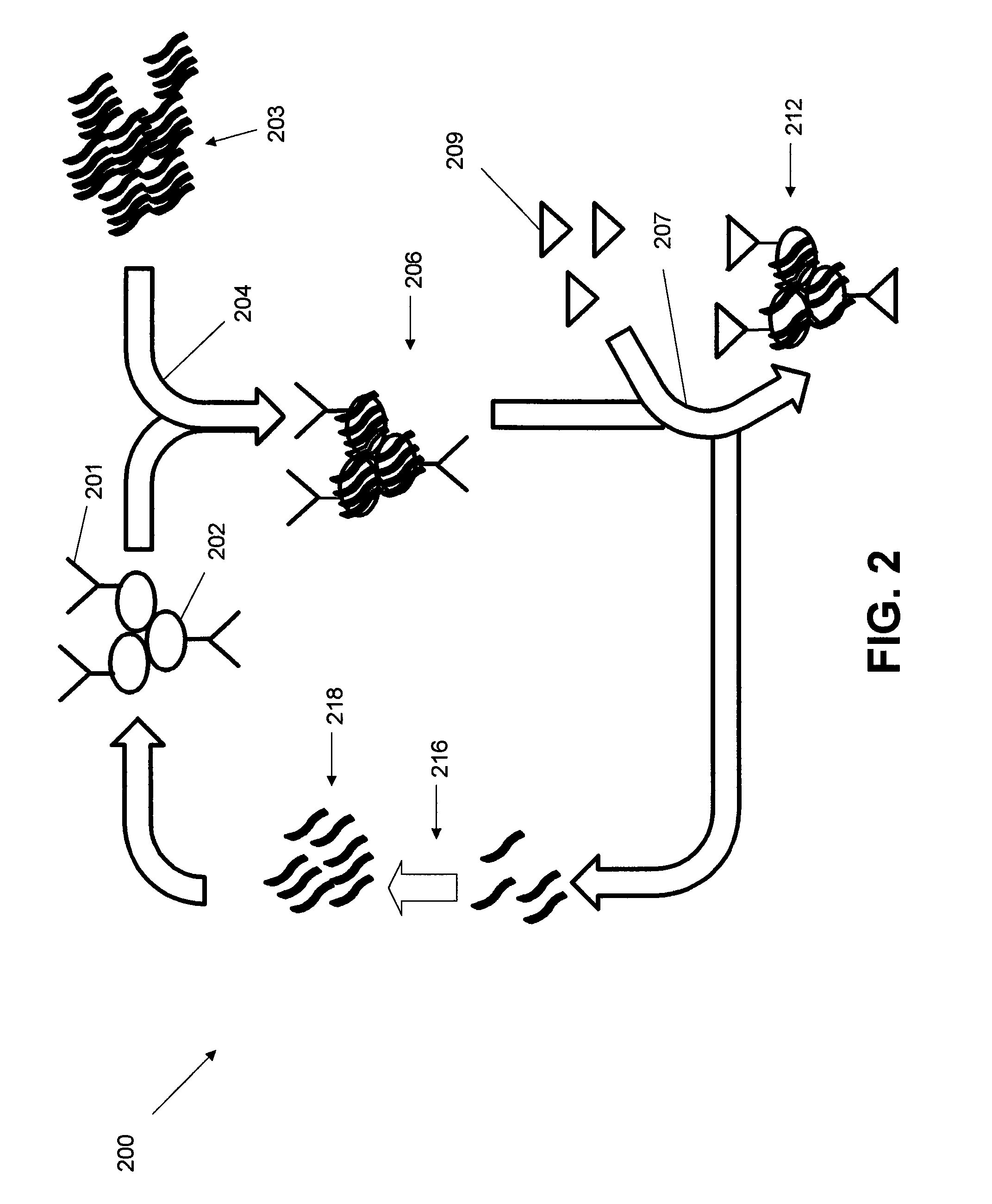
A Ligand-guided-Selection (LIGS) method for identifying highly specific aptamers against a predetermined antigen of a target is provided. LIGS uses a stronger and highly specific bivalent binder (e.g. an antibody) interacting with its cognate antigen to displace specific aptamers from a partially enriched SELEX pool. Elution of the displaced aptamers provides aptamers that are specific to the predetermined antigen.

Description

CROSS-REFERENCE TO RELATED APPLICATIONS[0001]This application claims priority to and is a non-provisional of U.S. Patent Application Ser. 62 / 146,472 (filed Apr. 13, 2015); U.S. Patent Application 62 / 253,963 (filed Nov. 11, 2015) and U.S. Patent Application 62 / 320,793 (filed Apr. 11, 2016) the entirety of which are incorporated herein by reference.STATEMENT OF FEDERALLY SPONSORED RESEARCH OR DEVELOPMENT[0002]This invention was made with government support under contract number SC3GM105578 awarded by the National Institute of Health (NIH). The government has certain rights in the invention.REFERENCE TO A SEQUENCE LISTING[0003]This application refers to a “Sequence Listing” listed below, which is provided as an electronic document entitled “RESE17305RO_ST25.txt” (5 kb created on Apr. 12, 2016) which is incorporated herein by reference in its entirety.BACKGROUND OF THE INVENTION[0004]The subject matter disclosed herein relates to methods for screening for an aptamer. Aptamers are small ...

Claims

the structure of the environmentally friendly knitted fabric provided by the present invention; figure 2 Flow chart of the yarn wrapping machine for environmentally friendly knitted fabrics and storage devices; image 3 Is the parameter map of the yarn covering machine
Login to View More

Application Information

Patent Timeline
no application Login to View More
Patent Type & Authority Applications(United States)
IPC IPC(8): C12N15/10G01N33/53
CPCG01N33/5308C12N15/1048G01N2500/04G01N2500/10
Inventor MALLIKARATCHY, PRABODHIKA
Owner RES FOUND THE CITY UNIV OF NEW YORK
Features
  • R&D
  • Intellectual Property
  • Life Sciences
  • Materials
  • Tech Scout
Why Patsnap Eureka
  • Unparalleled Data Quality
  • Higher Quality Content
  • 60% Fewer Hallucinations
Social media
Patsnap Eureka Blog
Learn More