Check patentability & draft patents in minutes with Patsnap Eureka AI!

Ligand-guided-selection method for screening antigen-specific ligands

a ligand and antigen-specific technology, applied in the field of methods for screening for aptamers, can solve the problems of limited translational applications, and achieve the effect of strong and highly specific binder

Inactive Publication Date: 2019-04-09
RES FOUND THE CITY UNIV OF NEW YORK
View PDF5 Cites 0 Cited by
  • Summary
  • Abstract
  • Description
  • Claims
  • Application Information

AI Technical Summary

Benefits of technology

LIGS enables the identification of highly specific aptamers that can recognize antigens in their native state, improving the potential for clinical applications by increasing the separation efficiency and specificity of aptamers, allowing for targeted binding to specific antigens even in complex receptor systems.

Problems solved by technology

SELEX has resulted in generating a significant number of aptamers against targets ranging from small molecules to whole cells; however, translational applications have been limited.

Method used

the structure of the environmentally friendly knitted fabric provided by the present invention; figure 2 Flow chart of the yarn wrapping machine for environmentally friendly knitted fabrics and storage devices; image 3 Is the parameter map of the yarn covering machine
View more

Image

Smart Image Click on the blue labels to locate them in the text.
Viewing Examples
Smart Image
  • Ligand-guided-selection method for screening antigen-specific ligands
  • Ligand-guided-selection method for screening antigen-specific ligands
  • Ligand-guided-selection method for screening antigen-specific ligands

Examples

Experimental program
Comparison scheme
Effect test

example 1

CD3ε Expressed on T Lymphocytes

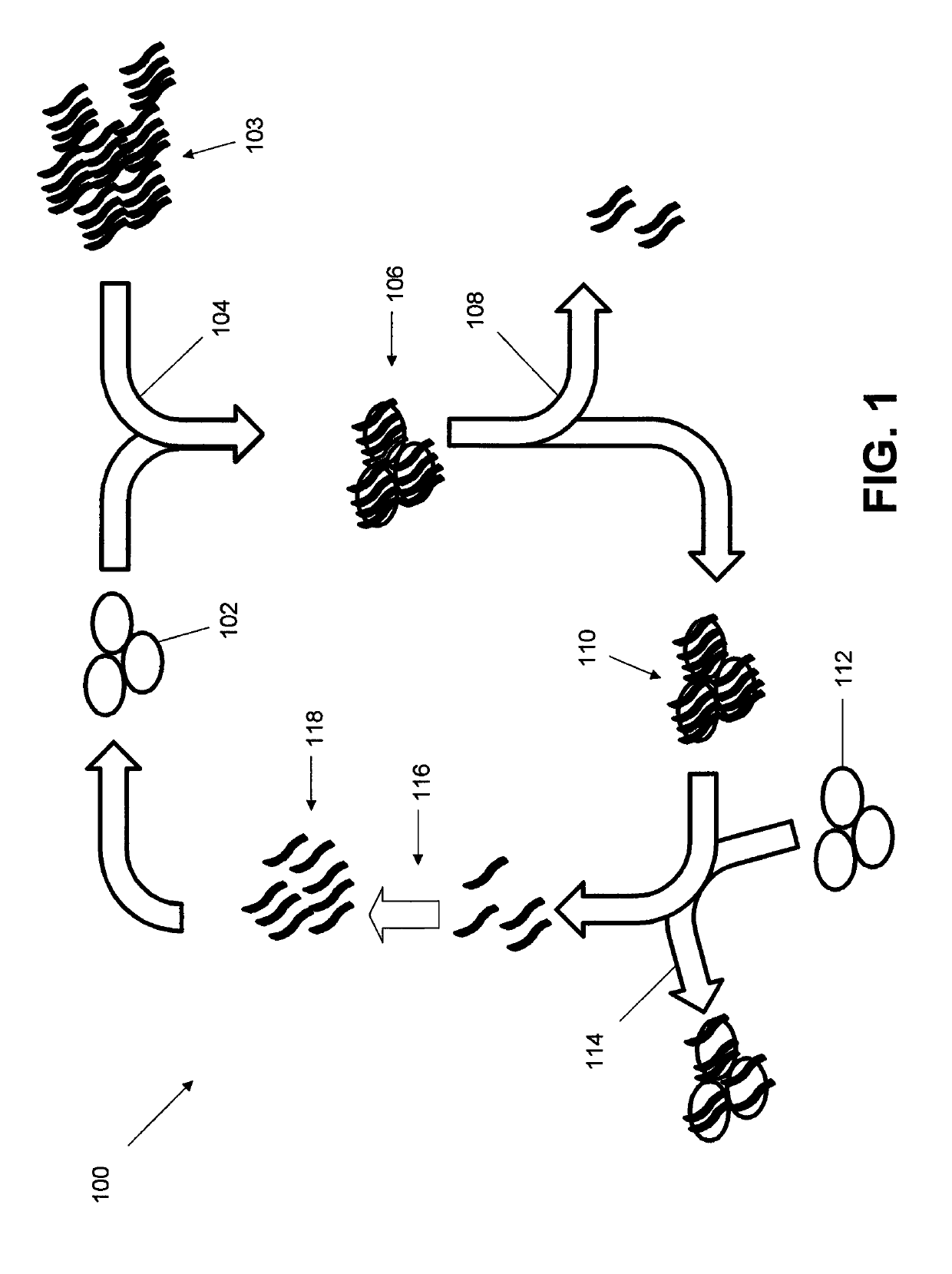
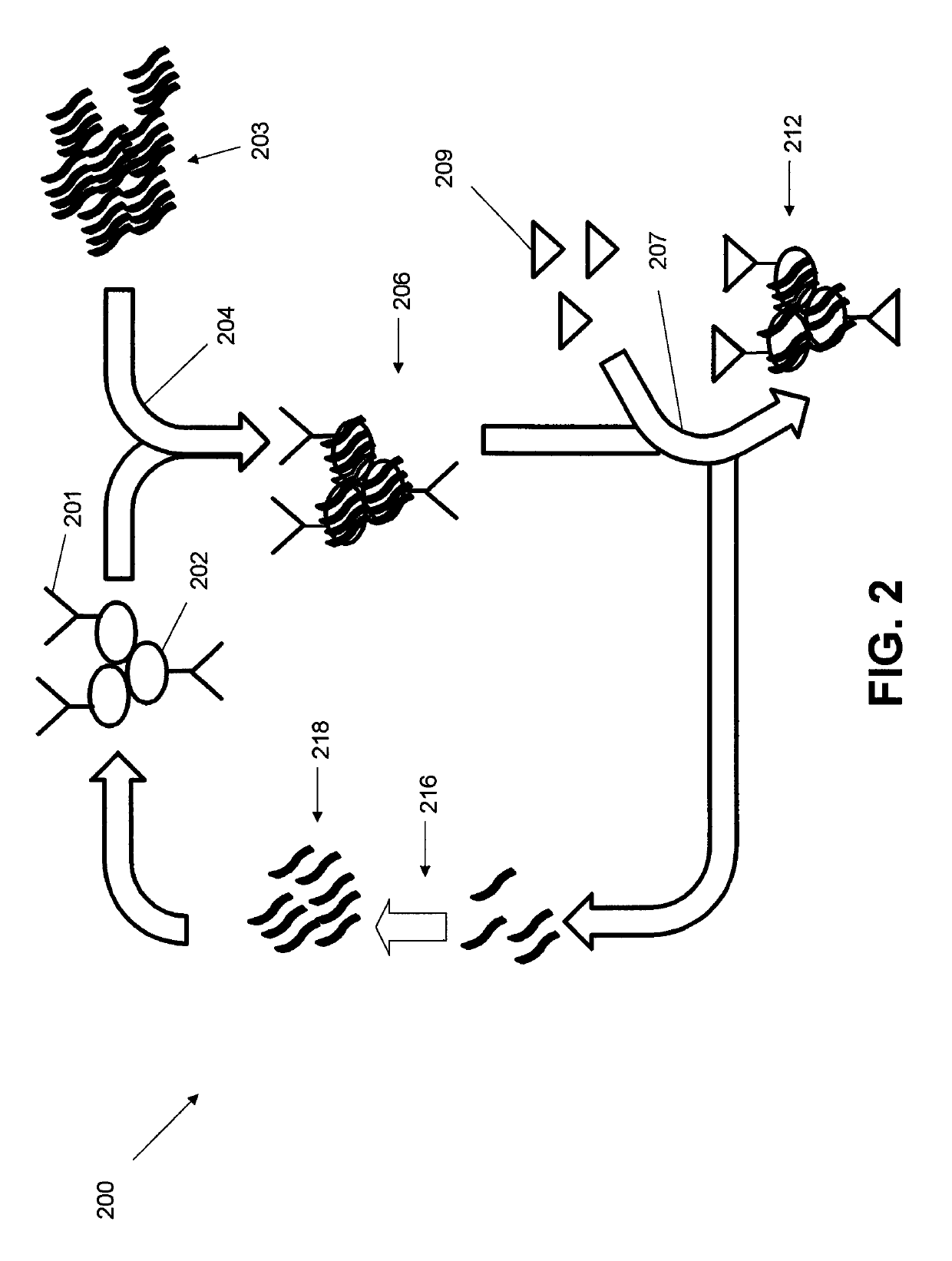
[0033]LIGS was used to identify aptamers against CD3ε expressed on T lymphocytes from a partially enriched SELEX library against a whole cell. CD3ε is one of the ectodomains of the T-cell receptor (TCR) complex expressed on T-cells. Using high-affinity anti-CD3 antibody against a specific antigen on the CD3ε chain as the secondary ligand, three specific aptamers against CD3ε domain were successfully identified.

[0034]The expression of CD3ε on Jurkat.E6 cells was confirmed by flow cytometry using a fluorescently labeled anti-CD3ε antibody. The selection library had 45 randomized nucleotides flanked by two primers, but with modifications pertaining to the conditions for PCR were further optimized to ensure high PCR efficiency of the library. The first round of cell-SELEX employed approximately 7 million Jurkat.E6 cells to ensure that all potential binders were retained. A total of 5 million cells were then used during the second round of selection, and th...

example 2

IgM Expressed on Burkitt's Lymphoma Cells

[0056]In this example, an antibody against IgM expressed on Burkitt's lymphoma cells (Ab) outcompeted and replaced the aptamer candidates binding to the same target of the Ab. Based on the specificity of Ab towards its target, the aptamers identified by LIGS showed specificity towards Ab's target. The selected aptamers show specificity towards Ramos cells. As expected, identified specific aptamers for mIgM, competes with the cognate Ab binding to its target.

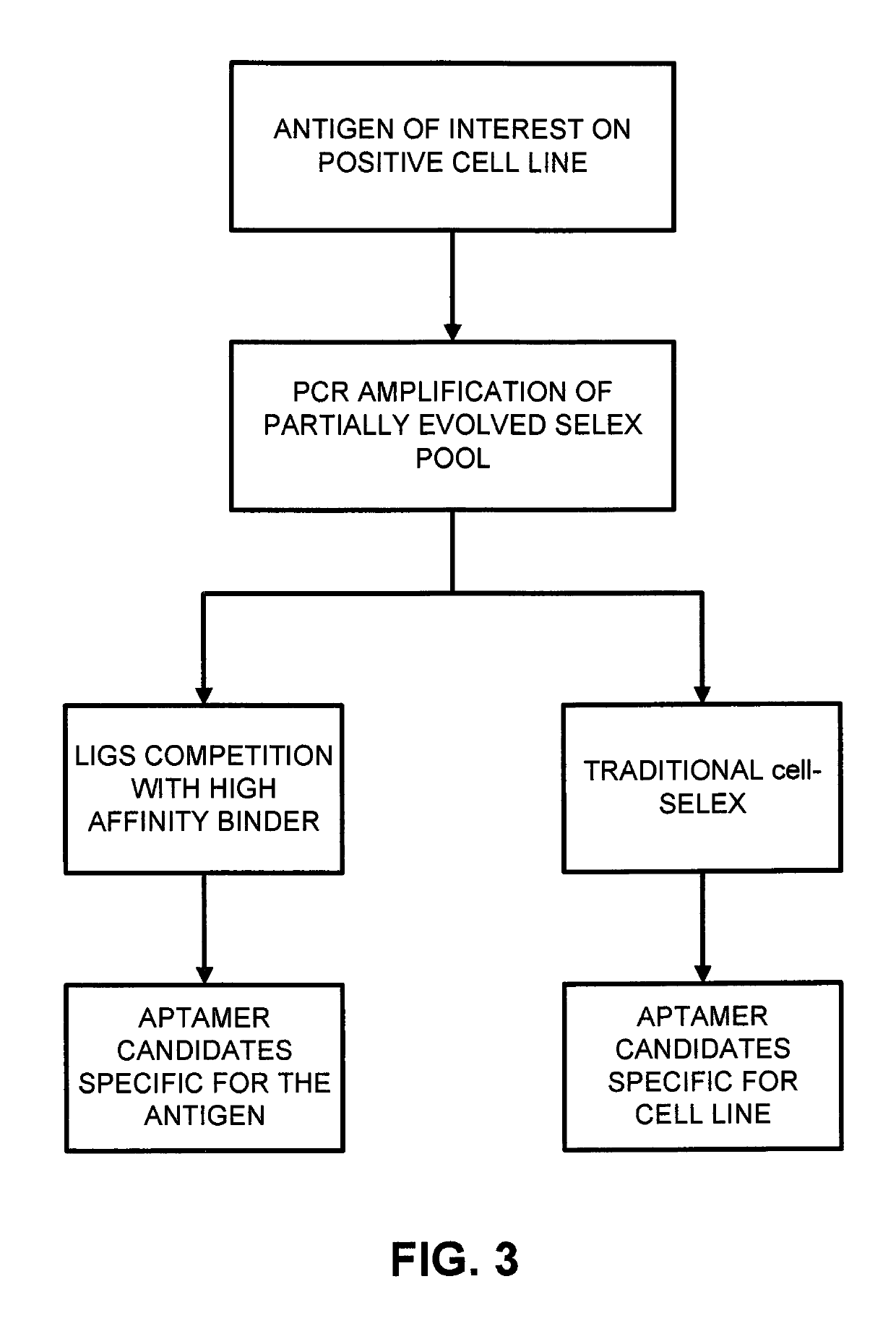
[0057]The conventional cell-SELEX method was first employed against Ramos cells that naturally express high-levels of the desired antigen (mIgM). Cell-SELEX was continued until a partial enrichment of the evolved SELEX library against the target cells was observed. Next, the partially enriched library was divided into fractions. The first fraction was PCR-amplified, cloned and sequenced. These sequences are specific towards target cells. An excess of Ab was introduced on the second fractio...

the structure of the environmentally friendly knitted fabric provided by the present invention; figure 2 Flow chart of the yarn wrapping machine for environmentally friendly knitted fabrics and storage devices; image 3 Is the parameter map of the yarn covering machine
Login to View More

PUM

PropertyMeasurementUnit
concentrationsaaaaaaaaaa
molecular weightaaaaaaaaaa
affinityaaaaaaaaaa
Login to View More

Abstract

A Ligand-guided-Selection (LIGS) method for identifying highly specific aptamers against a predetermined antigen of a target is provided. LIGS uses a stronger and highly specific bivalent binder (e.g. an antibody) interacting with its cognate antigen to displace specific aptamers from a partially enriched SELEX pool. Elution of the displaced aptamers provides aptamers that are specific to the predetermined antigen.

Description

CROSS-REFERENCE TO RELATED APPLICATIONS[0001]This application claims priority to and is a non-provisional of U.S. Patent Application Ser. 62 / 146,472 (filed Apr. 13, 2015); U.S. Patent Application 62 / 253,963 (filed Nov. 11, 2015) and U.S. Patent Application 62 / 320,793 (filed Apr. 11, 2016) the entirety of which are incorporated herein by reference.STATEMENT OF FEDERALLY SPONSORED RESEARCH OR DEVELOPMENT[0002]This invention was made with government support under contract number SC3GM105578 awarded by the National Institute of Health (NIH). The government has certain rights in the invention.REFERENCE TO A SEQUENCE LISTING[0003]This application refers to a “Sequence Listing” listed below, which is provided as an electronic document entitled “RESE17305RO_ST25.txt” (5 kb created on Apr. 12, 2016) which is incorporated herein by reference in its entirety.BACKGROUND OF THE INVENTION[0004]The subject matter disclosed herein relates to methods for screening for an aptamer. Aptamers are small ...

Claims

the structure of the environmentally friendly knitted fabric provided by the present invention; figure 2 Flow chart of the yarn wrapping machine for environmentally friendly knitted fabrics and storage devices; image 3 Is the parameter map of the yarn covering machine
Login to View More

Application Information

Patent Timeline
no application Login to View More
Patent Type & Authority Patents(United States)
IPC IPC(8): C12N15/10G01N33/53C12N5/07
CPCG01N33/5308C12N15/1048G01N2500/04G01N2500/10
Inventor MALLIKARATCHY, PRABODHIKA
Owner RES FOUND THE CITY UNIV OF NEW YORK
Features
  • R&D
  • Intellectual Property
  • Life Sciences
  • Materials
  • Tech Scout
Why Patsnap Eureka
  • Unparalleled Data Quality
  • Higher Quality Content
  • 60% Fewer Hallucinations
Social media
Patsnap Eureka Blog
Learn More