
Peptide-mediated intravesical delivery of therapeutic and diagnostic agents
a technology applied in the field of peptide-mediated intravesical delivery of therapeutic and diagnostic agents, can solve the problems of hampered drug development of this approach, unable to achieve the effect of non-cancerous diseased condition, and relying on concentration gradients to achieve the effect of facilitating the delivery of the agen
Inactive Publication Date: 2018-11-22
UNIVERSITY OF PITTSBURGH
View PDF1 Cites 0 Cited by
- Summary
- Abstract
- Description
- Claims
- Application Information
AI Technical Summary
Benefits of technology
The invention is about using a combination of therapeutic and diagnostic agents with cationic peptides to treat and diagnose bladder cells. The cationic peptides act as carriers for the anionic agents, helping them enter bladder cells. This technique has been tested in animals and is being developed for use in humans. The technical effect is that cationic peptides improve the delivery of therapeutic agents to target cells.
Problems solved by technology
However, applied research for bladder diseases has lagged behind other disciplines.
Drug development of this approach has been hampered by inefficient cellular uptake of the ODN.
It is known that tight junctions in urothelium are compromised in cancerous condition [6] and therefore the strategy of relying on concentration gradient may not work in non-cancerous diseased condition where the barrier is intact, such as in overactive bladder.
Several approaches have been tried to increase the bladder uptake of ODN without compromising the bladder barrier, but all have limitations.
The translation of basic antisense research into therapeutics is also impeded by intracellular stability of ODN and potential for “off-target” gene silencing, immunostimulation, and other side effects.
A significant limitation for medicine, particularly treatments given by the intravesical route (via a catheter into the bladder), is the poor permeability of the bladder to outside agents.
Efficient cellular uptake of many chemical agents is still a challenge.
Method used
the structure of the environmentally friendly knitted fabric provided by the present invention; figure 2 Flow chart of the yarn wrapping machine for environmentally friendly knitted fabrics and storage devices; image 3 Is the parameter map of the yarn covering machine
View moreImage
Smart Image Click on the blue labels to locate them in the text.
Smart ImageViewing Examples

Examples
Experimental program
Comparison scheme
Effect test
working example
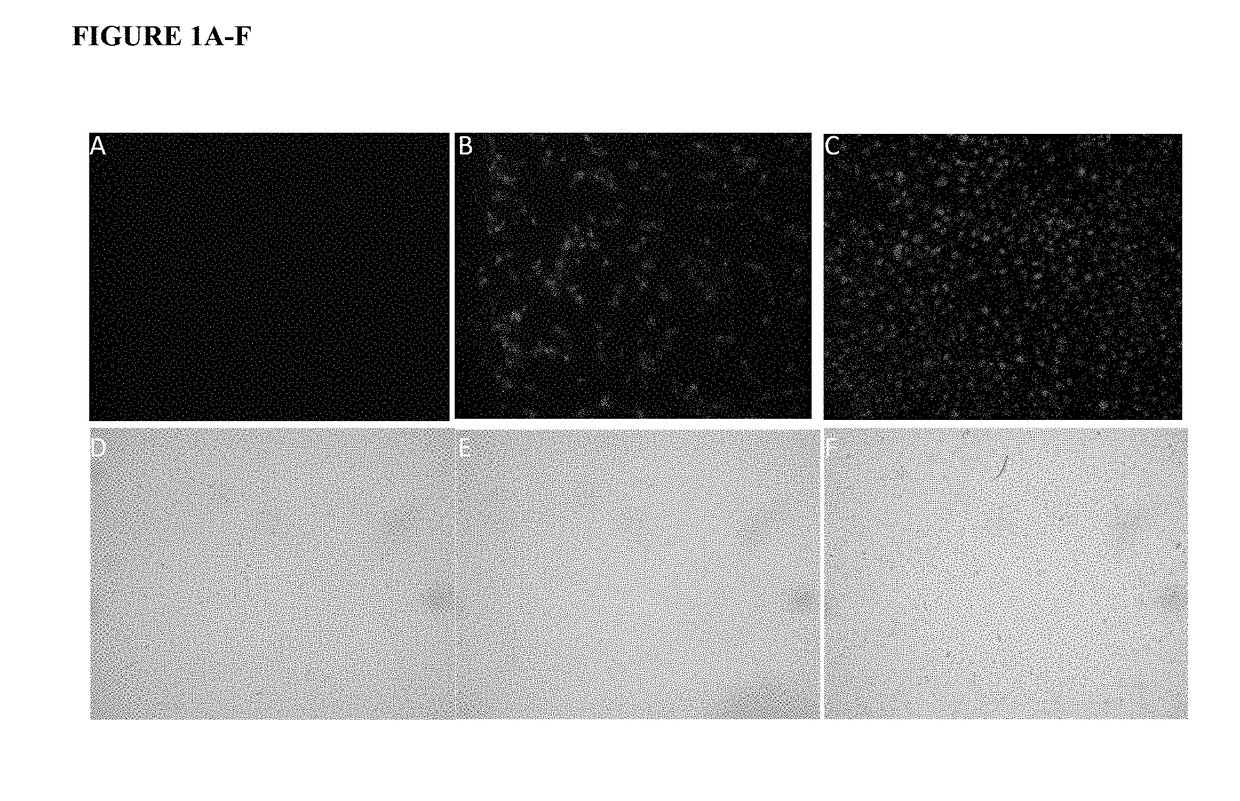
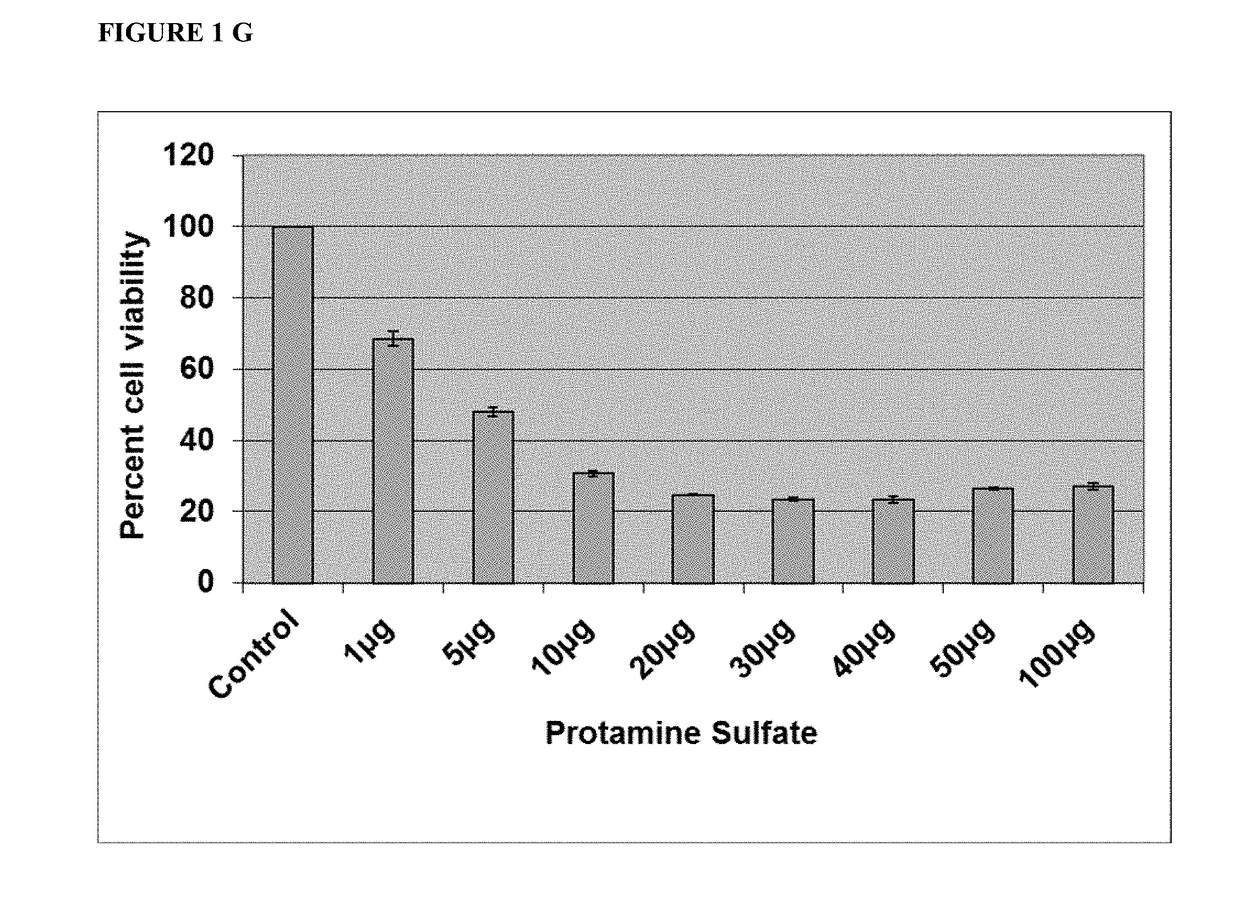
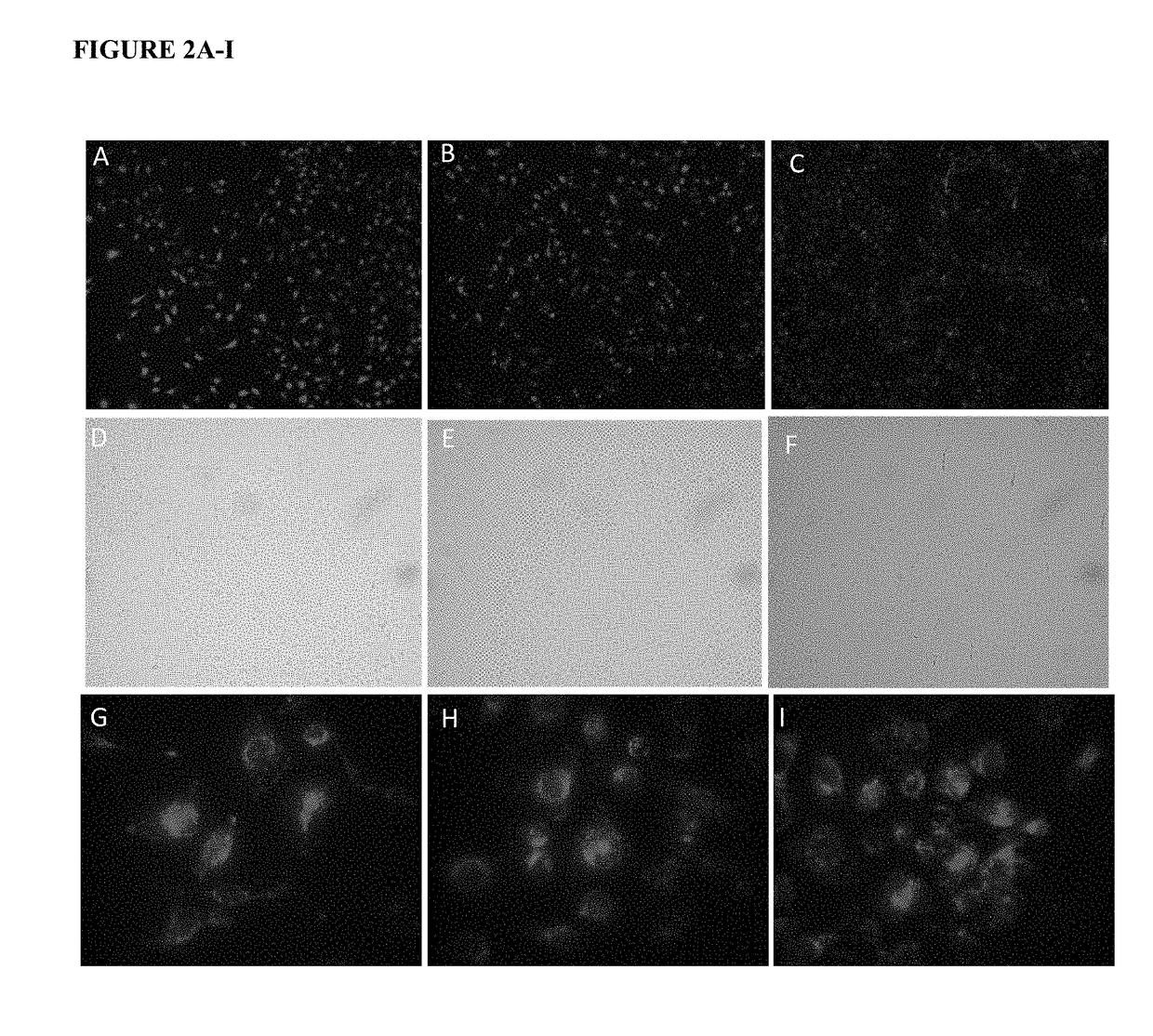
[0041]The present study describes the use of a new carrier for ODN, Protamine, which has been used as a component in the delivery system for gene and ODN in the past, but not in this context [14]. Protamine is highly stable, well characterized and is used clinically as an antidote to heparin overdoses and a complexing agent for insulin in long-acting preparations [15]. It has, however, been reported to have toxic effects when instilled into bladder at relatively higher concentration [21-23].
the structure of the environmentally friendly knitted fabric provided by the present invention; figure 2 Flow chart of the yarn wrapping machine for environmentally friendly knitted fabrics and storage devices; image 3 Is the parameter map of the yarn covering machine
Login to View More PUM
 Login to View More
 Abstract
The present invention relates to compositions comprising therapeutic and / or diagnostic anionic agents together with cationic peptides and their use in methods for delivering the anionic agents to bladder cells.
Description
PRIORITY CLAIM[0001]This application is a division of U.S. patent application Ser. No. 14 / 846,536, filed Sep. 4, 2015, which claims priority to U.S. Provisional Application No. 62 / 046,585 filed Sep. 5, 2014, the contents of which are hereby incorporated by reference in its entirety herein.GRANT INFORMATION[0002]This invention was made with government support under Grant No. DK088836 awarded by the National Institutes of Health. The government has certain rights in the invention.INTRODUCTION[0003]The present invention relates to methods and compositions for administering agents to cells in the bladder, whereby a cationic peptide or a mixture of cationic peptides is used to deliver an anionic therapeutic or diagnostic agent.BACKGROUND OF THE INVENTION[0004]Introduction of short strands of antisense DNA with sequences complementary to the mRNA encoding a particular protein inside the cell is being explored as a therapeutic approach [1]. The inserted antisense oligonucleotide (“ODN”) bi...
Claims
the structure of the environmentally friendly knitted fabric provided by the present invention; figure 2 Flow chart of the yarn wrapping machine for environmentally friendly knitted fabrics and storage devices; image 3 Is the parameter map of the yarn covering machine
Login to View More Application Information
Patent Timeline
 Login to View More
 Patent Type & AuthorityApplications(United States)
IPC IPC(8): A61K47/42A61K31/7088A61K47/64
CPCA61K31/7088A61K47/645A61K47/42C12N15/113A61K49/0002A61K47/6807
InventorTYAGI, PRADEEPYOSHIMURA, NAOKIKASHYAP, MAHENDRA PRATAP
OwnerUNIVERSITY OF PITTSBURGH