Method and Apparatus for Personal Awareness and Growth

US20210209959A1Inactive Publication Date: 2021-07-08LYCAS GEOFFREY S
0 Cites 0 Cited by

Patent Information

Authority / Receiving Office
US · United States
Current Assignee / Owner
Publication Date
2021-07-08
Estimated Expiration
Not applicable · inactive patent

Smart Images

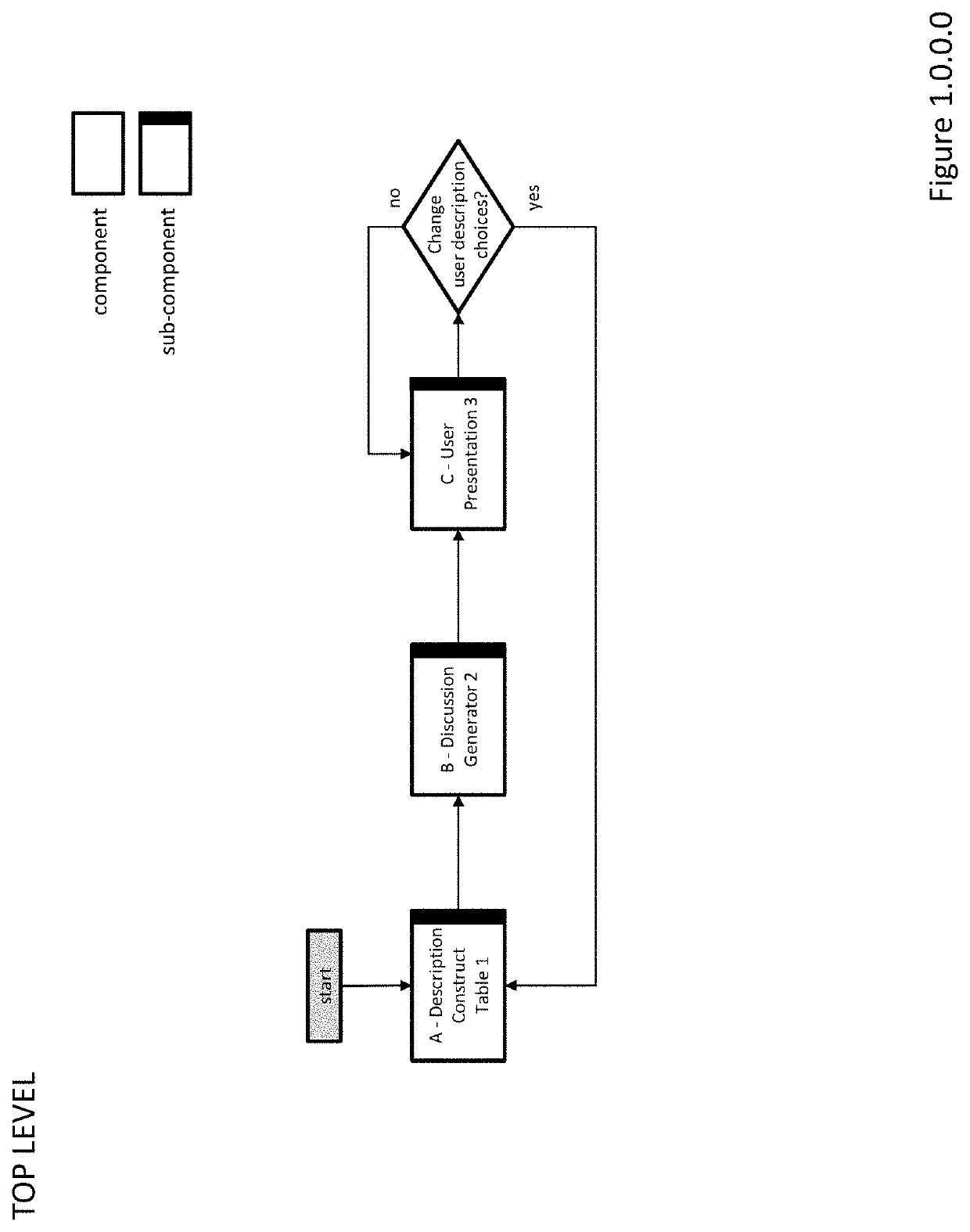
  • Figure 1
    Figure 1
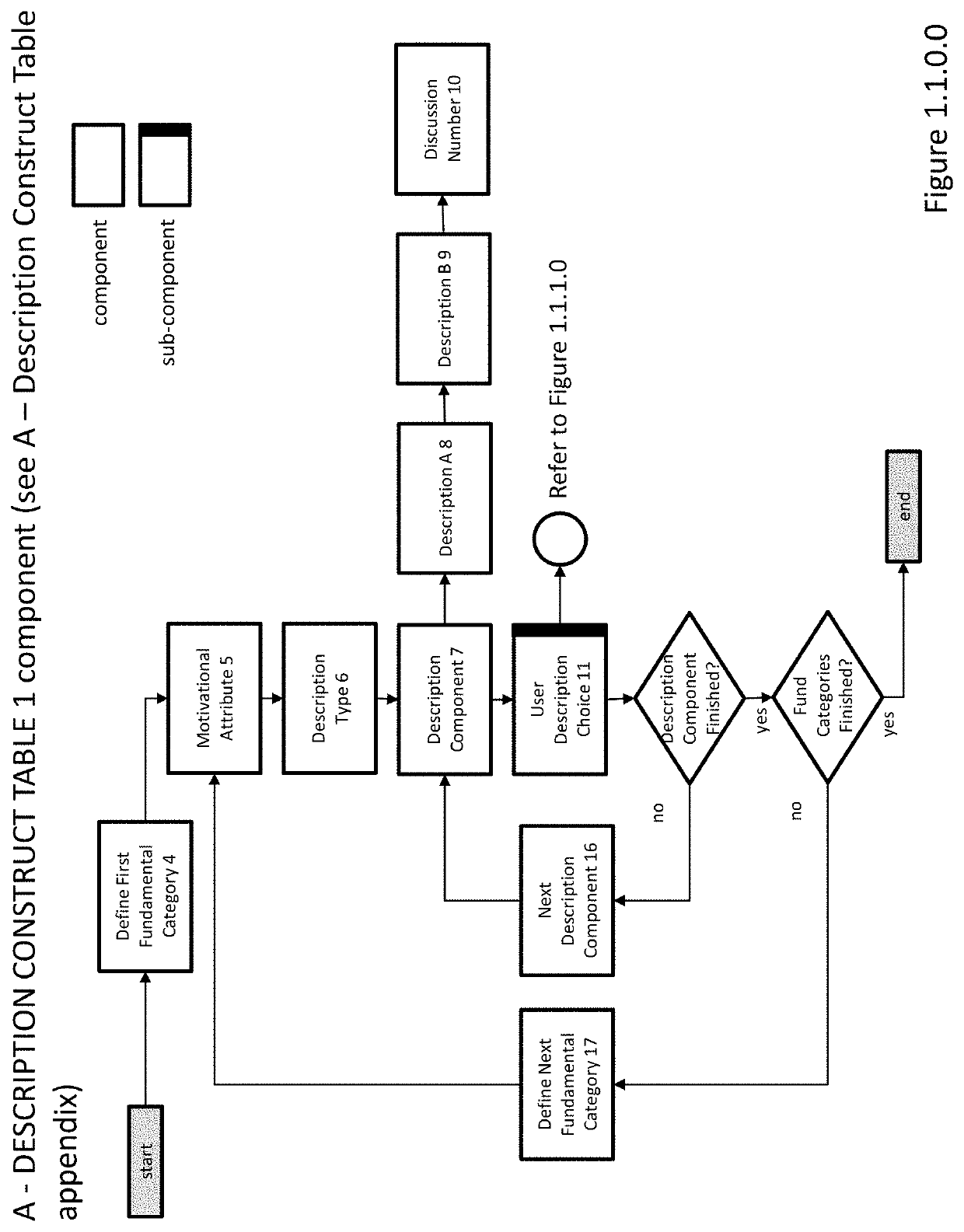
  • Figure 2
    Figure 2
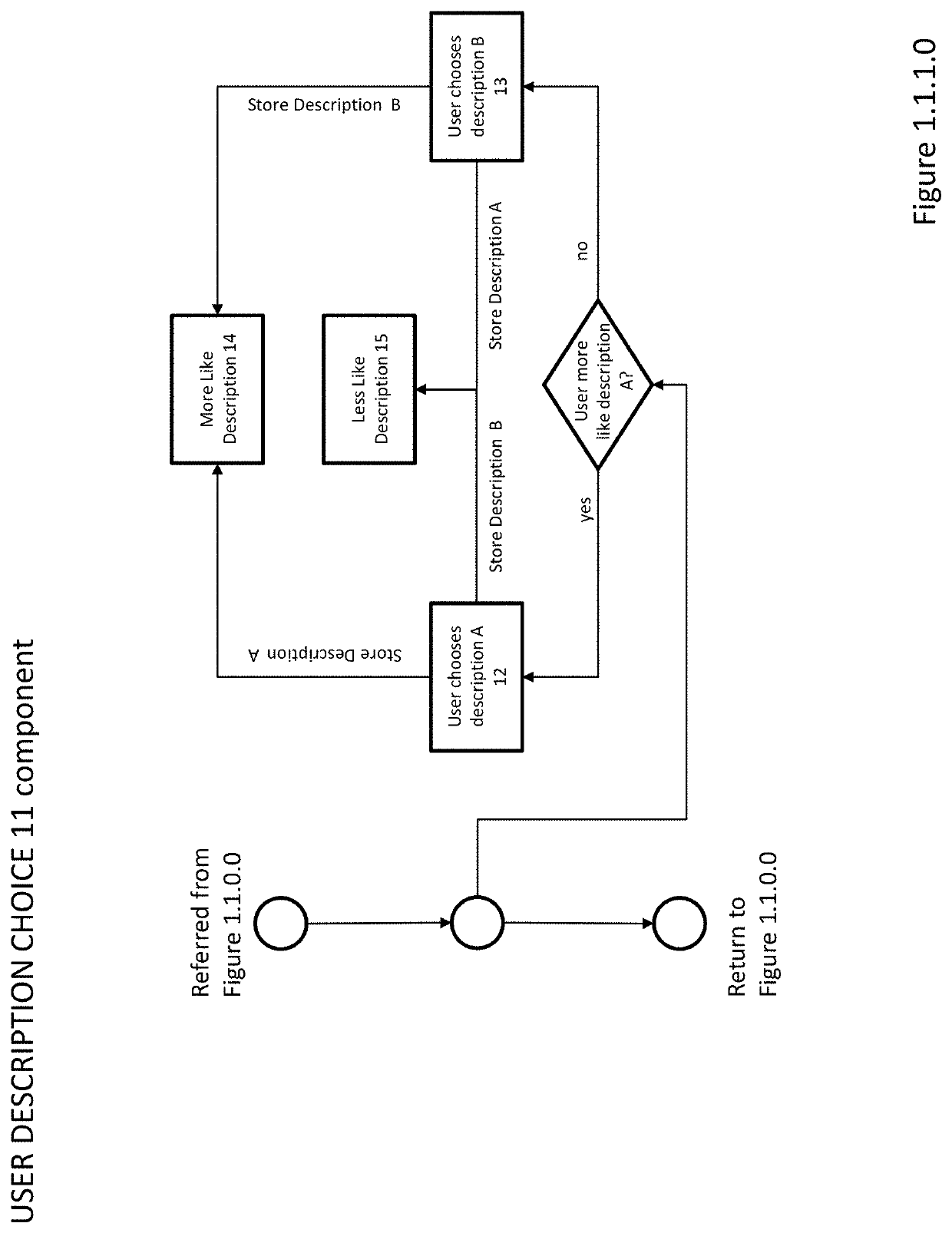
  • Figure 3
    Figure 3
Patent Text Reader

Abstract

An presentation generator is disclosed for generating presentations for interacting with a user on a personal topic of, e.g., the user's selection, wherein the presentations assist the user in obtaining a greater awareness of his / her motivations and / or behaviors relating to the topic. In one embodiment, the presentation generator generates and presents to the user textual observations, questions, and / or statements for the user's consideration. Such presentations use and / or are consistent with textual descriptions obtained from: (a) the results of one or more personality / motivation test results, and (b) user inputs, e.g., regarding the selected topic together with his / her confidence in the validity of such inputs. The invention organizes the textual descriptions so that outputs to the user can be generated from various personality / motivational perspectives thereby assisting the user in viewing the topic of discussion from different perspectives and thereby becoming more aware of his / her biases, motivations, and / or concerns relating to the topic.
Need to check novelty before this filing date? Find Prior Art

Description

RELATED APPLICATIONS

[0001] The present patent application is a continuation-in-part of application Ser. No. 16 / 056,649, filed Aug. 7, 2018, which is a continuation-in-part of application Ser. No. 15 / 429,606, filed Feb. 10, 2017 (now U.S. Pat. No. 10,055,802, issuing Aug. 21, 2018), which is a continuation of U.S. patent application Ser. No. 13 / 896,553, filed on May 17, 2013 (now U.S. Pat. No. 9,589,475, issued Mar. 7, 2017), which is a continuation of U.S. patent application Ser. No. 13 / 538,431, filed on Jun. 29, 2012 (now U.S. Pat. No. 8,449,300, issued May 28, 2013), which is a continuation of U.S. patent application Ser. No. 12 / 987,555, filed Jan. 10, 2011 (now U.S. Pat. No. 8,226,418, issued Jul. 24, 2012), which in turn is a continuation of U.S. patent application Ser. No. 10 / 896,438, filed Jul. 21, 2004 (now U.S. Pat. No. 7,874,841, issued Jan. 25, 2011), which in turn is a continuation-in-part of U.S. patent application Ser. No. 10 / 367,074 filed Feb. 13, 2003, which in turn is...

Examples

Embodiment Construction

[0081]There are two major sections described in the remainder of this summary section hereinbelow:[0082]A. Section A describes the mechanics of the invention as it relates to the Relationship Anatomy Model in regards to the fundamental categories, motivational attributes, motivational coping techniques, and the user's motivation(s) or attitudinal trait descriptions (e.g., descriptions A & B) relative to a discussion topic.[0083]B. Section B describes the mechanics of the invention as it relates to how a user interacts with this system in everyday situations, relationships, or aspects of general life (e.g., discussion topics) through the User Presentation.

Section A—Mechanics of the Invention

[0084]Section A describes the mechanics of the invention as it relates to the design of the relationship anatomy model in regards fundamental categories, motivational attributes, motivational coping techniques and to the user's description of themselves in selecting predefined attitudinal trait de...