
Bicyclic peptide ligands specific for cd38
a peptide ligand and bicyclic technology, applied in the field of polypeptides, can solve the problems of reducing the conformational flexibility of the cyclic structure, and achieve the effect of preventing, suppressing or treating a diseas
- Summary
- Abstract
- Description
- Claims
- Application Information
AI Technical Summary
Benefits of technology
Problems solved by technology
Method used
Image

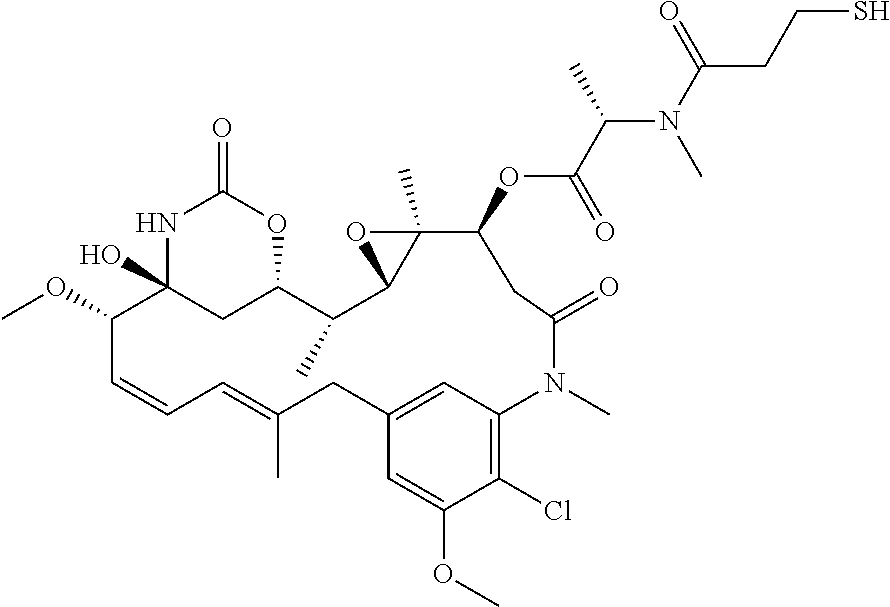
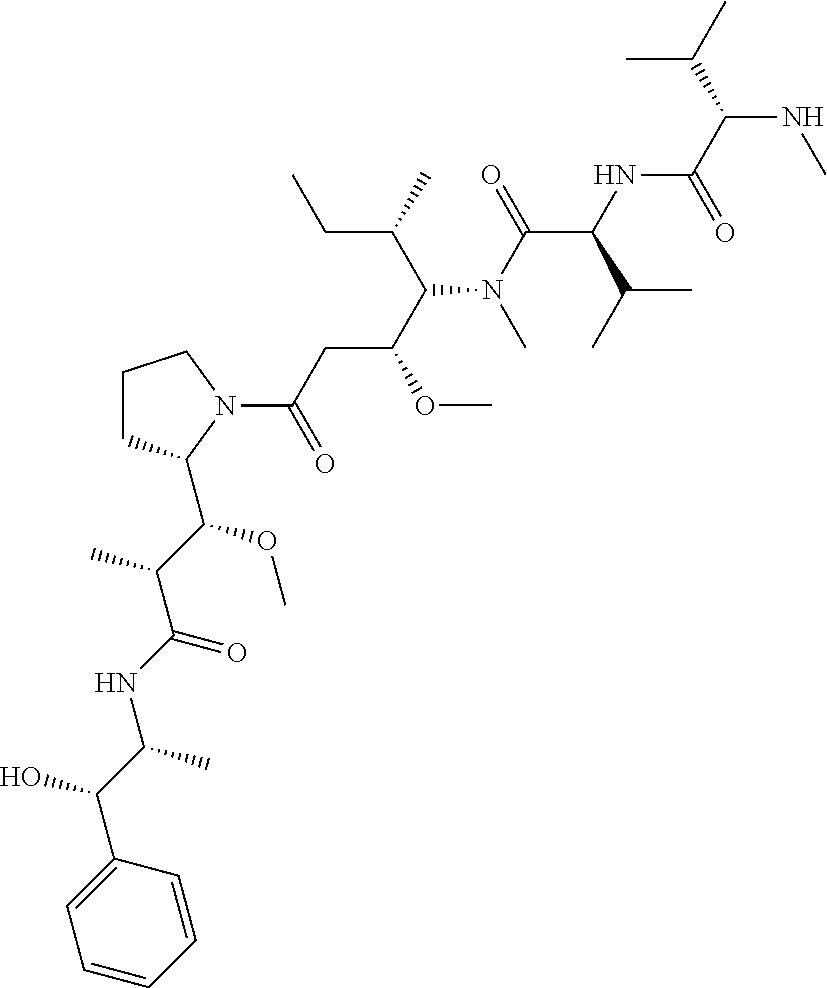
Examples
examples
Materials and Methods
[0189]Peptide Synthesis
[0190]Peptide synthesis was based on Fmoc chemistry, using a Symphony peptide synthesiser manufactured by Peptide Instruments and a Syro II synthesiser by MultiSynTech. Standard Fmoc-amino acids were employed (Sigma, Merck), with appropriate side chain protecting groups: where applicable standard coupling conditions were used in each case, followed by deprotection using standard methodology. Peptides were purified using HPLC and following isolation they were modified with 1,3,5-Triacryloylhexahydro-1,3,5-triazine (TATA, Sigma). For this, linear peptide was diluted with 50:50 MeCN:H2O up to ˜35 mL, ˜500 μL of 100 mM TATA in acetonitrile was added, and the reaction was initiated with 5 mL of 1 M NH4HCO3 in H2O. The reaction was allowed to proceed for ˜30-60 min at RT, and lyophilised once the reaction had completed (judged by MALDI). Once completed, 1 ml of 1M L-cysteine hydrochloride monohydrate (Sigma) in H2O was added to the reaction for ...
PUM
| Property | Measurement | Unit |
|---|---|---|
| half life | aaaaa | aaaaa |
| weight | aaaaa | aaaaa |
| width | aaaaa | aaaaa |
Abstract
Description
Claims
Application Information
 Login to View More