
Morphological disambiguation
a morphological and disambiguation technology, applied in the field of computer-based linguistic processing, can solve problems such as the difficulty of dealing with hebrew spelling, and achieve the effect of improving the accuracy of morphological disambiguation
- Summary
- Abstract
- Description
- Claims
- Application Information
AI Technical Summary
Benefits of technology
Problems solved by technology
Method used
Image

Examples
Embodiment Construction
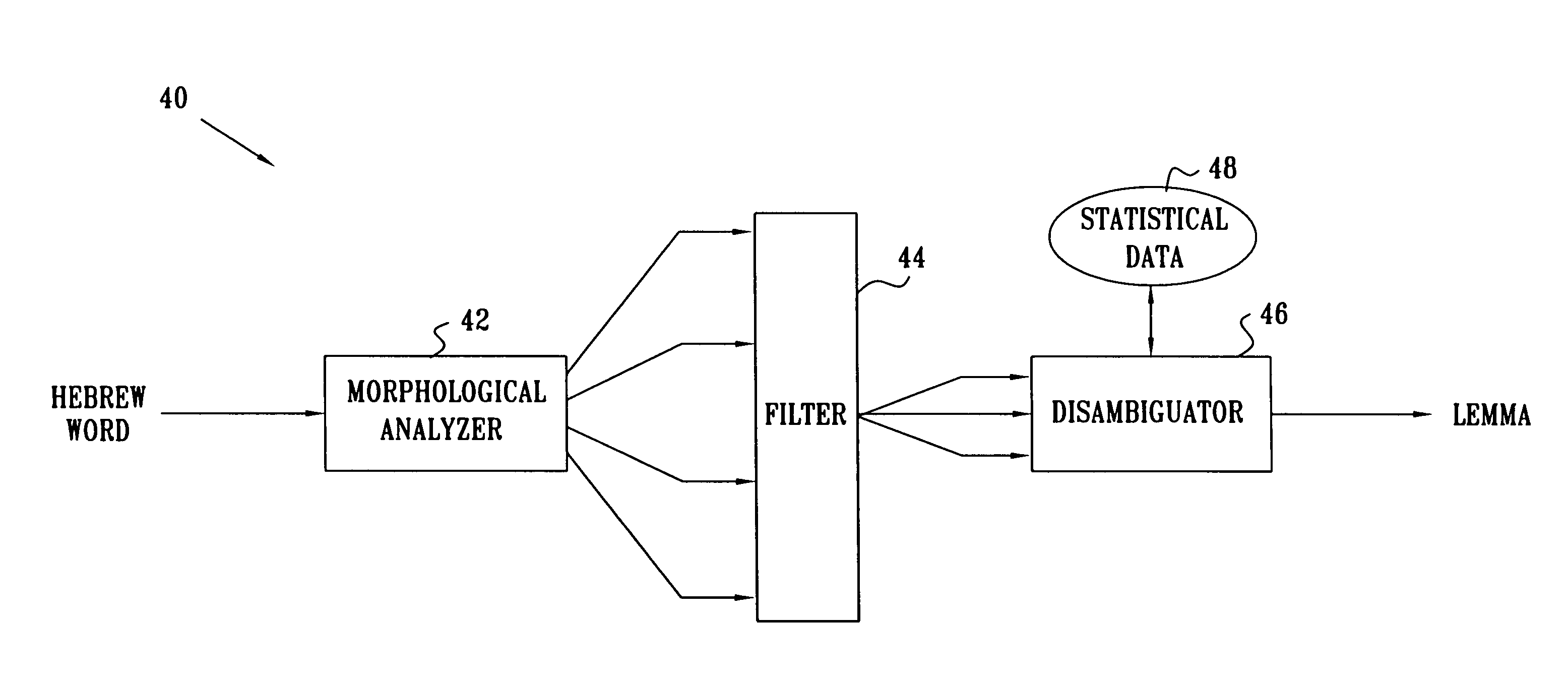
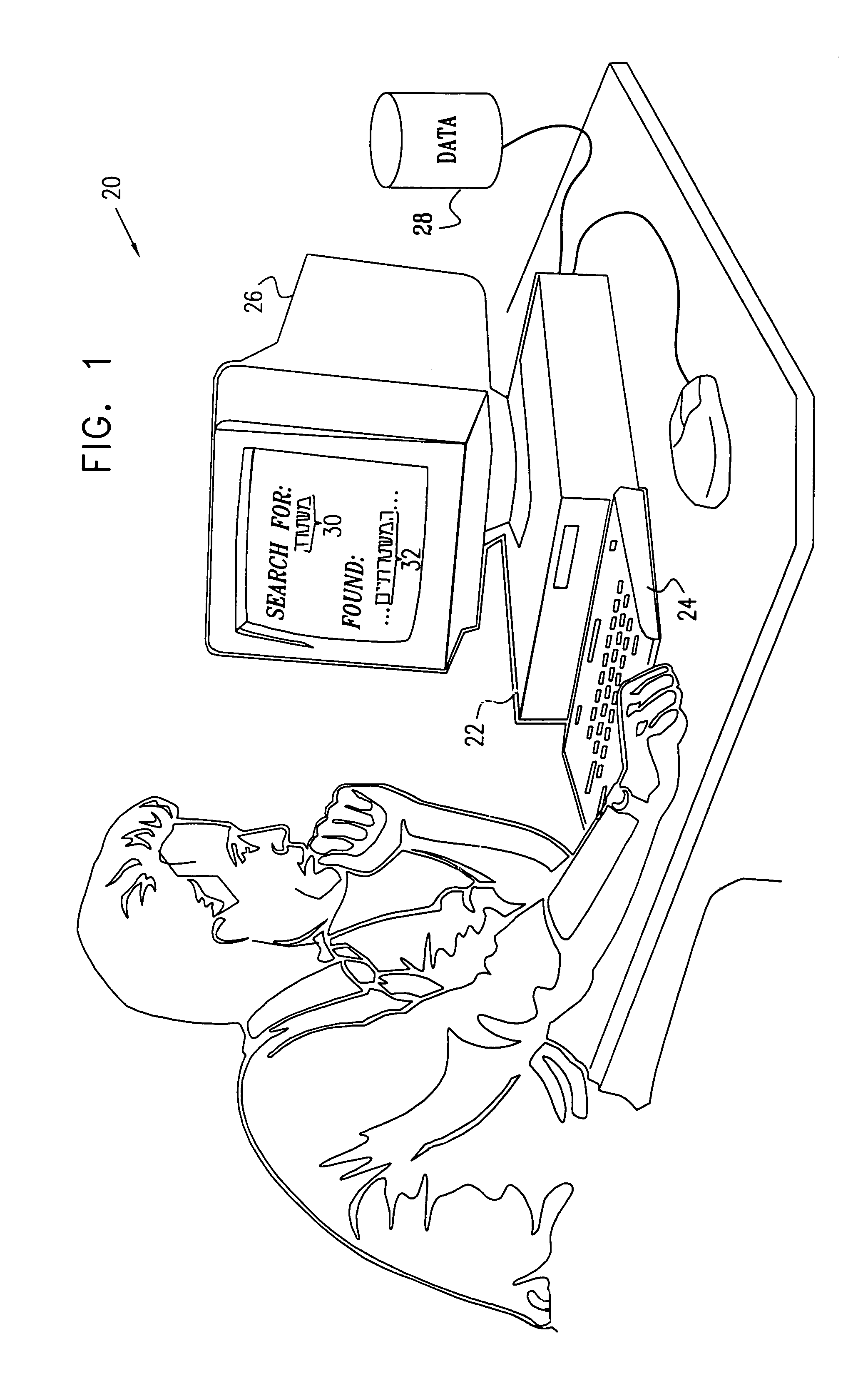
[0053]FIG. 1 is a schematic, pictorial illustration of a system 20 for linguistic processing, in accordance with a preferred embodiment of the present invention. System 20 comprises a computer processor 22, with a text input device, such as a keyboard 24, and an output device, such as a display 26. Alternatively or additionally, the processor may receive its input and / or output via a network or by any other suitable means. System 20 typically performs its functions, described in detail hereinbelow, under the control of software running on processor 22. This software may be downloaded to the processor over a network or, alternatively, it may be provided on tangible means, such as CD-ROM or non-volatile memory.
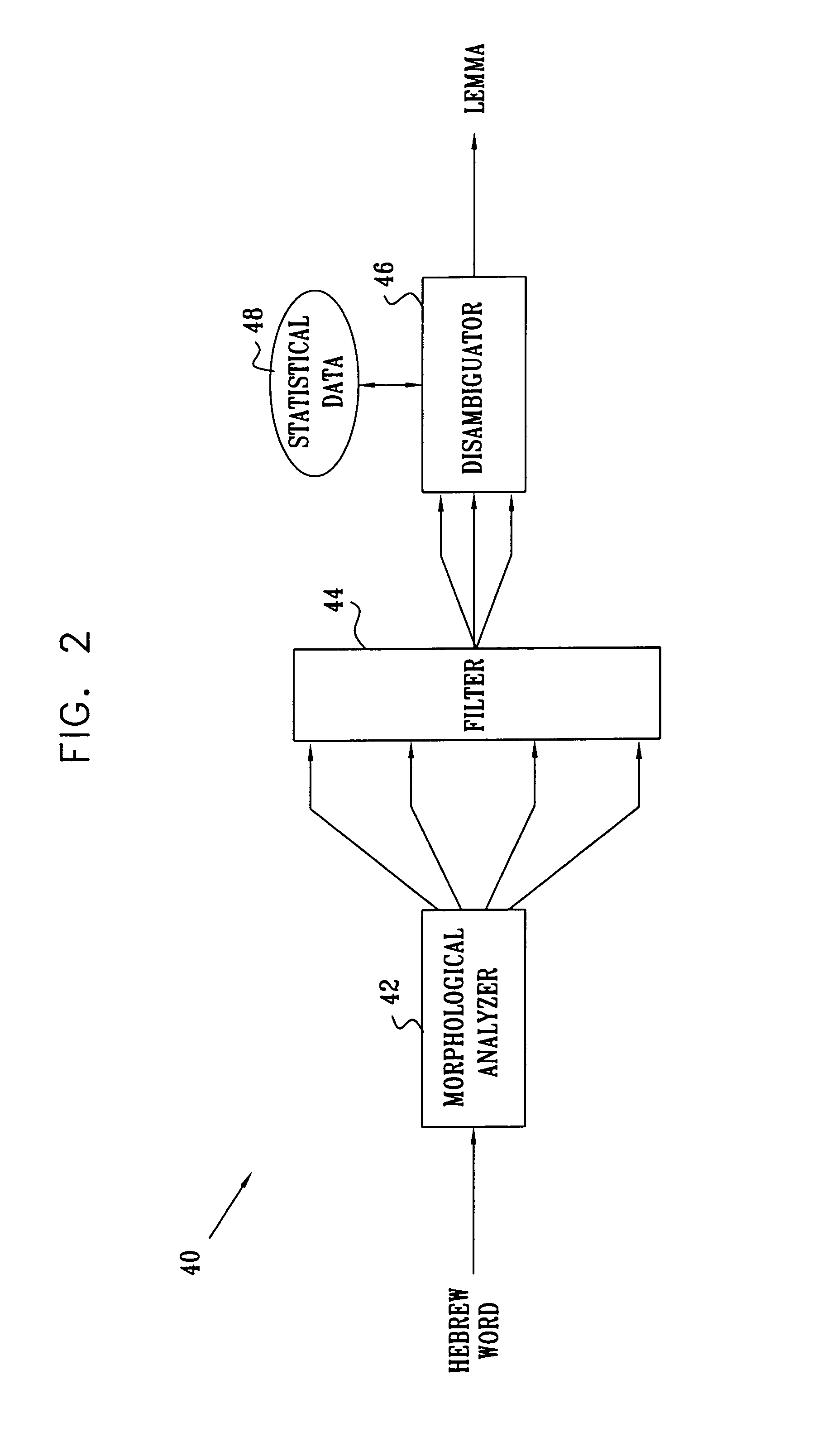
[0054]In typical operation, system 20 operates on a corpus of text documents, which are stored in one or more storage devices 28, either local to processor 22 or accessed via a network. System 20 processes the documents to determine the lemmas of the words in the text and, prefe...
PUM
 Login to View More
 Abstract
Description
Claims
Application Information
 Login to View More