
Light source having an LED and a luminescence conversion body and method for producing the luminescence conversion body
a technology of luminescence and conversion body, which is applied in the direction of discharge tube luminescnet screen, energy-saving lighting, sustainable buildings, etc., can solve the problem of photochemical instability of epoxy resin, and achieve the effect of high light power and high light power
- Summary
- Abstract
- Description
- Claims
- Application Information
AI Technical Summary
Benefits of technology
Problems solved by technology
Method used
Image

Examples
Embodiment Construction
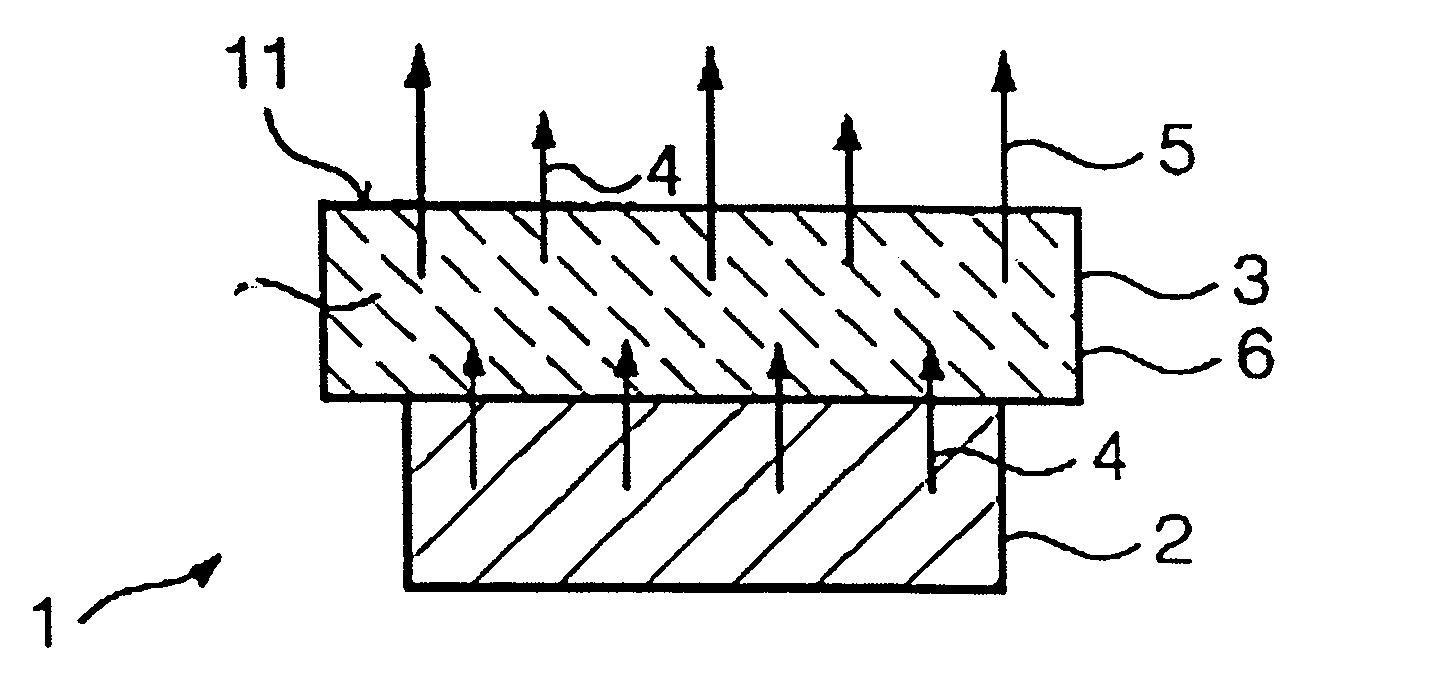
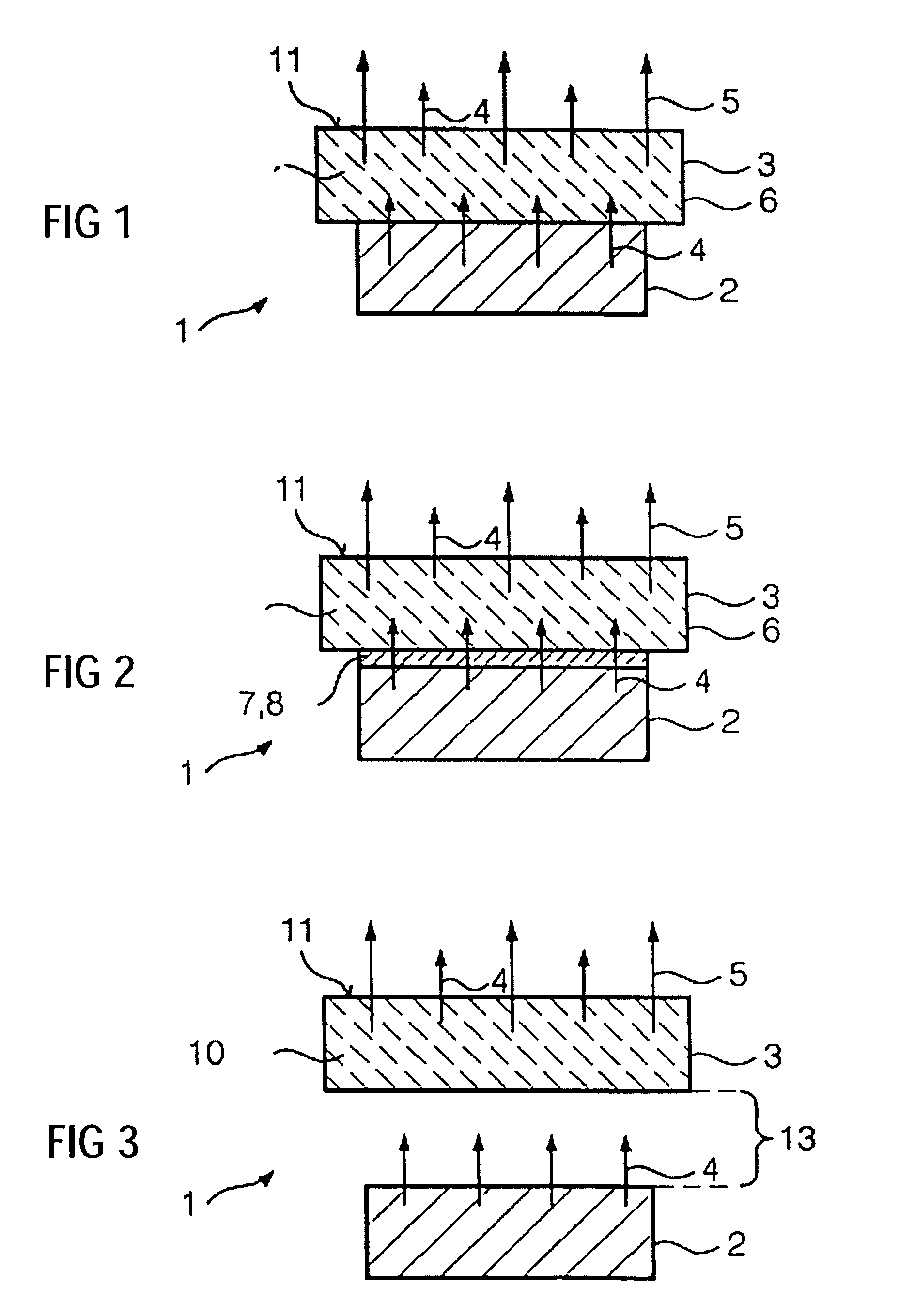
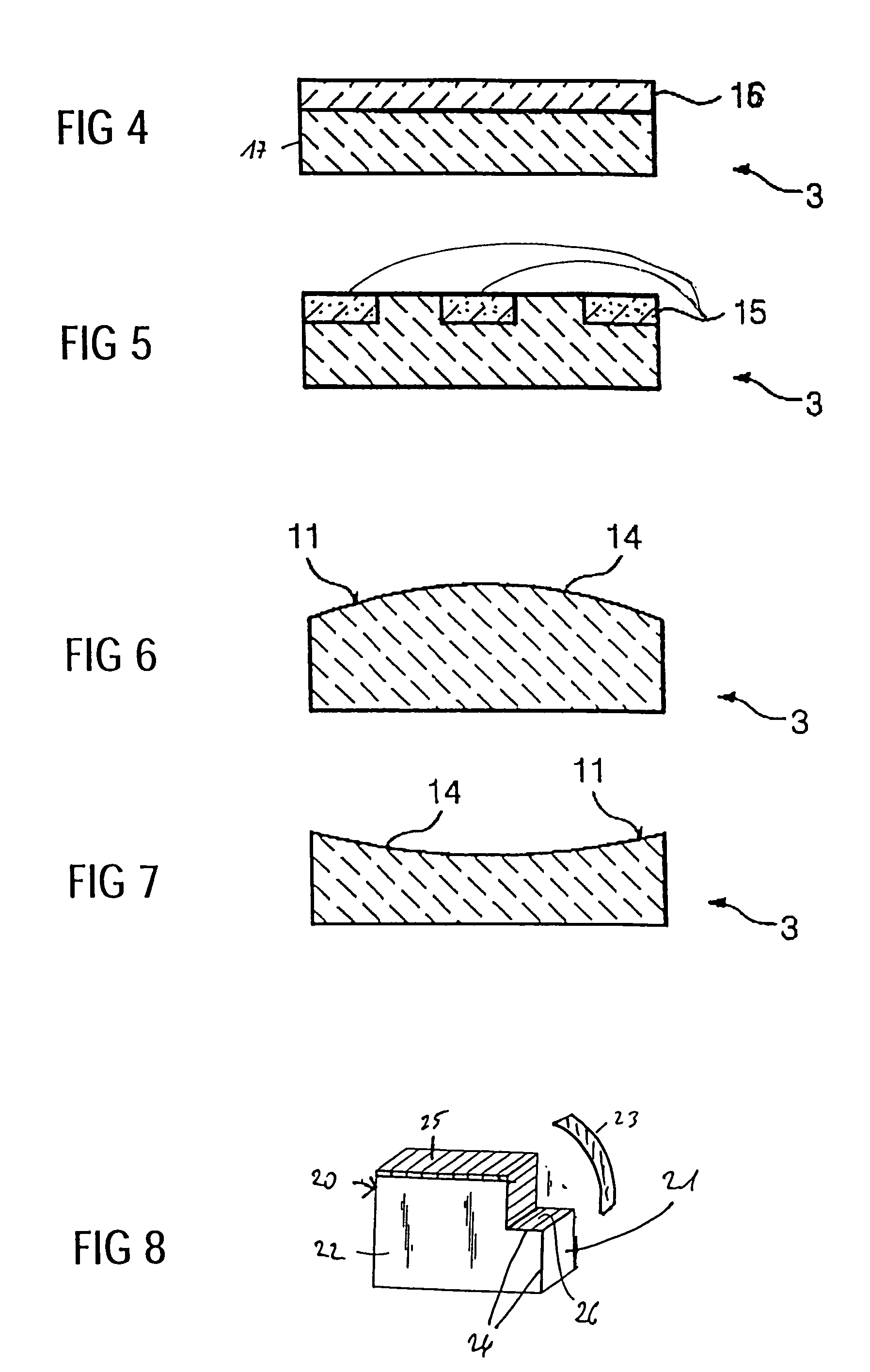
[0042]The light source 1 in FIG. 1 is a luminescence conversion LED that radiates white light. It comprises an LED 2 and a luminescence conversion body 3. The LED 2 has GaInN as semiconductor material. The LED 2 emits blue light with an intensity maximum at about 450 nm as primary radiation 4.
[0043]The luminescence conversion body 3 is a polycrystalline ceramic body having a ceramic density of about 95% of the theoretical density. The ceramic body 3 comprises ceramic particles, that is to say crystallites, having an average grain size of 10 μm to 20 μm (understood as equivalent diameter). The base material of the ceramic body 3 is an yttrium aluminum garnet. The base material is homogeneously doped with Ce for activation purposes. The Ce-doped, still ceramic base material functions as luminescent material which converts the primary radiation 4 of the LED 2 into the secondary radiation 5. The secondary radiation 5 emitted by the luminescent material has an intensity maximum—dependent...
PUM
| Property | Measurement | Unit |
|---|---|---|
| grain size | aaaaa | aaaaa |
| grain size | aaaaa | aaaaa |
| temperature | aaaaa | aaaaa |
Abstract
Description
Claims
Application Information
 Login to View More