Silicone rubber composition for extrusion molding

a technology of extrusion molding and composition, which is applied in the direction of transportation and packaging, layered products, special tyres, etc., can solve the problems of large temperature dependency of acrylic optical fibers, decrease in elastic modulus of acrylics, and unsuitability for optical fiber sensors, etc., to reduce the temperature dependency of acrylic optical fiber sensors

Inactive Publication Date: 2011-07-12
SHIN ETSU CHEM CO LTD
View PDF22 Cites 0 Cited by
  • Summary
  • Abstract
  • Description
  • Claims
  • Application Information

AI Technical Summary

Benefits of technology

The silicone rubber composition effectively reduces the temperature dependency of acrylic optical fiber sensors and is suitable for extrusion molding, achieving a cured product with a minimum 5% rate of elastic modulus variation across the specified temperature range, improving the sensors' performance and manufacturability.

Problems solved by technology

However, the elastic modulus of acrylics decreases with increasing temperature, meaning acrylic optical fibers have a large temperature dependency, and are therefore unsuitable for use as optical fiber sensors.
By using a liquid silicone rubber for which the elastic modulus increases with increasing temperature, the temperature dependency of an acrylic optical fiber sensor can be significantly reduced, but the workability of such compositions is poor, and they are not suitable for mass production.[Patent Reference 1] JP 4-361126 A[Patent Reference 2] JP 11-165324 A[Patent Reference 3] JP 2001-082918 A[Patent Reference 4] JP 2002-267549 A[Patent Reference 5] U.S. Pat. No. 5,335,749[Patent Reference 6] WO 01 / 23224 A1[Patent Reference 7] JP 2006-500284 A

Method used

the structure of the environmentally friendly knitted fabric provided by the present invention; figure 2 Flow chart of the yarn wrapping machine for environmentally friendly knitted fabrics and storage devices; image 3 Is the parameter map of the yarn covering machine
View more

Image

Smart Image Click on the blue labels to locate them in the text.
Viewing Examples
Smart Image
  • Silicone rubber composition for extrusion molding

Examples

Experimental program
Comparison scheme
Effect test

example 1

[0070]100 parts by mass of an organopolysiloxane consisting of 99.431 mol % of dimethylsiloxane units, 0.544 mol % of methylvinylsiloxane units and 0.025 mol % of dimethylvinylsiloxane units, and with an average polymerization degree of approximately 8,000, 20 parts by mass of a fumed silica with a BET specific surface area of 200 m2 / g (product name: Aerosil (a registered trademark) 200, manufactured by Nippon Aerosil Co., Ltd.), 4 parts by mass of a dimethylpolysiloxane having silanol groups at both terminals and with an average polymerization degree of 15, 0.45 parts by mass of vinyltrimethoxysilane, and 0.01 parts by mass of 1,3-divinyl-1,1,3,3-tetramethyldisilazane were placed in a kneader and subjected to kneading under heating at 180° C. for two hours, thus yielding a base compound. To 100 parts by mass of this base compound was added 0.8 parts by mass of 1,6-hexanediol-t-butylperoxycarbonate as a cross-linking agent, and the resulting mixture was mixed uniformly using a two r...

example 2

[0071]100 parts by mass of an organopolysiloxane consisting of 99.5 mol % of dimethylsiloxane units, 0.475 mol % of methylvinylsiloxane units and 0.025 mol % of dimethylvinylsiloxane units, and with an average polymerization degree of approximately 8,000, 22 parts by mass of a fumed silica with a BET specific surface area of 300 m2 / g (product name: Aerosil 300, manufactured by Nippon Aerosil Co., Ltd.), 0.5 parts by mass of vinyltrimethoxysilane, 3 parts by mass of a methylvinylpolysiloxane with an average polymerization degree of 15 and a vinyl group content of 0.0013 mol / g, and 0.01 parts by mass of 1,3-divinyl-1,1,3,3-tetramethyldisilazane were placed in a kneader and subjected to kneading under heating at 180° C. for two hours, thus yielding a base compound. To 100 parts by mass of this base compound was added 0.8 parts by mass of 1,6-hexanediol-t-butylperoxycarbonate as a cross-linking agent, and the resulting mixture was mixed uniformly using a two roll mill, yielding a compos...

example 3

[0072]100 parts by mass of an organopolysiloxane consisting of 99.85 mol % of dimethylsiloxane units, 0.125 mol % of methylvinylsiloxane units and 0.025 mol % of dimethylvinylsiloxane units, and with an average polymerization degree of approximately 8,000, 1 part by mass of a dimethylpolysiloxane with both molecular chain terminals blocked with dimethylvinylsiloxy groups and with a viscosity at 25° C. of 5,000 mPa·s, 1 part by mass of an organopolysiloxane resin consisting of 6.5 mol % of (CH3)2(CH2═CH)SiO1 / 2 units, 54 mol % of SiO2 units and 39.5 mol % of (CH3)3SiO1 / 2 units, 22 parts by mass of a fumed silica with a BET specific surface area of 300 m2 / g (product name: Aerosil 300, manufactured by Nippon Aerosil Co., Ltd.), 0.5 parts by mass of vinyltrimethoxysilane, 3 parts by mass of a methylvinylpolysiloxane with an average polymerization degree of 15 and a vinyl group content of 0.0013 mol / g, and 0.01 parts by mass of 1,3-divinyl-1,1,3,3-tetramethyldisilazane were placed in a kn...

the structure of the environmentally friendly knitted fabric provided by the present invention; figure 2 Flow chart of the yarn wrapping machine for environmentally friendly knitted fabrics and storage devices; image 3 Is the parameter map of the yarn covering machine
Login to View More

PUM

PropertyMeasurementUnit
specific surface areaaaaaaaaaaa
temperatureaaaaaaaaaa
Login to View More

Abstract

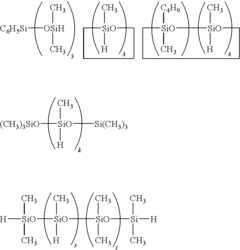
Provided is a silicone rubber composition for extrusion molding, including: (A) 100 parts by mass of an organopolysiloxane represented by an average composition formula (1): R1nSiO(4-n) / 2 (in the formula, R1 represents identical or different, unsubstituted or substituted monovalent hydrocarbon groups, and n represents a positive number within a range from 1.95 to 2.04), (B) 0 to 50 parts by mass of a vinyl group-containing silicon compound, (C) 5 to 100 parts by mass of a reinforcing silica, and (D) an effective quantity of a curing agent, in which the vinyl group content relative to the combination of the components (A) through (D) is at least 1.0×10⁻⁴ mol / g. The composition yields a cured product for which the elastic modulus increases across a temperature range from 30 to 110° C. and which is therefore capable of reducing the temperature dependency of acrylic optical fibers. The composition is suitable for extrusion molding.

Description

[0001]This application is a division of application Ser. No. 11 / 852,676, filed Sep. 10, 2007, now abandoned Apr. 20, 2010, which claims priority to JP 2006-244945, filed Sep. 11, 2006.BACKGROUND OF THE INVENTION[0002]1. Field of the Invention[0003]The present invention relates to a silicone rubber composition for extrusion molding that yields a cured product for which the elastic modulus increases across a temperature range from 30 to 110° C.[0004]2. Description of the Prior Art[0005]Tests are being conducted in which special optical fiber sensors are embedded within high-performance structural materials such as composite materials, and these sensors are then used to continually monitor the structural materials for distortion and the like. For example, a method has been disclosed for measuring the internal distortion within a fiber-reinforced composite material laminate by embedding the sensor portion of an optical fiber interferometer within the layers of a fiber-reinforced composi...

Claims

the structure of the environmentally friendly knitted fabric provided by the present invention; figure 2 Flow chart of the yarn wrapping machine for environmentally friendly knitted fabrics and storage devices; image 3 Is the parameter map of the yarn covering machine
Login to View More

Application Information

Patent Timeline
no application Login to View More
Patent Type & AuthorityPatents(United States)
IPC IPC(8): C08K5/5419C08K3/36
CPCC08L83/04C08G77/12C08G77/16C08G77/18C08G77/20C08L83/00Y10T428/31663
InventorTODOROKI, DAICHI
OwnerSHIN ETSU CHEM CO LTD