Electric brake

a technology of electric brakes and brake cylinders, which is applied in the direction of brake cylinders, anti-theft devices, instruments, etc., can solve the problems of increased pad gap, increased braking time, and variable degree of deceleration of vehicles, so as to secure sufficient braking force and responsiveness, and good accuracy

US8430213B2Active Publication Date: 2013-04-30HITACHI LTD
20 Cites 12 Cited by

Patent Information

Authority / Receiving Office
US · United States
Patent Type
Patents(United States)
Current Assignee / Owner
Publication Date
2013-04-30

Smart Images

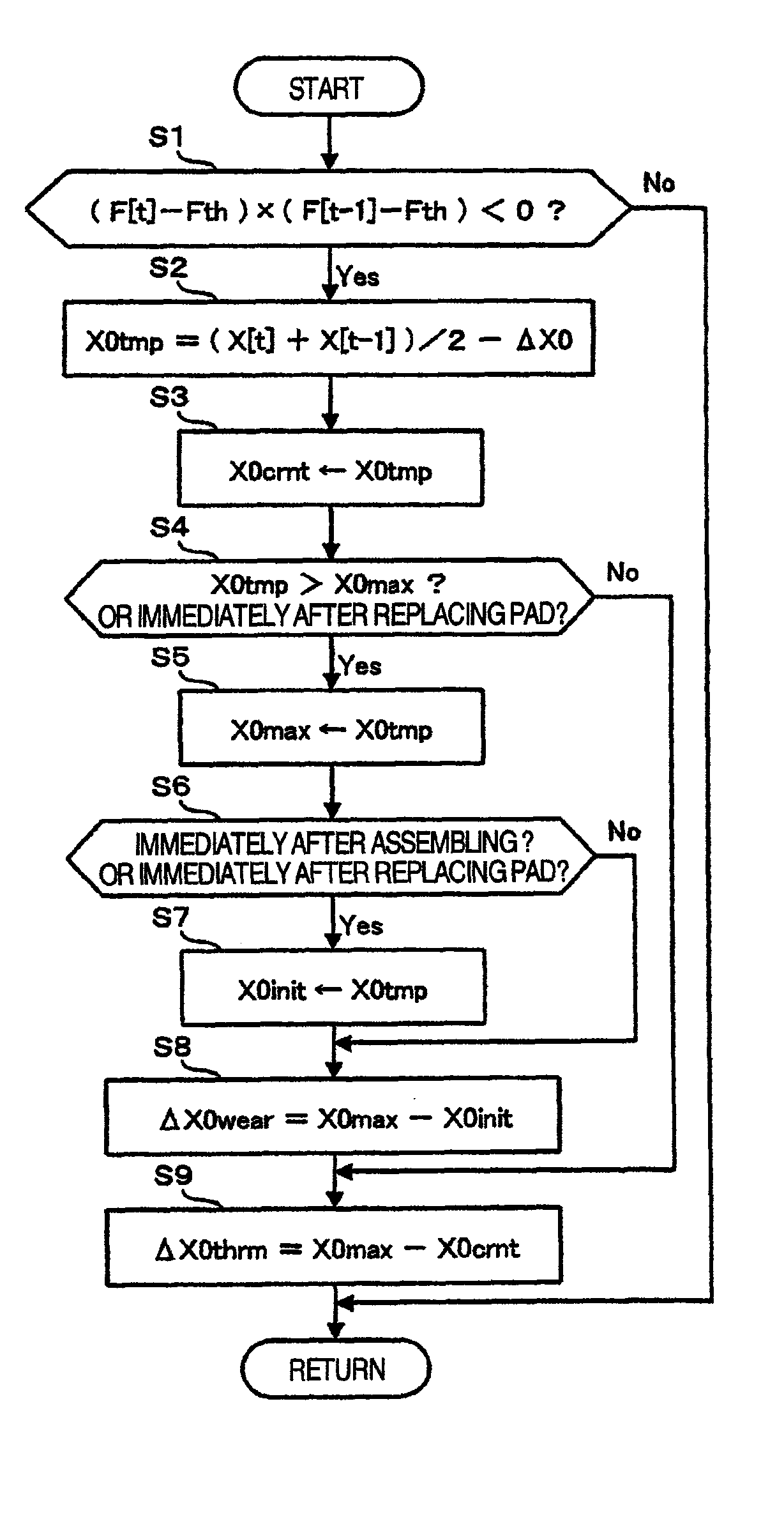
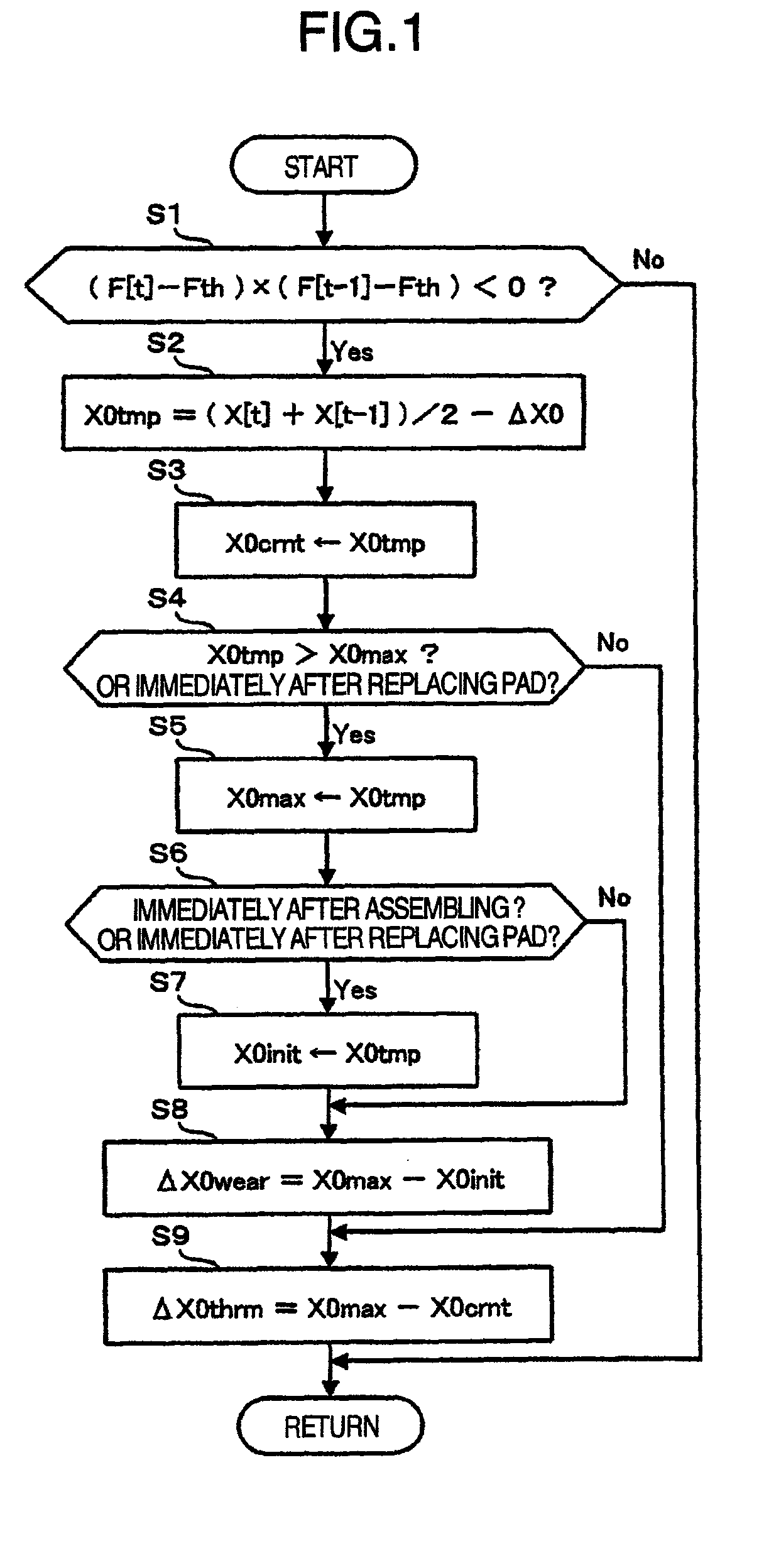
  • Figure 1
    Figure 1
  • Figure 2
    Figure 2
  • Figure 3
    Figure 3
Patent Text Reader

Abstract

Provided is an electric brake capable of accurately estimating the brake pad temperature and securing a sufficient braking force and response. An electric brake has a disc rotor rotating with a wheel, an actuator for rectilinearly actuating a piston in the axial direction of the disc rotor by using an electric motor, a drive controller for controlling the drive of the actuator, a brake pad pressed by the piston to give a frictional resistance to the disc rotor in the direction of rotation, and a braking start position detector for detecting a braking start position of the piston where the disc rotor is brought into contact with the brake pad. The drive controller stores the braking start position detected by the braking start position detector as the maximum braking start position. When the braking start position shifts in the pressing force-increasing direction, the drive controller updates the value stored as the maximum braking-start position.
Need to check novelty before this filing date? Find Prior Art

Description

TECHNICAL FIELD

[0001] The present invention relates to a brake apparatus for an automobile, and particularly to an electric brake apparatus which generates braking force using an electric motor.BACKGROUND ART

[0002] Conventionally, there is known development of an electric brake apparatus in which an electric motor is rotationally driven depending on the amount of stepping of a brake pedal to generate braking force using the rotational torque of the electric motor. For example, the electric brake apparatus proposed in JP-A-2001-32868 comprises an actuator having an electric motor, and is adapted to apply braking force to a wheel by pressing a brake pad against a disc rotor depending on the amount of stepping of a brake pedal.

[0003] The electric brake apparatus in the above conventional example uses the position of the brake pad at the time of releasing thrust detected by a thrust sensor when braking is finished as a braking start position; controls a gap between the brake rotor and the ...

Examples

Embodiment Construction

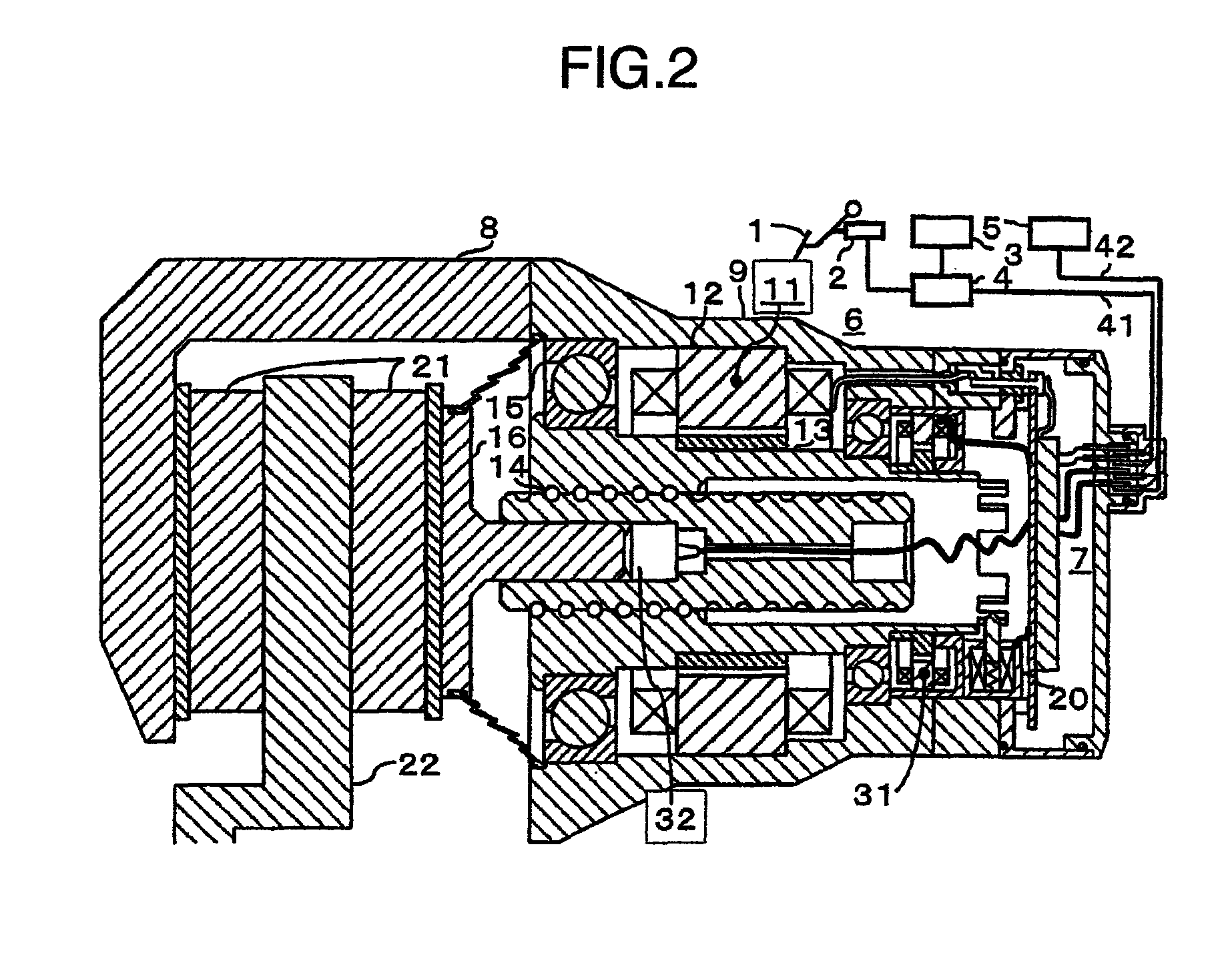
[0022]FIG. 1 shows an embodiment of a brake apparatus of the present invention.

[0023]The brake apparatus comprises a brake pedal 1, a pedal sensor 2 for detecting the stepping amount of the brake pedal, an operating state detection unit 3, a vehicle motion controller 4 for calculating braking force, an electric power supply 5, an actuator 6 which is an electric braking force generating mechanism, a drive controller 7 for driving the actuator 6 and for transmitting and receiving a signal, and a caliper 8.

[0024]The actuator 6 comprises a housing 9, a motor 11, a stator 12 which is a fixing part of the motor 11 to the housing 9, a motor rotor 13 which is a rotating part of the motor 11, a screw portion 14 for converting rotation of the motor rotor 13 to linear motion, a bearing 15 supporting the motor rotor 13, a piston 16 generating thrust from the rotational power of the motor rotor 13, a parking brake mechanism 20 for mechanically fixing the position of the motor rotor 13 and the pi...