
Expandable body cavity liner device
- Summary
- Abstract
- Description
- Claims
- Application Information
AI Technical Summary
Benefits of technology
Problems solved by technology
Method used
Image

Examples
Embodiment Construction
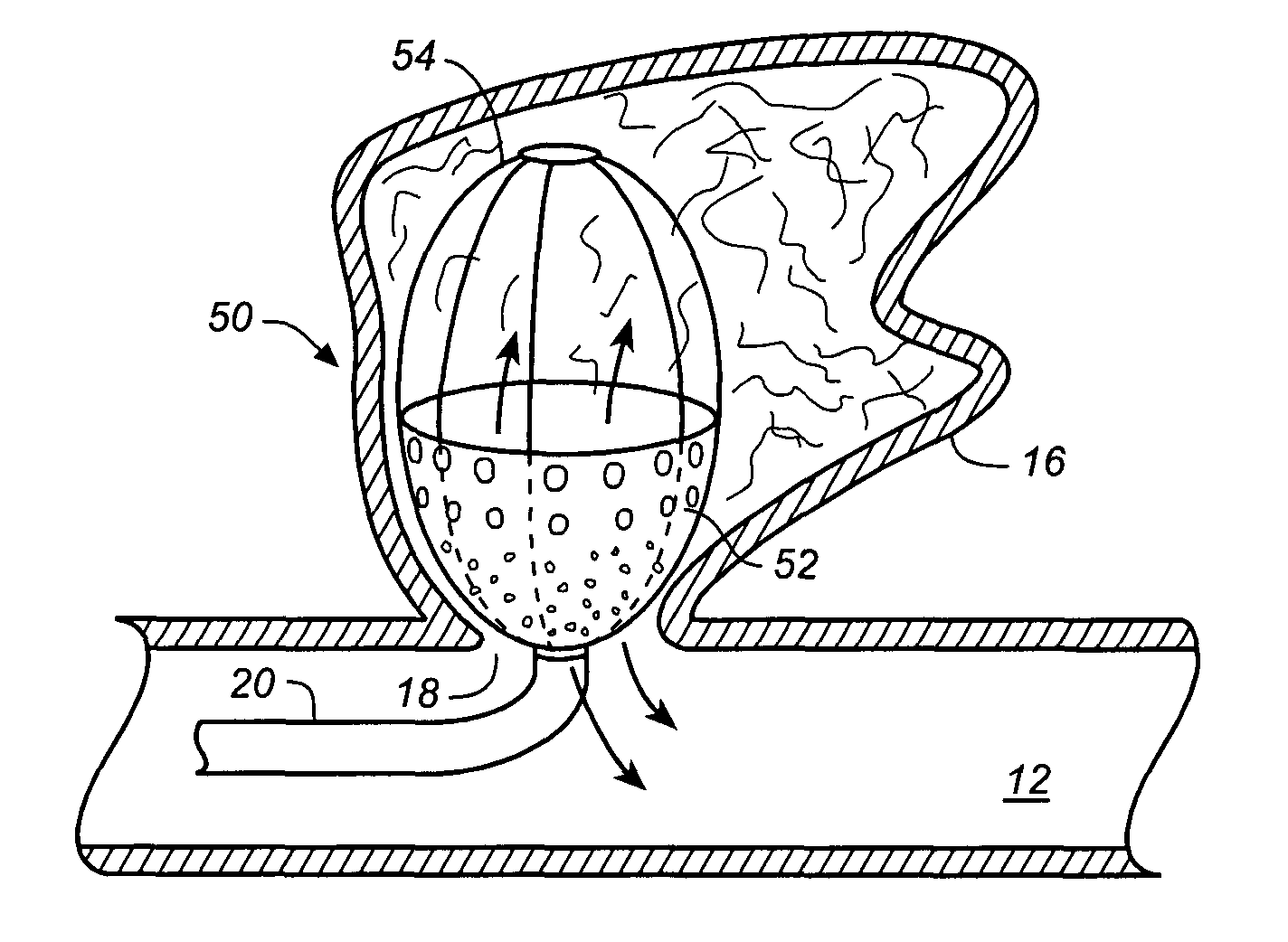
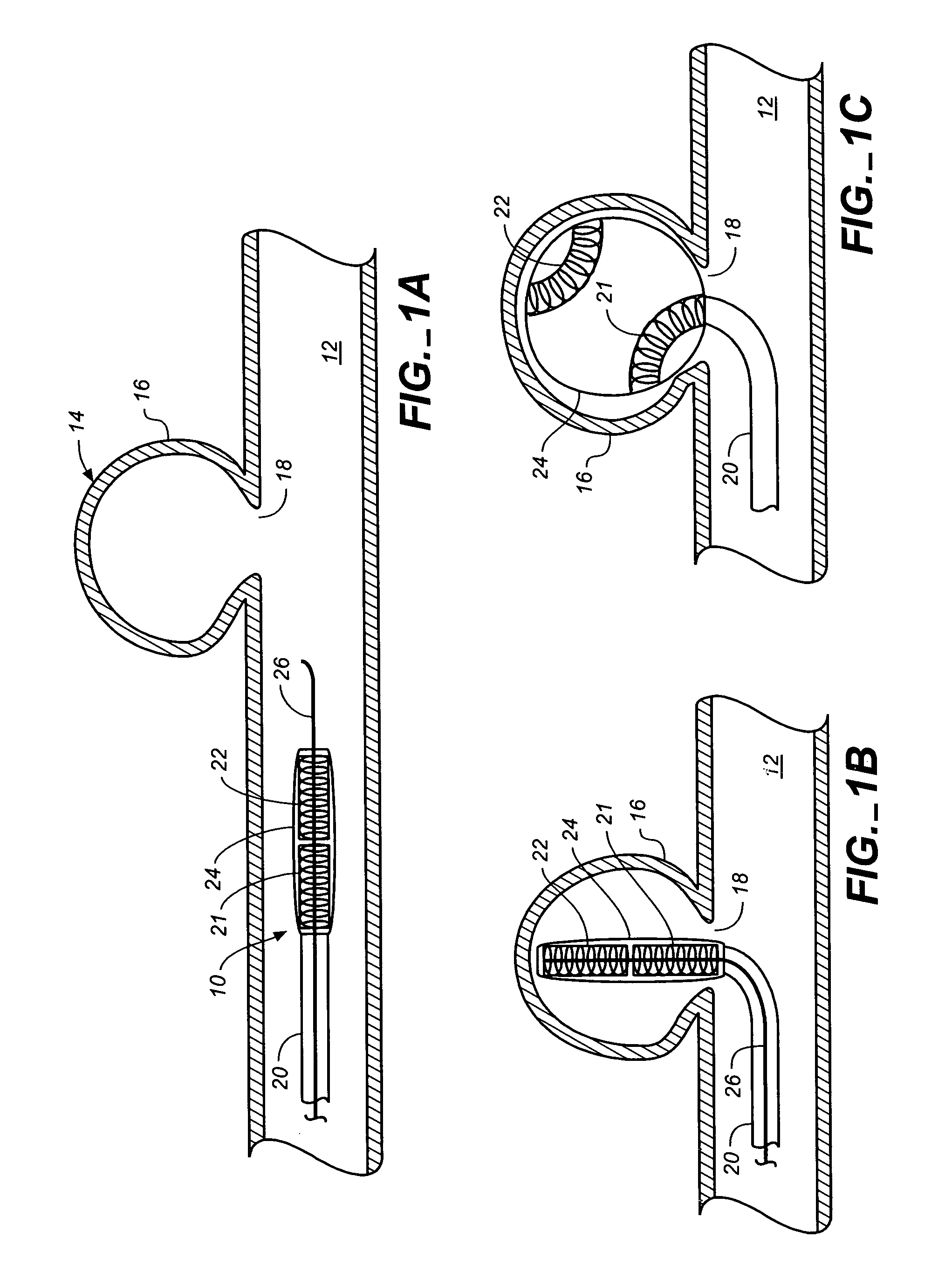
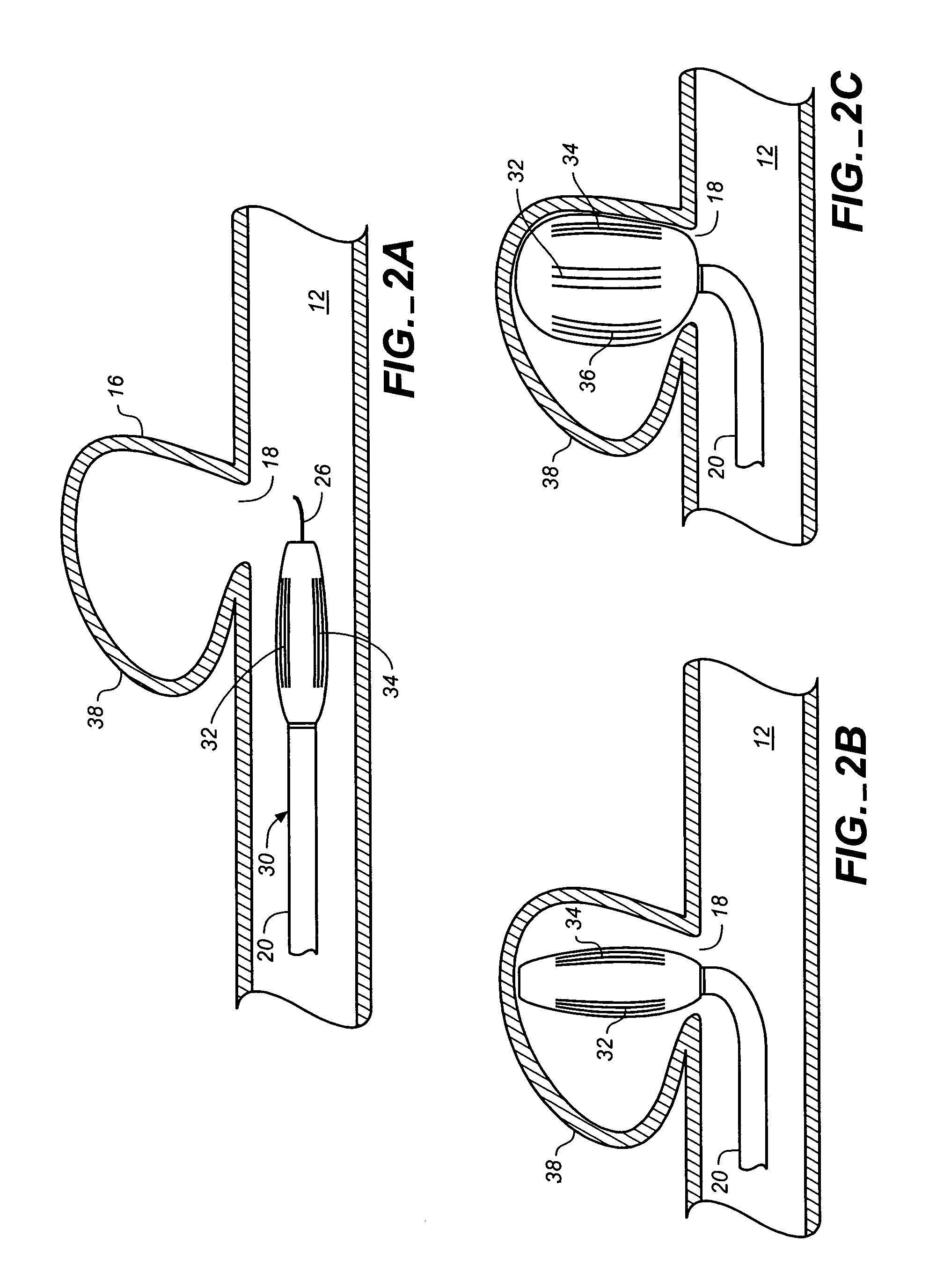
[0029]FIGS. 1A-1C illustrate a portion of an aneurysm treatment device 10 in a vessel 12 which has an aneurysm 14 therein, and thus illustrate the general context of the present invention. Though the embodiments discussed herein are discussed in conjunction with an aneurysm, it will be appreciated that they can be used in substantially any vascular cavity. Aneurysm 14 is defined by aneurysmal sac 16 and neck 18. Device 10 includes, in the embodiment illustrated, delivery catheter 20, a pair of extender coils 21 and 22 and an expandable liner 24. Delivery catheter 20 has a proximal end that extends proximally to a position where it is manipulable by an operator. The distal end of catheter 20 is releaseably connected to the liner 24 and coil 21. Coils 21 and 22 can either be attached to the liner or catheter, or unattached.
[0030]When in the insertion position shown in FIG. 1A, coils 21 and 22 are axially aligned with one another, their length is sufficient to substantially hold liner2...
PUM
 Login to View More
 Abstract
Description
Claims
Application Information
 Login to View More