Secure registration of group of clients using single registration procedure

a single registration procedure and group registration technology, applied in the field of communication security, can solve the problems of not providing a mechanism for allowing a “reverse registration” of existing registration approaches

US9450928B2Active Publication Date: 2016-09-20THALES DIS FRANCE SA
48 Cites 6 Cited by

Patent Information

Authority / Receiving Office
US · United States
Patent Type
Patents(United States)
Current Assignee / Owner
Publication Date
2016-09-20

Smart Images

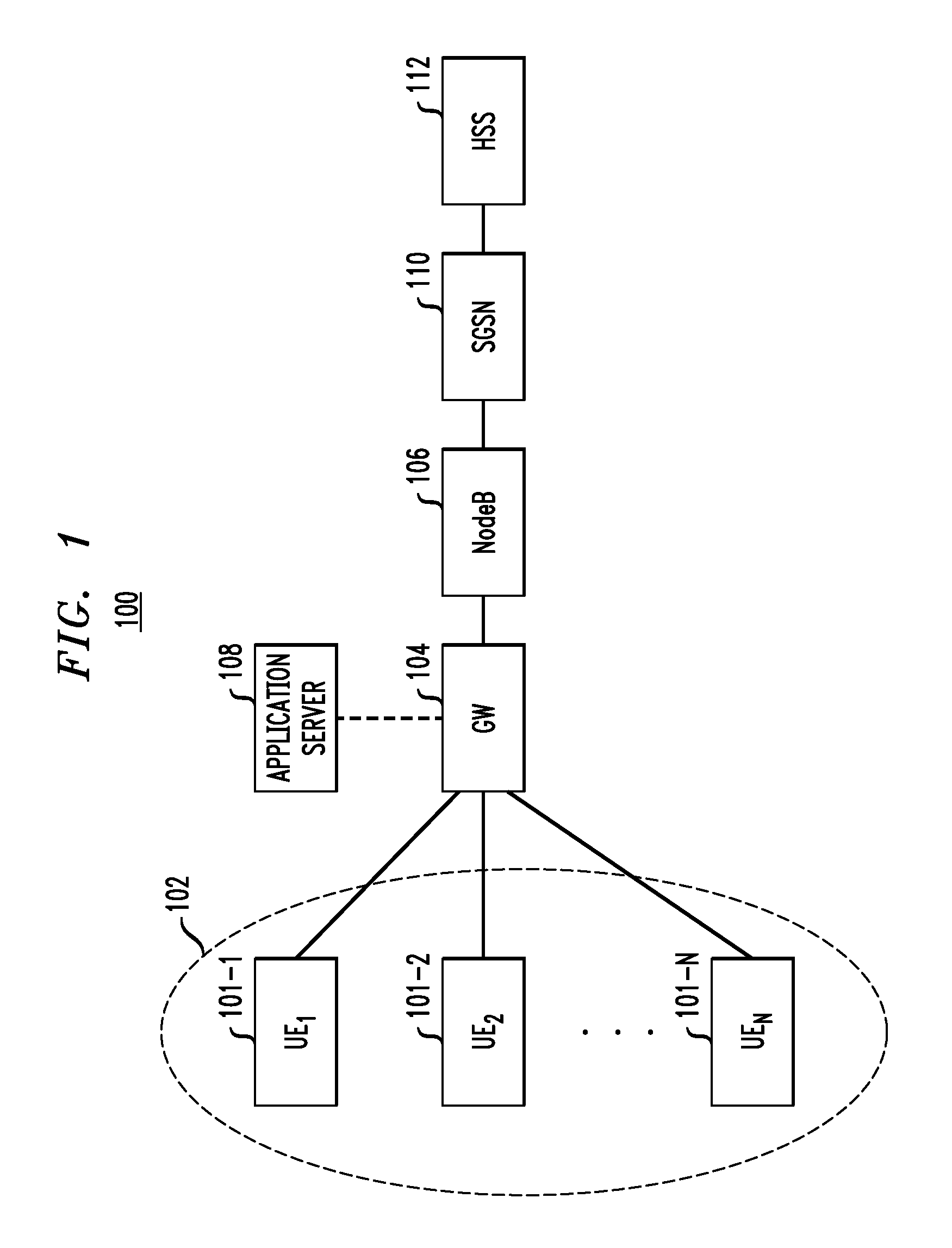
  • Figure 1
    Figure 1
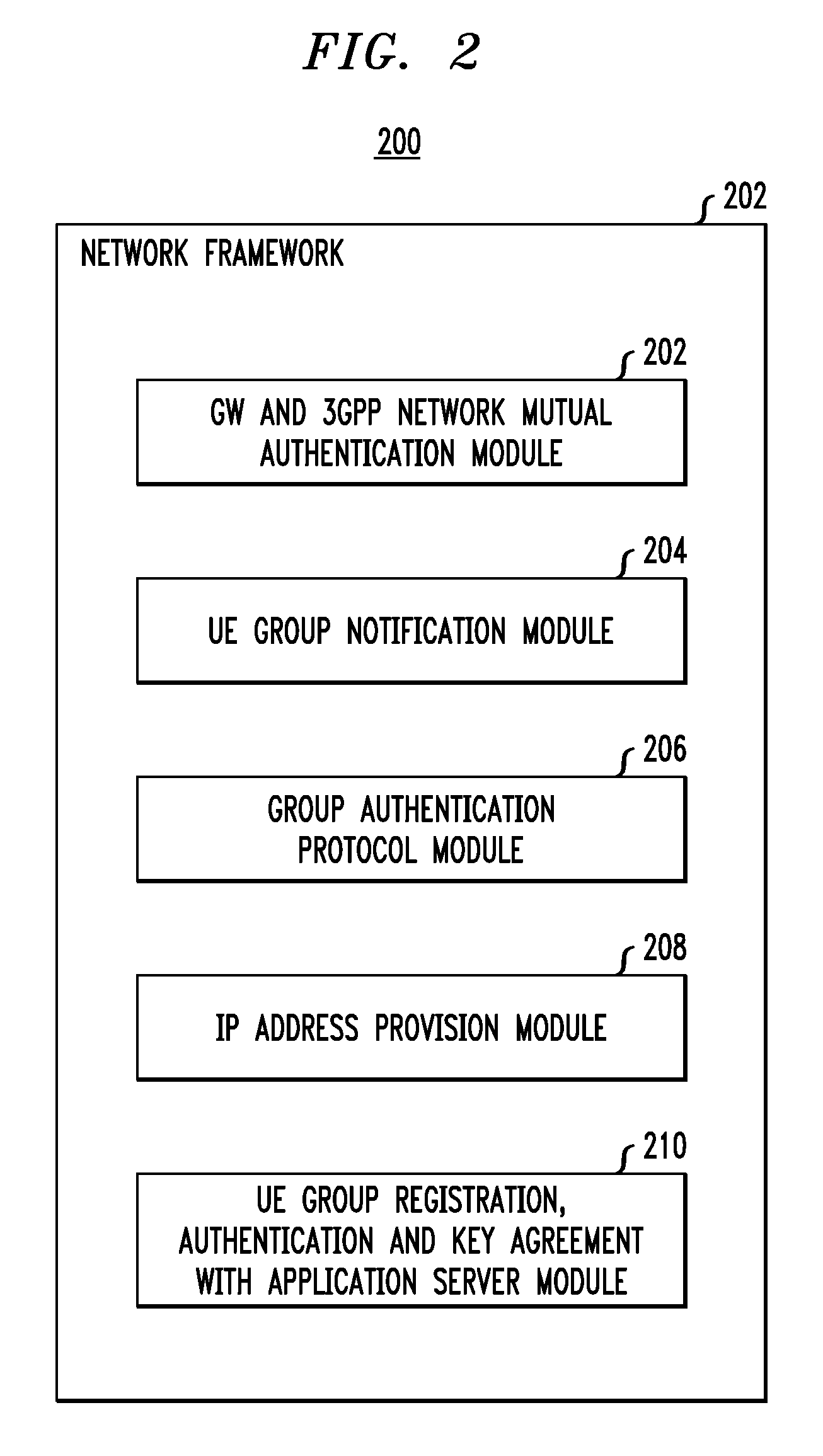
  • Figure 2
    Figure 2
  • Figure 3
    Figure 3
Patent Text Reader

Abstract

Automated secure registration techniques for communication devices are provided which address the problem of allowing multiple clients to gain access to one system, and thus provide a solution to the “reverse single sign-on” problem. For example, a method for registering a group of two or more communication devices in a communication network comprises the following steps. A group challenge message is sent from a network device to the group of two or more communication devices. The network device receives one or more response messages to the group challenge respectively from one or more of the group of two or more communication devices, wherein the response message from each of the responding communication devices in the group comprises a group credential corresponding to the group.
Need to check novelty before this filing date? Find Prior Art

Description

FIELD OF THE INVENTION

[0001] The present invention relates generally to communication security and, more particularly, to techniques for registering a group of communication devices in a communication network using a single registration procedure.BACKGROUND OF THE INVENTION

[0002] Traditional secure registration protocols rely on clients (or devices) authenticating with a server (or network). For instance, a user (of the client or device) may log on to a server, or a mobile device might register with a network. The registration protocol often includes authentication of client / device to the server / network or a mutual authentication protocol. More recently, with a view towards securing the entire session (not just access), these authentication protocols have been augmented to include a key agreement procedure which allows the client / device and the server / network to agree on a set of keys to secure the entire session.

[0003] Examples of one way authentication protocols include: CHAP describ...

Examples

Embodiment Construction

[0025]The following description will illustrate the invention in the context of an exemplary machine-to-machine (M2M), also known as machine-type-communications (MTC), environment. It should be understood, however, that while principles of the invention are particularly suitable to such an M2M or MTC environment, the invention is not limited to use with such an environment. That is, principles of the invention are generally applicable to any communication environment in which it would be desirable to provide secure registration features for a group of devices (users) using a single registration procedure.

[0026]One type of communication device that is particularly suitable for use with principles of the invention is referred to as an “open device.” The phrase “open device” may be generally defined as a communication device operating in a network on which one can run applications (e.g., firmware or software) from any provider other than the network operator without prior approval by t...