
Buprenorphine derivatives and uses thereof
A technology of derivatives and compounds, applied in the field of buprenorphine derivatives, can solve problems such as low bioavailability of buprenorphine
Patent Information
- Authority / Receiving Office
- CN · China
- Patent Type
- Applications(China)
- Current Assignee / Owner
- Publication Date
- 2009-04-15
- Estimated Expiration
- Not applicable · inactive patent
Smart Images
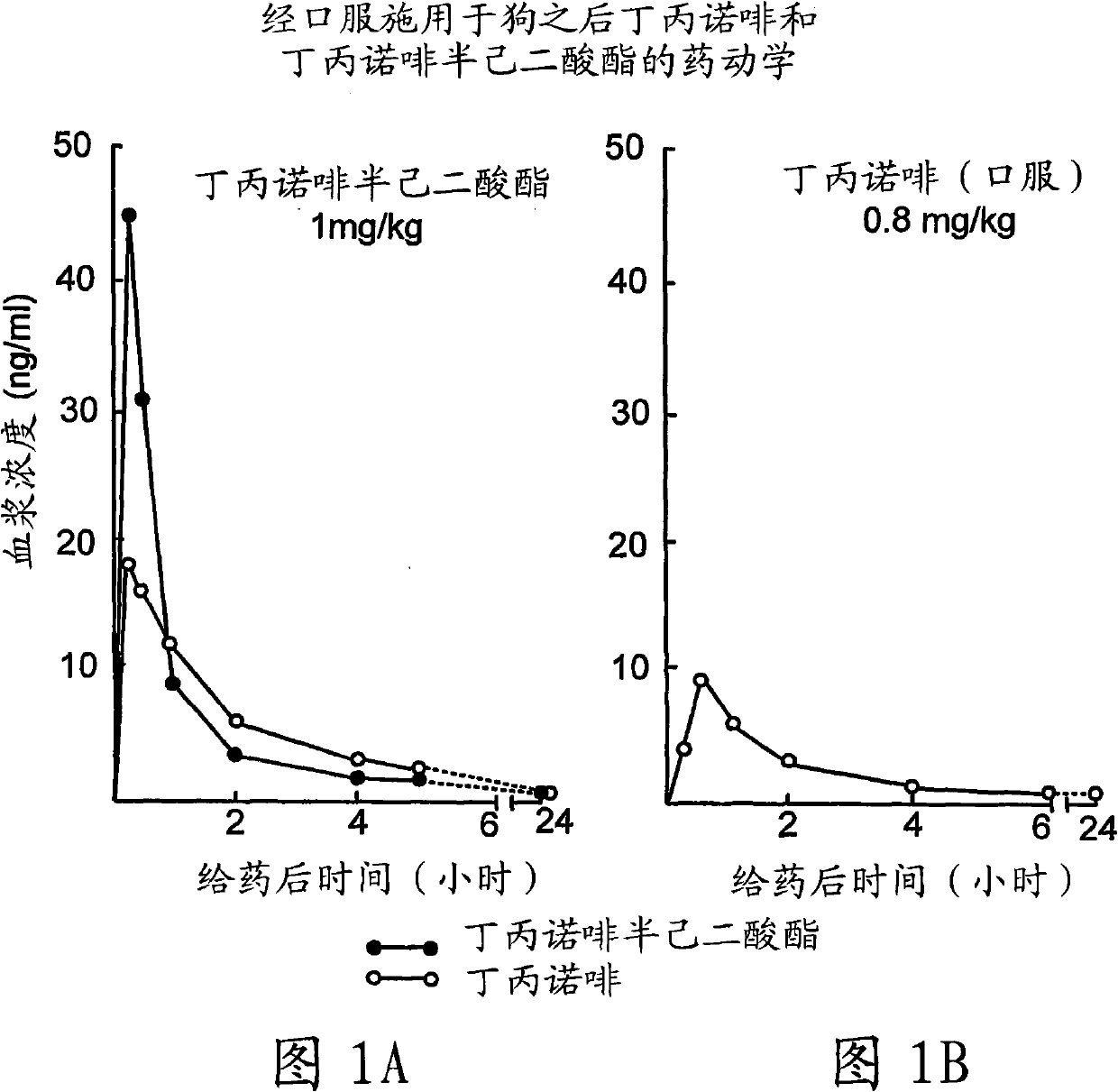
Figure 1 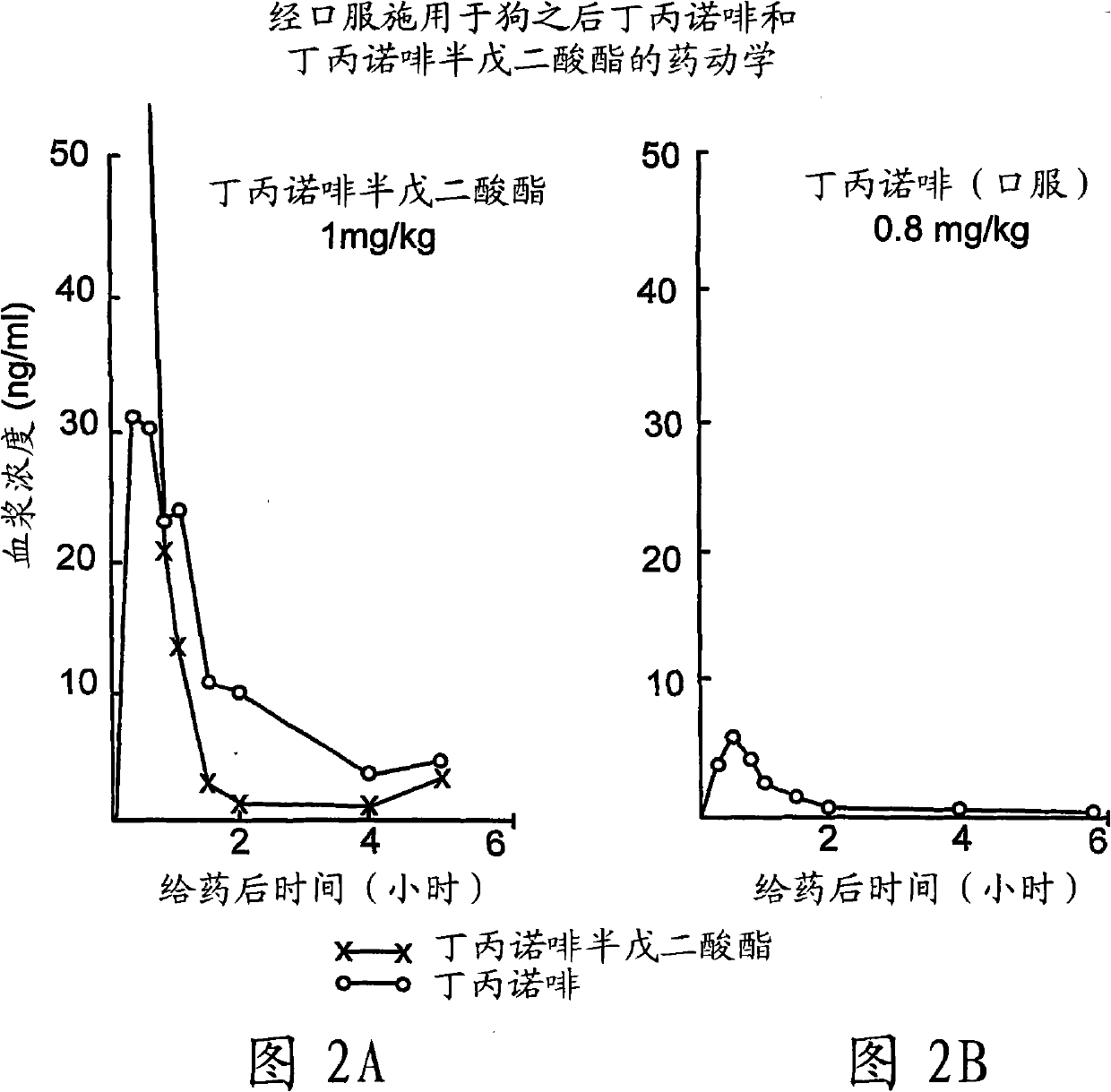
Figure 2 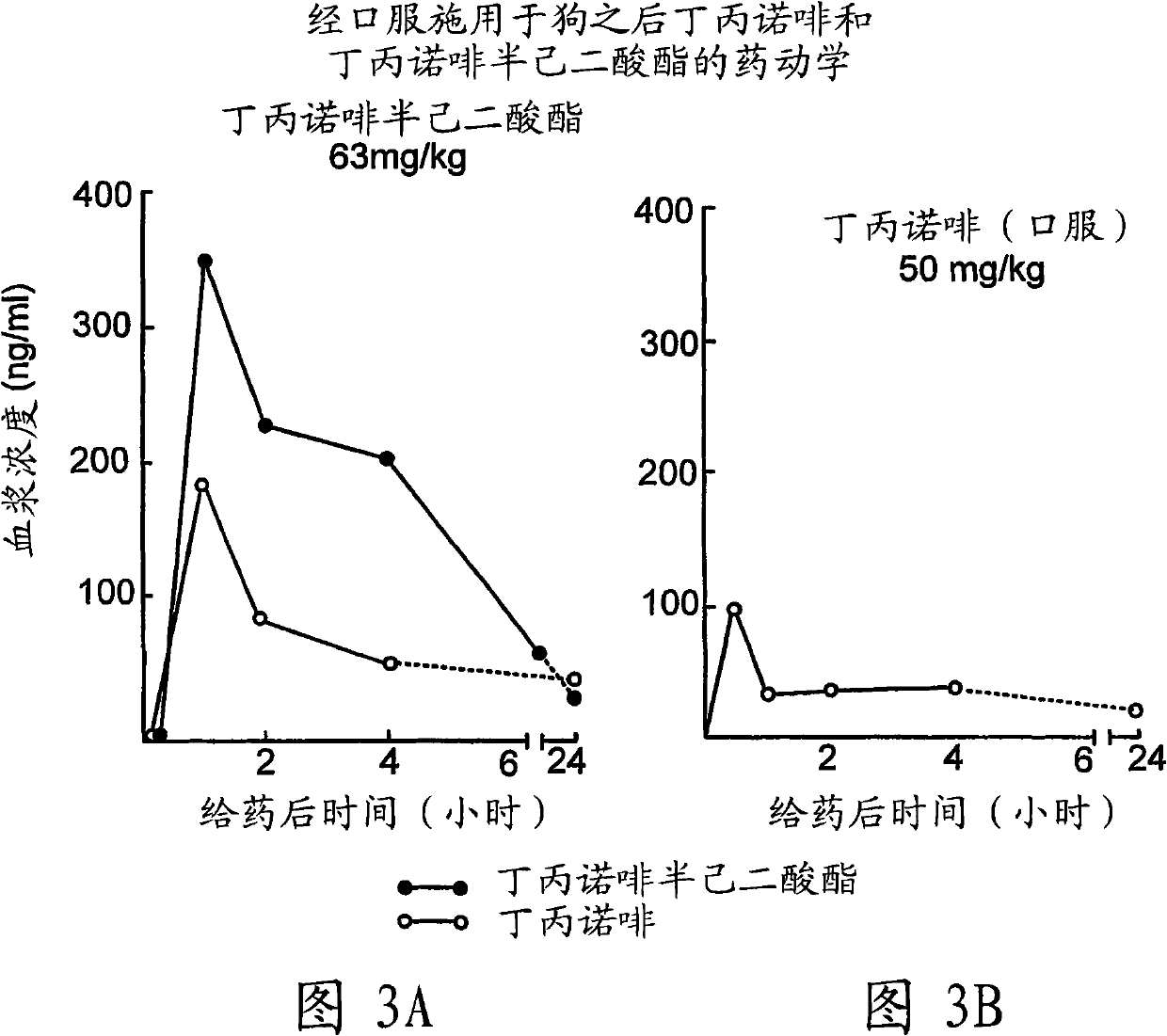
Figure 3
Abstract
Description
technical field
[0001] The present invention relates to buprenorphine derivatives and applications thereof. Background technique
[0002] Treating opioid abuse and dependence by replacing an abused opiate with a safer, longer-acting opioid is often a successful pharmacotherapeutic intervention strategy. The widely abused opiate heroin acts as an agonist of the mu-opioid receptor (MOR). Heroin is commonly abused intravenously, often leading to needle-sharing among addicts, which is often responsible for the spread of life-threatening infectious diseases such as hepatitis C and HIV / AID. Methadone has been used as an alternative to MOR agonists. Methadone is orally active and has a sufficiently long duration of action to allow it to be administered in a once-daily dose. Recently, a partial MOR agonist, buprenorphine 1, 21-(cyclopropyl-7α-[(S)-1-hydroxy-1,2,2-trimethylpropyl]-6, 14-Ethylidene-6,7,8,14-tetrahydro-oripavine, used as drug therapy (see e.g. U.S. Patent No. 49354...
Examples
Embodiment A
[0105] Embodiment A: Synthesis of buprenorphine hemisuccinate
[0106] Sodium phenoxide method:
[0107] Buprenorphine (2.35 g, 0.005 mol) was added to sodium hydride (50% dispersion in oil; 0.24 g, 0.005 mol NaH) in 2:1 ethanol:H 2 in warm solution in O (9ml). After stirring for 30 minutes, the solvent was removed by repeated azeotropy with benzene. Finally the residue is dried in vacuo over phosphorus pentoxide. This crude sodium salt was dissolved in dry benzene (30ml), then succinic anhydride (0.5g, 0.005mol) was added, and the mixture was stirred for 1.5 hours. After removing benzene, the residue was shaken with 2N hydrochloric acid (50ml) for 2 hours. The hydrochloride salt thus obtained was filtered, washed with water and dried. Recrystallization from isopropanol followed by washing the filtered product with hot methanol afforded the pure salt (1.0 g), mp 214°C-216°C (dec.). Measured values (percent): C, 64.95; H, 7.6; N, 2.2; Cl, 6.25. C 33 h 43 NO 7 (HCl...
Embodiment B
[0110] Example B: Synthesis of Buprenorphine Hemiglutarate
[0111] A solution of buprenorphine (2.1 g, 0.0045 mol) and glutaric anhydride (1.6 g, 0.014 mol) in dry ether: acetonitrile (3:5, 50 ml) was stirred at room temperature for 5 days, during which time buprenorphine Phenylhemiglutarate glutarate precipitated as a compact white solid. The solid was filtered off and washed with dry ether (40ml). This washing gave the salt (1.4 g) as a white crystalline solid, mp 160°C - 161.5°C. The salt was dissolved in a minimal amount of cold methanol (12ml), then an excess of dry ether (60ml) was added, followed by ethereal HCl. This resulted in the precipitation of a white solid which was filtered off and washed with dry ether. Recrystallization from methanol / ether gave pure buprenorphine hemiglutarate (0.9 g) as hydrochloric acid monohydrate, mp 214°C-215°C (dec.). Measured value (percentage): C63.85; H7.75; N2.08. C 34 h 47 NO 7 (HCl)(H 2 O) requires C64.18; H7.92; N2.20; ...
Embodiment C
[0112] Example C: Synthesis of Buprenorphine Hemiadipate
[0113] Buprenorphine (96 g, 0.2 mol) was dissolved in freshly dried tetrahydrofuran. To this was added adipic acid (129.2 g, 0.8 mol) and DCCI (100 g, 0.48 mol). The mixture was stirred for 6 days before additional adipic acid (30 g) and DECI (25 g) were added. The reaction mixture was stirred for three days. Thereafter, stirring was stopped and the mixture was left to stand for three days. The solid was filtered off and the solvent was removed from the soluble material. The resulting solid was dissolved in a minimal amount of methanol followed by addition of ethanol / HCl to give buprenorphine hemiadipate hydrochloride as a solid (86 g), which was purified by recrystallization from ethanol. The purified material has a melting point of 270°C to 272°C (decomposition). Measured values (percent): C, 66.49; H, 8.12; N, 2.23; Cl, 5.53. C 35 h 50 NO 7 Cl needs C, 66.49; H, 7.97; N, 2.22; Cl, 5.61; 3440 (OH), 176...