
High-temperature powder retarder in oil well cement
An oil well cement, medium and high temperature technology, applied in drilling compositions, chemical instruments and methods, etc., to achieve the effects of stable chemical properties, easy adjustment of thickening time, and good compatibility
Patent Information
- Authority / Receiving Office
- CN · China
- Patent Type
- Applications(China)
- Current Assignee / Owner
- Publication Date
- 2012-11-14
- Estimated Expiration
- Not applicable · inactive patent
Smart Images
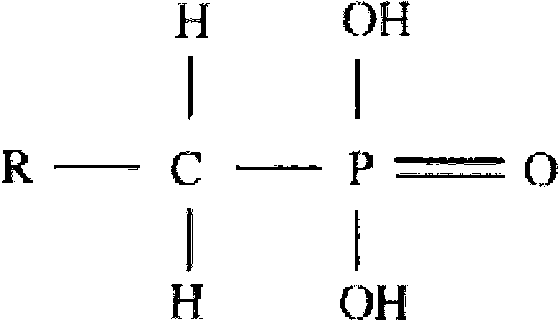
Figure 1 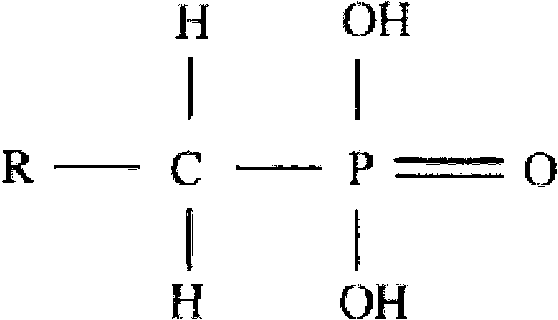
Figure 2 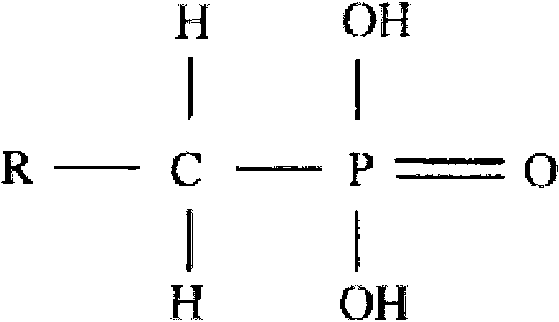
Figure 3
Abstract
Description
technical field
[0001] The invention relates to a cement admixture used in the cementing field of oilfield well completion technology, which belongs to a medium-high temperature retarder. Background technique
[0002] In oil and gas well cementing operations and other underground cementing operations, it is usually required to inject cement slurry containing cement, water and admixtures into the predetermined formation underground through surface pumping equipment to seal the annulus between the formation and the casing. . Typically cement slurry is pumped into the casing and returns to the annulus through the gap between the casing and the formation. The cement slurry solidifies in the annular space to form a hard cement sheath column, which can form a bond with the formation and the casing. In order to achieve a satisfactory cementing operation, it is necessary to achieve a high-strength bond to prevent fluid channeling along or within the cement sheath, which would cont...
Examples
Embodiment 1
[0029] Weigh 1 part by weight of methylene phosphate, 0.10 part of citric acid, 0.05 part of tartaric acid and 0.20 part of gluconic acid, and then mix them uniformly in a mortar to make a medium-high temperature powder retarder, use R01 as code name.
[0030] Mix the cement slurry performance of this retarder under the different test conditions of table 1
[0031]
Embodiment 2
[0033] Weigh 1 part by weight of subunit phosphate, 0.20 part of citric acid, 0.10 part of tartaric acid and 0.10 part of gluconic acid, and then mix them evenly in a mortar to make a medium-high temperature powder retarder, and use R02 as the code name .
[0034] Mix the cement slurry performance of this retarder under the different test conditions of table 2
[0035]
[0036]
Embodiment 3
[0038] Weigh 1 part of subunit phosphate, 0.20 part of citric acid, 0.05 part of tartaric acid and 0.15 part of glucose, and then mix them uniformly in a mortar to make a medium-high temperature powder retarder, and use R03 as the code name.
[0039] Mix the cement slurry performance of this retarder under the different test conditions of table 2
[0040]