
Easy-adhesion agent for solar cell protection sheet, solar cell protection sheet, and solar cell module
A technology for solar cells and protective sheets, applied in the direction of film/sheet adhesives, non-polymer organic compound adhesives, adhesives, etc., can solve the problem of high cost, achieve small output reduction and excellent adhesion , The effect of excellent adhesion durability
Patent Information
- Authority / Receiving Office
- CN · China
- Patent Type
- Applications(China)
- Current Assignee / Owner
- Publication Date
- 2014-09-10
Smart Images
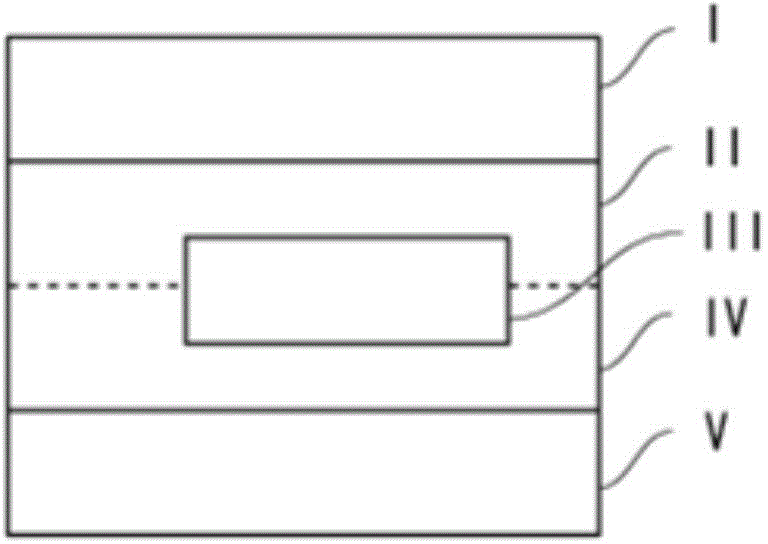
Figure 1 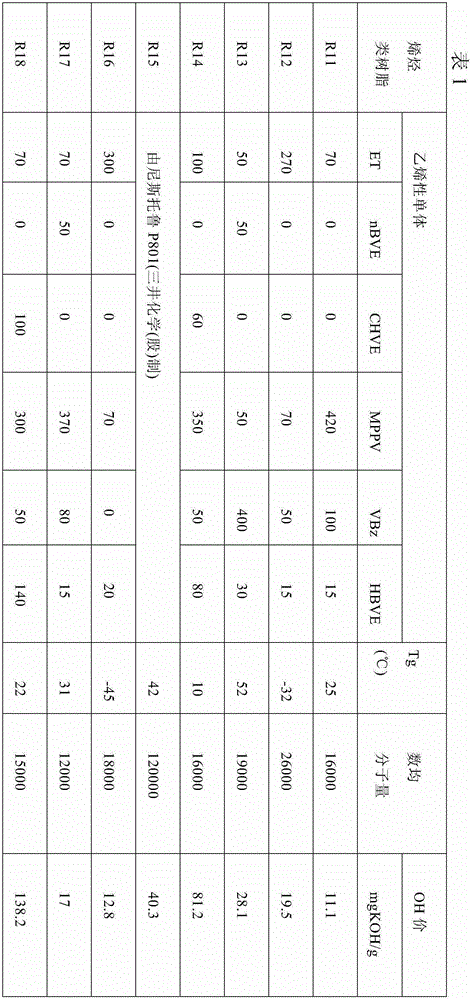
Figure 2 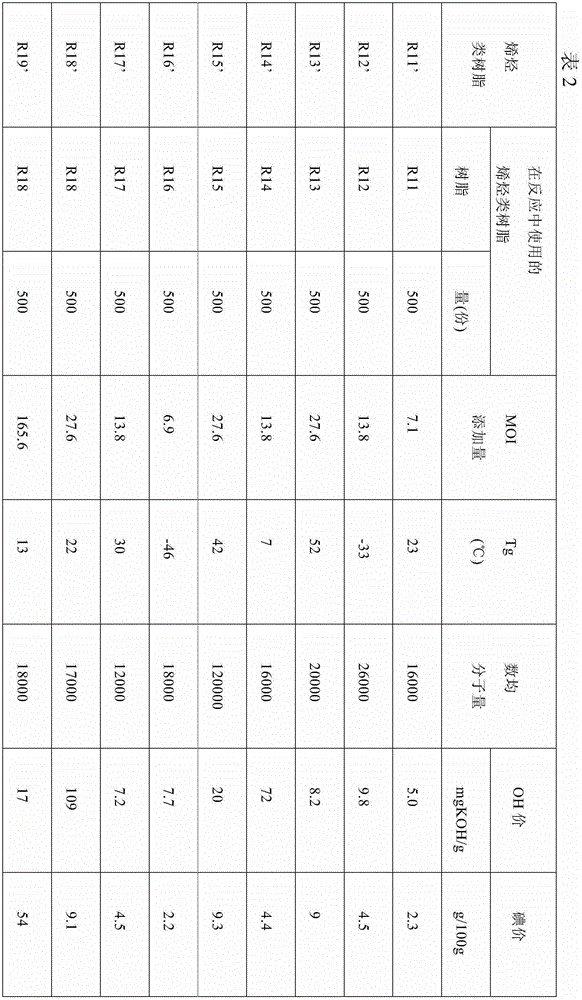
Figure 3
Abstract
Description
technical field
[0001] The invention relates to an easy adhesive for a solar cell protection sheet. Moreover, it is related with the solar cell protection sheet which used the said solar cell protection sheet easy adhesive, and the solar cell module which used this solar cell protection sheet. Background technique
[0002] In recent years, due to the increasing awareness of environmental issues, solar cells have attracted attention as clean energy that does not cause environmental pollution, and have been intensively studied and promoted in terms of useful energy utilization.
[0003] There are various forms of solar cell elements, and crystalline silicon solar cell elements, polycrystalline silicon solar cell elements, amorphous silicon solar cell elements, copper indium selenium solar cell elements, and compound semiconductor solar cell elements are known as typical ones. Among them, polycrystalline silicon solar cell elements, amorphous silicon solar cell elements, and c...
Examples
Embodiment 1
[0340] Using the sample 1 for adhesive force evaluation, the adhesiveness of the easy-adhesive layer to the EVA film and the adhesiveness of the heat-and-moisture test (after 1000 hours and after 2000 hours) were evaluated by the method described later.
[0341] Adhesion Evaluation
[0342] Cut the surface of the solar cell protection sheet 1 of the sample 1 for adhesion evaluation into a width of 15 mm with a cutter knife, and the gap between the easy-adhesive layer formed on the solar cell protection sheet 1 and the EVA film as a sealing material was cut. Adhesion was measured. A tensile tester was used for the measurement, and a 180-degree peel test was performed at a loading speed of 100 mm / min. The obtained measured values were evaluated as follows.
[0343] ◎: 50N / 15mm or more
[0344] ○: More than 30N / 15mm to less than 50N / 15mm
[0345] △: More than 10N / 15mm to less than 30N / 15mm
[0346] ×: less than 10N / 15mm
[0347] Adhesion evaluation after damp heat test
...
Embodiment 2~221、 comparative example 1~30
[0350] In the same manner as in Example 1, using samples 2 to 221 and 1' to 30' for adhesive force evaluation, the adhesiveness of the easily adhesive layer to the EVA film and the adhesiveness after the heat-and-moisture resistance test were evaluated. The above results are shown in Tables 13-1, 13-2, 13-3, 13-4, 14, 15-1A, 15-1B, 15-2, 15-3A, 15-3B, 16, 17-1A , 17-1B, 17-2A, 17-2B, 17-3A, 17-3B, 18, 19-1A, 19-1B, 19-2A, 19-2B, 19-3A, 19-3B, 20, 21 -1A, 21-1B, 21-2A, 21-2B, 21-3A, 21-3B, 22, 23-1, 23-2, 23-3, 24.
[0351] The abbreviations in Tables 13-1 to 24 indicate the contents shown below.
[0352] Compounds B1-B6 having a (meth)acryloyl group
[0353] Among the compounds B1 to B6 having a (meth)acryloyl group, the compounds described below were used as they were.
[0354] B1: Aronicus M-215 (manufactured by Toagosei Co., Ltd., isocyanuric acid EO-modified diacrylate)
[0355] B2: Aronicus M-315 (manufactured by Toagosei Co., Ltd., isocyanuric acid EO-modified triacr...
Embodiment 222
[0418] Manufacture of solar cell modules
[0419] Whiteboard glass・・・Solar cell surface protection material (I)
[0420] EVA film...Sealing material on the light receiving side (II)
[0421] Polycrystalline silicon solar cell element···solar cell (III)
[0422] EVA film...Sealing material on the non-light-receiving side (IV)
[0423] The above-mentioned (I)-(IV) and the solar cell protection sheet 1 are stacked in order so that the easy-adhesive layer of the solar cell protection sheet 1 is in contact with the sealing material (IV) on the non-light-receiving side side, and then put into a vacuum laminator , evacuated to about 1 Torr, under the state of applying atmospheric pressure as pressurized pressure, heated at 150°C for 30 minutes, and then heated at 150°C for 30 minutes to make a 10cm×10cm square photoelectric conversion efficiency evaluation. battery module 1.
[0424] Determination of Photoelectric Conversion Efficiency
[0425] The solar cell output of the obtai...