
Method for preparing laminated conductive titanium-aluminum-carbon honeycomb ceramic by using element powder in situ and application
A honeycomb ceramic, in-situ preparation technology, applied in chemical instruments and methods, catalyst carriers, physical/chemical process catalysts, etc., can solve problems such as collapse, large closed pores, product deformation, etc., to achieve low production costs and overcome high costs. , the effect of reducing production costs
Patent Information
- Authority / Receiving Office
- CN · China
- Patent Type
- Applications(China)
- Current Assignee / Owner
- Publication Date
- 2015-01-21
- Estimated Expiration
- Not applicable · inactive patent
Smart Images
Figure 1 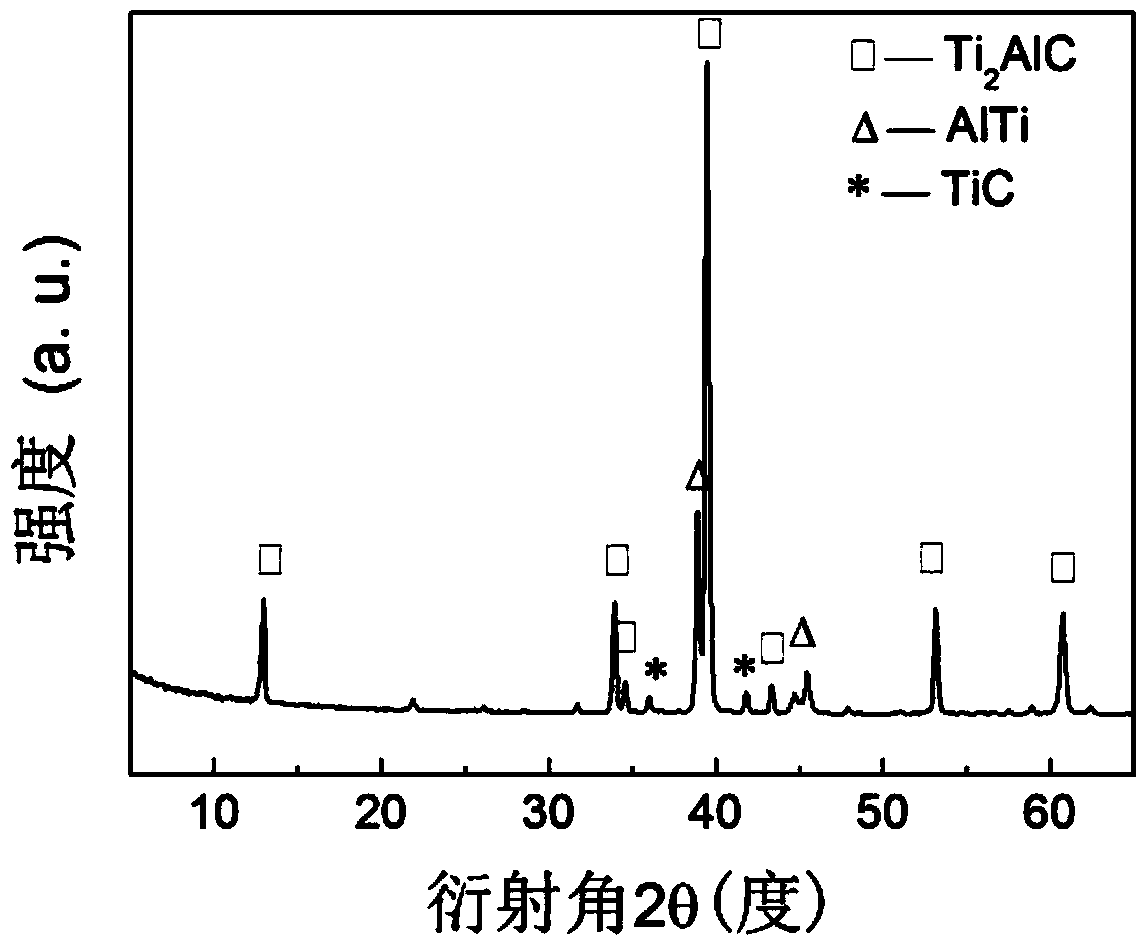
Figure 2 
Figure 3
Abstract
Description
technical field
[0001] The invention relates to the field of conductive honeycomb ceramics, in particular to a method and application for in-situ preparation of layered conductive titanium-aluminum-carbon honeycomb ceramics by using element powder. Background technique
[0002] Today, the number of automobiles is increasing rapidly, resulting in an increasing amount of automobile exhaust emissions. Carbon monoxide (CO), hydrocarbons (C x h y ), oxygen and nitrogen compounds (NO x ), sulfur dioxide, solid particles and aldehydes have a strong pungent taste or carcinogenic effect, and have become important sources of air pollution.
[0003] In order to reduce the pollution of exhaust gas, internal purification measures such as exhaust gas recirculation and delayed ignition time and external measures such as high-efficiency catalytic technology are mainly adopted. High-efficiency catalytic technology converts CO, C x h y , NO x converted to CO 2 、H 2 O, N 2 , the thre...
Examples
Embodiment 1
[0033]Using absolute ethanol as the medium, Ti powder (325 mesh), Al powder (10 μm), graphite powder (1 μm) and binder dextrin (accounting for 8% of the weight of the ceramic powder) are mixed in molar ratio Ti: Al: C The ratio of 2:1.48:1 is mixed, wet mixed in a polyurethane ball mill tank, the volume ratio of the mixed material to absolute ethanol is 3:2, the weight ratio of the ball to material is 1.5, and the wet mixing time is 8 hours. After the mixed powder is dried, add a solution made of plasticizer glycerin and deionized water for kneading. The amount of deionized water added is 13% of the weight of the ceramic powder, and the amount of glycerin added is 2% of the weight of the ceramic powder. . Lubricant edible oil is added, and kneading is continued to finally obtain a ceramic mud body, and the amount of the lubricant added is 0.8% of the weight of the ceramic powder. After aging for 12 hours, use a single cross-section of 30×30mm 2 , It can extrude 200 through t...
Embodiment 2
[0035] Using absolute ethanol as the medium, Ti powder (325 mesh particle size), Al powder (10 μm), graphite powder (1 μm) and binder starch (accounting for 5% of the weight of the ceramic powder) were mixed according to the molar ratio Ti: Al: C The ratio of 2:1.48:1 is mixed, wet mixed in an agate ball mill jar, the volume ratio of the mixture to absolute ethanol is 2:1, the weight ratio of the ball to material is 0.5, and the wet mixing time is 6 hours. After the mixed powder is dried, add a solution made of plasticizer glycerin and deionized water for mixing. The amount of deionized water added is 12% of the weight of the ceramic powder, and the amount of glycerin added is 1% of the weight of the ceramic powder. . Lubricant edible oil is added, and kneading is continued to finally obtain a ceramic mud body, and the amount of lubricant added is 0.5% of the weight of the ceramic powder. After aging for 12 hours, a single section is 30×30mm 2 , It can extrude 200 through th...
Embodiment 3
[0037] Using absolute ethanol as the medium, Ti powder (325 mesh particle size), Al powder (10 μm), graphite powder (1 μm) and binder starch (accounting for 10% of the weight of the ceramic powder) were mixed in molar ratio Ti: Al: C Mix in the ratio of 3:1.2:1.8, wet mix in an agate ball mill jar, the volume ratio of the mixture to absolute ethanol is 3:2, the weight ratio of the ball to material is 2, and the wet mixing time is 12 hours. After the mixed powder is dried, add a solution made of plasticizer glycerin and deionized water for mixing. The amount of deionized water added is 16% of the weight of the ceramic powder, and the amount of glycerin added is 3% of the weight of the ceramic powder. . Lubricant mineral oil is added, and the kneading is continued to finally obtain ceramic mud. The amount of mineral oil added is 1% of the weight of the ceramic powder. After aging for 12 hours, a single section is 30×30mm 2 , It can extrude 200 through the mold with square hole...