
Anti-oxidation health product taking L-Se-methylselenocysteine as main raw material
A technology of selenocysteine, the main raw material, is applied in the field of antioxidant health care product formulation, which can solve problems such as accumulation of free radicals, and achieve the effects of stable content, strong anticancer activity and clear chemical structure
Patent Information
- Authority / Receiving Office
- CN · China
- Patent Type
- Applications(China)
- Current Assignee / Owner
- Publication Date
- 2015-09-30
- Estimated Expiration
- Not applicable · inactive patent
Smart Images
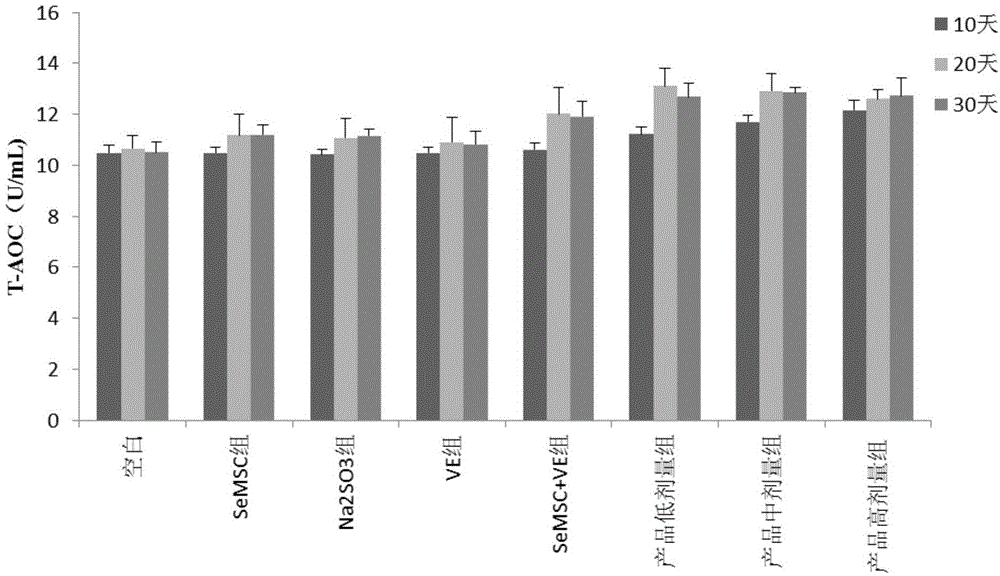
Figure 1 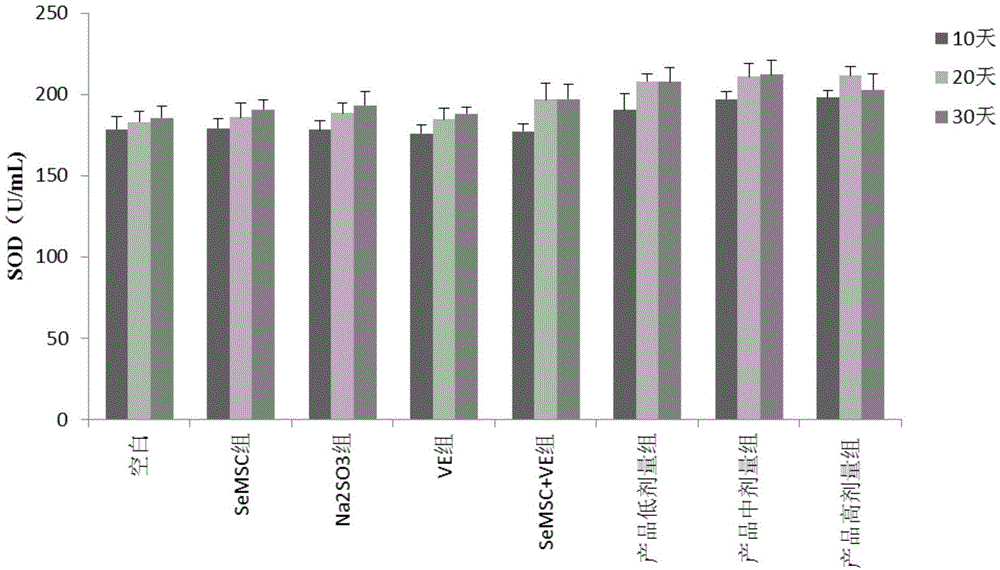
Figure 2 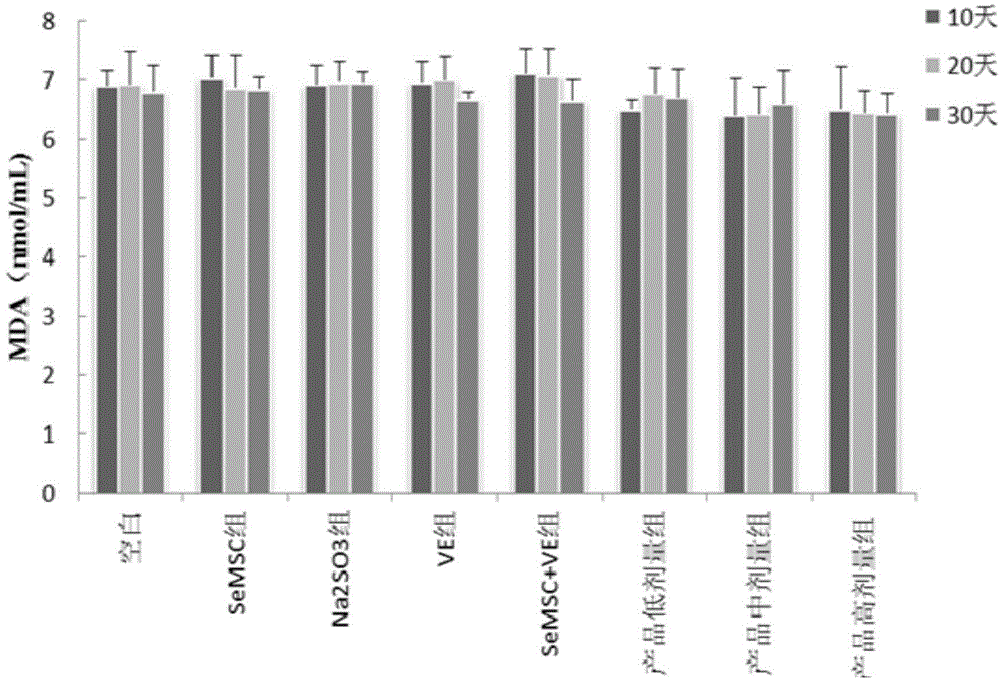
Figure 3
Abstract
Description
technical field
[0001] The invention belongs to the technical field of functional health food, and in particular relates to an anti-oxidation health product formula. Background technique
[0002] With age, the level of free radicals in the body tends to increase. At the same time, the free radical scavenging mechanism is degraded, resulting in a large accumulation of free radicals in the body. Excess free radicals in the body are increasingly harmful to the health of the body. It has caused obstacles to various physiological functions of the body, promoted the occurrence and development of various senile diseases (such as atherosclerosis, cardiovascular and cerebrovascular diseases, degeneration of brain nerve cells, diabetes, and tumors, etc.), leading to the aging of the body and even death .
[0003] As people pay more and more attention to health, selenium-enriched products have been widely accepted. Organic selenium can effectively remove free radicals in the body an...
Examples
Embodiment 1
[0018] Health product formula (according to daily consumption, scaled up during production): daily consumption is L-selenomethylselenocysteine: 90μg; vitamin E: 7.2mg; vitamin C: 43.2mg; grape Seed extract: 189.6mg (containing 95% proanthocyanidins). The remaining excipients are starch, β-cyclodextrin, sodium carboxymethylcellulose (CMC) and xanthan gum. Among them, starch: 208.11mg; dextrin: 90mg; β-cyclodextrin: 0.9mg, CMC: 0.45mg, xanthan gum: 0.45mg, microcrystalline cellulose: 60mg.
[0019] 40 healthy female SD rats, weighing 180-220g, were randomly divided into 5 groups after a week of adaptation to the environment with a balanced diet, with 8 rats in each group, and there was no significant difference in the weight of the rats among the groups.
[0020] The first group: blank group; given the corresponding volume of distilled water;
[0021] The second group: organic selenium (SeMSC) group; the concentration of SeMSC was 7.5 μg / kg BW;
[0022] The third group: inorg...
Embodiment 2
[0031] Health care product formula (according to daily consumption, scaled up during production): daily consumption is L-selenomethylselenocysteine: 90μg; vitamin E: 7.2mg; vitamin C: 49.98mg; tea Polyphenols: 212.82 mg. The remaining excipients are starch, β-cyclodextrin, sodium carboxymethylcellulose (CMC) and xanthan gum. Among them, starch: 159mg; dextrin: 124.11mg; β-cyclodextrin: 0.9mg, CMC: 0.54mg, xanthan gum: 0.36mg, microcrystalline cellulose: 45mg.
[0032] 40 healthy female SD rats, weighing about 200g, were randomly divided into 5 groups with a balanced diet and adapted to the environment for 1 week, with 8 rats in each group. There was no significant difference in the weight of the rats between the groups:
[0033] The first group: blank group; given the corresponding volume of distilled water;
[0034] The second group: organic selenium (SeMSC) group; the concentration of SeMSC was 7.5 μg / kg BW;
[0035] The third group: inorganic selenium (Na 2 SeO 3 ) gro...
Embodiment 3
[0047] Health product formula (according to daily consumption, scaled up during production): daily consumption is L-selenomethylselenocysteine: 120μg; vitamin E: 8.88mg; vitamin C: 60mg; tomato red Vitamins: 71.09mg. The remaining excipients are starch, β-cyclodextrin, sodium carboxymethylcellulose (CMC) and xanthan gum. Among them, starch: 245mg; dextrin: 161.0mg; β-cyclodextrin: 0.9mg, CMC: 0.48mg, xanthan gum: 0.42mg, microcrystalline cellulose: 52.11mg.
[0048] 40 healthy female SD rats, weighing about 200g, were randomly divided into 5 groups after 7 days of adaptation to the environment with a balanced diet, with 8 rats in each group, and there was no significant difference in the weight of the rats between the groups
[0049] The first group: blank group; given the corresponding volume of distilled water;
[0050] The second group: low-dose product group; the dose of the product administered to rats is 5 times the recommended dose for the human body;
[0051] The th...