
Semi-aromatic sulfonated polyether ketone and preparation method thereof
A sulfonated polyetherketone, semi-aromatic technology, applied in electrical components, collectors/separators, circuits, etc., can solve the problems of high melting temperature, which is not conducive to the preparation of large-area membrane materials with uniform structure, and achieves reproducibility. Good performance, improved proton conductivity, low cost effect
Patent Information
- Authority / Receiving Office
- CN · China
- Patent Type
- Applications(China)
- Current Assignee / Owner
- Publication Date
- 2014-02-05
- Estimated Expiration
- Not applicable · inactive patent
Smart Images
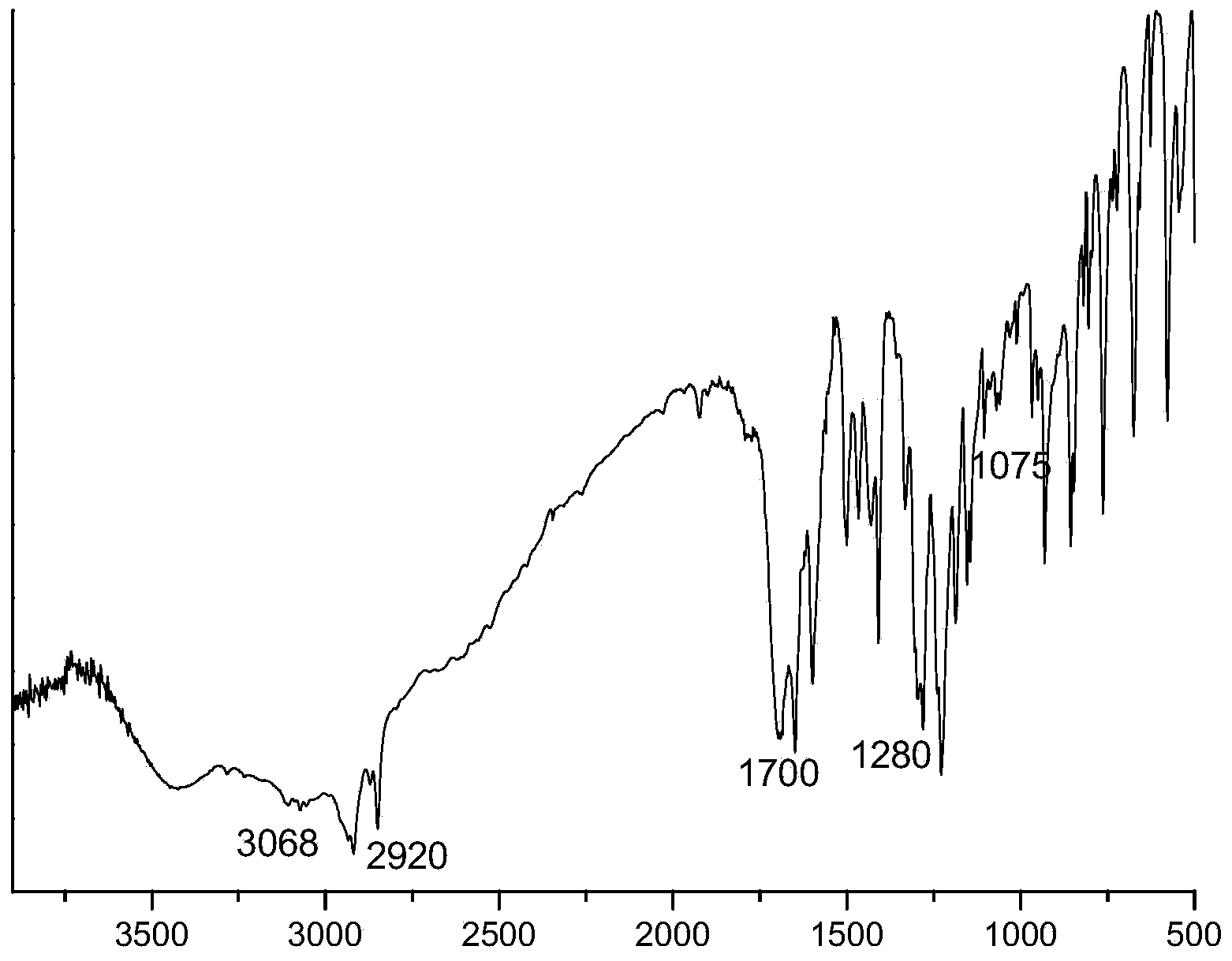
Figure 1 
Figure 2 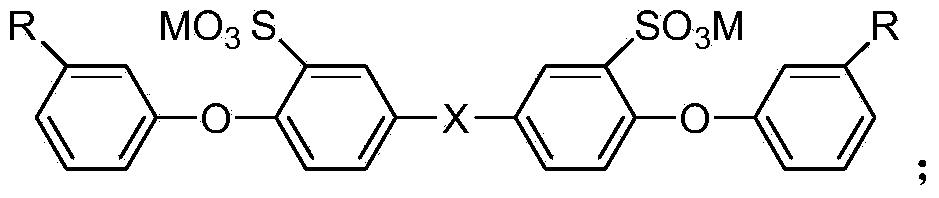
Figure 3
Abstract
Description
technical field
[0001] The invention belongs to the field of polymer materials, and in particular relates to a semi-aromatic sulfonated polyether ketone used as a proton exchange membrane material and a preparation method thereof. Background technique
[0002] Proton exchange membrane fuel cells have the advantages of high specific power, low operating temperature, low corrosion and long life, and are considered to be the preferred power source for aerospace, military, and electric vehicles. As the core of the proton exchange membrane fuel cell, the performance of the proton exchange membrane directly determines the performance of the fuel cell. At present, most commercial proton exchange membrane materials are perfluorinated sulfonated polymers, and the most widely used one is the perfluorinated sulfonated polymer developed by DuPont with the trade name Nafion. This type of material has the advantages of high proton conductivity, good mechanical strength, excellent stabili...
Examples
Embodiment 1
[0027] 0.01mol 1,4-bis(3-sodium sulfonate-4-phenoxy-benzoyl)benzene, 0.01mol sebacic acid and 30.3g Eaton's reagent, the mass ratio of sebacic acid and Eaton's reagent is 15: 1. Add it to the reaction flask of the spherical condenser connected to the calcium chloride drying tube at the top; the Eaton reagent is prepared by dissolving phosphorus pentoxide in methanesulfonic acid, with a mass percentage of 10%; stir at room temperature to dissolve the monomer, and heat up , reacted at 50°C for 10 hours. After the reaction is completed, the obtained solution is poured into distilled water, and the light yellow flocculent solid precipitates is octamethylene sulfonated polyether ketone, which is boiled and washed 5 times with distilled water to remove inorganic compounds. After drying, the yield was 97%.
[0028] After testing: the infrared spectrogram of the semi-aromatic sulfonated polyetherketone prepared in this embodiment, refer to the attached figure 1 As shown, 1700cm -1 ...
Embodiment 2
[0030] In Example 1, the reaction at 50° C. for 10 hours was replaced by the reaction at 80° C. for 3 hours. Other monomer feed ratios, reaction conditions and processing steps were the same as in Example 1. The product is a pale yellow solid with a yield of 95%.
Embodiment 3
[0032] In Example 1, the fixed reaction temperature was set as a temperature program, that is, the reaction at 50°C for 10 hours was replaced by the reaction at 20°C for 2 hours, then the temperature was raised to 60°C for 2 hours, and then the reaction was performed at 80°C for 2 hours. Other monomer feed ratios and reaction conditions and processing steps are the same as in Example 1. The product is a pale yellow solid with a yield of 98%.