
A polyisopropylacrylamide functionalized fluorescent silicon quantum dot material and preparation method thereof
A technology of propylacrylamide and quantum dot materials, which is applied in the field of optical materials, can solve the problems of narrow application range and poor processability, and achieve good biocompatibility, good processability, and stable luminescent properties
Patent Information
- Authority / Receiving Office
- CN · China
- Patent Type
- Patents(China)
- Current Assignee / Owner
- Publication Date
- 2018-07-20
Smart Images
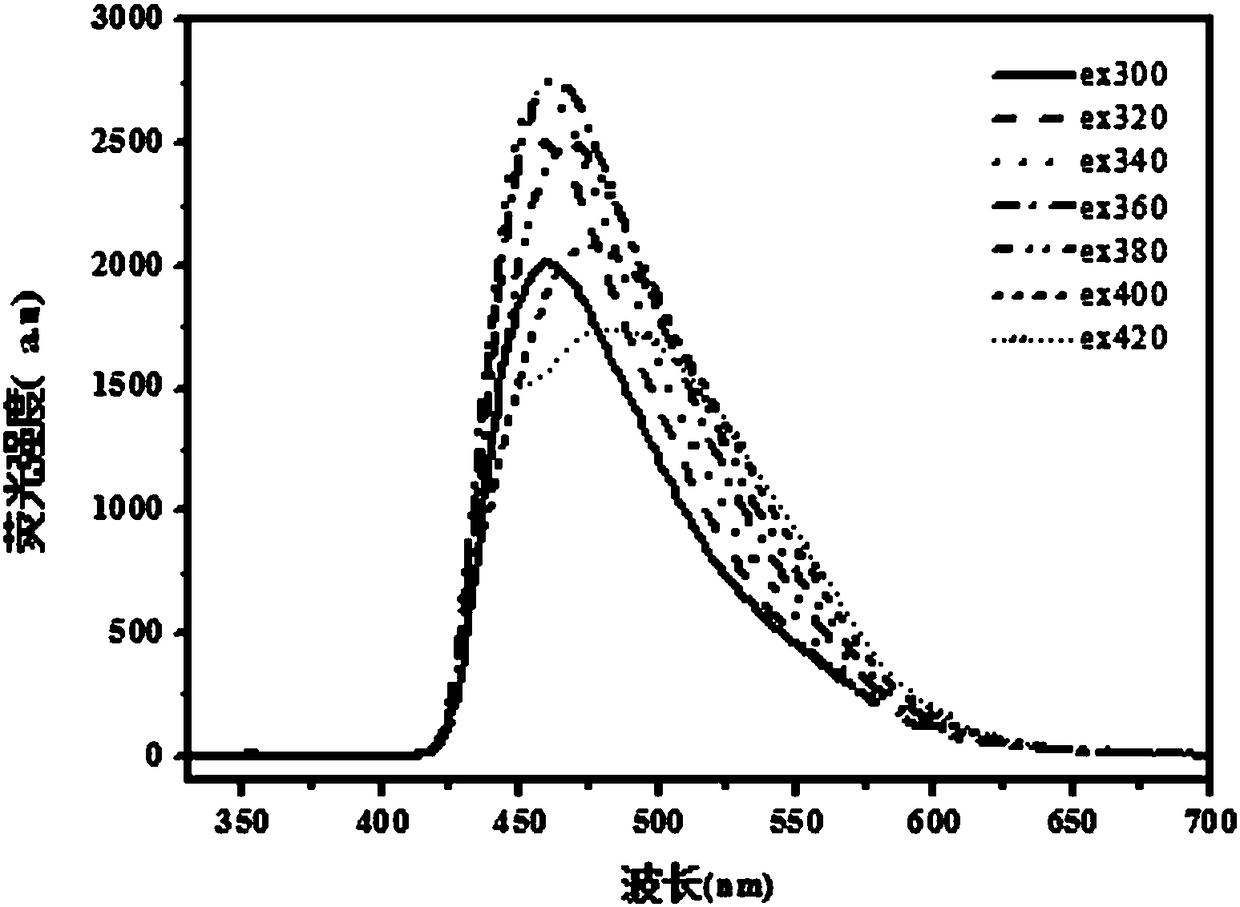
Figure 1 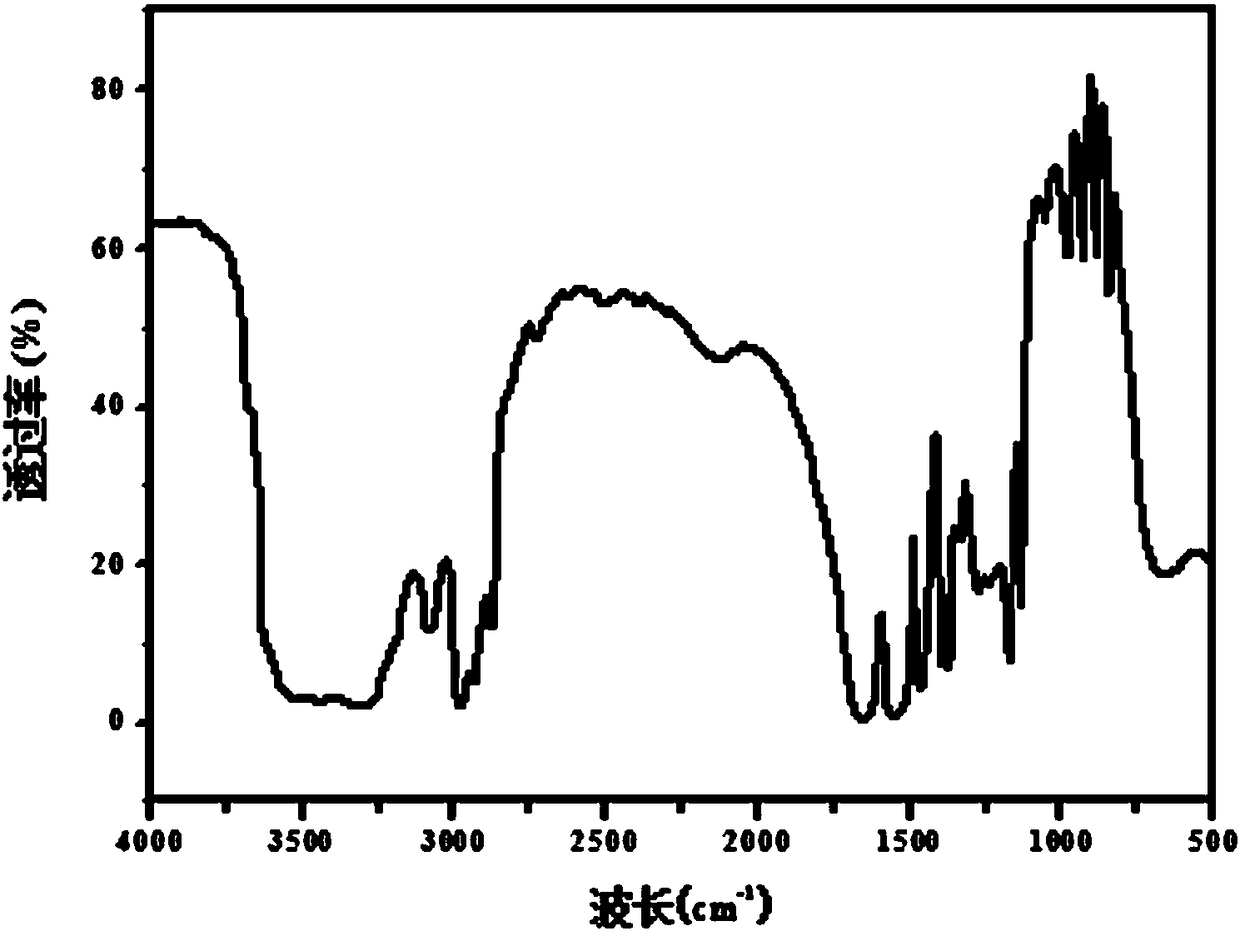
Figure 2 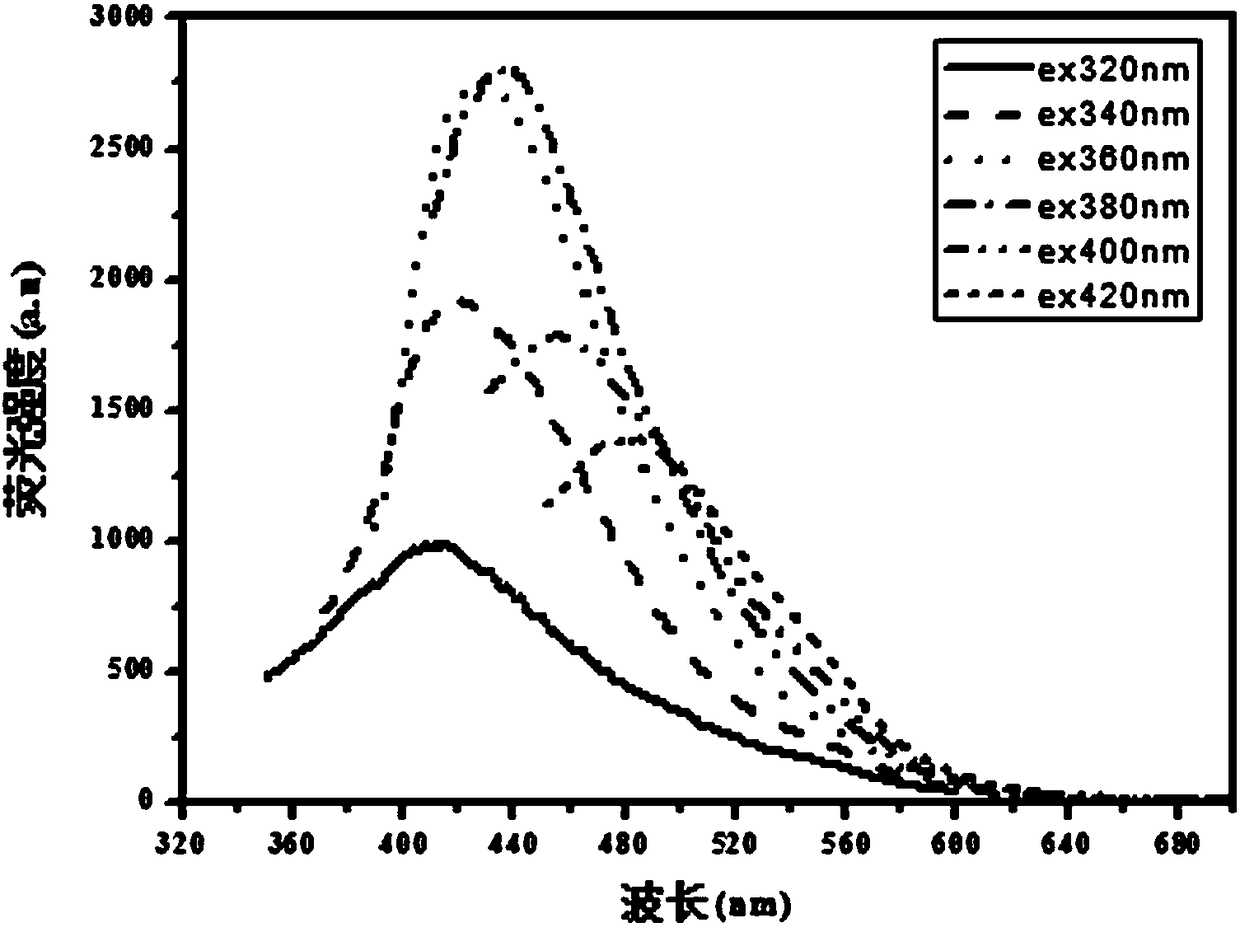
Figure 3
Abstract
Description
technical field
[0001] The invention relates to the field of optical materials, and relates to a fluorescent silicon quantum dot material functionalized with polyisopropylacrylamide and a preparation method thereof. technical background:
[0002] Silicon quantum dots (Si QDs) generally refer to silicon nanocrystals with a size no larger than 10 nm. Due to the quantum confinement effect, its luminous efficiency can far exceed that of traditional bulk silicon materials, showing excellent photoelectric properties. However, pure silicon quantum dots have disadvantages such as poor processability and narrow application range.
[0003] In order to make silicon quantum dots exhibit excellent and stable photoelectric properties and be effectively applied, it is usually necessary to modify the surface of silicon quantum dots. The modified silicon quantum dots have more stable luminescent properties, low toxicity, and good biocompatibility, so fluorescent silicon quantum dots are wi...
Examples
Embodiment 1
[0029] Weigh 200 mg of fluorescent silicon quantum dots, add them to a mixed solution of 5 mL of ethanol and water, add 1 mL of KH-550 silane coupling agent, stir, react at room temperature for 24 hours, filter to remove the reaction solvent, and then vacuum dry to obtain aminated Fluorescent silicon quantum dots: weigh 50 mg of aminated fluorescent silicon quantum dots, add 10 mL of absolute ethanol to disperse and dissolve them, and transfer them to a round bottom flask, add 20 mg of EDC, 30 mg of NHS, and 30 mg of trithiocarbonate. Continue to stir, react at room temperature for 24 hours, and then dialyze in ethanol for 48 hours. The resulting solution is a purified fluorescent silicon quantum dot chain transfer agent; take 400 μL fluorescent silicon quantum dot chain transfer agent in a 10 mL ampoule, add 80 μL AIBN, 200 mg refined N-isopropylacrylamide, after freezing under liquid nitrogen, evacuate, then nitrogen, repeat the freezing-vacuum-nitrogen operation 5 times, and...
Embodiment 2
[0031] Weigh 200 mg of fluorescent silicon quantum dots, add them to a mixed solution of 5 mL of ethanol and water, add 1 mL of KH-550 silane coupling agent, stir, react at room temperature for 24 hours, filter to remove the reaction solvent, and then vacuum dry to obtain aminated Fluorescent silicon quantum dots, weigh 50 mg of aminated fluorescent silicon quantum dots, add 10 mL of absolute ethanol to disperse and dissolve, and transfer it to a round bottom flask; add 20 mg EDC, 30 mg NHS, and 30 mg trithiocarbonate. Continue to stir, react at room temperature for 24 hours, and then dialyze in ethanol for 48 hours. The resulting solution is a purified fluorescent silicon quantum dot chain transfer agent. Take 400 μL fluorescent silicon quantum dot chain transfer agent in a 10 mL ampoule, add 80 μL AIBN, 200 mg refined N-isopropylacrylamide, vacuumize after freezing under liquid nitrogen, then pass through nitrogen, repeat the operation of freezing-vacuumizing-nitrogen for 5 t...
Embodiment 3
[0033] Weigh 200 mg of fluorescent silicon quantum dots, add them to a mixed solution of 5 mL of ethanol and water, add 1 mL of KH-550 silane coupling agent, stir, react at room temperature for 24 hours, filter to remove the reaction solvent, and then vacuum dry to obtain amino Aminated fluorescent silicon quantum dots, weigh 50 mg of aminated fluorescent silicon quantum dots, add 10 mL of absolute ethanol to disperse and dissolve, and transfer it to a round bottom flask; add 20 mg of EDC, 30 mg of NHS, and 30 mg of trithiocarbonate. Continue to stir, react at room temperature for 24 hours, and then dialyze in ethanol for 48 hours. The resulting solution is a purified fluorescent silicon quantum dot chain transfer agent. Take 400 μL fluorescent silicon quantum dot chain transfer agent in a 10 mL ampoule, add 80 μL AIBN, 400 mg refined N-isopropylacrylamide, vacuumize after freezing under liquid nitrogen, then pass through nitrogen, repeat the operation of freezing-vacuumizing-n...