
Method for efficiently repairing composite polluted soil by artificial ecological system
An ecosystem and complex pollution technology, applied in the field of soil remediation, can solve the problems of ignoring economic benefits, maximizing ecological benefits, and single types of heavy metals, so as to improve extraction and degradation rates, increase plant absorption rates, and eliminate secondary pollution. Effect
Patent Information
- Authority / Receiving Office
- CN · China
- Patent Type
- Applications(China)
- Current Assignee / Owner
- Publication Date
- 2017-07-21
Smart Images
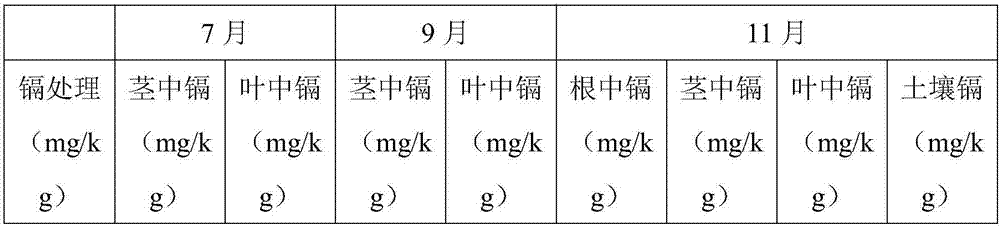
Figure 1 
Figure 2 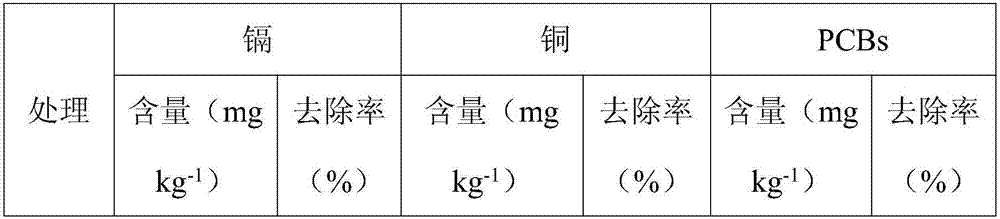
Figure 3
Abstract
Description
technical field
[0001] The invention relates to the field of soil remediation, in particular to a method for efficiently remediating composite polluted soil by using an artificial ecosystem. Background technique
[0002] At present, heavy metal and organic pollution has become an important obstacle to economic development and human health, and has received extensive attention internationally. The problem of soil pollution is particularly prominent in our country, mainly from modern industry, mining industry, smelting industry, municipal solid waste, pesticide abuse, etc., which have seriously affected my country's economic development, human health and quality of life. For example, in my country's grain production, the excessive rate of heavy metals in grain due to soil pollution has reached 10%, and the annual direct loss is as high as 20 billion yuan.
[0003] The remediation methods of soil pollution include chemical methods, physical methods and biological methods. Alt...
Examples
Embodiment 1
[0034] The selection of embodiment 1 material
[0035] (1) Trees: select trees with strong environmental adaptability, strong stress resistance, large biomass, high tolerance and accumulation characteristics of multiple heavy metals and / or organic compound pollution, and certain economic value. .
[0036] Preferably: jujube trees with high accumulation of manganese, zinc, and lead; camphor trees with high accumulation of manganese, copper, zinc, lead, and nickel; masson pine and hemlock with high accumulation of manganese, zinc, and lead; The Taiwan acacia with high accumulation, the haggard tree with high accumulation of lead, cadmium and zinc; , fast-growing trees with high accumulation of lead, bamboo willow, amorpha, alder, pistachio, Populus euphratica, mulberry, Paulownia and willow, fast-growing trees with high accumulation of cadmium, zinc, manganese, lead and copper, eucalyptus, and organic pollutants Alpine ficus and fir with high absorption capacity and fast-growi...
Embodiment 2
[0045] Example 2 Construction of Ecosystem
[0046] Experimental materials: Bamboo willow, iron broom with cut leaves, Schisandra angustifolia and / or fufangteng, lotus seedlings, Cynorrhizae haizhou, and earthworms.
[0047] 1) Bamboo willow seedlings are transplanted from the whole plant or rooted from cuttings, when the height is 1.5-1.8m. Transplant a bamboo willow seedling every 30-40cm in the heavy metal-polluted soil, the transplanting depth is 10-20cm, and the row spacing is 80-100cm. Apply N, P, and K fertilizers before planting or topdress during the period.
[0048] 2) After the bamboo willows are planted, evenly spread the wet vegetable garden soil mixed with 5-10% cow manure (or 5% pig manure, chicken manure) under the forest to a thickness of 2-3 cm, forming a "mediated environment" that is easy for earthworms to survive. Artificially cultivated earthworms, the density is 0.3-0.5kg / m 2 .
[0049] 3) Sow in the vegetable garden soil under the bamboo willow fore...
experiment example 1
[0053] Take soil not polluted by heavy metals, apply cadmium solution (in the form of CdCl 2 configuration) so that the cadmium concentrations were 0, 5, and 10 mg / kg·DW, and each treatment was repeated three times. Activation was carried out for 8 weeks to balance the distribution of heavy metal cadmium in the soil. During the activation period, the A. japonicus was multiplied. After the multiplication, the stem sections of the A. japonicus with uniform size (every two stem nodes were one section) were taken to grow roots in the Hoagland nutrient solution. Transplant the hollow lotus that has finished rooting into the activated soil, and water it regularly to ensure sufficient water. After 8 weeks of cultivation (i.e. in July), the aerial part was harvested to measure the tissue distribution of heavy metal cadmium in the stems and leaves, and then harvested once in September for a total of 3 times until the whole plant was harvested in November. Tissue distribution of heavy...